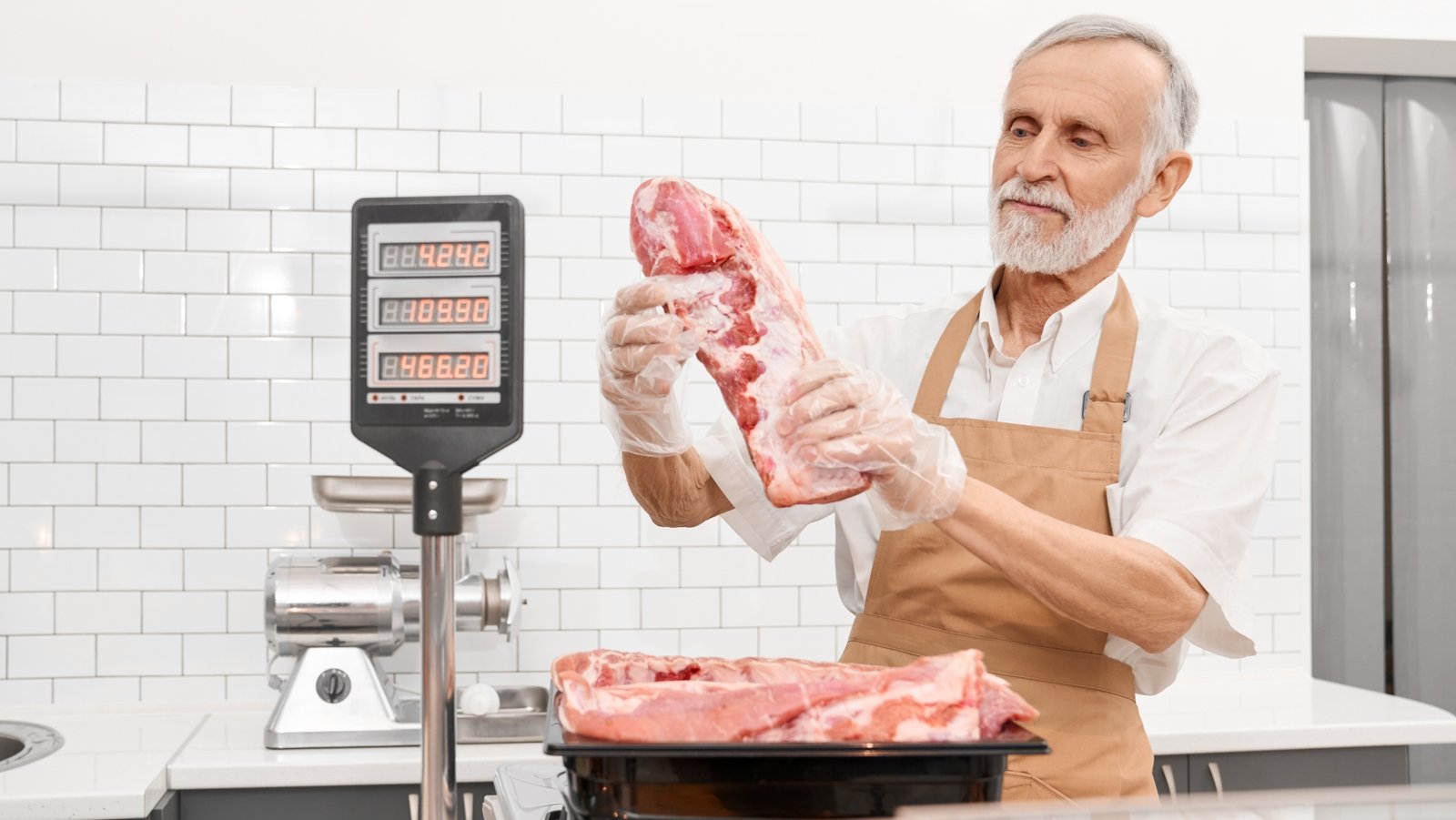








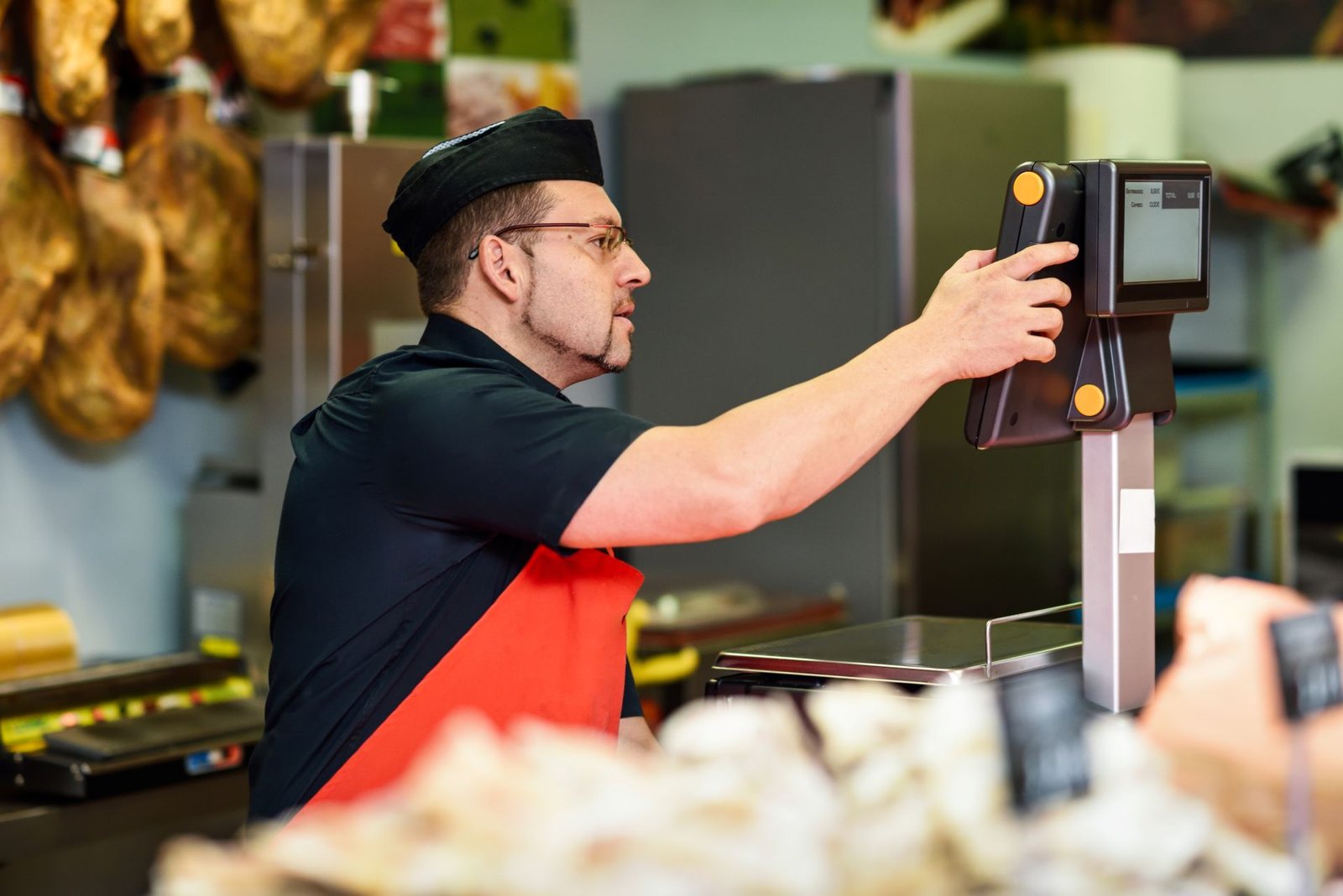
There are two fundamentally different ways to sell food by weight in a retail environment.
The first: the customer stands at the counter, the operator weighs the product, and both parties see the total price on the scale’s display. The transaction completes at the counter. No label is needed.
The second: the product is packaged before the customer arrives — wrapped, sealed, and placed in a case or on a shelf. The customer selects a package, takes it to checkout, and the cashier scans a barcode. The price on the receipt comes from the barcode on the package, not from a scale at the checkout lane.
The first workflow requires a price computing scale. The second requires a label printing scale. The distinction between those two workflows is the single most important decision when determining whether a label printing scale is right for your operation.
Table of Contents
What a Label Printing Scale Is
A label printing scale is a price computing scale with a built-in thermal label printer. It weighs the item, calculates the total price based on the stored price per pound, and immediately prints a self-adhesive label that is applied to the package before it leaves the counter or enters the self-service case.
A label printing scale weighs bulk or unpackaged products, computes prices, and prints labels that display essential product information for products sold in retail environments.
The label is the critical output. It transforms a weighed product into a scannable, shelf-ready package — one that a customer can select, verify, and carry to checkout without any additional staff interaction.
What Information Does a Label Printing Scale Print
The label produced by a label printing scale contains the commercial and compliance information that a pre-packaged product sold at retail is legally required to carry. A standard deli or grocery label includes:
Product name: The common name of the item — “Smoked Turkey Breast,” “Extra Sharp Cheddar,” “House-Made Potato Salad.”
Net weight: The weight of the product only, excluding packaging. This is the net quantity declaration required for random-weight packages under state weights and measures law (the Uniform Packaging and Labeling Regulation in NIST Handbook 130) and, for most foods, FDA’s 21 CFR 101.7. Meat and poultry labels fall under USDA FSIS rules.
Price per pound: The unit price at which the product is being sold.
Total price: Net weight multiplied by price per pound — the amount the customer pays at checkout.
Barcode: A price-embedded barcode — almost always in the GS1 format beginning with the digit “2” — that encodes both the PLU number and the total price. When the cashier scans this barcode at checkout, the POS system reads the price directly from the barcode. No manual entry required.
Pack date and sell-by date: Federal law does not require open dating on most foods (infant formula is the main exception), but some states require dates on certain perishables such as dairy or shellfish, and many retailers require them as policy. The scale prints the current date automatically as the pack date. The sell-by date is typically calculated from a stored shelf-life value in the PLU entry.
Ingredients: Many label printing scales can store and print a full ingredient list from the PLU entry, which FDA rules require on most packaged foods (some foods packaged in-store for direct sale have exemptions — see the FDA Food Labeling Guide).
Allergen information: Major food allergens — milk, eggs, fish, crustacean shellfish, tree nuts, wheat, peanuts, soybeans and sesame — must be declared on packaged food labels under the Food Allergen Labeling and Consumer Protection Act (FALCPA), as amended by the FASTER Act, which added sesame from January 1, 2023. Label printing scales can store and print allergen statements per PLU.
Store name and address: Printed on labels for products packaged at the retail location — identifying the establishment as the packer and distributor of the product.
How the Price-Embedded Barcode Works
The price-embedded barcode is the mechanism that connects the label printing scale at the deli counter to the POS terminal at checkout — without any manual data entry in between.
When a package is weighed and labeled, the scale encodes the total price into the barcode. The barcode begins with the digit “2” — a universally recognized signal that the barcode contains an embedded price. The POS system scans the barcode, identifies the “2” prefix, extracts the price, and adds the item to the transaction at that price automatically.
These labels are called “price embedded” because the price of the weighed package is embedded in the barcode. The PLU number and total price are both encoded within the barcode’s digit sequence, allowing the POS to extract both the product identity and the specific price for that individual package.
This means each package carries its own price. Two packages of sliced turkey weighing different amounts carry different barcodes with different embedded prices — but both scan correctly at checkout because each price is embedded individually in each label.
Do You Need a Label Printing Scale?
The decision comes down to one question: do any of your products leave the counter in a sealed package with a label, rather than being handed directly to the customer while they wait?
You Need a Label Printing Scale If:
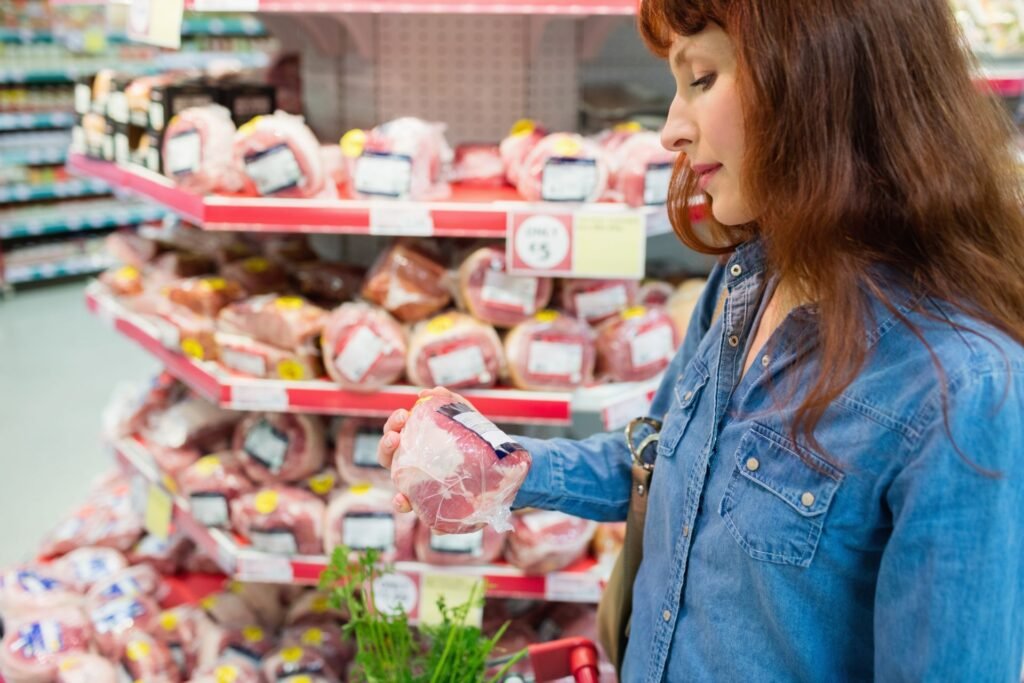
You pre-package deli products for a self-service case. Sliced meats, specialty cheeses, prepared salads, smoked fish — any product that is packaged at the counter and placed in a refrigerated self-service case for customers to select needs a price-embedded barcode label. A price computing scale cannot produce that label.
You package products for display before customers arrive. A bakery that packages muffins by weight before the store opens. A specialty food retailer that packages nuts and dried fruit from bulk bins during off-hours. Any pre-packaging workflow requires a label printing scale.
You need sell-by dates and ingredient lists on labels. A price computing scale displays the price. It cannot print a label with a sell-by date, an ingredient list, or allergen information. If your operation is required to display this information on packaged products — as it is for many packaged retail foods — only a label printing scale can produce compliant labels at the point of weighing.
Your checkout lanes scan barcodes rather than manually entering weights. If your POS workflow requires cashiers to scan a barcode on each weight-priced item rather than weighing it again at checkout, every such item must carry a price-embedded barcode label from a label printing scale.
You operate at high volume with pre-packaged products. A supermarket deli department packaging 200 items per shift cannot use a price computing scale and handwritten labels efficiently. Label printing scales make high-volume pre-packaging viable by printing accurate, consistent, scannable labels at the speed of weighing.
A Price Computing Scale Is Sufficient If:
Every transaction is served-to-order at the counter. The customer waits. The operator weighs. Both see the price. The transaction completes. No label is needed. No packaging is involved.
You sell exclusively at farmers’ markets or outdoor stands where products are weighed in front of the customer on demand, with no pre-packaging.
Your volume is too low to justify the investment. Label printing scales cost significantly more than equivalent price computing scales — typically two to five times the price of a comparable price computing model, depending on PLU capacity, label format options, and connectivity. A small specialty food retailer with minimal pre-packaging may find the cost-benefit math favors a price computing scale with a separate label printer connected via RS-232, rather than an integrated label printing scale.
Label Printing Scale vs Standalone Scale with External Printer
Label printing scales have a built-in printer and scale in one unit. Some retailers instead connect a price computing scale to a separate external thermal label printer via RS-232.
The integrated approach is cleaner — one device on the counter, one power connection, one maintenance item. It is the standard for any high-volume pre-packaging operation.
The separate approach gives some additional flexibility. The scale and printer can be positioned independently. If the printer fails, the scale continues to operate as a price computing scale for serve-to-order transactions while the printer is serviced. For lower-volume operations where pre-packaging is occasional rather than continuous, the separate approach may be more economical.
Both approaches require the scale component to be NTEP-certified for legal-for-trade use.
NTEP Certification for Label Printing Scales
A label printing scale used in any commercial transaction where price is determined by weight must be NTEP-certified. The printer component does not require separate certification — only the scale portion. But the weight used to calculate the price printed on the label must come from an NTEP-certified scale.
This matters specifically because the label’s printed price is a commercial representation. The net weight on the label is the legally declared net quantity. If the scale that produced that weight was not NTEP-certified, the label is not a compliant commercial representation — regardless of how accurately it was printed.
The CAS LP-1000 thermal label printing scale is NTEP-certified legal for trade, designed specifically for food service environments where items need to be pre-packed and priced for sale.
Verify the CC number in the NCWM NTEP database before purchase. Contact your local Weights and Measures office for inspection and sealing before the scale’s first commercial use. For a full explanation of how NTEP certification works, see our article on what is an NTEP scale and when do you legally need one.
Key Specifications to Evaluate
PLU count and storage: How many distinct products will be weighed and labeled? Each PLU stores product name, price per pound, ingredient list, allergen statement, and shelf-life for automatic sell-by date calculation. Size PLU memory to your current product count plus 30% growth headroom.
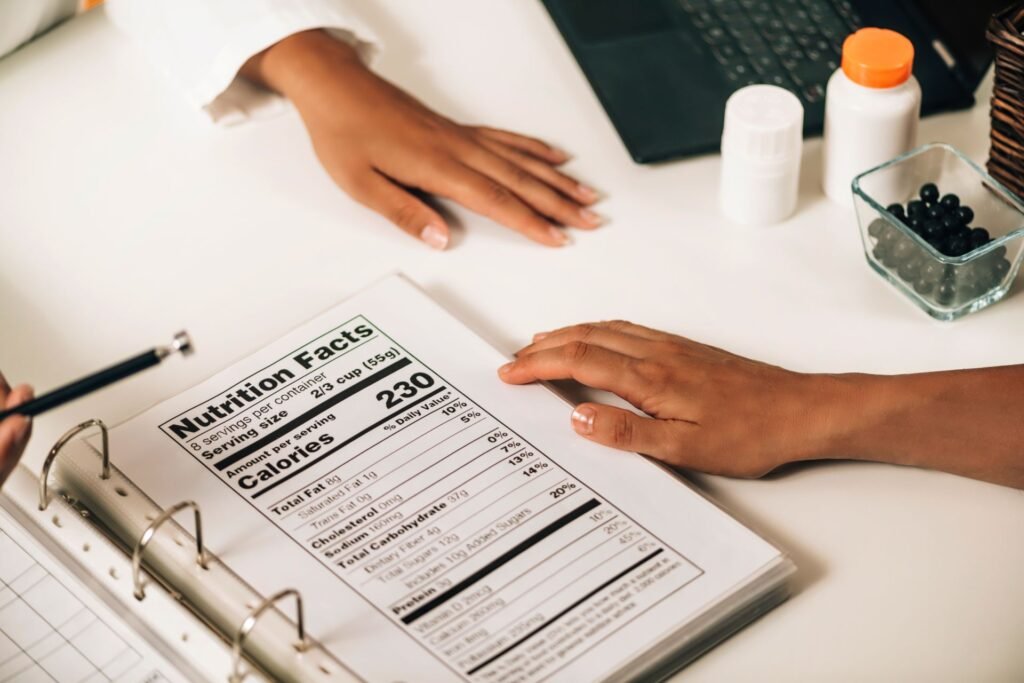
Label formats: How many label sizes and layouts does the scale support? Most label printing scales offer 20–50 standard label formats. Operations with nutritional labeling requirements need formats that accommodate a full Nutrition Facts panel. Confirm the available formats match your compliance needs before purchase.
Print speed: In a high-volume pre-packaging operation, print speed directly affects throughput. A scale that takes 3–4 seconds per label versus one that takes 1 second per label is a meaningful operational difference across hundreds of packages per shift.
Connectivity: RS-232, USB, Ethernet, and Wi-Fi options vary by model. Ethernet or Wi-Fi connectivity allows centralized PLU management — price changes made at a back-office computer propagate to all connected scales simultaneously, eliminating the need for manual PLU updates at each individual scale.
Label supply: Thermal label rolls must be compatible with the scale’s printer head width and core size. Confirm label roll availability and cost before specifying a model — label supply is an ongoing operational cost that varies significantly across scale brands and printer configurations.
FAQs
What is the difference between a label printing scale and a price computing scale?
A price computing scale weighs the item, calculates the total price, and displays it to both operator and customer on a dual screen. The transaction completes at the counter — no label is produced. A label printing scale does everything the price computing scale does and additionally prints a self-adhesive thermal label with the product name, net weight, price per pound, total price, barcode, sell-by date, and optional ingredient and allergen information. The label is applied to the package and scanned at checkout.
Do I legally need a label printing scale for my deli or grocery?
If any products leave your counter in a sealed package with a price label — for a self-service case, for display, or for customers to take to a checkout lane for scanning — you need a label printing scale. The printed label is a commercial and compliance document. It must be produced by an NTEP-certified scale and must include the legally required information for pre-packaged food products.
What is a price-embedded barcode?
A price-embedded barcode is a barcode — typically beginning with the digit “2” in the GS1 format — that encodes the specific price of an individual package in the barcode itself. When a cashier scans this barcode at the POS terminal, the system reads the price directly from the barcode. Each package carries its own embedded price, so two packages of the same product at different weights scan as two different prices.
How many PLUs does a label printing scale need?
Count every distinct product you weigh and label, and add 30% for growth and seasonal additions. A small deli counter with 30 products needs at least 40 PLUs. A full grocery deli with 100+ products needs several hundred PLUs. Supermarket-grade label printing systems store thousands of PLUs with full product descriptions, ingredient lists, and nutritional information.
Can a label printing scale replace a separate label printer?
Yes — for most retail food operations, an integrated label printing scale replaces both the price computing scale and a separate external label printer with a single device. The integrated approach is cleaner, requires less counter space, and eliminates the RS-232 cable and driver configuration between two separate devices. The separate approach gives more flexibility if the scale and printer need to be positioned independently or if the operation occasionally uses the scale for serve-to-order transactions without printing.
Conclusion
A label printing scale is the right instrument for any retail food operation where products are packaged before reaching the customer — pre-packaged deli items, bakery products by weight, specialty foods in the self-service case, and any other product that carries a label to checkout rather than being weighed at the counter.
It is not the right instrument — or an efficient use of the investment — for operations where all transactions are made-to-order, and every product is weighed directly in front of the customer.
The decision is not about scale quality or scale features. It is about workflow. Identify which transactions in your operation require a label on the package, and which do not. That answer determines whether a label printing scale is a necessity or an unnecessary cost.
For a complete guide to all the decisions involved in choosing the right scale type for your retail operation, see our article on how to choose a retail scale for your business. For a focused guide to deli counter scale specifications, see our article on best scale for a deli: what to look for and why it matters.
Sources
- National Institute of Standards and Technology, NIST Handbook 130 (2026): Uniform Packaging and Labeling Regulation.
- U.S. Food and Drug Administration, 21 CFR 101.7, Declaration of net quantity of contents.
- U.S. Food and Drug Administration, Food Allergies and FALCPA (as amended by the FASTER Act).
- USDA Food Safety and Inspection Service, Food Product Dating.
- National Conference on Weights and Measures, NTEP Certificates of Conformance database.
Last reviewed September 2026 by the Scale Blog editorial team. Labeling requirements depend on the product and jurisdiction; confirm with your regulator before finalising label formats.