







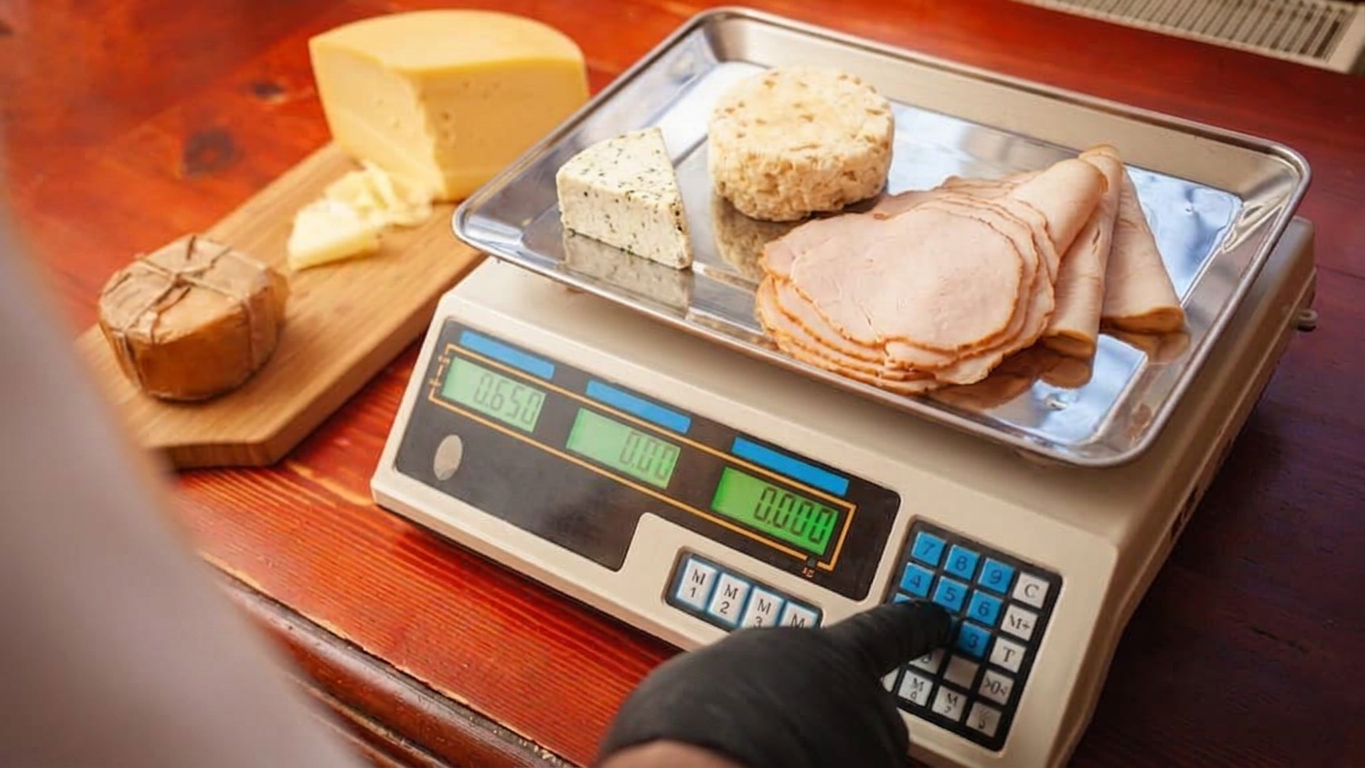
The deli counter is one of the most demanding retail weighing environments in any food business. Products change throughout the day — sliced turkey at breakfast, specialty cheese at lunch, prepared salads at dinner. Prices vary by product, by grade, and sometimes by the pound versus the ounce. Containers differ in weight. Staff turnover means the scale must be simple enough for a new operator to use confidently during the lunch rush.
The wrong scale at a deli counter creates friction on every transaction. The right one is invisible — it weighs accurately, computes the price instantly, prints a label cleanly, and moves to the next customer without hesitation.
This guide identifies every feature that separates a well-specified deli scale from one that creates daily problems, and explains what each feature means in the reality of a working deli counter.
Table of Contents
NTEP Certification — Non-Negotiable
Every deli scale used in a transaction in which a customer pays by weight must be NTEP-certified. No exceptions.
A deli counter is one of the clearest examples of a legal-for-trade application in US retail. The customer asks for half a pound of smoked turkey. The operator slices it, places it on the scale, reads the weight, and tells the customer the price. That price is based entirely on what the scale reads. That scale must carry a Certificate of Conformance number from the National Type Evaluation Program.
Clearly, for commercial locations that calculate sale price based on weight, such as delis, markets, bakeries, or butcher shops, the best food scale is definitely a legal-for-trade scale.
Additionally, food-contact equipment must be cleanable and made of safe, corrosion-resistant materials under the FDA Food Code as adopted by your state, and many health departments expect NSF-certified (or equivalent) scales. NSF/ANSI standards cover the materials, construction and design. NTEP certification confirms commercial accuracy compliance. NSF certification confirms food safety compliance. A deli scale needs both.
Before putting any NTEP-certified deli scale into service, contact your local Weights and Measures office to schedule an inspection and sealing. For a full explanation of this requirement, see our article on what is an NTEP scale and when do you legally need one.
Price Computing vs Label Printing — Which Type Does Your Deli Need?
This is the first functional decision for any deli counter scale purchase.
Price Computing Scale (Serve-to-Order)
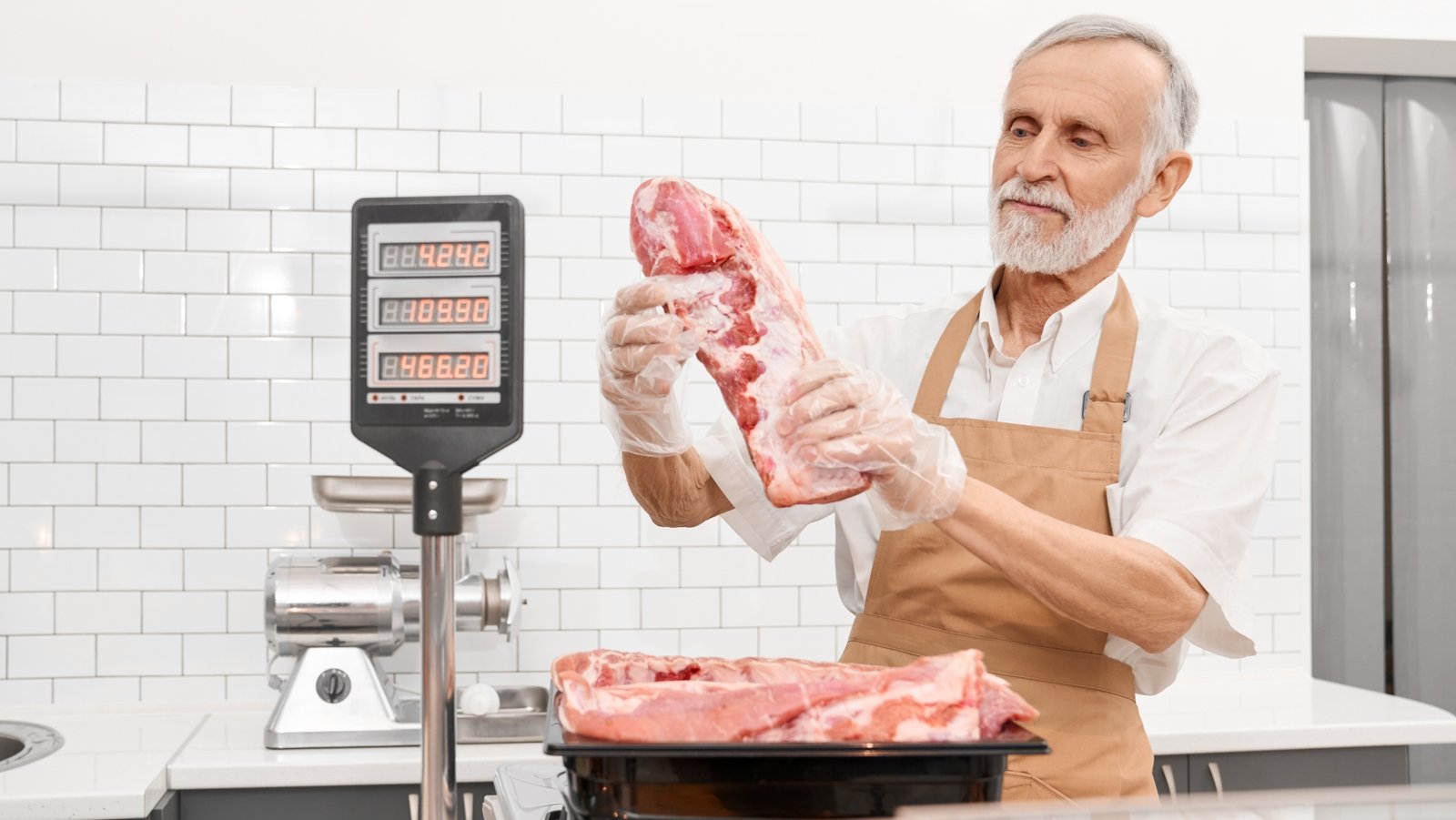
A price computing scale weighs the item, multiplies it by the price per pound, and displays the total price — to both the operator and the customer — on a dual display. The customer sees the weight and price in real time. The operator reads the total and completes the transaction.
This is the appropriate scale for a deli counter where products are sliced or portioned and sold directly across the counter. The customer watches the transaction. No label is required because the transaction completes at the counter.
Label Printing Scale (Pre-Packaged Products)
A label printing scale performs everything the price computing scale does — but also prints a thermal label on the spot. The label includes the product name, weight, price per pound, total price, a barcode, and optionally an ingredients list, allergen information, and sell-by date.
This is the appropriate scale when deli products are pre-packaged for the self-service case — pre-sliced meats, packaged specialty cheeses, grab-and-go prepared foods. The customer selects the package from the case. The barcode on the label scans at checkout. The price is embedded in the barcode.
As soon as an item is weighed, the deli scale calculates the price per ounce or pound based on what is programmed, prints a barcode label with the total cost for scanning at checkout, and the sold item is automatically deducted from inventory through POS integration.
Many deli operations need both functions. The front-counter scale handles serve-to-order transactions. The back-counter label printing scale handles pre-packaging. For a detailed breakdown of label printing scales and when the investment is justified, see our article on what is a label printing scale and do you need one.
Capacity and Readability
Most deli items — sliced meats, cheeses, prepared salads — weigh well under 5 lb per portion. A 30 lb capacity scale with 0.01 lb readability covers the vast majority of deli counter transactions with precision.
The 0.01 lb readability matters in a deli environment. At $10.99 per pound for specialty cheese, a 0.01 lb difference in the reading is a $0.11 difference in what the customer pays. Over hundreds of transactions, that difference compounds in one direction or the other — either the customer is consistently overcharged by small amounts, or the deli is consistently undercharging.
The dual-range design — a scale with 30 lb capacity at 0.01 lb readability and 60 lb capacity at 0.02 lb readability — handles both light portions and heavier orders on a single instrument.
For a deli that also handles large bulk items — whole cuts, large catering orders, full wheels of cheese — a 60 lb capacity model may be more appropriate. The key is ensuring the lightest items you regularly sell still fall within the scale’s minimum weighing range, where accuracy is guaranteed.
PLU Count — How Many Do You Need?
PLU — Price Look-Up — is the stored product memory that allows the operator to recall a product name and price per pound with a single key press rather than re-entering the price for every transaction.
Count your regular deli products. Add 20–30% for growth and seasonal additions. That figure is your minimum PLU requirement.
A small deli counter with 15–20 regular products needs at least 25–30 PLUs. A full-service grocery store deli with 50+ sliced meats, cheeses, and prepared foods needs 100 or more. A supermarket deli with label printing capability needs hundreds — some label printing scale systems store thousands of PLUs with full product descriptions, ingredient lists, and nutritional information.
Speed keys — direct-access PLU keys pre-assigned to the most common products — significantly reduce transaction time during peak periods. Scales with 20–40 speed keys allow operators to select the most common deli products with a single press rather than entering the PLU number. During a busy lunch rush, this time saving is substantial.
Tare memory per PLU is equally important. Different containers — deli paper, plastic trays, foam trays of different sizes — have different weights. Storing the tare weight as part of each PLU means the operator does not need to manually tare the scale for every container type on every transaction. The correct tare is applied automatically when the PLU is recalled.
Platform Design and Hygiene
The deli counter platform contacts raw meat, sliced deli products, prepared foods, and the containers used to hold them — multiple times per shift. Platform hygiene is not optional in this environment.
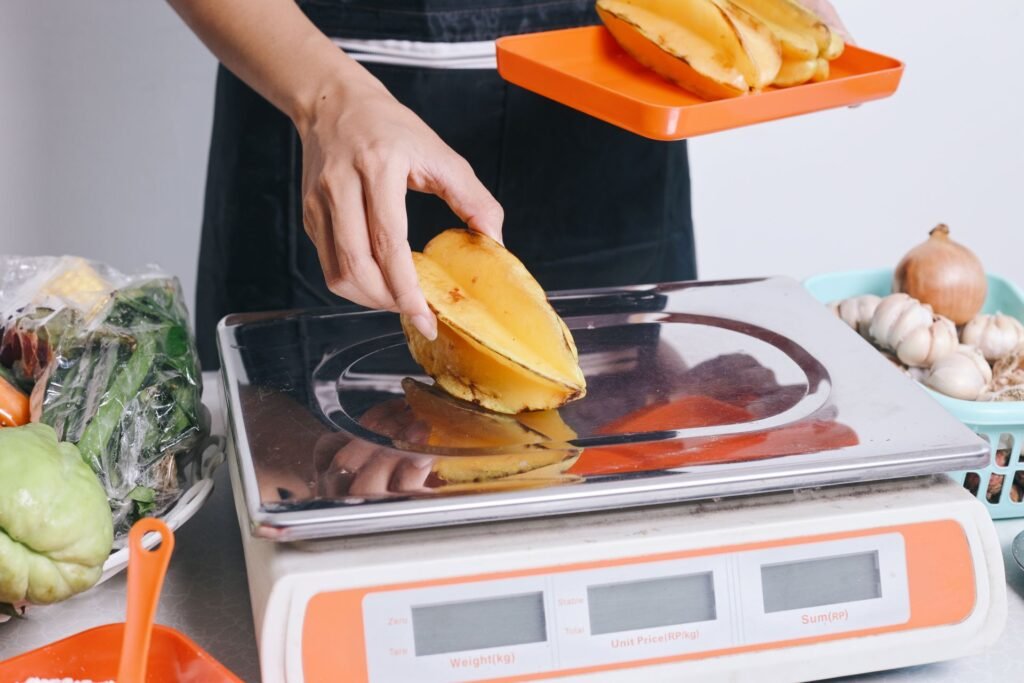
Stainless steel is the standard choice. Food codes require food-contact surfaces to be smooth, durable, corrosion-resistant and nonabsorbent, and for a deli scale platform that effectively means stainless steel. Stainless steel resists corrosion from meat juices, dairy residue, and food-safe cleaning chemicals. It can be sanitized repeatedly without degrading.
Removable platform. A platform that lifts out of the scale for cleaning under the platform surface is a practical necessity in a busy deli environment. Meat and cheese residue accumulate in the gap between the platform and the scale body. A removable platform allows thorough cleaning. A fixed platform creates a hygiene gap that daily wiping cannot fully address.
NSF certification. In its deli scale guide, select a scale with food-grade stainless steel construction that is NSF-certified to ensure it meets health department standards.
IP rating. A deli counter scale is wiped down with damp cloths and sanitizers multiple times each day. A minimum IP54 rating protects the indicator from the moisture and cleaning chemicals that are routine in this environment. For deli operations that use wet cleaning methods — rinsing the counter area — an IP65 rating provides additional protection.
Dual Display — Customer Visibility
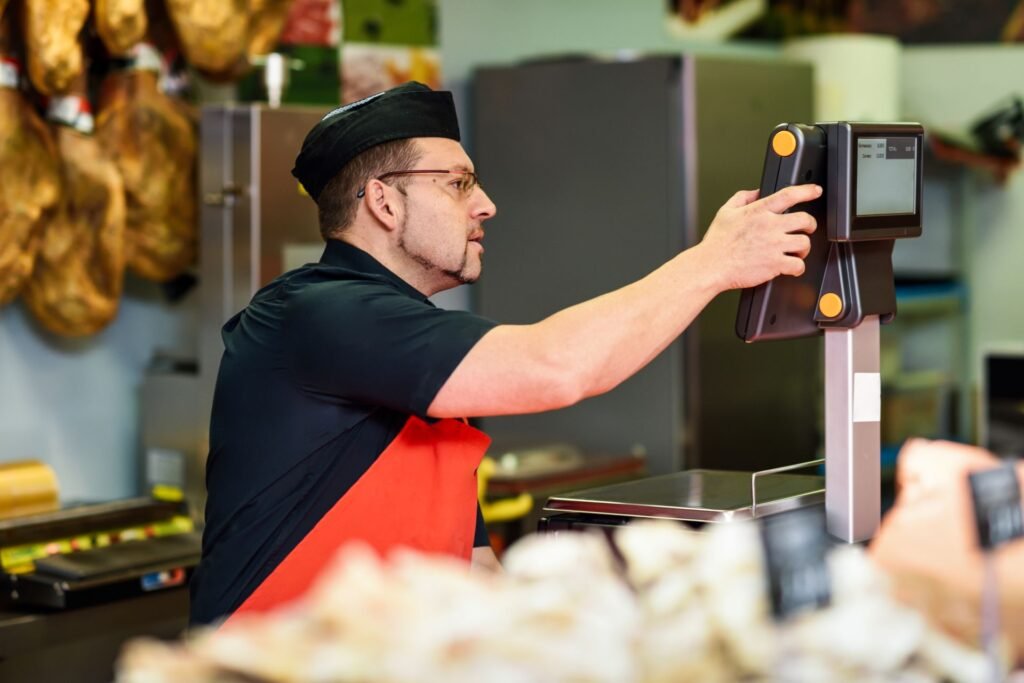
Every deli scale used in a transaction in which the customer pays by weight must have a customer-facing display. In most US states, this is a legal requirement — not a preference.
The customer must be able to see the weight and total price as the transaction occurs. This is both a legal requirement under most state Weights and Measures regulations and a practical customer trust issue. Customers who can see the scale reading in real time — and verify that what is being charged matches what was placed on the scale — are customers who trust the counter. Customers who cannot see the scale have no way to verify the accuracy of what they are being charged.
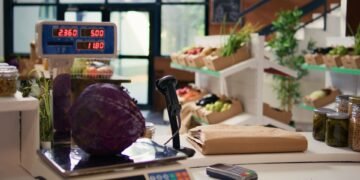
Most deli scales feature a rear-facing customer display integrated into the scale body. Some use a pole-mounted display that provides greater height and visibility from a customer’s standing position. Either satisfies the legal requirement and the practical need.
POS Integration
A deli scale that connects directly to the store’s POS system eliminates the manual step of entering the deli item price into the cash register separately from the weighing transaction.
In an integrated system, the scale weighs the product, the label printer produces a barcode label with the price embedded, and the cashier at checkout scans the barcode. The POS reads the weight and price from the barcode. No manual price entry. No transcription error. With inventory integration, the sold item can also be automatically deducted from inventory — keeping the stock count current without a separate inventory update.
For smaller deli operations without a full POS system, RS-232 connectivity to a receipt printer or label printer is the standard. For operations with full grocery POS infrastructure, Ethernet connectivity to the store network allows centralized PLU management — price changes made at the back office propagate to all networked scales simultaneously.
What to Avoid When Buying a Deli Scale
Buying a non-NTEP scale for the deli counter. This is the single most consequential purchasing mistake. A non-certified scale in a legal-for-trade deli application is a Weights and Measures violation from the moment it processes its first transaction.
Under-specifying PLU count. Buying a scale with 10 PLUs for a counter that sells 40 products means manual price entry on most transactions — which is slower and more error-prone than PLU recall.
Ignoring the platform. A scale with a plastic platform or a fixed, non-removable platform creates a daily hygiene problem in a deli environment. The cost difference between a basic platform and a removable stainless steel NSF-certified platform is modest. The health inspection consequence of a non-compliant platform is not.
Skipping label printing capability when pre-packaging is part of the operation. If any products leave the deli counter in a sealed package with a label — even occasionally — a label printing scale pays for itself quickly in time saved and label accuracy compared to handwritten or manually generated labels.
Choosing capacity without checking the minimum weighing range. Every scale has a minimum weighing range — the lightest load it can accurately measure. A 60 lb scale may not accurately weigh a 2 oz sample of specialty spice. Confirm the minimum weighing specification for the lightest products sold at the counter.
FAQs
Does a deli scale need to be NTEP-certified?
Yes — without exception. Any deli scale used in a transaction where a customer pays based on weight is required to be legal for trade — in practice an NTEP-certified model — under state weights and measures laws. Most health departments also expect NSF-certified (or equivalent) food-contact equipment. Before its first commercial use it must be inspected and sealed, or placed in service by a registered service agency, depending on your state.
What is the difference between a price computing deli scale and a label printing deli scale?
A price computing scale weighs the product, calculates the total price, and displays it to both the operator and customer on a dual display — appropriate for serve-to-order counter transactions. A label printing scale does everything the price computing scale does and also prints a thermal label with product name, weight, price, barcode, and optional ingredient information — appropriate for pre-packaged deli products sold in the self-service case.
What capacity deli scale do I need?
A 30 lb capacity scale with 0.01 lb readability covers most deli counter transactions — sliced meats, cheeses, prepared foods — with the precision that high-price-per-pound specialty products require. For operations that also handle large bulk items, a dual-range 30/60 lb model provides both fine readability at the lower range and sufficient capacity for heavier orders.
How many PLUs does a deli scale need?
Count your regular products sold by weight and add 20–30% for growth. A small counter with 20 products needs at least 25–30 PLUs. A full-service grocery deli with 50+ products needs 100 or more. Choose a scale with more PLU capacity than you currently need — running out of PLU memory during a busy period is a real operational problem.
Does the deli scale platform need to be stainless steel?
Yes. Any platform that contacts deli products — meat, cheese, prepared foods — should be stainless steel. NSF certification documents that the design and materials meet recognised food-equipment standards. A removable stainless steel platform is the practical specification for any deli counter where the platform is cleaned multiple times per shift.
Conclusion
A deli scale is the instrument at the center of every transaction on your counter. It determines what your customers are charged, how quickly your staff can serve them, whether your operation is legally compliant, and whether your health inspector finds a food-safe setup or a hygiene problem.
Getting the specification right means starting with NTEP and NSF certification, choosing the correct type for your transaction workflow — price computing for serve-to-order, label printing for pre-packaged products — and then matching capacity, PLU count, platform design, and connectivity to the actual demands of your counter.
For a complete overview of all the decisions involved in choosing any retail scale, see our article on how to choose a retail scale for your business.
Sources
- NIST Handbook 44 (2026), Section 2.20 Scales — nist.gov
- FDA Food Code 2022, Chapter 4 Equipment — fda.gov
- NSF/ANSI 169 and 2 food equipment standards — nsf.org
- NCWM National Type Evaluation Program — ncwm.com
Last reviewed September 2026 by the Scale Blog editorial team. Confirm health-code and weights and measures requirements with your local authorities.