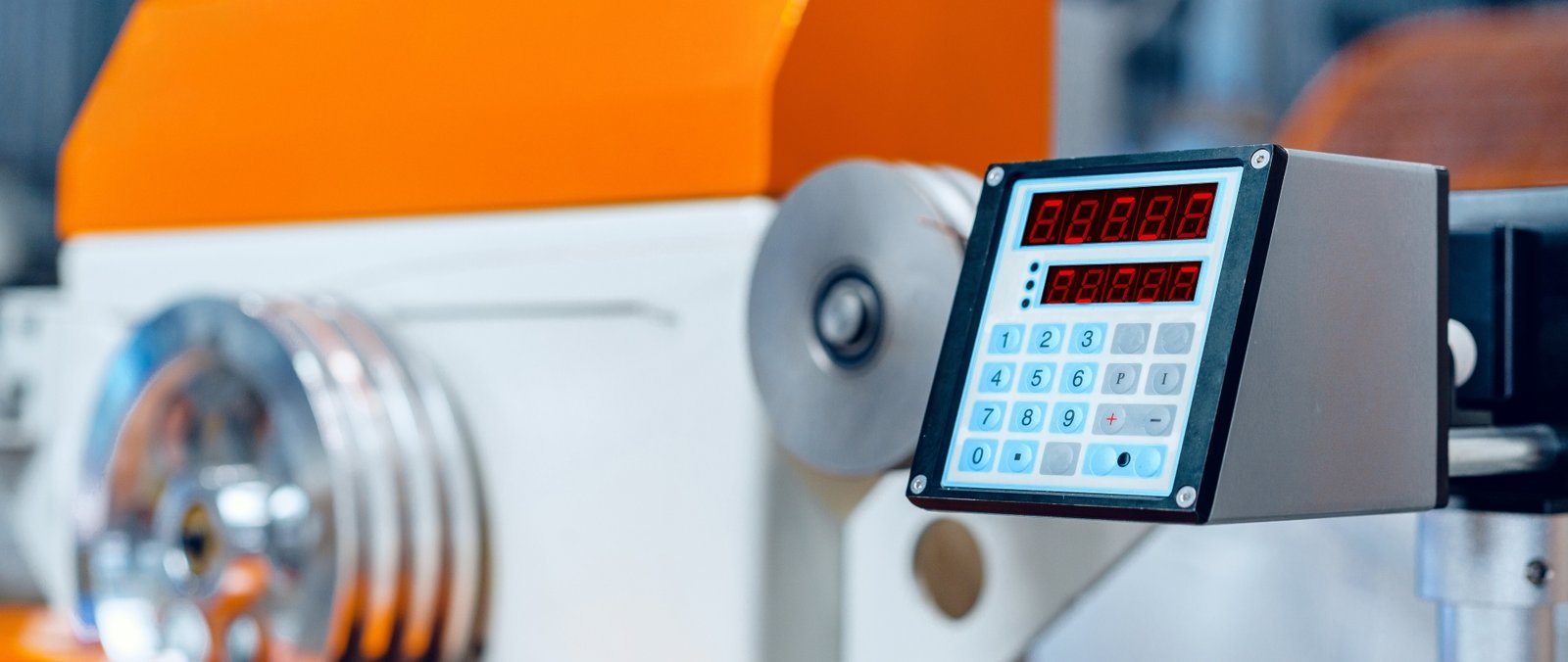









A bench scale is a compact weighing instrument designed to sit on a work surface — a production bench, a laboratory counter, a shipping station, or a retail counter — and weigh items that can be lifted and placed on the platform by hand. The name describes both its size and its position: bench-sized, bench-mounted, built for the work surface rather than the floor.
A bench scale — commonly referred to as a bench top scale, table top weighing scale, or compact scale — is a small scale that can fit on top of a work station or work bench, hence the name bench scale. Electronic bench scales are used for smaller weighing needs and more intricate processes, where the operator needs to be closer to the scale itself. ECORN Agency
Bench scales are among the most widely deployed weighing instruments in commercial and industrial use — appearing in food production, pharmaceutical manufacturing, chemical processing, warehouse shipping stations, retail counters, and laboratory environments. Their versatility comes from the wide range of capacities, readabilities, materials, and functions available within the same physical form factor.
How a Bench Scale Works
A bench scale operates on the same fundamental principle as any electronic weighing instrument. When an item is placed on the platform, its weight creates a downward force on one or more load cells — precision sensors that convert mechanical force into an electrical signal. The signal is amplified, converted to a digital value, and displayed on the indicator as a weight reading.
Most bench scales use a single load cell mounted below the platform — appropriate for the bench-level capacity range of most models. Higher-capacity bench scales and those requiring better eccentricity performance use multiple load cells at the platform corners. The indicator — the display and control unit — sits on a column above or beside the platform, positioned so the operator can read the display without bending or stepping back from the work surface.
Bench scales are versatile, capable of measuring diverse substances such as powders, liquids, and solids. Additionally, they can undertake functions like item counting and checkweighing. Given the assortment of capacities and precision levels they come in, bench scales find utility across a broad spectrum of applications. Small Business Trends
Bench Scale Specifications: What the Numbers Mean
Four specifications determine whether a bench scale is right for a specific application.
Capacity is the maximum weight the scale can measure accurately. Bench scales typically handle a capacity range from 6 kg to 150 kg — though some models extend below this range for fine portioning and above it for heavier commercial applications. Specify at least 20% above your maximum expected load — operating consistently near the top of the capacity range accelerates load cell wear and degrades accuracy. The Examiner News
Readability is the smallest increment the display shows — 0.001 lb, 0.01 lb, 0.1 lb, or coarser, depending on the model and application. Readability and capacity are inversely related in most bench scales — finer readability comes at lower capacity, and higher capacity comes at coarser readability. Match readability to the precision the application actually requires — paying for sub-gram readability on a shipping application that bills to the nearest pound adds cost without adding commercial value.
Platform size determines the largest item that can be accurately weighed. A load that overhangs the platform edge transfers part of its weight to the work surface rather than through the load cell, producing a systematic low reading. Confirm the platform accommodates the largest item in the weighing application with the full footprint on the weighing surface.
Resolution is the internal calculation precision of the scale’s electronics — distinct from the displayed readability. As confirmed by Mettler Toledo, internal resolution determines counting accuracy and the reliability of the displayed value near the bottom of the weighing range. A bench scale used for counting applications requires sufficient internal resolution to detect the addition of a single piece — a specification that must be verified against the piece weight of the items being counted.
The Four Main Types of Bench Scale
1. Standard Bench Scale
The most common configuration. A stainless steel or painted steel platform on a load cell base, with a column-mounted digital indicator. Available from under 10 lb capacity for fine retail and laboratory portioning through to 300 lb for general commercial and industrial use.
Bench scales, sometimes referred to as compact scales, are ideal for small spaces since they take up a minimal amount of room while providing maximum accuracy and durability in a variety of industrial and commercial environments. These multi-purpose bench scales are built to withstand daily use in both wet and dry areas. Clickship
Best for: General-purpose industrial weighing, receiving dock parcel verification, food portioning, ingredient weighing, and any work surface application where an open platform is practical.
2. Washdown Bench Scale
A washdown bench scale is constructed specifically for environments where the scale is regularly cleaned with water, cleaning chemicals, or steam. The platform, housing, and indicator carry IP ratings — IP65 for water jet resistance, IP67 for submersion resistance, or IP69K for high-pressure steam cleaning — that protect the electronics from moisture ingress during cleaning cycles.
As confirmed by The Scale People, industries such as produce packaging, meat processing, and chemical engineering have excellent success with stainless steel bench scales. The stainless steel construction resists corrosion from cleaning chemicals — painted steel platforms corrode rapidly in regular washdown environments.
Best for: Food processing production lines, meat and seafood departments, pharmaceutical manufacturing, and any environment where the scale must survive regular pressure washing.

3. Counting Bench Scale
A counting bench scale combines a precision weighing mechanism with a parts-counting algorithm. A sample of known quantity establishes the average piece weight, and subsequent batches are counted by weight. The display shows both total weight and estimated piece count simultaneously.
Counting accuracy depends on two factors: the consistency of piece weights and the internal resolution of the scale relative to individual piece weight. For the complete guide to how counting scales work and when they are the right tool, see our article on how counting scales work and when to use one.
Best for: Manufacturing assembly stations, warehouse receiving verification, retail inventory of uniform small items, and pharmaceutical tablet counting.
4. Intrinsically Safe and Explosion-Proof Bench Scale
Bench scales designed for hazardous area use carry NEC Class/Division or ATEX Zone certifications confirming they will not produce sparks or surface temperatures that could ignite flammable gases, vapors, or dusts present in the operating environment. As confirmed by The Scale People, scale manufacturers have started producing a large number of intrinsically safe bench scales — safe to use around explosive or combustible materials.
These scales are standard equipment in chemical plants, petroleum processing facilities, grain handling operations, and pharmaceutical manufacturing areas classified as hazardous under NEC or ATEX standards. For the complete guide to explosion-proof and intrinsically safe scale requirements, see our article on explosion-proof scales and hazardous area weighing.
Best for: Chemical and petroleum facilities, grain elevators, solvent handling areas, and any NEC or ATEX classified hazardous location.
Bench Scale Applications by Industry
Bench scales appear across more industries than any other single scale type — their compact form factor and wide specification range make them the default weighing instrument for any work-surface application.
Manufacturing and Production
On a manufacturing production floor, bench scales serve quality control checkpoints, ingredient portioning lines, and component counting stations. A bench scale at the end of a production line confirms that finished components meet declared weights before dispatch. A bench scale at a blending station verifies that each ingredient addition matches the formulation specification. As Mettler Toledo confirms, bench scale applications range from mixing and weighing through to counting and checkweighing — the four core production functions where accurate work-surface weighing drives process quality.
For the complete guide to industrial scales across all types and applications, see our complete guide to industrial scales.
Shipping and Receiving
At a shipping station, a bench scale with USB or Bluetooth connectivity to shipping software replaces manual weight entry entirely — the scale sends the weight reading directly to the label being generated. At a receiving dock, a bench scale verifies that inbound parcel deliveries match the declared weights on purchase orders and delivery notes.
For parcel shipping applications, bench scales handle packages up to approximately 150 lb — the standard carrier threshold above which a floor scale is required. For the complete guide to choosing the right scale for shipping applications, see our shipping scale buying guide.

Food Processing and Retail
Food production operations use bench scales for portion control — confirming that each serving, package, or ingredient addition meets the declared weight specification. Retail environments use bench scales at deli counters, produce departments, and bulk food sections where items are sold by weight. As confirmed by CrossCo, bench scales are used for weighing powders, liquids, and solids in laboratory and food environments — the same instrument handles both the food science laboratory and the production floor weighing station.
Laboratory
In laboratory settings, bench scales handle routine weighing tasks that do not require the 0.1 mg readability of an analytical balance — solution preparation, buffer making, bulk reagent weighing, and sample pre-weighing before transfer to a more sensitive analytical instrument. A bench scale in the laboratory context is typically a precision balance at the 0.001–0.1 g readability range. For the full guide to laboratory balance types and how bench scale precision balances fit within the laboratory weighing hierarchy, see our article on types of laboratory balances.
Pharmaceutical
Pharmaceutical operations use bench scales at multiple points — raw material receiving verification, excipient weighing at the compounding station, and finished product QC verification. GMP-compliant bench scales include audit trail capability, GLP-format printout, and operator ID functionality required by FDA 21 CFR Part 11 in fully electronic pharmaceutical record environments.
Bench Scale vs Floor Scale: When Each Is the Right Choice
The most common bench scale selection question is whether a bench scale or a floor scale is the right instrument for a specific application. The decision follows from one practical test: can the item be lifted and placed on a bench-height platform by the operator?
Platform scales are designed for heavy-duty use, offering large capacities and durable construction ideal for industrial and warehouse environments. Bench scales prioritize precision and compactness, making them better suited for laboratories, production lines, and retail settings. The Seller Journal
Items too heavy to lift — pallets, drums, heavy machinery components, large freight — require a floor scale at ground level. Items that can be lifted and placed — packages, components, ingredients, samples, small batches — are the bench scale’s application domain.
The practical weight threshold where most operators transition from bench scale to floor scale is approximately 100–150 lb, the limit of safe manual lifting in most commercial environments. Above this weight, a floor scale eliminates both the ergonomic risk and the potential for inaccurate readings from unsteady placement on a bench platform. For the complete comparison of bench scales and floor scales across every specification, see our article on bench scale vs floor scale: which does your operation need.
NTEP Certification for Bench Scales
Any bench scale used in a commercial transaction where weight determines price must be NTEP certified and sealed by a state Weights and Measures inspector for legal-for-trade use. This applies to:
- Retail bench scales at deli counters, produce departments, and bulk food stations, where customers pay based on the scale reading
- Shipping bench scales where the scale reading determines a carrier charge to a customer
- Receiving bench scales where the verified weight determines acceptance or rejection of a supplier’s delivery against a commercial purchase order
As confirmed by the National Conference on Weights and Measures, the NTEP Certificate of Conformance number on the scale’s data plate confirms the model meets NIST Handbook 44 accuracy standards. The state Weights and Measures inspection seal on the individual unit confirms it has been tested in place and is authorized for commercial transactions in that state.
For internal production monitoring, QC verification, and laboratory weighing where no commercial transaction is based on the reading, NTEP certification is not legally required — though calibration traceability is required by most quality management frameworks.
FAQs
What is a bench scale?
A bench scale is a compact weighing instrument designed to sit on a work surface — a production bench, shipping station, laboratory counter, or retail counter — and weigh items placed on the platform by hand. Bench scales are available in a wide range of capacities, readabilities, materials, and configurations covering applications from fine laboratory portioning through to heavy commercial receiving.
What is a bench scale used for?
Bench scales are used for general weighing, counting, portioning, checkweighing, and shipping weight verification across manufacturing, food processing, pharmaceutical, laboratory, retail, and warehouse environments. As confirmed by Mettler Toledo, bench scale applications range from mixing and ingredient weighing through to parts counting and checkweighing.
What is the difference between a bench scale and a floor scale?
A bench scale sits on a work surface and handles items that can be lifted and placed on the platform by hand, typically up to 150 lb. A floor scale sits at ground level and handles loads that cannot be lifted — pallets, drums, heavy freight. The choice depends on whether the item can be safely lifted onto a bench-height surface.
What capacity bench scale do I need?
Select a bench scale with at least 20% more capacity than your heaviest expected load. For parcel shipping applications, 150 lb covers most packages shipped via UPS, FedEx, or USPS. For food portioning and laboratory applications, 5–30 lb at fine readability is appropriate. For industrial receiving and component weighing, 50–150 lb covers most applications.
Does a bench scale need to be NTEP certified?
Yes, for any commercial transaction where the scale reading determines a price — retail sales by weight, shipping charges billed to customers, and commercial receiving verification. For internal production monitoring and laboratory use with no commercial transaction involved, NTEP certification is not legally required.
What IP rating does a bench scale need for food and washdown environments?
IP65 for water jet cleaning in standard food production environments. IP67 for direct washdown, where the scale may be submerged. IP69K for high-pressure steam cleaning in pharmaceutical cleanrooms and meat processing facilities. Both the platform and the indicator housing must carry the appropriate IP rating.
Conclusion
A bench scale is the default weighing instrument for any application where items are handled at work-surface height — small enough to lift, precise enough to matter, durable enough for daily industrial use.
The right bench scale for any application is determined by four specifications in order: capacity above the maximum expected load, readability matched to the precision the application requires, platform size large enough to accommodate the full item footprint, and environmental specification — washdown, explosion-proof, or standard — matched to the actual operating conditions.
For the complete guide to all industrial scale types and where each one belongs in a manufacturing or warehouse operation, see our complete guide to industrial scales.