
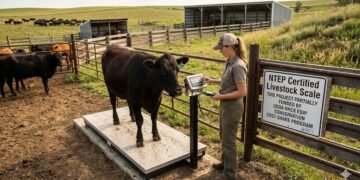




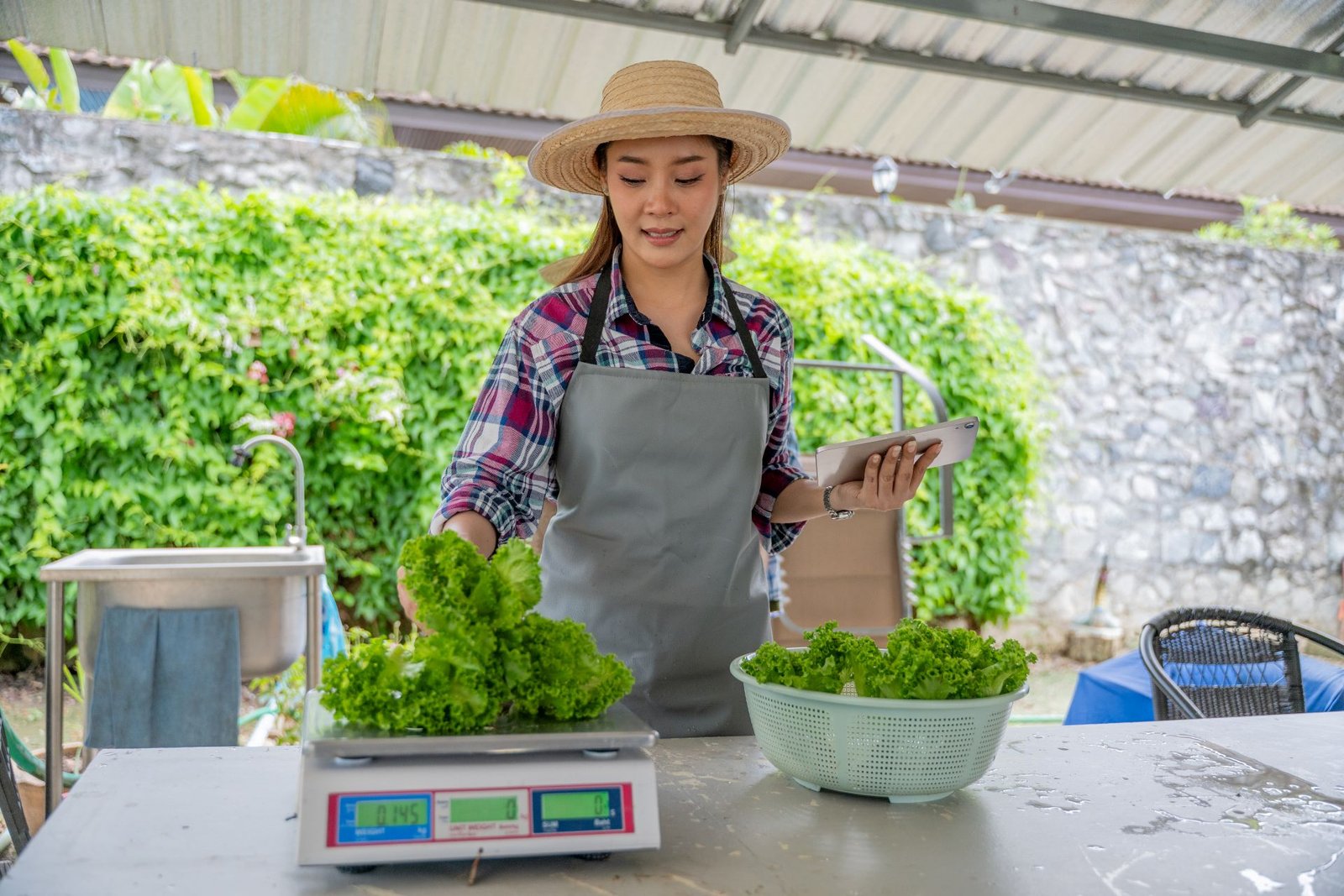
Most new farmers market vendors spend weeks planning their display, their pricing, their product mix, and their signage. They spend almost no time on the scale — until an inspector shows up at the market and the scale fails inspection, or is not NTEP-certified, or has never been sealed for legal-for-trade use.
A scale violation at a farmers’ market is not a paperwork issue. It is an immediate stop-use order on the device. In most states, it means no more sales by weight until a compliant scale is in place and inspected. For a vendor whose entire product line is sold by the pound, that means packing up and going home.
This guide covers everything you need to know about farmers market scales before your first market day — the legal requirements, the right scale type, the specifications that matter for outdoor use, and what you must do before the first transaction.
Table of Contents
The Legal Requirement: NTEP Certification Is Mandatory
Every scale used at a farmers’ market to sell products by weight must be NTEP-certified. This applies in every US state. It applies whether you sell produce, honey, baked goods, meat, cheese, or any other product priced by the pound or ounce.
NTEP stands for National Type Evaluation Program. It is the national type-evaluation program run by the National Conference on Weights and Measures (NCWM) that confirms a scale meets the accuracy and construction requirements of NIST Handbook 44. A scale that passes NTEP evaluation carries a Certificate of Conformance — a CC number — on its data plate.
State agriculture and Weights and Measures programs enforce this requirement at farmers’ markets directly. In North Carolina, for example, the state Department of Agriculture describes inspectors checking scales at farmers markets. In many states inspections happen during the season and can be unannounced. Inspectors visit markets throughout the season — not just at the start of the year.
Many markets and state agriculture departments require NTEP-certified scales — but many inexpensive scales sold online are not certified, so check for a Certificate of Conformance number before you buy. Some farmers’ markets require proof of NTEP certification and a current Weights and Measures seal before they will allow a vendor to sell by weight at all.
A non-NTEP scale used at a farmers’ market is not simply a compliance risk. Every transaction conducted on it is legally invalid. Any state inspector finding a non-certified scale in commercial use can issue a stop-use order on the spot.
Before the First Market Day: State Inspection and Sealing
Purchasing an NTEP-certified scale is the first step. Before using it in any commercial transaction — including your first day at the market — it must be inspected and sealed by a state or county Weights and Measures official.
Washington’s Farmers Market Management Toolkit, for example, says scales must also be inspected and have a sticker showing when they were last serviced. Vendors are responsible for ensuring their own scale is inspected before use.
The inspection process involves a Weights and Measures official testing the scale’s accuracy with certified test weights, verifying the CC number against the NTEP database, and — if the scale passes — affixing a seal. That seal is the physical evidence that the specific unit has been verified as compliant for commercial use in your state.
Some states require a license or registration for any commercial weighing device before it can be used. In Colorado, for example, Colorado Farm to Market explains that a device license is needed before commercial use. Requirements differ by state — contact your state’s Department of Agriculture or Weights and Measures office to confirm what is required before your first market day. Find your state office through the NIST state Weights and Measures directory.
Many states hold farmers market scale clinics — inspection events organized specifically for market vendors — where inspectors come to a central location to certify scales for a season. In North Carolina, NC Cooperative Extension reports that these clinics are often free. Check with your local Cooperative Extension office, state Department of Agriculture, or farmers market manager to find out if a clinic is scheduled near you.
The Right Scale Type for Farmers Markets
A farmers’ market scale is almost always a portable, battery-operated price computing scale. It weighs the product, multiplies by the price per pound, and displays the weight, unit price, and total price simultaneously to both the vendor and the customer on a dual display.
This is the standard instrument for direct-to-consumer sales by weight in an outdoor setting. It is compact, self-contained, and battery-powered — none of which requires an electrical outlet at the booth.
What a Farmers’ Market Scale Must Do
Weigh accurately to 0.01 lb. At $3.00 per pound for heirloom tomatoes, a 0.01 lb reading difference is $0.03 per transaction. At $12.00 per pound for specialty mushrooms, the same 0.01 lb difference is $0.12. Across hundreds of transactions per market day, accumulated small errors — in either direction — compound significantly.
Display to both the vendor and the customer simultaneously. NIST Handbook 44 (G-UR.3.3) requires commercial devices to be positioned so the customer can see the indications and the weighing, and computing scales generally show weight and price on the customer side. Washington’s toolkit likewise says scales must be positioned so customers can observe the weighing operation and the weight displayed. A scale with only an operator-facing display is not compliant for customer-facing transactions in most jurisdictions.
Operate on battery. Most farmers’ market booths do not have access to electrical power. A scale that requires AC power is unusable at most outdoor markets. Battery life should cover a full market day — typically 6–8 hours of active use — without a recharge.
Store at least basic PLU memory. If you sell more than one or two products by weight, PLU memory allows you to recall the correct price per pound with a single key press rather than re-entering it for each transaction.
Choosing the Right Capacity
Capacity is the single most common specification mistake in farmers’ market scale purchases. The error goes in both directions.
Too small: A 15 lb scale cannot weigh a 20 lb watermelon. If you sell heavy produce — pumpkins, winter squash, large melons — you need at least a 30–60 lb capacity model.
Too large: A 60 lb scale reads to 0.02 lb in its upper range. For small, high-value items — microgreens, specialty herbs, saffron — you need a lower-capacity model that reads to 0.01 lb or finer across its entire range.
The dual-range design resolves most of this. A dual-range scale with 30/60 lb capacity reads to 0.01 lb up to 30 lb and switches automatically to 0.02 lb readability above 30 lb. About dual-range capacity, it provides a wider weighing range — the 30/60 lb option allows you to weigh smaller and larger fruits and vegetables on the same scale without losing resolution.
Capacity guide by product type:
| Product | Typical Maximum Weight | Recommended Capacity |
|---|---|---|
| Herbs, microgreens, berries | Under 2 lb | 6–15 lb |
| Salad greens, small vegetables | Under 5 lb | 15–30 lb |
| Most produce — mixed stand | Under 15 lb | 30 lb or 30/60 lb dual |
| Heavy produce — melons, squash, pumpkins | Up to 30 lb | 60 lb |
| Honey — large jars | Up to 10 lb | 30 lb |
| Specialty meat — roasts, whole birds | Up to 15 lb | 30–60 lb |
Add a 20–25% safety margin above the heaviest item you regularly sell. A scale operated near its rated maximum degrades accuracy and wears the load cell faster.
Battery Life and Cold Weather
Battery life is the most underestimated operational factor for farmers’ market scales. A scale that advertises 100 hours of battery life under laboratory conditions may deliver significantly less in outdoor conditions.
Backlight reduces battery life substantially. Most portable price computing scales operate 40–100 hours without the backlight and significantly fewer with it active. In bright outdoor conditions, the backlight may be unnecessary. In a covered booth or overcast morning market, the backlight may be essential for display visibility. Know which condition applies to your setup.
Cold temperatures drain batteries faster. Battery drain accelerates in cold environments. For early-season and late-season markets in cold climates, carry a charged backup battery or a battery bank that can recharge the scale between market hours. Confirm that your scale’s operating temperature range covers the conditions at your market.
Rechargeable vs replaceable batteries. Most portable price computing scales use a built-in rechargeable lead-acid or lithium battery charged via an AC adapter between market days. Some simpler models use standard D-cell batteries. Rechargeable models are more economical over time. Replaceable battery models offer a field recovery option — carry spare batteries, swap in the field — that rechargeable models do not.
Net Weight — The Legal Requirement for Every Transaction
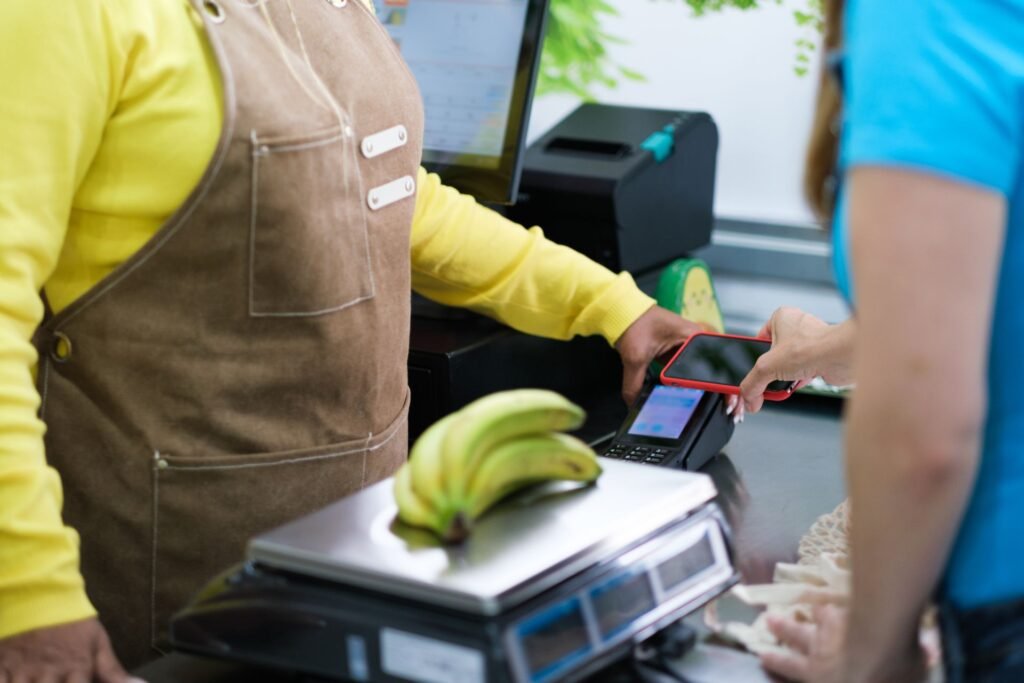
Every sale at a farmers’ market must be conducted by net weight. Net weight is the weight of the product only — not including the bag, tray, wrapper, or any other container.
Washington’s toolkit states that all sales must be conducted using net weight, meaning the weight of the product only, excluding the wrapper, labeling, and container weight.
This means any product weighed in a bag, basket or container must be weighed using the tare function. Place the empty bag or container on the platform, press tare, then add the product. The scale zeros out the container weight and displays only the product weight. The price is calculated on net weight only. Charging a customer for the weight of the bag in addition to the product is illegal in every state — even if unintentional.
This also means you should never hand the customer the bag and then weigh both together without taring the bag first. The tare function is not optional in a legal-for-trade farmers’ market transaction. It is how every weighed sale must be conducted.
Outdoor Setup: What Affects Scale Accuracy
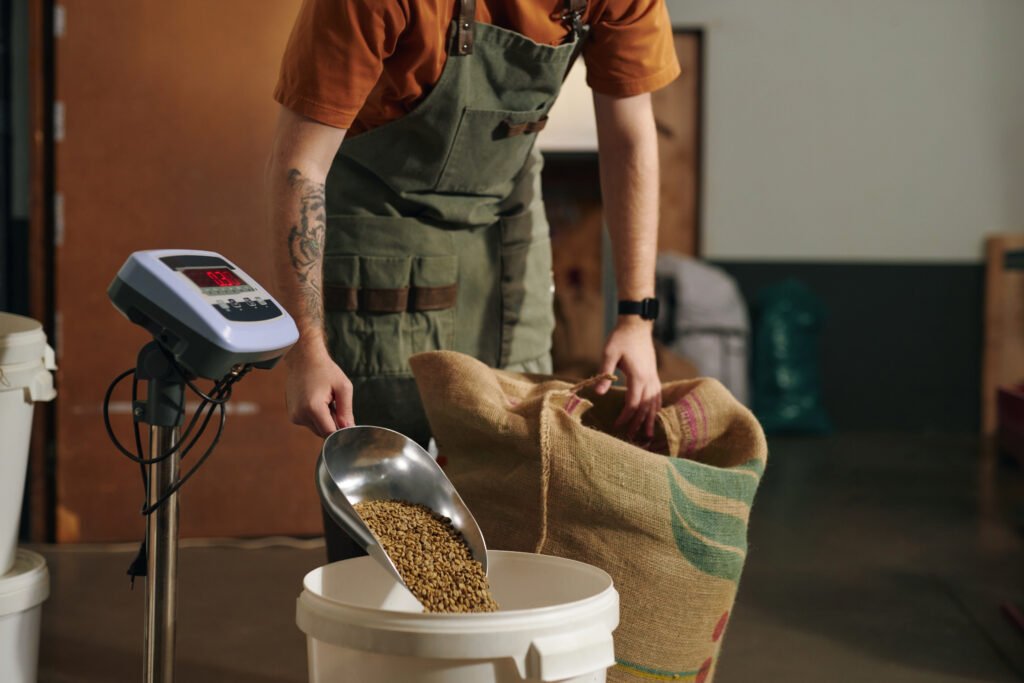
A price computing scale at a farmers’ market is operating in conditions that a fixed deli counter scale never encounters. Several environmental factors affect accuracy at an outdoor market.
Leveling. Every scale must be level for accurate readings. An unlevel scale produces readings that vary depending on where the product is placed on the platform. All portable price computing scales include adjustable leveling feet and a bubble level indicator. Check and confirm the level on the setup surface at your booth before the first transaction. Market tables are rarely perfectly flat.
Wind. Wind across the scale platform causes the reading to fluctuate — the same effect as blowing gently on a kitchen scale. Position the scale behind your body or a booth panel to block the prevailing wind direction. For herb and microgreen vendors with very light products, even a light breeze can produce reading instability. Some scales include a low-profile design that reduces wind sensitivity.
Vibration. Traffic vibration, neighboring booth activity, and unsteady tables all affect scale readings. A heavy-duty, stable table surface — not a folding table that flexes under load — produces more consistent readings. Some vendors use a small dedicated weighing surface separate from their main display table for this reason.
Direct sunlight. Extended direct sunlight can affect the scale’s internal temperature and display visibility. Position the scale in shade when possible. At a minimum, ensure the display is readable in the lighting conditions at your booth.
Transporting and Caring for Your Scale
A farmers’ market scale that gets dropped, roughly handled, or improperly stored between markets will drift out of calibration. That drift may not be obvious — the scale may still display a reading, but the reading may be wrong by more than the legal tolerance.
Your scale should be calibrated and tested at least once per year, and immediately after any instance in which you drop or mishandle the scale.
Use a carrying case. Most portable price computing scales have an optional hard-shell or padded carrying case. This is worth the additional cost. A scale bouncing loose in the back of a truck or van between market days is a scale that will need early recalibration.
Do not stack heavy items on the platform during transport. The load cell is a precision sensor. Sustained off-center or excessive loads during transport degrade it.
Bring a known test weight to the market. A small NIST-traceable test weight — a 1 lb or 2 lb class F weight — allows you to verify scale accuracy on setup. Place the test weight on the platform and confirm the reading matches. If it does not, the scale needs service before any commercial use.
FAQs
Do I need an NTEP-certified scale to sell at a farmers’ market?
In practically every state, yes. Any scale used at a farmers market to sell products by weight must be NTEP-certified and inspected and sealed by a state or county Weights and Measures official before its first commercial use. Using a non-certified scale — including a consumer kitchen scale or an uncertified digital scale purchased online — is a legal violation in any commercial weighing application.
Do I need to get my farmers’ market scale inspected every year?
Yes. Most states require annual Weights and Measures inspections of commercial scales. In North Carolina, for example, scales must be certified annually before use. Any scale that has been dropped, moved to a different state, or repaired should be checked before returning to commercial use, and many jurisdictions require re-inspection or a service-agency placement report after repair.
What capacity farmers market scale do I need?
Match capacity to the heaviest single item you regularly sell, with a 20–25% safety margin above it. A dual-range 30/60 lb model covers most mixed-produce vendors. A vendor selling primarily lightweight items — herbs, microgreens, berries — is better served by a 15 lb model with finer readability throughout its range. A vendor selling heavy produce — pumpkins, winter squash — needs a 60 lb model.
Can I use my farmers’ market scale at multiple markets in different states?
Not without separate registration and inspection in each state where it is used. Commercial weighing device registrations and Weights and Measures seals are state-specific. If you operate markets across state lines, contact the Weights and Measures office in each state to determine the registration and inspection requirements for each jurisdiction.
What is net weight, and why does it matter at a farmers’ market?
Net weight is the weight of the product only — not including the bag, tray, or any container. Every farmers’ market sale by weight must use net weight. This means the tare function must be used for every transaction where the product is placed in a container. Charging a customer for the combined weight of the product and its container is illegal under state Weights and Measures law in every US state.
Conclusion
A farmers’ market scale is a legal instrument — not just a convenience tool. It must be NTEP-certified. It must be inspected and sealed by a Weights and Measures official before its first commercial use. It must display weight and price to both the vendor and the customer. Every transaction must be conducted on net weight. And the scale must be re-inspected annually and after any event that may have affected its accuracy.
Getting the scale right before your first market day takes an afternoon — contacting the Weights and Measures office, scheduling an inspection, and verifying the CC number. Getting it wrong on market day takes a stop-use order and a lost day of sales.
For a complete guide to how a price computing scale works and what PLU keys do, see our article on what is a price computing scale and how does it work. For the full legal framework governing NTEP certification requirements, see our article on what is an NTEP scale and when do you legally need one.
Sources
- NIST Handbook 44 (2026), General Code G-UR.3.3 and Section 2.20 Scales — nist.gov
- NIST Handbook 130 (2026), Method of Sale regulation (net weight) — nist.gov
- NCWM National Type Evaluation Program — ncwm.com
- State examples: NCDA&CS Standards Division; Washington State Farmers Market Association toolkit; Colorado Department of Agriculture Measurement Standards
Last reviewed September 2026 by the Scale Blog editorial team. Rules differ by state — contact your state or county weights and measures office before your first market day.