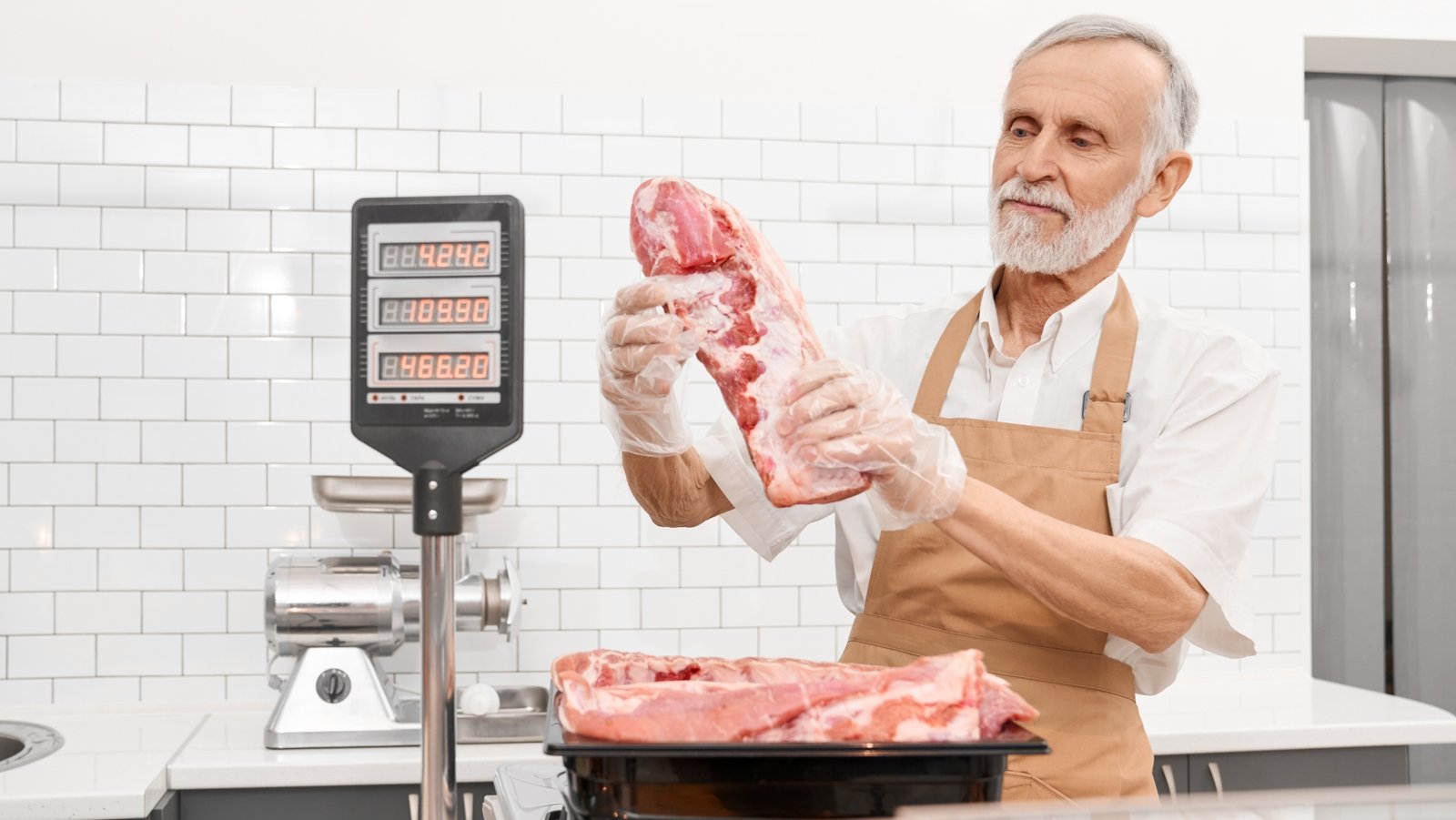








A price computing scale is a digital weighing instrument that does two things simultaneously. It measures the weight of an item placed on its platform. It multiplies that weight by a price per pound — entered by the operator or stored in the scale’s memory — and displays the total price the customer owes.
That combination of functions is what separates a price computing scale from every other scale type. A standard bench scale shows weight. A price computing scale shows weight, price per pound, and total price — all at once, on the same display, in the same transaction.
This is the instrument at the deli counter when turkey is sliced to order. It is the scale at the farmers’ market produce stand, at the candy shop bulk bin, at the seafood counter, and at the coffee roaster selling by the pound. Anywhere a customer hands over money based on how much something weighs, there is almost certainly a price computing scale — or should be — in the transaction.
Table of Contents
How a Price Computing Scale Works
The operating principle is straightforward. Three numbers define every transaction on a price computing scale:
Weight: The mass of the item on the platform, measured by the load cell and displayed in pounds and ounces or decimal pounds.
Unit price: The price per pound set by the seller — entered manually for each transaction or recalled from a stored product lookup.
Total price: Weight multiplied by unit price, calculated instantly by the scale’s processor and displayed simultaneously with the weight and unit price.
The formula is:
Total Price = Weight × Price Per Pound
The scale performs this calculation automatically. The operator places the item, enters the price per pound, and reads the total price directly from the display. No manual arithmetic. No calculator. No opportunity for a calculation error.
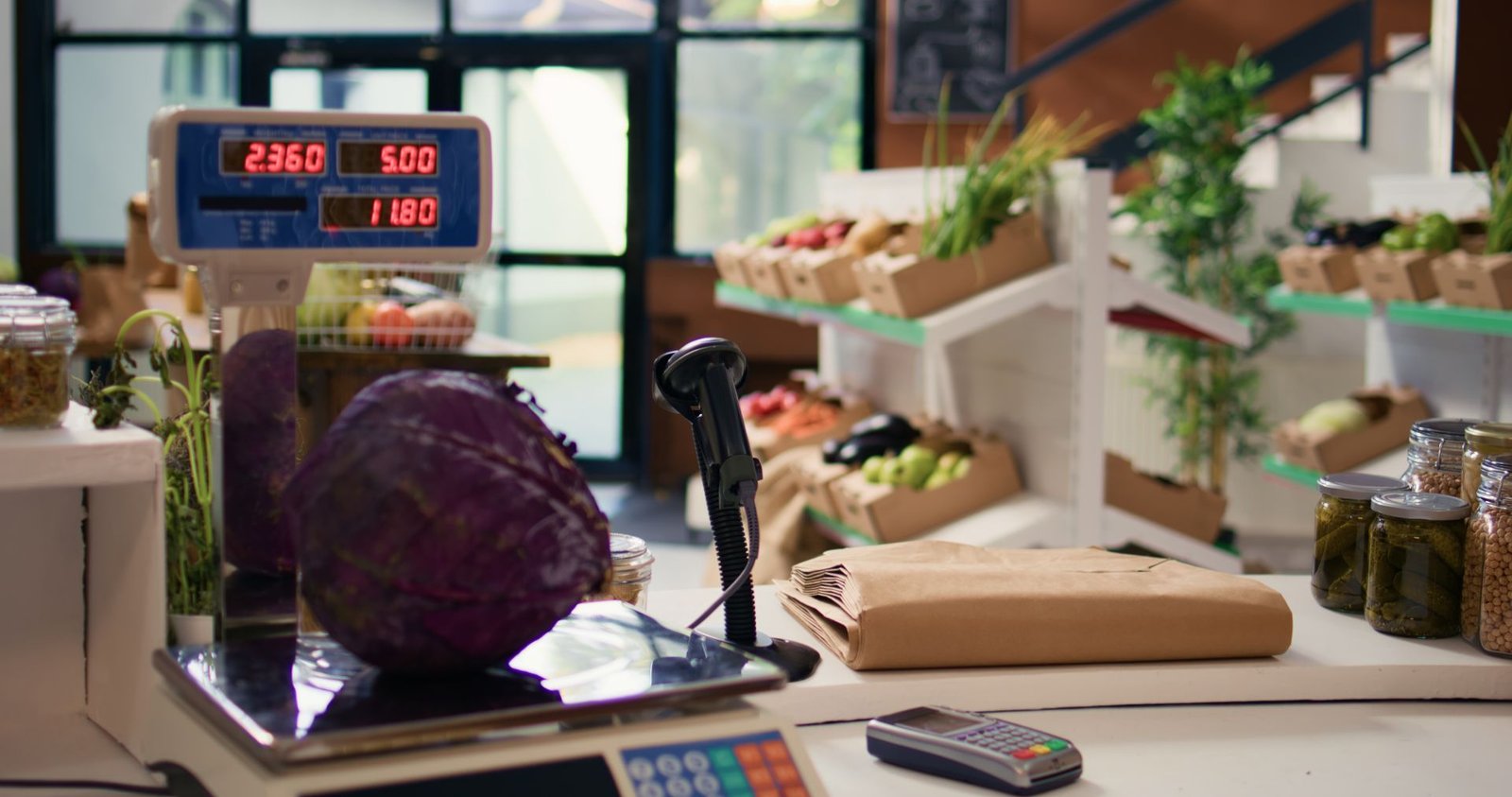
Large backlit displays show weight, price per unit, and total cost simultaneously, speeding the entire transaction process by showing this information to both the customer and the operator at the same time.
The Key Components of a Price Computing Scale
Load Cell
The load cell is the measurement engine. It is a metal sensing element with strain gauges bonded to its surface. When weight is placed on the platform, the load cell deflects slightly. The strain gauges detect that deflection and convert it into an electrical signal. The scale’s processor converts that signal into a weight reading.
For a full explanation of how load cells work in any weighing instrument, see our article on what is an industrial scale and how does it work.
Dual Display
Almost every commercial price computing scale has two displays — one facing the operator and one facing the customer. Both show the same three numbers: weight, unit price, and total price.
The customer-facing display is not a courtesy feature. Customers must be able to verify the weight and price of any transaction conducted on a scale used in commerce. NIST Handbook 44 — the model code for commercial weighing devices that the states adopt into law — requires commercial devices to be positioned so the customer can see the indications and the weighing (G-UR.3.3), which is why computing scales show weight, unit price and total price on the customer side.

PLU Keys and Memory
PLU stands for Price Look-Up. A PLU is a stored product entry that links a product name and a price per pound in the scale’s internal memory. The operator presses a PLU key — or enters a PLU number — and the scale recalls the stored unit price automatically. The operator then places the item on the platform and reads the total price.
PLU functions are ideal for quickly recalling stored values in retail settings that work with many different goods at different price points. For example, a farmers’ market stand selling strawberries at $3.99 per pound, blueberries at $2.99 per pound, and potatoes at $1.49 per pound can store all three prices as PLUs. Switching between products takes a single key press rather than re-entering the price each time.
Price computing scales typically store between 3 and several hundred PLUs, depending on the model. Entry-level portable scales for farmers’ market use store 3–40 PLUs. Mid-range deli and grocery scales store 100–300 PLUs. High-end label printing scales store thousands of PLUs with full product descriptions, ingredient lists, and barcodes.
Tare Function
A price computing scale’s tare function works exactly as it does on any other digital scale. It subtracts the weight of the container — a bag, a tray, a wrapper — from the total reading, so the displayed weight and calculated price reflect the product alone.
There are typically three tare methods available on a price computing scale. Manual tare places the empty container on the platform and presses the tare key. Keyboard tare enters the known container weight numerically. PLU tare stores the container weight as part of the PLU entry, so the tare is applied automatically whenever that product is recalled.
For a full explanation of how the tare function works and why it matters for accurate retail pricing, see our article on what is the tare function on a shipping scale and why does it matter.
Keypad
The keypad on a price computing scale serves three functions. It enters the unit price per pound for manual transactions. It enters PLU numbers for stored product recall. It handles operator commands — zero, tare, clear, and print.
Most retail price computing scale keypads are sealed against moisture and food residue — a practical necessity in deli, produce, and food service environments where the scale is cleaned multiple times per shift.
Power Supply
Most price computing scales operate on both AC power and a built-in rechargeable battery. Battery operation is standard for portable applications — farmers’ markets, outdoor produce stands, mobile food vendors. Battery life on modern price computing scales ranges from 40 hours to over 200 hours per charge, depending on whether the backlight is active.
Where Price Computing Scales Are Used
Price computing scales appear in any retail environment where products are sold by weight. The most common applications in the US are:
Deli counters — Sliced meats, cheeses, prepared salads, and hot foods priced by the pound. The scale weighs each portion as it is sliced or scooped, computes the price, and typically prints a label or displays the total for the cashier.
Produce departments and grocery stores — Bulk fruits and vegetables priced by the pound. Customers select their produce, the operator weighs it, and the scale computes the price.
Farmers’ markets and roadside stands — Fresh produce, eggs, honey, baked goods, and specialty food items sold direct to consumers. Battery-powered models are the standard for this application.
Candy shops and bulk food stores — Items sold by weight from bulk bins: nuts, dried fruit, candy, coffee, loose-leaf tea, grains, and spices.
Seafood counters — Fresh fish and shellfish priced by the pound, with high-value items requiring accurate weight to the hundredth of a pound.
Butcher shops and meat markets — Fresh cuts priced by the pound, often requiring label printing capability for pre-packaged items.
Coffee roasters — Whole bean or ground coffee sold by the pound directly to retail customers.
Price Computing Scale vs Standard Scale — What Is the Difference?
A standard digital scale displays weight only. To arrive at a price, the operator must read the weight and perform the multiplication manually, or enter the weight into a separate POS system.
A price computing scale performs that multiplication automatically and displays the result. This eliminates a calculation step, eliminates a data entry step, and eliminates the calculation errors that those steps generate.
The more important distinction is legal. A standard scale — even an accurate one — cannot be legally used in a transaction where the customer pays based on the weight it displays, unless it is NTEP-certified. Many price computing scales are sold in both NTEP-certified and non-certified versions, so check for the Certificate of Conformance number rather than assuming. The scale meets the accuracy, durability, and operational requirements of NIST Handbook 44 for commercial weighing devices.
Any business charging customers based on weight — at a deli counter, a produce stand, a farmers market, or any other retail setting — is legally required to use an NTEP-certified scale. Using a non-certified scale in a commercial transaction exposes the business to fines, seizure of the scale, and in some states, forced closure of the department until a compliant scale is installed.
For a complete guide to NTEP certification requirements and when they apply, see our article on what is an NTEP scale and when do you legally need one.
Types of Price Computing Scales
Not all price computing scales are the same instrument. Three distinct configurations serve different retail environments.
Portable price computing scale: Battery-powered, compact, designed for outdoor use. Typical capacity 30–60 lb. 3–40 PLUs. No printer. Ideal for farmers’ markets, outdoor produce stands, and mobile food vendors. These are the most affordable entry points into legal-for-trade retail weighing.
Countertop price computing scale: The standard deli and grocery instrument. AC-powered with battery backup. Typical capacity 15–60 lb. 100–300 PLUs. Dual display. Optional RS-232 or USB connectivity to a printer or POS system. This is the instrument at most US deli counters and specialty food retailers.
Label printing scale: An advanced price computing scale with a built-in thermal printer. Prints a label showing product name, weight, price per pound, total price, ingredients, sell-by date, and barcode. Used for pre-packaged items in supermarket deli and bakery departments. Covered in detail in our article on what is a label printing scale and do you need one.

What to Look for When Buying a Price Computing Scale
NTEP certification: Required for any legal-for-trade application. Non-negotiable. Verify the Certificate of Conformance number in the NCWM NTEP database before purchase.
Capacity: Match to the heaviest single item you regularly sell. Most deli and produce applications are served by a 30–60 lb capacity model. Add a 20–25% safety margin above your heaviest item.
PLU count: Estimate the number of distinct products you sell by weight. A farmers’ market stand selling 10 products needs a very different PLU count than a supermarket deli counter with 200 products.
Display type: Confirm the scale has a dual display — operator-facing and customer-facing. This is a legal requirement in most states and a practical expectation in any customer-facing retail environment.
Power source: Battery operation is essential for any outdoor or mobile application. For fixed indoor counters, AC power is standard, with battery backup for power interruptions.
Platform material: Stainless steel platforms are the standard for food contact applications. They resist corrosion, clean easily, and meet NSF food safety standards. Avoid plastic platforms in deli or butcher environments where regular cleaning with sanitizing agents is required.
Connectivity: If the scale must communicate with a POS system or printer, confirm the connection type — RS-232, USB, or Ethernet — and that it is compatible with your specific POS software before purchasing.
For a complete step-by-step buying guide covering all of these decisions for any retail scale application, see our article on how to choose a retail scale for your business.
FAQs
What is a price computing scale?
A price computing scale is a digital weighing instrument that measures the weight of an item and automatically multiplies that weight by a preset price per pound to calculate the total price owed. It displays weight, unit price, and total price simultaneously on dual screens visible to both the operator and the customer. It is the standard instrument for any retail transaction where the customer pays based on how much a product weighs.
What does PLU mean on a price computing scale?
PLU stands for Price Look-Up. A PLU is a stored product entry that links a product name and a price per pound in the scale’s internal memory. The operator presses the PLU key for a specific product, and the scale recalls the stored unit price automatically — eliminating the need to re-enter the price for each transaction. Price computing scales store between 3 and several hundred PLUs, depending on the model.
Do I need an NTEP-certified price computing scale for my retail business?
Yes — if your business charges customers based on the weight displayed on the scale, NTEP certification is legally required. This applies to deli counters, produce stands, farmers’ markets, candy shops, seafood counters, butcher shops, and any other retail environment where price is determined by weight. Using a non-NTEP scale in a legal-for-trade application exposes the business to fines, scale seizure, and in some states, forced closure of the department.
What is the difference between a price computing scale and a regular scale?
A regular digital scale displays weight only. To determine a price, the operator must manually calculate weight multiplied by price per pound — introducing a step that is slow and error-prone. A price computing scale performs that multiplication automatically and displays the result instantly. The more important difference is legal: a standard scale cannot be used in commercial transactions where the customer pays based on weight unless it is NTEP-certified. Price computing scales for retail are NTEP-certified as a standard specification.
What capacity price computing scale do I need?
Match capacity to the heaviest single item you regularly sell, with a 20–25% safety margin above it. Most deli and grocery produce applications are served by a 30–60 lb capacity model. A candy shop or spice retailer selling lightweight items may need only a 6–15 lb capacity model with finer readability. A seafood counter handling whole fish may need a 30–60 lb model with dual-range capability for accurate readings at both the light and heavy end of the product range.
Conclusion
A price computing scale is the instrument that converts a weight measurement into a commercial transaction. It weighs the item. It multiplies the weight by the price per pound. It shows the result — simultaneously — to the operator and the customer. That three-step process, performed automatically and accurately, is the foundation of legal-for-trade selling by weight in every retail food environment in the United States.
The legal requirement for NTEP certification is not optional when weight determines price. The dual display requirement is not optional when customers are involved in the transaction. And the accuracy requirement — enforced through regular state Weights and Measures inspections — is not optional when the reading on the scale is the number on the receipt.
Getting the instrument right protects the business, builds customer trust, and removes a category of calculation errors from every transaction conducted by weight.
Sources
- NIST Handbook 44 (2026), General Code G-UR.3.3 and Section 2.20 Scales — nist.gov
- NIST Handbook 130 (2026), Method of Sale regulation — nist.gov
- NCWM NTEP Certificate of Conformance database — ncwm.com
Last reviewed September 2026 by the Scale Blog editorial team. PLU capacity, displays and connectivity vary by model; confirm with the manufacturer.