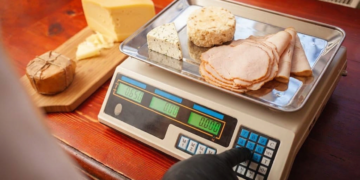








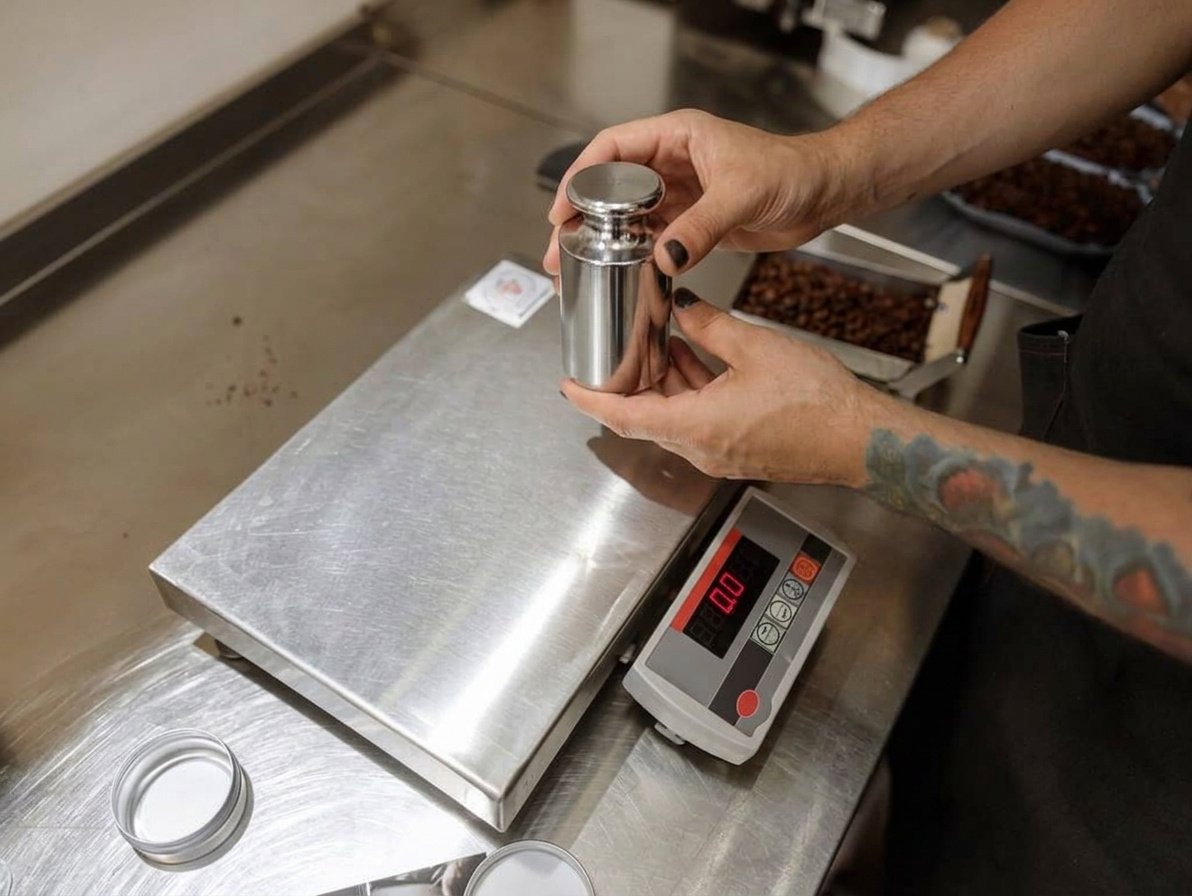
A retail scale that is out of calibration does not look out of calibration. The display still lights up. It still shows a weight. It still multiplies by the price per pound and shows a total. Every transaction looks normal. The error is invisible — until a Weights and Measures inspector places a certified test weight on the platform and the reading does not match.
At that point, the scale is removed from service. The business stops selling by weight until a compliant, calibrated, sealed scale is back on the counter. Depending on the state and the severity of the deviation, fines follow.
Calibration is the activity that prevents this outcome. Understanding what calibration means for a legal-for-trade retail scale — what the law requires, how often it is required, and what triggers immediate recalibration between official inspections — is the foundation of staying continuously compliant in any business that sells by weight.
Table of Contents
What Calibration Means for a Legal-for-Trade Retail Scale
Calibration and certification are related but distinct concepts. Conflating them creates the most common compliance gap in retail scale management.
NTEP certification confirms that the scale model type meets the design, accuracy, and construction requirements of NIST Handbook 44 — the federal standard governing all commercial weighing devices in the US. This is the manufacturer’s responsibility and applies to the model, not the individual unit.
Weights and Measures inspection and sealing confirms that the specific unit — at its specific location — reads accurately within the tolerances permitted by Handbook 44. This is the business owner’s responsibility and is required before every scale enters commercial service and at the inspection frequency required by the state.
Calibration is the technical process of testing the scale’s readings against certified test weights at multiple points across its range, identifying any deviation, and adjusting the scale if readings fall outside tolerance. Calibration is performed by a certified scale technician and produces a calibration certificate — the documentation that an inspector or auditor can verify.
In-house verification is the daily or per-use check the operator performs using a known test weight — confirming the scale reads correctly at a single point before the first transaction of the day. It is an operational check, not a calibration.
Calibration is the process of checking, adjusting, or determining by comparison of load cell outputs against standard test loads. In-house verification confirms this is still true between professional calibrations.
The Legal Calibration Requirement — What Handbook 44 Establishes
NIST Handbook 44 sets two distinct tolerance levels for every retail scale:
Acceptance tolerance: The tighter tolerance applied to a scale at the time of initial installation or after repair — when the scale is being placed into commercial service for the first time, or returning to service after adjustment. For a Class III retail scale, acceptance tolerance is half the maintenance tolerance: 0.5 d for test loads up to 500 divisions, 1 d from 501 to 2,000 d, and 1.5 d from 2,001 to 4,000 d.
Maintenance tolerance: The somewhat less stringent tolerance applied to a scale that has been in service for more than 30 days. Maintenance tolerances include a limited allowance for the effects of normal wear on a device that is properly selected, installed, used, and maintained. For a Class III retail scale, the maintenance tolerance depends on the test load: 1 d up to 500 divisions, 2 d from 501 to 2,000 d, 3 d from 2,001 to 4,000 d, and 5 d from 4,001 to 10,000 d (NIST Handbook 44, Section 2.20, Table 6).
For a 30 lb price computing scale reading to 0.01 lb — the standard retail deli or produce scale — one scale division equals 0.01 lb. A 30 lb × 0.01 lb scale has 3,000 divisions, so its maintenance tolerance is ±0.01 lb for loads up to 5 lb, ±0.02 lb from 5.01 to 20 lb, and ±0.03 lb from 20.01 to 30 lb. On a 2 lb purchase at $10.00 per pound, a 0.01 lb error is worth $0.10 on the whole transaction. A scale that exceeds its tolerance can be rejected and ordered out of service until it is corrected.
The two-tolerance system reflects a practical reality: a scale that reads perfectly at installation will drift slightly under normal use. The maintenance tolerance accommodates that normal drift while protecting consumers and businesses from systematic measurement errors that exceed what is reasonably acceptable in commerce.
How Often the Law Requires Official Inspection
The official inspection and re-certification of a legal-for-trade retail scale is performed by a state or county Weights and Measures official. Inspection frequency is set at the state level — not federally — but the standard across most US states is annual inspection.
Inspection frequency is set by each state, and sometimes by a county or city. Many jurisdictions aim to inspect retail scales about once a year, others inspect less often or on a risk basis, and unannounced inspections and complaint investigations can happen at any time.
The inspection process involves a Weights and Measures official placing certified test weights on the scale at multiple points across its range — typically at 25%, 50%, 75%, and 100% of capacity — and confirming the reading at each point is within the maintenance tolerance permitted by Handbook 44. If readings are within tolerance, the inspector affixes or renews the seal. If readings are outside tolerance, the scale is rejected — it cannot be used for commercial transactions until it is recalibrated, the calibration is verified, and the seal is renewed.
To find your state’s Weights and Measures office and confirm your state’s specific inspection schedule and requirements, use the NIST state Weights and Measures office directory.
What Triggers Immediate Recalibration
Annual official inspections set the minimum legal floor. Multiple events require immediate recalibration and re-sealing before the scale returns to commercial service — regardless of when the last annual inspection occurred.
The scale was moved. Any scale relocated to a new surface must be re-leveled and re-verified before use. For any portable scale that moves between locations — a farmers market scale transported between markets — re-leveling and a test weight verification is required at every new setup location. If the scale has been transported in a vehicle and may have experienced physical shock, a professional inspection is warranted before commercial use.
The scale was dropped or physically impacted. Physical shock to a scale — dropping it, striking it with a heavy object, a shelf collapsing on it — can damage or displace the load cell and shift calibration significantly. A scale that has experienced physical impact must be removed from service and professionally recalibrated before its next commercial transaction.
The scale was repaired or serviced. Any repair that involves opening the scale body, replacing components, or adjusting internal settings voids the current calibration seal. The scale must be re-inspected and re-sealed by a Weights and Measures official or registered scale technician before returning to commercial use.
The Weights and Measures seal is broken or missing. The seal is the physical evidence that the scale has been inspected and verified for commercial use. A broken or missing seal — however it occurred — means the scale is no longer authorized for commercial transactions. Contact a registered scale service company to re-inspect and re-seal before the next use.
Readings are inconsistent with known references. If a package of known weight — a product the operator weighs regularly and knows the expected value for — reads differently than usual, investigate immediately. Place a certified test weight on the platform and verify. If the reading is outside tolerance, remove the scale from service.
The scale overloaded. Sustained overloading — placing weights above the scale’s rated maximum capacity — can permanently deform the load cell. After any overload event, test with a certified weight before resuming commercial use. If readings are out of tolerance, contact a scale technician.
In-House Daily Verification — What It Is and What It Is Not
In-house daily verification is the operator’s responsibility between official inspections. It is not a substitute for professional calibration — but it is the first line of defense against a scale drifting out of tolerance between annual inspections.
What it involves: Place a NIST-traceable test weight of known certified value on the scale platform at the start of each day. Confirm the display reading matches the test weight’s certified value within the scale’s rated accuracy. Record the result — test weight value, displayed reading, and date — in a calibration log.
What it detects: Gross calibration shifts — a scale that has drifted substantially out of tolerance since its last professional calibration. It does not detect subtle multi-point drift or corner load errors that a full professional calibration assesses.
What test weight to use: A Class F NIST-traceable test weight in a denomination that represents a meaningful portion of the typical transaction range. For a 30 lb retail scale, a 5 lb or 10 lb certified test weight is adequate for daily verification. Have the test weight itself re-certified periodically (many businesses do this annually) by a laboratory accredited to ISO/IEC 17025.
The verification record: Maintain a daily log. A calibration log documents that the business is actively monitoring scale accuracy — it is useful evidence of due diligence if a Weights and Measures inspector visits and questions the scale’s maintenance history. It also allows the business to identify gradual drift over time — if the daily verification reading has been trending away from the certified value over weeks, professional recalibration is needed before the official annual inspection.

The Calibration Seal — What It Is and Why It Matters
The calibration seal — a sticker or physical seal affixed to the scale by a Weights and Measures official or registered scale technician — is not cosmetic. It is the legal authorization for that specific scale unit to conduct commercial transactions at that location.
The seal serves two functions. First, it confirms that the scale has been tested in place and found to be within the maintenance tolerance of Handbook 44. Second, it protects the calibration settings from unauthorized adjustment. A scale whose internal calibration parameters have been changed without re-inspection — even if the reading still appears correct — is not legally authorized for commercial use.
Any breach of the seal — cracked, peeled, missing, or visibly tampered — invalidates the scale’s legal-for-trade authorization. The scale must be taken out of commercial service until a registered technician re-inspects it and applies a new seal.
If an inspector finds a scale non-compliant during verification testing, the correction period and procedure are set by the state or local jurisdiction — some allow a set number of days for minor issues, while a rejected scale must not be used until it is corrected. Repeat or uncorrected violations can lead to further enforcement.

Consequences of Operating an Out-of-Calibration Scale
Operating a retail scale that is out of calibration in a legal-for-trade application — whether discovered by a Weights and Measures inspector or identified internally — carries consequences that compound quickly.
Stop-use order: An inspector who finds the scale reading outside maintenance tolerance at any test point can issue an immediate stop-use order. The scale cannot be used for commercial weighing until recalibrated and re-sealed.
Fines: Civil penalties vary by state but are real and enforceable. A scale operating significantly out of tolerance — particularly if it has been systematically overcharging customers — may be treated as a more serious violation than a scale that simply drifted slightly.
Transaction invalidation: Any sale conducted on a scale that is found to have been out of tolerance at the time of the sale can be considered an invalid commercial transaction. The financial exposure from a period of systematic miscalibration extends beyond the fine to the value of all transactions conducted while the scale was out of tolerance.
Reputational consequences: Weights and Measures violation records are publicly accessible in most states. A retailer found operating an out-of-calibration scale used to overcharge customers faces reputational damage that outlasts the financial penalty.
The cost of annual professional calibration for a retail price computing scale is a fraction of the cost of a single Weights and Measures violation — let alone the combined cost of fines, lost sales during the stop-use period, and any remediation owed to customers.
Calibration Schedule Summary for Retail Scales
| Scale Type | Official W&M Inspection | In-House Verification | Immediate Recalibration Triggers |
|---|---|---|---|
| Deli counter price computing scale | Per state schedule (often annual) | Daily before first transaction | Drop, repair, overload, moved, seal broken |
| Grocery produce price computing scale | Per state schedule (often annual) | Daily before first transaction | Drop, repair, overload, moved, seal broken |
| Farmers market portable scale | Per state schedule (often annual) | Each market day setup | Transport shock, season end/start |
| Jewelry Class II balance | Per state schedule (often annual) | Each use session | Physical impact, temperature change, moved |
| Checkout POS interface scale | Per state schedule (often annual) | Daily before store opens | Repair, moved, seal broken |
FAQs
How often does a retail scale legally need to be calibrated?
Inspection frequency is set by each state or local jurisdiction; many aim for roughly annual inspections of legal-for-trade retail scales, while calibration by a service company is done as needed or on the schedule your business sets. Some states and some high-volume commercial environments require more frequent inspections. Contact your state or county Weights and Measures office to confirm the specific requirement in your jurisdiction. In addition to official inspections, operators should perform daily in-house verification with a certified test weight before the first commercial transaction.
What is the difference between calibration and a Weights and Measures inspection?
Calibration is the technical process of testing and adjusting a scale to read within its specified accuracy tolerances — performed by a certified scale technician. A Weights and Measures inspection is the official government verification that the scale meets the tolerance requirements of NIST Handbook 44, performed by or on behalf of a state or county Weights and Measures official, and resulting in the affixing of a seal that authorizes the scale for commercial use. Both are required for a legal-for-trade retail scale to remain compliant.
What happens if a Weights and Measures inspector finds my retail scale out of calibration?
The inspector issues a stop-use order on the scale — it cannot be used for commercial transactions until recalibrated and re-sealed. Fines may be issued depending on the severity of the deviation and the state’s penalty schedule. The time allowed to correct a problem depends on your jurisdiction; a rejected scale must not be used until it is corrected. Operating a scale under a stop-use order is a separate violation with its own penalties.
Does moving my scale to a new location require a new Weights and Measures inspection?
Yes. Any scale moved to a new location — including a portable farmers market scale moved between markets, a scale relocated within the store, or a scale transported to a new facility — must be re-leveled, re-verified with a test weight, and re-inspected by a Weights and Measures official or registered scale technician before returning to commercial use. The existing seal is location-specific.
What is an in-house verification and how is it different from professional calibration?
In-house verification is a daily operational check performed by the scale’s operator — placing a NIST-traceable test weight on the platform and confirming the reading is within the scale’s rated accuracy before the first transaction. It detects gross calibration drift but does not replace professional calibration, which tests the scale at multiple points across its full range and produces a calibration certificate. Both practices are part of a complete calibration compliance program for any legal-for-trade retail scale.
Conclusion
Retail scale calibration is not a once-and-done event at installation. It is an ongoing compliance activity — annual official inspection by Weights and Measures, daily in-house verification by the operator, and immediate professional recalibration whenever a trigger event occurs.
The law — through NIST Handbook 44 and state Weights and Measures regulations — establishes the tolerance within which every legal-for-trade retail scale must read accurately. Staying within that tolerance throughout the year, not just at the moment of the annual inspection, is what continuous compliance means in practice.
For the complete framework governing NTEP certification and the legal-for-trade requirements that make calibration necessary in the first place, see our article on what is an NTEP scale and when do you legally need one. For step-by-step guidance on daily scale verification at the start of each shift, see our article on how to set up and use a price computing scale.
Sources
- National Institute of Standards and Technology, NIST Handbook 44 (2026), General Code G-T.1 and Section 2.20 Scales, Table 6.
- National Institute of Standards and Technology, NIST Handbook 105-1, Specifications and Tolerances for Field Standard Weights (Class F).
- NIST Office of Weights and Measures, State Weights and Measures Directors.
Last reviewed September 2026 by the Scale Blog editorial team. Tolerances shown are for accuracy Class III; always follow your state or local weights and measures office for inspection schedules and procedures.