









LTL freight — Less Than Truckload — is the shipping mode used when a business has more cargo than a parcel carrier will accept but not enough to fill an entire truck trailer. Instead of paying for the full trailer, the shipper pays only for the space and weight their freight occupies. The carrier consolidates shipments from multiple businesses into a single truck.
For most US businesses shipping palletized goods between 150 lb and 10,000 lb, LTL is the standard and most cost-effective freight option. Understanding how weight affects LTL cost is not a minor operational detail — it determines how every freight invoice is calculated, and an inaccurate weight on a Bill of Lading triggers a reclassification process that adds fees on top of the corrected charge.
This article explains how LTL pricing works, how weight and density drive freight class, what changed with the 2025 NMFC overhaul, and why accurate weighing is the foundation of every correctly billed LTL shipment.
Table of Contents
How LTL Pricing Is Structured
LTL freight is priced per hundredweight (CWT) — that is, per 100 pounds of shipment weight. The rate per CWT is not fixed. It is determined by a combination of four variables that interact with each other on every shipment.
Weight: The total weight of the shipment, including the pallet, packaging, and all securing materials. Carriers apply weight break discounts — the heavier the shipment, the lower the rate per CWT. A 3,000 lb shipment pays a lower rate per pound than a 500 lb shipment moving the same distance in the same freight class.
Density: The weight of the shipment divided by the cubic space it occupies, measured in pounds per cubic foot (PCF). Density is the single most important variable in LTL pricing because it determines freight class. A denser shipment takes up less trailer space per pound — making it cheaper and easier to transport — and receives a lower freight class and a lower rate.
Freight class: A standardized number between 50 and 500, assigned by the NMFC (National Motor Freight Classification) system. Lower class numbers mean lower shipping costs. Higher class numbers — assigned to lighter, bulkier, more fragile, or harder-to-handle freight — mean higher costs per pound.
Distance: Longer hauls cost more, applied as a rate per CWT over the lane between origin and destination zip codes.
The practical consequence of this structure: two pallets of identical weight moving the same distance can have very different freight bills if they occupy different cubic volumes — and therefore have different densities and freight classes.
The 18 Freight Classes and How Density Determines Yours
The NMFC system establishes 18 freight classes: 50, 55, 60, 65, 70, 77.5, 85, 92.5, 100, 110, 125, 150, 175, 200, 250, 300, 400, and 500. A lower class number generally means a lower shipping cost, because the freight is easier to ship.
The density formula:
Density (PCF) = Weight (lb) ÷ Volume (cubic feet) Volume (cubic feet) = (Length × Width × Height in inches) ÷ 1,728
Example: A pallet of automotive parts measuring 48″ × 40″ × 36″ and weighing 500 lb.
- Volume = (48 × 40 × 36) ÷ 1,728 = 69,120 ÷ 1,728 = 40 cubic feet
- Density = 500 ÷ 40 = 12.5 PCF
At 12.5 PCF, this shipment falls into Class 85 on the current 13-tier NMFC density scale (12 to under 15 PCF). Reducing the pallet height by 6 inches — through better stacking or tighter packaging — cuts the volume to 33.3 cubic feet and raises density to 15 PCF, which moves the shipment to Class 70 and a lower rate per CWT (assuming the commodity is rated by density).
This is the direct commercial link between weight accuracy, packaging efficiency, and freight cost. Weight is the numerator in the density calculation. An incorrect weight produces an incorrect density figure, which assigns the wrong freight class, which generates a reclassification adjustment at delivery.
What Changed With the July 2025 NMFC Overhaul
The NMFTA implemented its most significant classification overhaul in decades on July 19, 2025. The changes moved a large number of commodities to density-based classification — meaning the commodity’s NMFC code no longer determines its class alone. Density now drives classification for most freight categories.
What this means for shippers:
- Operations that previously relied on commodity-based class assignments without measuring density are now at significantly higher risk of reclassification at delivery.
- Accurate weight and dimension measurement at the point of packing is now a compliance requirement, not just a best practice.
- Shipments with lower density than expected at booking will be reclassified upward — to a higher, more expensive class — when the carrier inspects them at the terminal.
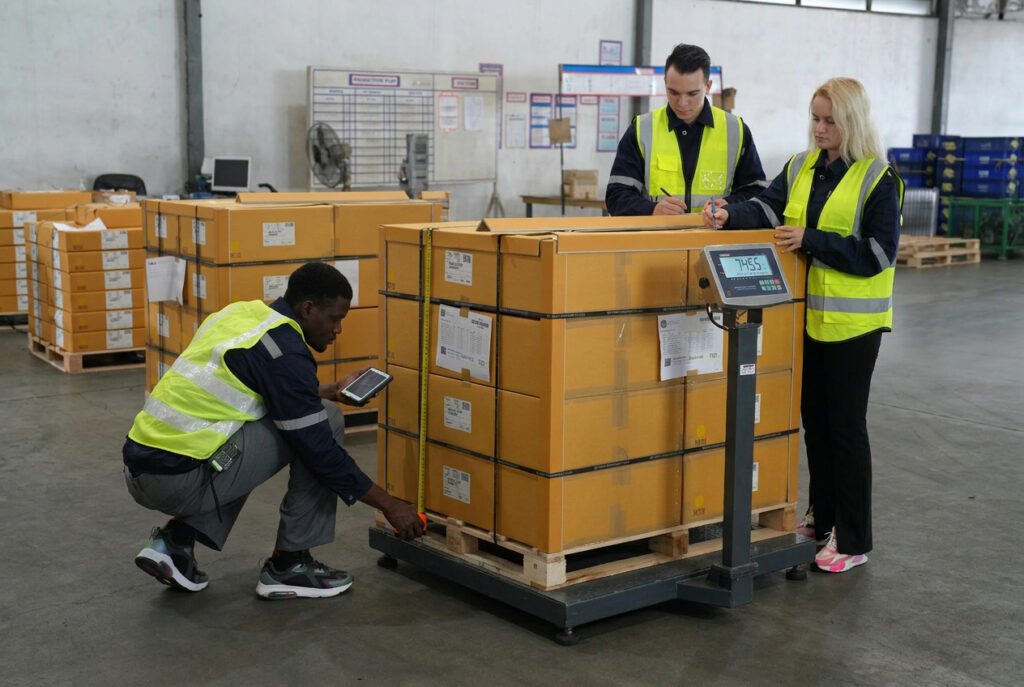
The practical consequence is direct: every LTL shipper now needs a calibrated freight scale that produces accurate pallet weights, and a process for measuring pallet dimensions, before the Bill of Lading is generated. Estimating either number after July 2025 carries a higher reclassification risk than it did before.
For the complete guide to the legal document that records your declared weight and governs your freight transaction, see the Scale Blog article on what is a Bill of Lading and why the weight field matters.
How Weight Inaccuracy Generates Freight Adjustments
A freight adjustment — also called a weight and inspection (W&I) charge — is issued by the carrier when the weight or dimensions declared on the Bill of Lading do not match what the carrier measures at their terminal. These adjustments are more expensive than a simple parcel overcharge because they include two components:
1. The corrected freight charge: The carrier rebills the shipment at the correct weight and the correct freight class, calculated at their published CWT rate.
2. The inspection fee: Many LTL carriers’ rules tariffs include an inspection or reweigh charge for shipments that must be reweighed or reclassified, which can apply even when the original error was small. Check your carrier’s rules tariff.
A pallet declared at 800 lb that the carrier measures at 1,050 lb faces a corrected weight charge, a potentially different freight class based on the corrected density calculation, and an inspection fee — all on a single shipment.
The root cause of the majority of these adjustments is the same: the shipper weighed the goods without including the pallet weight, used an uncalibrated scale, or estimated rather than measured. A calibrated, NTEP-certified freight scale that includes the full pallet — goods, packaging, pallet, and all securing material — at the point of dispatch eliminates the primary cause of weight-based freight adjustments.
The Weight Inputs That Must Be Included in Your LTL Weight
One of the most consistent causes of freight weight discrepancy is incomplete weight declaration. The weight on the Bill of Lading must include every component that will be on the scale when the carrier weighs the shipment at their terminal.
Include in your declared weight:
- The weight of the goods themselves
- All inner and outer packaging (boxes, wrapping, foam, cushioning)
- The pallet — a standard 48″ × 40″ wooden stringer pallet typically weighs about 30–50 lb, and more when wet or made of dense hardwood — weigh your own pallets rather than assuming
- All stretch wrap used to secure the load
- Banding, corner boards, and any other securing materials
Carriers weigh the entire assembled unit. Any component omitted from the declared weight becomes a discrepancy.
LTL Weight Limits and Thresholds to Know
| Threshold | Value | Context |
|---|---|---|
| Parcel limit | 150 lb (UPS/FedEx per package) | Heavier single pieces usually move LTL |
| Typical single pallet max | 2,000–4,000 lb | Varies by carrier |
| LTL upper weight limit | Carrier-specific (often around 10,000–20,000 lb) | Above this, volume or truckload pricing applies |
| Typical LTL sweet spot (rule of thumb) | 500–2,000 lb per shipment | Best balance of rate and handling efficiency |
| Average LTL rate (2026) | $0.20–$0.45 per lb | Varies significantly by class, lane, and contract status |
For operations shipping consistently above 10,000 lb per load, volume LTL or full truckload (FTL) pricing should be evaluated. For operations consistently below 500 lb, the cost comparison between LTL and consolidating into a parcel shipment is worth running on each load.
Suppliers shipping from metric-system countries declare cargo weight in metric tons. Use our metric tons to pounds converter to confirm pallet weight in pounds before the load arrives at your dock.
Why Accurate Freight Weighing Starts Before the BOL Is Generated
The Bill of Lading is the legal contract between the shipper and the carrier. The weight and freight class declared on the BOL are the basis for the freight quote and invoice. Once the carrier issues a W&I adjustment, the shipper’s only recourse is documented evidence that the original weight was correct — a scale record from a calibrated, certified freight scale taken at the time of dispatch.
Without that record, the carrier’s terminal weight is accepted as correct, and the adjustment stands. With a calibrated freight scale record, a shipper has the documentation to dispute an adjustment where the carrier’s measurement differs materially from the declared weight.
For operations shipping LTL freight regularly, a pallet scale at the dock — calibrated, certified, and recording weight against each shipment reference — is not optional equipment. It is the evidence layer that protects every freight invoice from unchallenged adjustment. For guidance on selecting the right scale for LTL freight applications, see our pallet scale buying guide.
FAQs
What is LTL freight?
LTL (Less Than Truckload) freight is a shipping mode where multiple shippers share space in a single truck trailer. Each shipper pays only for the space and weight their freight occupies. LTL is used for shipments typically between 150 lb and 10,000 lb — too heavy for parcel carriers but not large enough to fill an entire trailer.
How does weight affect LTL shipping cost?
Weight affects LTL cost in two ways. First, it determines the gross freight charge — heavier shipments pay more in total but typically less per pound due to weight break discounts. Second, weight is the primary input in the density calculation that determines freight class. A higher freight class means a higher rate per CWT, so an inaccurate weight can assign the wrong class and generate a reclassification adjustment at delivery.
What is freight class, and how is it calculated?
Freight class is a number between 50 and 500 assigned by the NMFC system that determines the rate per CWT for an LTL shipment. It is calculated primarily from density — weight divided by cubic volume in pounds per cubic foot. Since July 2025, the NMFTA has shifted most commodities to density-based classification, making accurate weight and dimension measurement at dispatch essential for correct class assignment.
What is included in LTL freight weight?
The declared weight must include the goods, all packaging materials, the pallet itself, stretch wrap, banding, corner boards, and all securing materials. Carriers weigh the complete assembled unit at their terminal. Any omitted component creates a weight discrepancy that triggers an adjustment.
What happens if my LTL freight weight is wrong?
The carrier issues a weight and inspection adjustment that includes the corrected freight charge at the accurate weight and class, plus an inspection surcharge. The shipper’s only effective recourse is a documented scale record from a calibrated freight scale showing that the original weight was accurate.
Conclusion
LTL freight cost is determined by weight, density, freight class, and distance, and weight is the input that drives all three of the others. An inaccurate weight on a Bill of Lading produces an incorrect density calculation, an incorrect freight class, and a freight adjustment that includes both a corrected charge and an inspection fee. Since July 2025, the NMFTA’s shift to density-based classification for most commodities has made accurate weight measurement at dispatch more commercially critical than at any point in the previous decade.
A calibrated freight scale at your shipping dock — recording the full pallet weight before the BOL is generated — is the most direct investment available for controlling LTL freight costs and protecting every shipment from unchallenged carrier adjustments.
Sources
- NMFTA, National Motor Freight Classification and 13-tier density scale (Docket 2025-1, effective July 19, 2025) — nmfta.org
- FedEx Freight and other LTL carrier rules tariffs (reweigh and inspection) — fedex.com/freight
- 49 CFR 373.101, Bills of lading — ecfr.gov
Last reviewed September 2026 by the Scale Blog editorial team. Class depends on the commodity’s NMFC item; not every commodity is rated purely by density. Confirm with your carrier or the NMFC.