






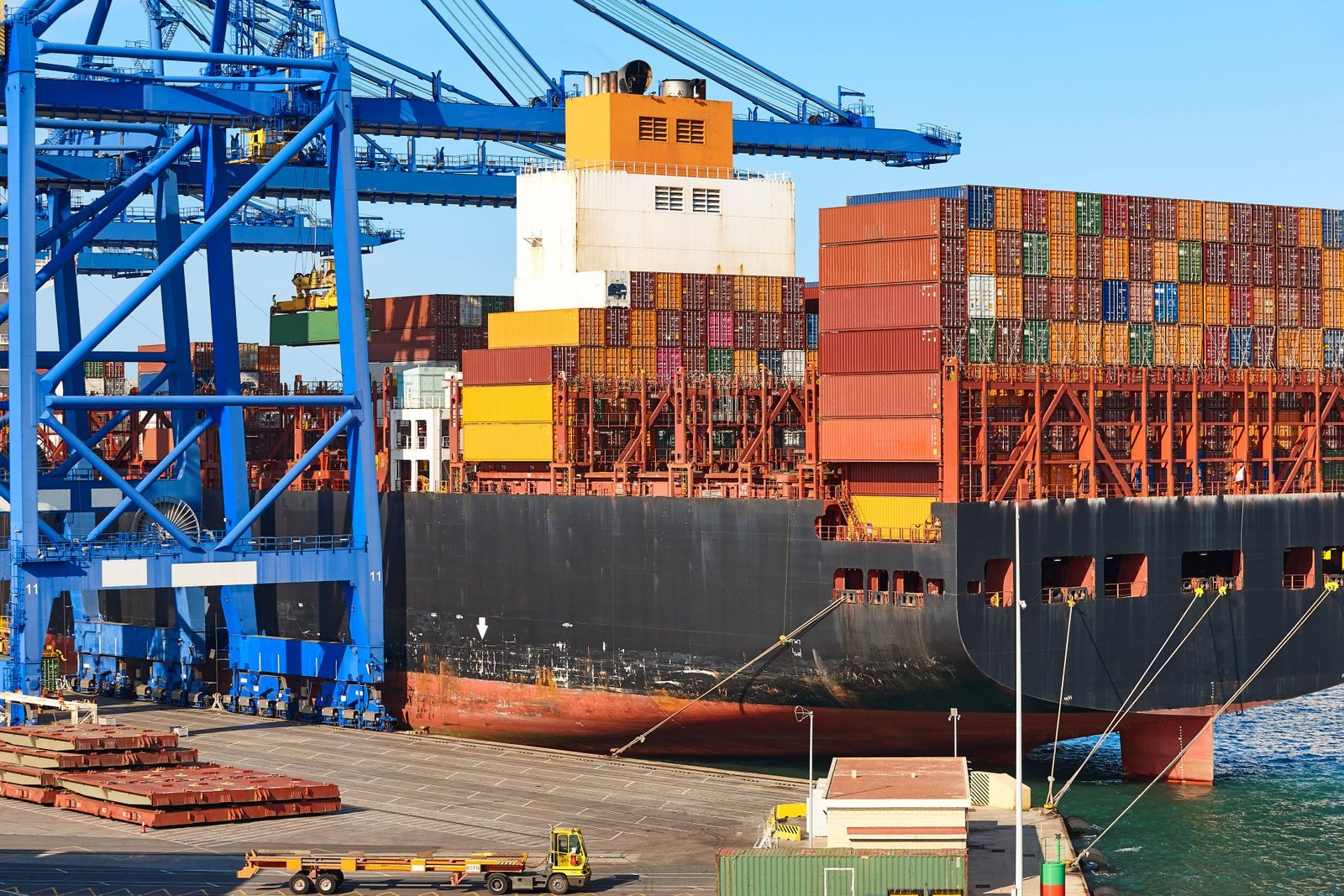
If your business ships goods internationally by sea, SOLAS VGM is not optional background knowledge — it is a legal requirement with hard consequences for non-compliance. A container without a declared Verified Gross Mass cannot be loaded onto a vessel. No estimate, no approximation, and no shipper exception applies. The regulation has been in force since July 1, 2016, and the scale requirements it imposes on every exporting shipper are specific, binding, and enforced at the port terminal before loading begins. This article explains what SOLAS VGM is, the two legally permitted methods for obtaining it, who is responsible, what the consequences of non-compliance are, and what weighing equipment is required to satisfy the regulation in a US shipping operation.
Table of Contents
What SOLAS VGM Is and Why It Exists
SOLAS stands for Safety of Life at Sea — the foundational international maritime safety convention administered by the International Maritime Organization (IMO). The VGM amendment — adopted under resolution MSC.380(94) and effective July 1, 2016 — was introduced after a series of marine casualties and incidents in which misdeclared container weights were identified as a contributing factor.
The specific problem the regulation addresses is straightforward: when a container’s declared weight is inaccurate, the ship’s stowage plan — which determines where each container is positioned on the vessel to maintain stability — is built on false data. Containers stacked based on incorrect weights shift loads during transit, destabilize the vessel, and in the most serious cases contribute to capsizing or container overboard incidents. Industry groups had long reported that a significant share of containers were misdeclared, and the scale of the problem was significant enough to trigger a global mandatory response.
The SOLAS amendment introduces two requirements that now apply universally to all packed containers loaded onto vessels engaged in international maritime traffic:
- The shipper is responsible for providing the verified gross mass and stating it in the shipping document before loading.
- A verified gross mass is a condition for loading. A container without a declared VGM will not be placed on the vessel.
The Two Legally Permitted VGM Methods
The SOLAS regulation permits exactly two methods for obtaining the VGM. No other method — including estimation, calculation from product specifications, or averaging — satisfies the requirement.
Method 1 — Weigh the Packed and Sealed Container
The entire packed container — with all cargo, dunnage, bracing, and securing materials inside, and the container doors sealed — is weighed as a single unit using calibrated and certified weighing equipment. The resulting weight is the VGM.
Scale required for Method 1: A weighbridge, container scale, or heavy-duty floor scale capable of accommodating a fully loaded container. Standard containers have traditionally been rated at 30,480 kg (about 67,200 lb) maximum gross mass, and many newer units carry higher ratings — check the CSC safety approval plate. The scale needs enough capacity for the heaviest loaded container (plus the truck and chassis on a weighbridge), and it must be calibrated and certified to the accuracy standards and requirements of the country where it is used.
Advantages of Method 1: Simple, single measurement, no calculation required, and no risk of mathematical error in the VGM declaration.
Limitations of Method 1: Requires access to a weighbridge or certified heavy-capacity scale — equipment that not every shipper’s facility has on site. Terminal operators at many US ports offer container weighing as a service, but this must be arranged in advance and may incur additional fees.
Method 2 — Weigh All Components and Calculate
The shipper weighs every individual item to be loaded into the container — all packages, cargo items, pallets, dunnage, bracing, and securing materials — and adds the tare weight of the container itself to the total. The tare weight of every container is marked on the container door — it is a required specification under ISO standards.
VGM under Method 2:
VGM = Sum of all item weights + Tare weight of the container
Every individual weighing under Method 2 must be performed on certified and calibrated equipment. SOLAS requires Method 2 to be certified and approved by the competent authority of the state where packing was completed, where that authority has set up such a process. In the United States the US Coast Guard is the competent authority; its guidance relies on existing weighing requirements, stating that equipment must meet the applicable accuracy standards and requirements of the state in which it is used. Certified and calibrated equipment is still required for every weighing event under both methods.
Advantages of Method 2: Does not require a container-capacity scale. Individual pallet and package weights measured during normal packing operations satisfy the requirement when performed on certified equipment. Better suited for shippers packing containers from multiple SKUs with established weight records per unit.
Limitations of Method 2: Every individual weighing must be performed on certified equipment. A single uncertified scale in the weight chain invalidates the VGM calculation. The tare weight must be taken from the container’s data plate — not from a generic reference table.
VGM declarations require gross mass in metric tons. If your facility scale displays pounds, use our metric tons to pounds converter to verify the declared value matches your scale reading before submission.
Who Is Responsible for SOLAS VGM Compliance
The SOLAS amendment places legal responsibility unambiguously on the shipper — defined as the legal entity or person named on the Bill of Lading or sea waybill. This responsibility cannot be transferred. A freight forwarder or logistics provider can assist with the process — measuring, calculating, and transmitting the VGM on the shipper’s behalf — but the shipper named on the BOL remains legally responsible if the VGM is inaccurate or missing.
The VGM must be submitted to the carrier and terminal representative sufficiently in advance of the vessel loading cutoff — specifically, early enough to be incorporated into the ship stowage plan. Most carriers operate a VGM cutoff that is earlier than the standard cargo cutoff. Missing the VGM cutoff can result in the container missing its sailing, even if all other documentation is in order.
Documentation requirements:
The VGM declaration must include:
- The declared VGM in kilograms or pounds
- The verification method used (Method 1 or Method 2)
- The name and signature of the authorized signatory of the shipper
- Reference to the certified weighing method or equipment used
There is no mandatory standard form for the VGM declaration — the information can be included in the shipping instruction or submitted as a separate document. Electronic transmission via VERMAS (Verified Gross Mass Message) EDI is the preferred protocol of most carriers and terminal operators.
The SOLAS VGM is submitted alongside the Bill of Lading for every ocean container shipment. For the complete guide to what a BOL is and how its weight declaration connects to VGM compliance, see what is a Bill of Lading.
What Happens if You Do Not Comply
Non-compliance with SOLAS VGM requirements produces a single immediate consequence: the container is not loaded. The availability of the VGM to the terminal representative and the ship’s master sufficiently in advance is a prerequisite for loading, not a guideline.
Beyond the immediate refusal to load, non-compliance can produce:
- Detention and demurrage charges — the container occupies terminal space without being loaded, generating daily storage and container hire fees
- Missed sailing — the next available vessel booking may be days or weeks later, depending on the route
- Re-weighing fees — if the terminal agrees to weigh the container on the shipper’s behalf as a contingency, the cost is the shipper’s responsibility
- Carrier and terminal penalties — some carriers apply surcharges for VGM non-compliance or late submission
- Reputational consequences — repeated non-compliance can affect a shipper’s standing with carriers and forwarders on established trade lanes
Providing an estimate rather than a verified weight is also non-compliant. SOLAS requires a verified weight — an estimate or best guess does not satisfy the regulation regardless of how close it may be to the true weight.
What Scale Do You Need to Comply With SOLAS VGM
Scale requirements differ between the two methods.
For Method 1 — Container-Capacity Certified Scale
Method 1 requires a scale capable of weighing a fully loaded container as a single unit. In practice, this means:
- Weighbridge: The standard solution at ports, terminals, and logistics hubs. A vehicle weighbridge that can accommodate a loaded truck and container produces the combined weight, from which the truck tare is subtracted to yield the container VGM.
- Container scale / heavy floor scale: Some larger shipper facilities have dedicated container scales. Capacity must exceed the maximum loaded container weight, for most operations at least 70,000 lb (approximately 32,000 kg) for standard ISO containers.
- NTEP certification: In the United States, the scale must be calibrated and certified. For commercial weighing applications, NTEP certification under NIST Handbook 44 provides the standard certification framework. State Weights and Measures approval from the applicable state authority is also required for commercial use.
Most US exporters without on-site container weighing capability use the port terminal’s weighbridge as the Method 1 solution, arranged through the carrier or freight forwarder.
For Method 2 — NTEP-Certified Pallet and Package Scales
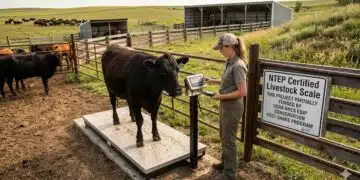
Method 2 requires certified and calibrated scales for every individual weighing event in the VGM calculation chain. For a typical US exporter packing containers from their own facility, this means:
- Pallet scale — NTEP certified, calibrated, with sufficient capacity for loaded pallet weights. Every pallet to be loaded into the container must be individually weighed on this instrument. For guidance on specifying the right pallet scale, see our pallet scale buying guide.
- Parcel or floor scale — for individual packages and items that are not palletized. Each item must be weighed on certified equipment.
- Calibration documentation — the scale’s current calibration certificate, showing traceability to NIST and the date of last calibration, must be available as supporting documentation for the VGM declaration.
Critical requirement for Method 2 scale records: Every individual weight used in the VGM calculation must be traceable to a certified weighing event. A weight taken from a product specification sheet, a previous shipment record, or a nominal value does not satisfy the requirement — only a weight measured on certified equipment at the time of packing is compliant.
The Two-Method Decision: Which One Applies to Your Operation
| Factor | Method 1 | Method 2 |
|---|---|---|
| Equipment required | Container-capacity weighbridge or scale | NTEP-certified pallet and package scales |
| Weighing location | Terminal, port, or on-site if equipment available | Shipper’s packing facility |
| Calculation required | No — single measurement | Yes — sum of all items plus tare |
| Best suited for | FCL shipments, large exporters with weighbridge access | Shippers packing containers from multiple SKUs |
| Risk of error | Low — single measurement | Higher — multiple weighing events required |
| Documentation | Single weight record | Individual records for every item weighed |
Most US exporters shipping Full Container Load (FCL) use Method 1 via the port terminal weighbridge when they do not have on-site container-capacity scales, and Method 2 when they have certified pallet and package scales at their packing facility and want to generate the VGM without an additional terminal weighing step.
Practical VGM Compliance Checklist for US Exporters
Before every container booking for sea export, confirm the following:
- Method 1 or Method 2 selected and documented for this shipment
- If Method 1: terminal weighbridge booking confirmed or on-site container scale available and calibrated
- If Method 2: all individual weighing equipment is NTEP certified and within the calibration period
- Container tare weight taken from the container’s data plate — not from a reference table
- VGM calculated, and a VGM declaration prepared with an authorized signatory
- VGM submitted to the carrier before the carrier’s VGM cutoff — earlier than the cargo cutoff
- VGM transmitted to the terminal representative via VERMAS EDI or approved alternative
- Calibration certificate for all scales used in the VGM calculation is on file and available for audit
For the calibration requirements that apply to the scales used in SOLAS VGM compliance, see our article on shipping scale calibration requirements.
FAQs
What is SOLAS VGM?
SOLAS VGM (Verified Gross Mass) is a mandatory requirement under the IMO’s Safety of Life at Sea convention, effective July 1, 2016, that requires shippers to declare the verified total weight of every packed container before it can be loaded onto a vessel for international maritime transport. A container without a declared VGM cannot legally be loaded.
What are the two methods for obtaining SOLAS VGM?
Method 1 involves weighing the entire packed and sealed container as a single unit on calibrated and certified equipment — typically a weighbridge. Method 2 involves weighing every individual item, package, pallet, dunnage, and securing material separately and adding the container’s tare weight. Both methods require certified and calibrated weighing equipment.
Who is responsible for SOLAS VGM compliance?
The shipper named on the Bill of Lading or sea waybill is legally responsible for providing an accurate VGM before loading. Freight forwarders and logistics providers can assist but cannot assume the shipper’s legal responsibility. The shipper remains accountable if the VGM is incorrect or missing.
What scale is needed for SOLAS VGM compliance?
For Method 1, a weighbridge or heavy-duty certified scale capable of weighing a fully loaded container, typically with a minimum capacity of 70,000 lb. For Method 2, NTEP-certified pallet and package scales at the packing facility, with current calibration certificates. In the United States, calibrated and certified equipment is required under the US Coast Guard’s implementation of the SOLAS amendment.
What happens if a container does not have a VGM?
The container will not be loaded onto the vessel. Non-compliance also risks demurrage and detention charges, missed sailing, re-weighing fees charged to the shipper, and carrier surcharges. Providing an estimated weight rather than a verified weight is also non-compliant — SOLAS requires a verified measurement, not an approximation.
Does SOLAS VGM apply to LCL shipments?
Yes. For Less than Container Load (LCL) shipments, the freight forwarder or consolidator packing the container becomes the shipper of record responsible for the VGM. Individual LCL shippers contributing cargo to a consolidated container are responsible for providing accurate weights for their own cargo under Method 2 so the consolidator can generate the full container VGM.
Conclusion
SOLAS VGM is one of the few shipping regulations where non-compliance produces an immediate, binary consequence — the container does not load, and every cost that follows is the shipper’s responsibility. Compliance requires either access to a container-capacity certified weighbridge for Method 1, or NTEP-certified pallet and package scales at the packing facility for Method 2. In the United States, calibrated and certified equipment is the baseline requirement under US Coast Guard implementation of the SOLAS amendment, and a calibration certificate for every scale in the VGM calculation chain is the documentary evidence that protects a shipper in the event of a compliance challenge.
For the full requirements that apply to scale calibration in shipping applications, see our article on shipping scale calibration requirements.
Sources
- SOLAS Chapter VI, Regulation 2 (as amended, in force July 1, 2016) — imo.org
- IMO MSC.1/Circ.1475, Guidelines regarding the verified gross mass of a container carrying cargo — imo.org
- US Coast Guard, Marine Safety Information Bulletins on SOLAS container weight verification — uscg.mil
- ISO 668 and the International Convention for Safe Containers (CSC) — iso.org, imo.org
Last reviewed September 2026 by the Scale Blog editorial team. VGM rules are applied by each flag state, port and carrier; confirm submission cut-offs and accepted methods with your carrier or forwarder.