
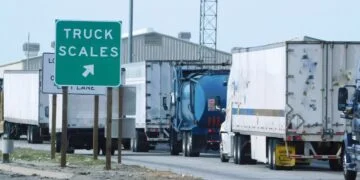





To buy a truck scale, size the deck to the longest truck you will weigh — 60–80 ft for tractor-semitrailers, up to about 100 ft for doubles — then choose pit or pitless (above-ground) mounting, a concrete or steel deck, and an NTEP-certified system your state will approve for trade. Rent or lease if you only need one for a project or a season.
Knowing how to buy a truck scale starts with one fact: it is often the most expensive single piece of weighing equipment a business buys, and it will likely outlast the trucks that cross it. Mettler Toledo says owners typically expect 10 to 20 years of service, and Rice Lake says a well-cared-for scale should give 25 years or more. Here is how to get the big decisions right.
Table of Contents
How to Buy a Truck Scale: Step by Step
Every project is different, but the buying process follows the same path. Use this as your checklist:
- Define the job. Write down what you will weigh (inbound grain, outbound aggregate, waste, scrap), how many trucks a day, and whether the weight sets a price.
- Measure your longest vehicle — and the longest one you might use in the next 10–20 years — to set the deck length.
- Pick the capacity and section ratings for your heaviest axle groups, not just gross weight.
- Survey the site. Approach room, drainage, soil and height limits will point you toward pit or pitless, and concrete or steel.
- Choose the load cell technology (analog, digital or hydraulic) based on lightning risk, moisture and your service plans.
- Confirm legal-for-trade requirements: an NTEP-certified model and your state’s inspection and registration rules.
- Plan the data side: indicator, ticket printer, software and, if needed, unattended terminals.
- Get at least two itemized quotes covering foundation design, installation, calibration, certification and warranty.
- Schedule installation and certification, including concrete curing time if you choose a concrete deck or pit.
- Set up a service plan so the scale is tested and calibrated on a regular schedule.
The rest of this truck scale buying guide takes each of those decisions in turn.
Types of Truck Scales
| Type | How it works | Pros | Watch out for |
|---|---|---|---|
| Pit scale | The weighbridge sits in a concrete pit, flush with the road | No ramps; works where approach room or height is limited | Pit must be kept clean and drained; more civil work |
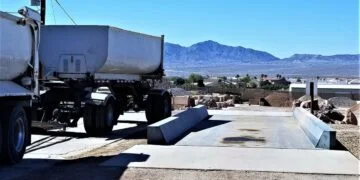
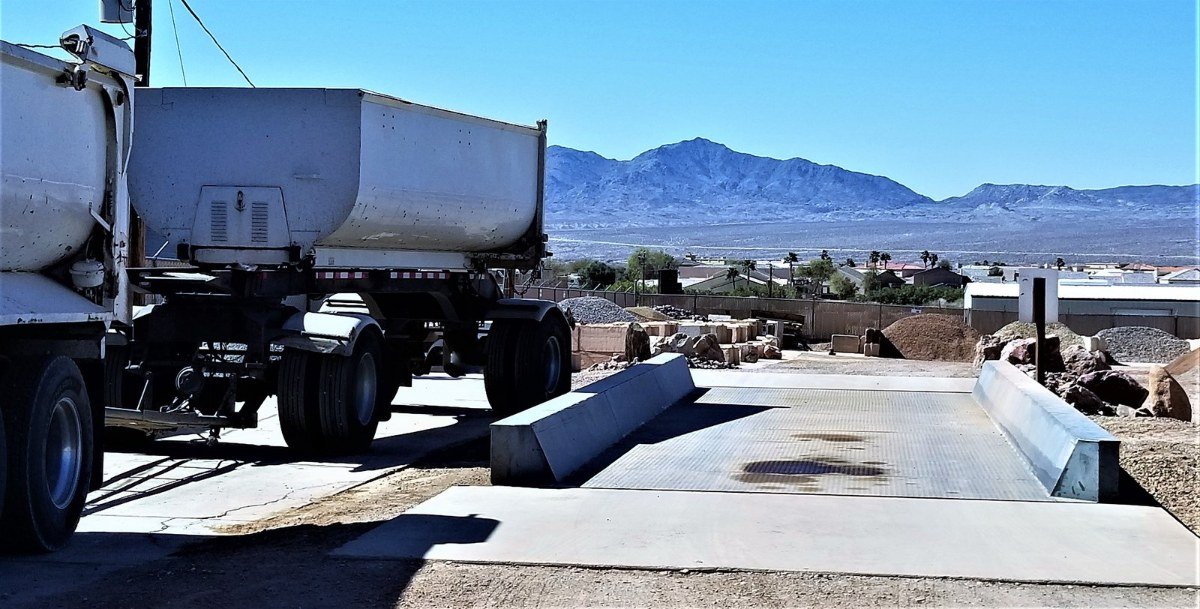
| Pitless / above-ground | Built up from grade on a foundation; trucks drive up short ramps (profile roughly 11–20 in) | Easier to install, inspect and clean under | Needs room for approach ramps |
| Portable truck scale | A modular above-ground scale designed to be moved between sites | Fast setup — rental units can be installed in hours | Less suited to permanent, very high-volume use |
| Axle scale | Weighs one axle or axle group at a time | Low cost; good for load checks and axle compliance | Cannot give legal-for-trade gross weights |
| Onboard scale | Load cells or sensors on the truck itself | Weight on the go, every load | Not a substitute for a certified ground scale in trade |
If you are not sure whether you need a full truck scale at all, our comparison of a farm scale vs a truck scale helps farms decide, and our explainer on truck axle weight limits covers why axle weights matter on the road.
Deck Length and Capacity by Vehicle Type
The golden rule from every manufacturer guide is the same: the scale must hold all the wheels of the longest vehicle you will ever weigh, including future trucks. Mettler Toledo gives these typical lengths:
| Vehicle | Typical deck length needed |
|---|---|
| Tractor-semitrailer | 60–80 ft (18–24 m) |
| Double trailers | Up to about 100 ft (30 m) |
| Single-unit trucks (dump, delivery, grain trucks) | Shorter decks may work — measure your longest truck, bumper to bumper, and add margin |
Capacity is about more than the gross weight of your heaviest truck. Look at the concentrated load capacity (CLC) and the rating per section, which describe how much weight the structure can carry on a tandem axle or a single section. Cardinal’s purchasing guide highlights CLC as a key spec, and Avery Weigh-Tronix’s rental units, for example, are rated at 90,000 lb CLC with dual tandem axle ratings.
Also think about readability. Mettler Toledo gives an example: under NTEP rules, a 200,000 lb scale weighing 70,000–80,000 lb trucks can have up to 160 lb of error, positive or negative, and still be within tolerance. Higher capacity is not free — it can mean coarser increments.
Concrete vs Steel Deck
| Concrete deck | Steel deck | |
|---|---|---|
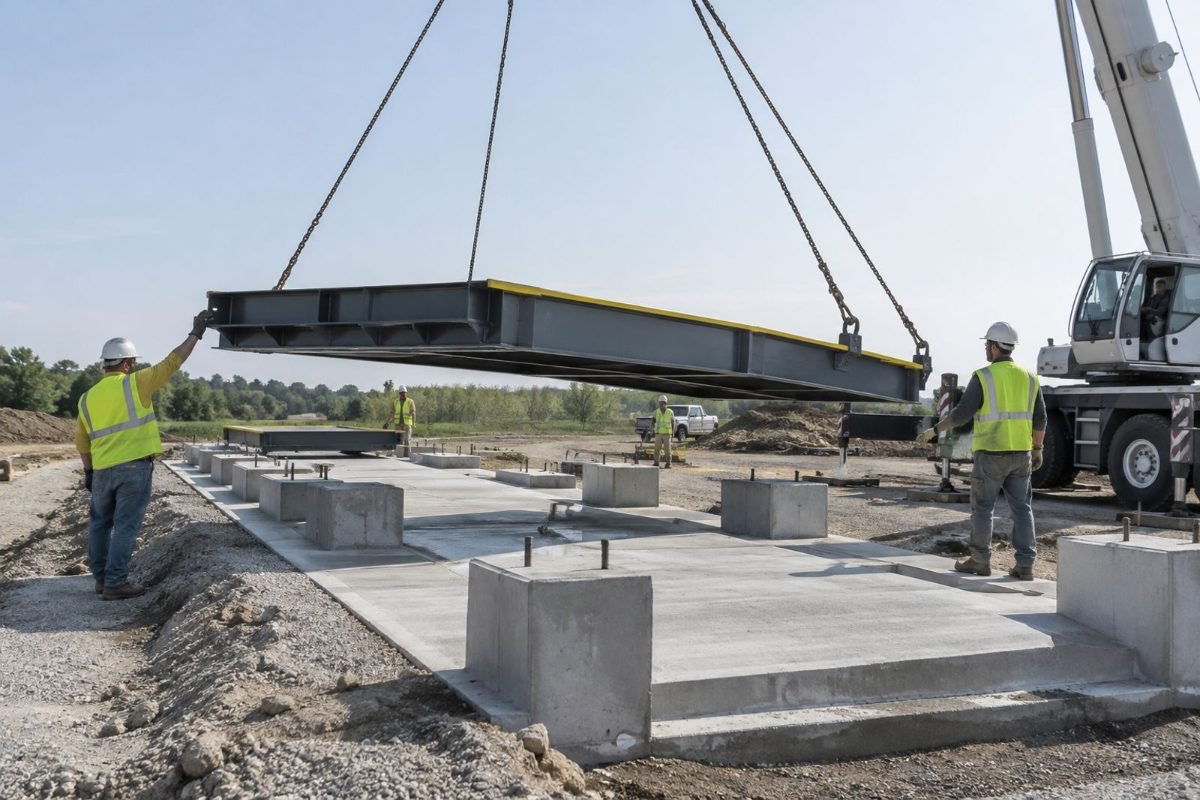
| Installation | Poured on site; about 21–28 days to cure | Installs in about a day |
| Traction and wear | Better traction when wet or icy; spreads heavy loads well | Traction tread available; can be slippery when wet |
| Corrosion | Better in wet, salty or corrosive sites (scrap yards, transfer stations, grain elevators) | More moisture and corrosion issues; more maintenance |
| Weight and relocation | Much heavier; hard to move | Lighter; easier to relocate or extend |
| Cost | Higher upfront (pour labor, finishing) | Lower upfront |
Opinions differ on the long run. Rice Lake credits concrete decks with five to seven years longer life, while Mettler Toledo says maintenance, service life and total project cost are about the same for both. In practice, site conditions — salt, water, traffic — usually decide it.
Foundations and Installation
Permanent truck scales sit on a concrete foundation, and the foundation is just as important as the weighbridge. It has to be designed for your soil, drainage and frost conditions, and for the loads the scale will see. Most manufacturers supply foundation drawings; a local engineer and concrete contractor usually build it.
- Approaches matter. Trucks should enter and leave the scale straight and level. Pit scales sit flush with the road; pitless scales need room for ramps and a level approach at each end.
- Plan for drainage so water does not pool around load cells and junction boxes.
- Protect against lightning. Cardinal’s guide notes analog systems are the most vulnerable to lightning and moisture, while hydraulic and digital load cell systems are more resistant.
- Think about the future. Some manufacturers can add modules to lengthen a scale later, Rice Lake notes — but only if the new module matches your system.
Load cell technology is part of this decision. Most truck scales use 6 to 12 load cells, according to Mettler Toledo. Analog systems have the lowest purchase price; digital load cells simplify wiring and fault-finding; hydraulic cells have no electronics in the weighbridge at all.
How Much Does a Truck Scale Cost?
We could not find current, published price ranges from manufacturers we trust, so we are not going to guess. Truck scales are almost always quoted, and the total depends on the factors below:
- Length and capacity — the biggest single driver.
- Deck type — steel decks cost less upfront because there is no on-site pour; concrete decks cost more but can suit harsh sites better.
- Pit or pitless — pits mean more excavation and concrete.
- Load cell technology — analog is cheapest to buy; digital and hydraulic cost more upfront but can lower lightning and moisture repairs.
- Foundation and site work — soil, drainage and approaches vary hugely from site to site.
- Indicator, software and unattended terminals.
- Freight, installation, certification and an annual service plan.
Ask suppliers for an itemized quote covering the scale, foundation design, installation, calibration and certification, and the warranty on load cells and structure, so you can compare like with like.
Buy, Rent or Lease?
| Option | Makes sense when | Things to check |
|---|---|---|
| Buy | You will weigh trucks for years at the same site | Total installed cost, warranty, service availability |
| Rent | You need a scale for a project, a harvest season, or while your own scale is down for repair | Delivery and setup time, who maintains it, calibration and certification |
| Lease | You want a permanent scale but prefer to spread the cost | Term, buyout, who pays for repairs |
Rental is more practical than many people think. Avery Weigh-Tronix, for example, rents portable truck scales in multiple lengths for construction, mining, quarries, asphalt and timber operations, with maintenance and repairs included in the agreement, calibration on delivery, and installation in as little as four hours.
NTEP and State Certification
If the truck scale’s weight sets a price — buying grain, selling aggregate, charging for disposal — it needs to be legal for trade. In the US, that means a model with an NTEP Certificate of Conformance, which many states require before the scale goes into commercial service, according to the NCWM. Mettler Toledo adds that most legal-for-trade truck scales also need certification by local weights and measures authorities, typically annually or semi-annually, and that busy scales may need calibrating more often.
Before you sign, confirm the exact model and capacity on the NTEP certificate, and check your state’s registration and inspection rules. Our guides to NTEP scales and industrial scale calibration explain both.
Software and Unattended Weighing
Modern truck scales are as much about data as steel. Truck scale software records each transaction, prints or emails tickets, and can integrate with accounting or inventory systems. Unattended terminals go further: Mettler Toledo describes drivers completing transactions from the cab with touchscreen terminals, RFID cards, QR codes or their own phones.
Unattended weighing makes the most sense for sites with steady traffic outside office hours or a small staff. Ask about traffic lights, cameras, ticket printers at cab height and remote support when you compare systems. For the wider context, see our overview of industrial scales.
Questions to Ask Truck Scale Suppliers
A good supplier will welcome these questions. Their answers tell you as much about the company as about the scale:
- Which NTEP certificate covers this exact model, length and capacity?
- What are the concentrated load capacity (CLC) and section ratings?
- Who designs the foundation, and who is responsible if it does not perform?
- What is the warranty on load cells, the weighbridge structure and the indicator — and what does it exclude?
- How is the scale protected against lightning and moisture?
- How quickly can a technician reach my site, and are parts stocked locally?
- Can the scale be lengthened later if my trucks change?
- Do you offer rental or temporary scales while mine is installed or repaired?
- What software, unattended terminals and integrations do you support?
Write the answers into your purchase order so there are no surprises later.
Find a Truck Scale Supplier
Ready to talk to manufacturers and dealers? These companies are listed in the ScaleBlog scale directory:
- Cardinal Scale Manufacturing
- Rice Lake Weighing Systems
- Mettler Toledo
- Avery Weigh-Tronix
- Intercomp
- Emery Winslow Scale Company
Are you a truck scale manufacturer, dealer or service company? Get your company listed in the directory.
Frequently Asked Questions
How long should a truck scale be?
Long enough to hold every wheel of the longest vehicle you will weigh, now and in the future. Mettler Toledo puts tractor-semitrailers at 60–80 ft (18–24 m) and double trailers at up to about 100 ft (30 m).
Is a pit or pitless truck scale better?
Neither is better everywhere. Pitless (above-ground) scales are easier to install, inspect and clean under, but need room for ramps. Pit scales sit flush with the road and suit sites with limited approach room, height limits or safety rules that call for a flush surface.
Should I choose a concrete or steel deck?
Steel decks install in about a day and cost less upfront. Concrete decks take about 21–28 days to cure but offer better traction when wet and handle corrosive, salty or wet sites well. Manufacturers disagree on which lasts longer, so site conditions usually decide.
Can I rent a truck scale?
Yes. Some manufacturers rent portable truck scales for projects, peak seasons or while a permanent scale is being repaired. Avery Weigh-Tronix, for example, includes maintenance and calibration in its rentals and installs in as little as four hours.
Does a truck scale need to be certified?
If you buy or sell by its weight, yes. The model should have an NTEP Certificate of Conformance, and the installed scale generally needs inspection and certification by your state or local weights and measures authority, typically annually or semi-annually.
Sources
- Mettler Toledo — Truck scale buying guide
- Cardinal Scale — Truck scale purchasing decisions guide
- Rice Lake — Vehicle scale design considerations
- Mettler Toledo — Legal-for-trade axle weighing
- Avery Weigh-Tronix — Truck scale rental
- NCWM — NTEP frequently asked questions
Last reviewed October 2026.