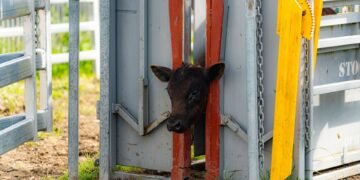
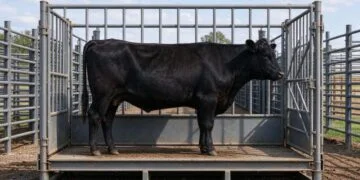





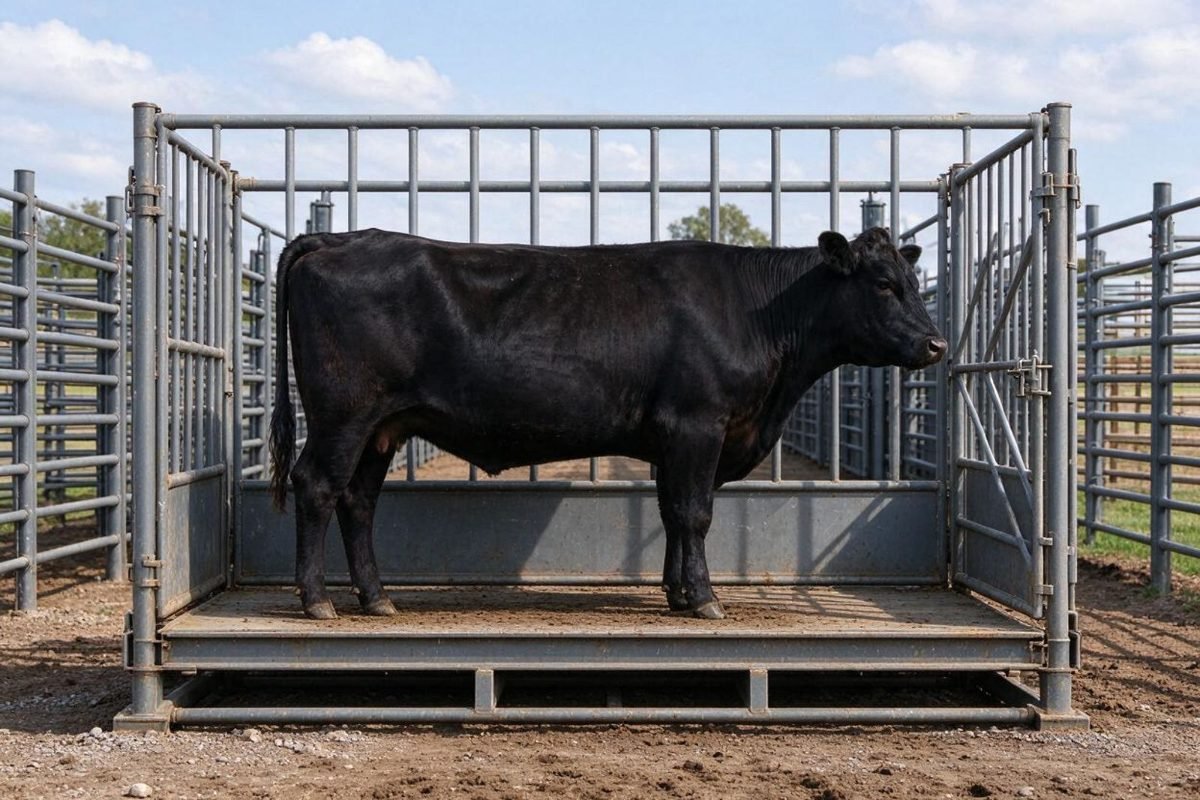
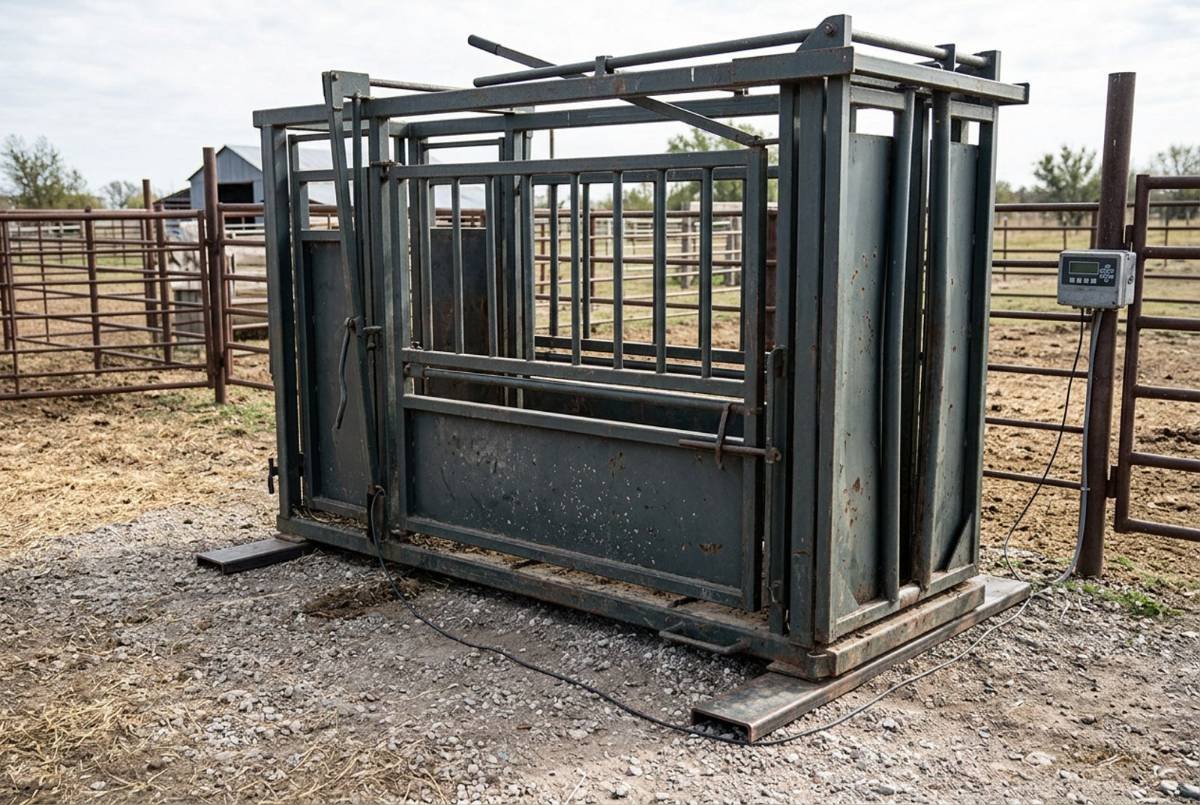
Livestock scales come in three main setups: single-animal cages and platforms (around 2,000 lb capacity for crate-style scales), load bars that go under a chute or platform (sets rated from about 3,300 to 11,000 lb), and larger alley or group platforms such as 5 × 7 ft decks. Most modern indicators can read EID tags and work out average daily gain for you.
ScaleBlog may earn a commission if you buy through links on this page, at no extra cost to you. See our affiliate disclosure.
A good cattle scale is one of the few pieces of ranch equipment that pays you back in hard numbers — better dosing, better sorting, and no more guessing at sale weights. This neutral buyer’s guide walks through the types of livestock scales, how to size one for your herd, the indicator features that matter, and how to set it up with your chute. Our two picks come at the end, with honest pros and cons.
Table of Contents
Types of Livestock Scales
Start by deciding how you want to weigh: one animal at a time, or several at once — and whether the scale stays put or travels with you.
| Type | Typical capacity | Best for | Portable? | Listed price (Oct 2026) |
|---|---|---|---|---|
| Single-animal cage / crate scale | About 2,000 lb | Calves, pigs, sheep and goats, one at a time | Yes — casters on many models | About $1,700 (Liberty LS-930 5′ × 30″) |
| Single-animal alley platform | Built on four 2,500 lb load cells (Liberty LS-929) | Adult cattle walking through an alley, one at a time | Semi-portable | About $1,380–$3,450 (Liberty LS-929 series) |
| Load bars under a squeeze chute or platform | 3,300–11,000 lb per set (1,500–5,000 kg) | Adding weighing to an existing chute, crate or platform | Yes — move the bars | About $1,730–$3,440 for bars (Gallagher via SellEton); indicator extra |
| Portable load-bar kit with indicator | 2,500, 5,000 or 10,000 lb | Weighing in different pens or on different farms | Yes | About $4,560–$6,480 (Rice Lake Farm Bars with 380 indicator) |
| Group / alley scale (5 × 7 ft and larger) | Large platforms rated for several head | Weighing small groups, pens of calves or hogs | Usually fixed or semi-portable | About $2,000–$4,600 (Liberty LS-700 and LS-930 5 × 7 ft systems) |
For most cow-calf operations, load bars under the squeeze chute are the easiest way to start: you keep the handling system you already have and add weighing to it. Feedlots and larger herds often move to a dedicated alley platform so animals can be weighed without being caught. For a broader look at every scale on the farm, see our farm scales guide.
What Capacity and Platform Size Do You Need?
Size the scale to the heaviest load you will ever put on it — one bull, or a whole pen if you weigh groups — and leave headroom. Then make sure the platform is long and wide enough for the animal to stand fully on it, with all four feet on the deck and nothing touching the side rails.
| What you weigh | What to look for | Example from current listings |
|---|---|---|
| Sheep, goats, pigs, calves (one at a time) | A contained cage or crate rated around 2,000 lb | Liberty LS-930 cage, 2,000 lb × 0.5 lb |
| Adult cattle (one at a time) | An alley platform long enough for the whole animal, or load bars under the chute | Liberty LS-929 alley platform, 85 × 26 in; Gallagher 2,500 kg load bars |
| Bulls and very large animals | Higher-capacity bars and a heavier platform | Gallagher 5,000 kg (11,000 lb) heavy-duty bars |
| Small groups of animals | A 5 × 7 ft or larger platform with side rails | Liberty 5 × 7 ft cage and floor scale systems |
Not sure what your animals weigh today? Our cattle weight chart gives typical weights by breed and age, and if you need numbers before the scale arrives, here is how to weigh a cow with a tape.
Indicator Features That Matter
The indicator — the box with the display — is where a livestock scale earns its keep. A basic one shows weight. A good one does a lot of your record-keeping:
- Animal averaging (motion compensation). Cattle rarely stand still. Averaging or motion-sensing indicators settle on a stable weight while the animal shifts. Liberty, for example, lists motion-sensing technology on its LS-929 cattle scale.
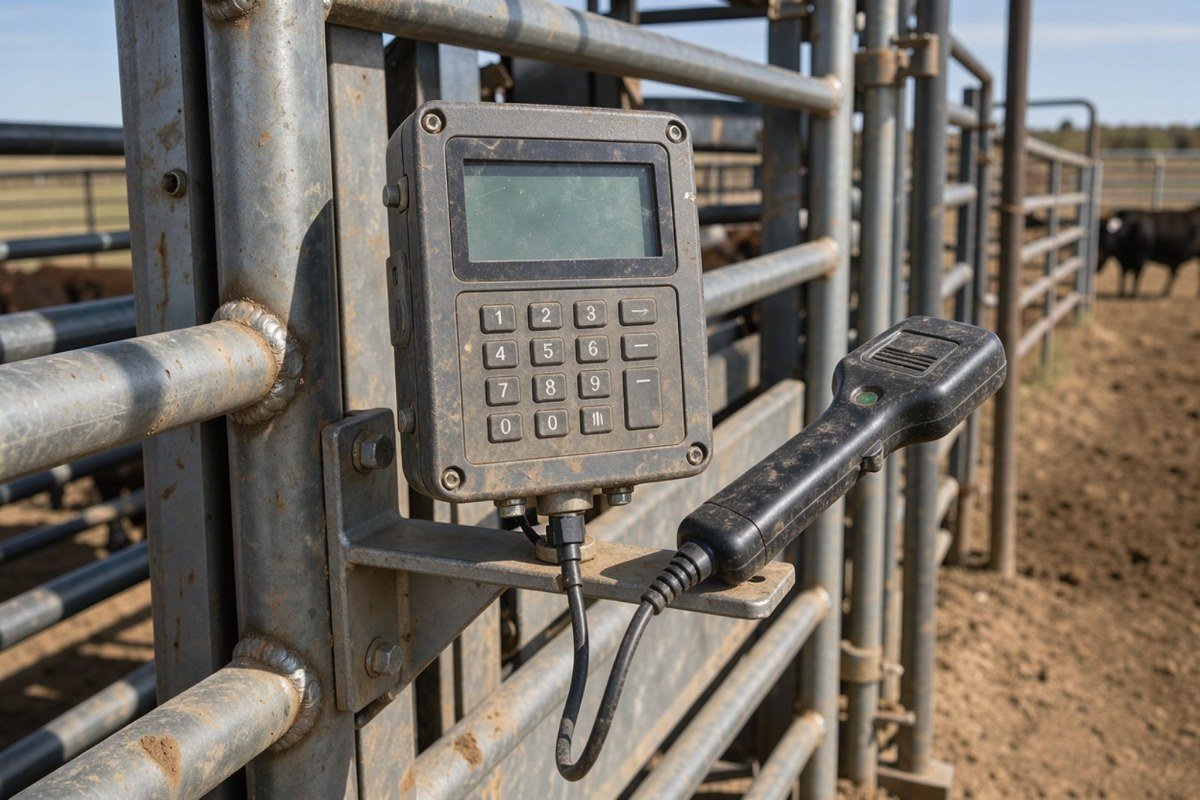
- EID / RFID reading. Indicators such as Gallagher’s TWR-5 have a built-in EID reader, so each weight is saved against the animal’s tag automatically. Our guide to EID tagging explains the tags.
- Weight gain and ADG. Gallagher lists average daily gain calculations and drafting by weight gain on the TWR-5. That turns the scale into a management tool — see how to track cattle weight gain.
- Data storage and export. The TWR-5 stores up to 1,000,000 weighing records and up to nine traits per animal, with Bluetooth, Wi-Fi and cloud upload.
- Power. Check the battery type and runtime. Rice Lake’s 380 farm-bar indicator runs on four C-cell batteries; many others use rechargeable packs.
- Toughness. Look for a sealed enclosure — Rice Lake specifies an IP66 stainless steel housing on its 380 indicator — and protected cables.
Portable vs Permanent Livestock Scales
| Portable (load bars, cages on casters) | Permanent (fixed alley platform or pit) | |
|---|---|---|
| Pros | Moves between pens, barns or farms; lower upfront cost; works with equipment you already have | Fastest throughput; no setup each time; most stable readings |
| Cons | Setup and leveling every time; cables and bars take more wear | Fixed location; higher cost; may need concrete work |
| Best for | Smaller herds, multiple sites, renting land | Larger herds, feedlots, sale barns and frequent weighing |
If you weigh a few times a year at different locations, portable wins. If you weigh weekly in the same alley, a permanent platform saves time every single session. Our guide to what to look for in a portable livestock scale covers the portable side in more depth.
Setting Up a Scale With Your Chute
Most weighing problems on a ranch are setup problems, not scale problems. A few basics make a big difference:
- Start with a firm, level base. Put load bars or a platform on concrete or a compacted, level pad. A rocking or tilted platform gives inconsistent readings.
- Make sure only the scale carries the animal. The platform or chute must not touch gates, posts or the ground anywhere except through the load bars or feet. Even a small contact point steals weight.
- Protect the cables. Route them away from hooves, gates and machinery. Gallagher, for example, sheathes its load bar cables in polyurethane with stainless steel springs against impact and rodent damage.
- Design for flow. Animals move more calmly onto a scale that is part of the alley, with solid sides and good footing, than onto one that feels like a step up.
- Zero the empty scale before each session, and clean out manure and mud that build up and add weight.
- Check it with a known weight occasionally — even a few bags of feed of known weight tell you whether readings have drifted.
We go step by step in our guide to setting up a livestock scale and chute system, and our article on what affects animal weight accuracy covers gut fill, weather and timing.
Accuracy, NTEP and Selling by Weight
For management — dosing, sorting, tracking gain — a well set-up non-NTEP livestock scale is usually all you need. Rice Lake, for example, labels its Farm Bars with 380 indicator as non-legal-for-trade; that is fine for your own records.
Selling or buying by weight is different. The NCWM notes that devices used for selling, buying or custody transfer generally need an NTEP Certificate of Conformance, and that many states require one before a device goes into commercial service. If you plan to sell cattle off your own scale, check with your state weights and measures office first. Our guides to NTEP scales and NRCS-certified farm scales explain the requirements.
Accuracy also depends on the animal. A restless steer on a sloppy platform will never weigh as consistently as a pallet. Averaging indicators, good footing and weighing at the same time of day get you most of the way there.
Choosing a Scale by Species
Cattle get most of the attention, but plenty of ranches weigh more than one species. A few notes by animal:
- Beef and dairy cattle. Single-animal weighing in an alley or chute is the norm. Plan for your heaviest cow or bull, not your average animal — our guide to average bull weight helps with the top end.
- Calves. A cage or small platform is easier than wrestling a calf onto a full-size cattle scale. See how much a calf weighs for typical numbers at birth and weaning.
- Pigs. Pigs need a fully enclosed crate with solid sides and a non-slip floor. Our pig weight guide covers market weights.
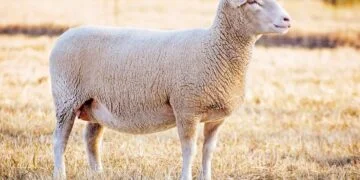
- Sheep and goats. A crate or small platform on load bars works best, with gates at both ends. Compare your flock with our guides to how much a sheep weighs and how much a goat weighs.
One scale can often cover several species if you choose a platform with removable side panels or a cage that fits on the same load bars — just make sure the readability is fine enough for your smallest animals.
How Often Should You Weigh?
The best schedule is the one you will actually keep. Most producers weigh at the moments when a number changes a decision: at birth or tagging, at weaning, before breeding, before treatments that are dosed by weight, and before sale. Feedlots and growing programs weigh more often to track gain and adjust rations.
Whatever your schedule, weigh at the same time of day and under the same conditions each time, so a change in the number is a change in the animal — not in its breakfast. Our guide to how often you should weigh livestock suggests schedules by species and production stage.
Costs to Budget Beyond the Scale
The platform or load bars are only part of the bill. When you price a livestock scale, check whether these are included:
- The indicator. Load bars are often sold without one, and EID-reading indicators cost more than basic weight displays.
- A platform or crate to sit on the bars, if you do not already have one.
- A firm, level base — a concrete pad or compacted gravel pad where the scale will live.
- Software or app subscriptions for herd records, if the indicator relies on one.
- Spare cables and batteries, because cables are the most common casualty on a working ranch.
- Calibration checks, especially if you will sell by weight and need the scale inspected.
Common Mistakes When Buying a Livestock Scale
- Buying far more capacity than you need. Bigger is not always better — a very high-capacity system can read in coarser steps, which matters when you weigh calves or sheep.
- Choosing a platform that is too short. If an animal cannot stand with all four feet on the deck, it will lean on gates and rails and the reading will be off.
- Skipping animal averaging. Without it, you will spend a lot of time waiting for a restless animal to settle.
- Leaving cables exposed. One stomp or one chewing rodent can take a scale out of action on weighing day.
- Assuming any scale is legal for trade. If you plan to sell by weight, confirm NTEP certification and your state’s rules before you buy.
- Ignoring data. A scale that stores weights against EID tags saves hours of transcription and makes trends visible.
A quick buying checklist
Before you order, write down: your heaviest animal or group, the species you will weigh, where the scale will live (one spot or many), how you will power it, whether you need EID and ADG, and whether you will ever sell by weight. With those six answers, comparing livestock scales for sale becomes a lot simpler.
Our Picks
Both picks below come from ScaleBlog’s affiliate partners. We have listed the trade-offs we see on their product pages so you can judge for yourself.
SellEton pick
Rice Lake Farm Bars with 380 Indicator (sold by SellEton)
- Two farm bars plus a Rice Lake 380 Synergy Series indicator
- Capacities of 2,500, 5,000 or 10,000 lb
- IP66 stainless steel indicator enclosure; 12 ft cable with quick disconnect
- Runs on 4 C-cell batteries (not included); factory calibrated
Pros: portable, fits under platforms and chutes you already own, rugged enclosure. Cons: non-legal-for-trade; batteries not included; no EID reading listed for this indicator.
Use code SCALEBLOG10 for 10% off.
Liberty Scales pick
Liberty LS-929 Livestock Scale for Cattle
- 85 × 26 × 5 in alley platform (larger L and XL sizes in the series)
- Four 2,500 lb load cells with leveling feet; semi-portable
- LS-7510-SS indicator with motion-sensing for restless animals
- Built-in ramps and side rails
Pros: complete platform, ready for single-animal cattle weighing, ramps and rails included. Cons: the listing does not state an NTEP certificate, so check before selling by weight; heavier to move than load bars.
Use code SCALEBLOG10 for 10% off.
Want to compare more options? Our farm scales guide lines up every type, from feed scales to truck scales.
Frequently Asked Questions
How much does a livestock scale cost?
As of October 2026, US listings put a single-animal cage scale at about $1,700, load bar sets at about $1,730–$3,440 before an indicator, complete portable load-bar kits at about $4,560–$6,480, and 5 × 7 ft group platforms at about $2,000–$4,600. EID-reading indicators and installation add to the total.
What size scale do I need for cattle?
Pick a capacity comfortably above your heaviest animal — or your heaviest group, if you weigh several at once — and a platform long and wide enough for the animal to stand fully on it. Load bar sets such as Gallagher’s 2,500 kg (5,500 lb) bars are designed to fit under most livestock platforms and crates.
Do I need an NTEP scale to sell cattle by weight?
Generally, yes, if your scale’s reading sets the price. The NCWM notes that devices used for buying and selling generally need an NTEP Certificate of Conformance, and many states require one. Check with your state weights and measures office before you sell off your own scale.
Can a livestock scale read EID tags?
Many can. Indicators such as Gallagher’s TWR-5 have a built-in EID reader, so each weight is stored against the animal’s tag, and can calculate average daily gain. Basic indicators show weight only, so check the spec before you buy.
Can I weigh cattle without a scale?
You can estimate it with a tape measure and a heart girth formula, but expect some error. It is handy for tracking growth, not for dosing or selling. See our guide to estimating cattle weight without a scale.
Sources
- Gallagher — TWR-5 weigh scale and data collector with integrated EID reader
- Gallagher — Loadbars range
- NCWM — NTEP frequently asked questions
- SellEton — Rice Lake Farm Bars with 380 indicator
- SellEton — Gallagher 5,500 lb load bars
- Liberty Scales — LS-929 livestock scale for cattle
- Liberty Scales — LS-930 cage system
Last reviewed October 2026.