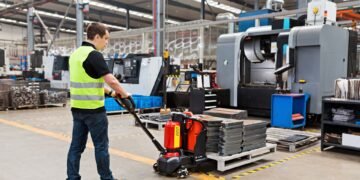
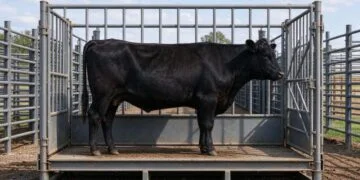
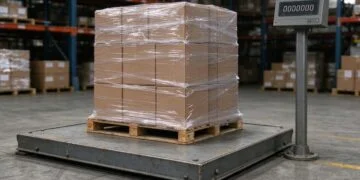
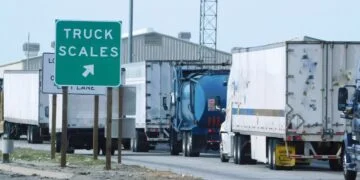





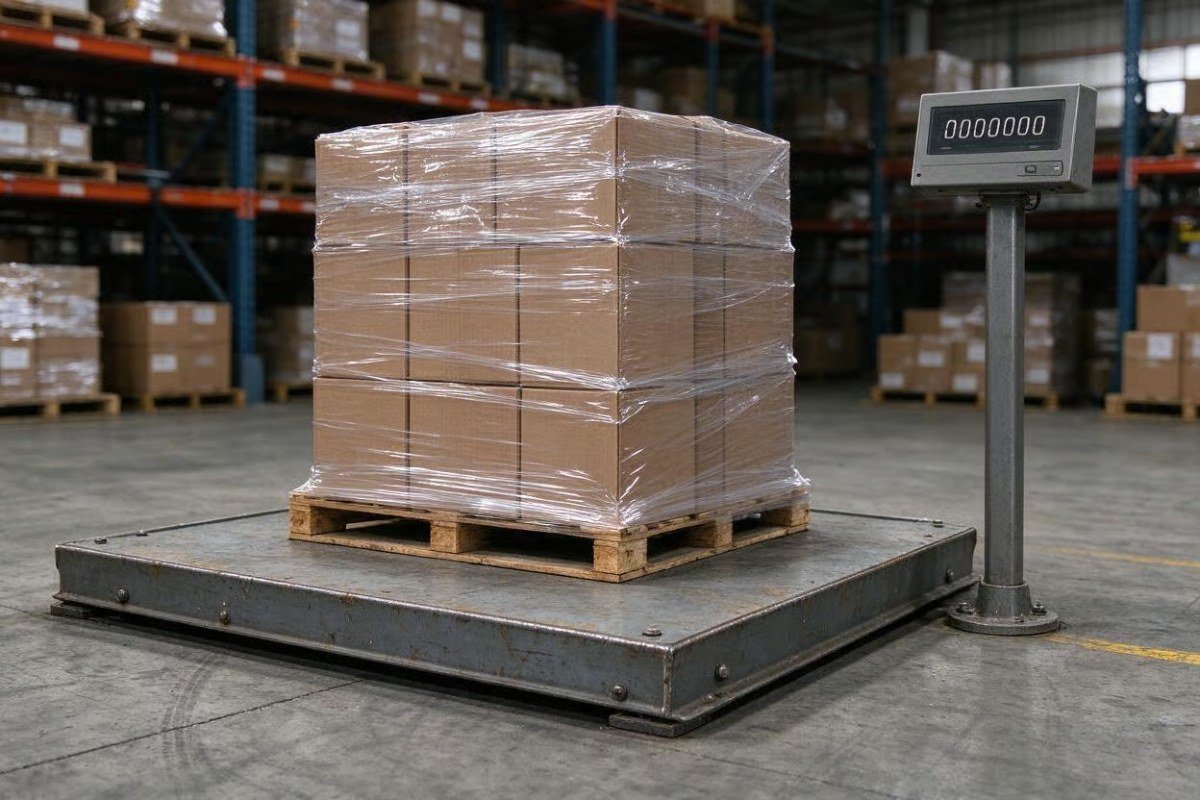
A floor scale — also called a platform scale — is a heavy-duty scale that sits on or in the floor. Common sizes run from 2 × 2 ft to 5 × 7 ft (larger on request), rated roughly 1,000–20,000 lb (454–9,072 kg), and they are used to weigh pallets, drums, carts and bulk goods.
If it is too heavy or awkward to lift onto a bench, it probably belongs on a floor scale. This guide covers the main types, the standard sizes and capacities manufacturers actually sell, current prices, and the certifications that matter if you sell by weight.
Table of Contents
Floor Scale vs Platform Scale: Is There a Difference?
Not really. “Floor scale” and “platform scale” are used interchangeably for a flat, low deck that sits at floor level — Rice Lake, for example, files its RoughDeck scales under platform scales. The only wrinkle is that some catalogs also call small benchtop platforms “platform scales,” so check the dimensions and capacity before you assume what you are getting. If you are deciding between the two styles, our bench scale vs floor scale guide helps.
Types of Floor Scales
Every floor scale is a deck on load cells with an indicator, but the build changes a lot depending on where it lives:
| Type | What it is | Best for |
|---|---|---|
| Low-profile | A thin deck — some models are as low as 2.2 in — that you can roll onto with a short ramp | Warehouses and shipping docks loading by pallet jack |
| Pit-mount | The deck sits in a pit so its surface is flush with the floor; no ramp needed | High traffic, forklifts and carts driving straight across |
| Washdown / stainless steel | Stainless deck, load cells and junction box built to survive hosing down and corrosive cleaners | Food processing, chemicals, pharmaceuticals |
| Portable | A floor scale with wheels and handles, or an open U-frame you can move between work areas | Weighing in more than one spot; rented or shared space |
| Drum / hopper | A platform or weigh modules sized for drums, tanks or hoppers, sometimes with controlled dispensing | Batching, filling and liquid inventory |
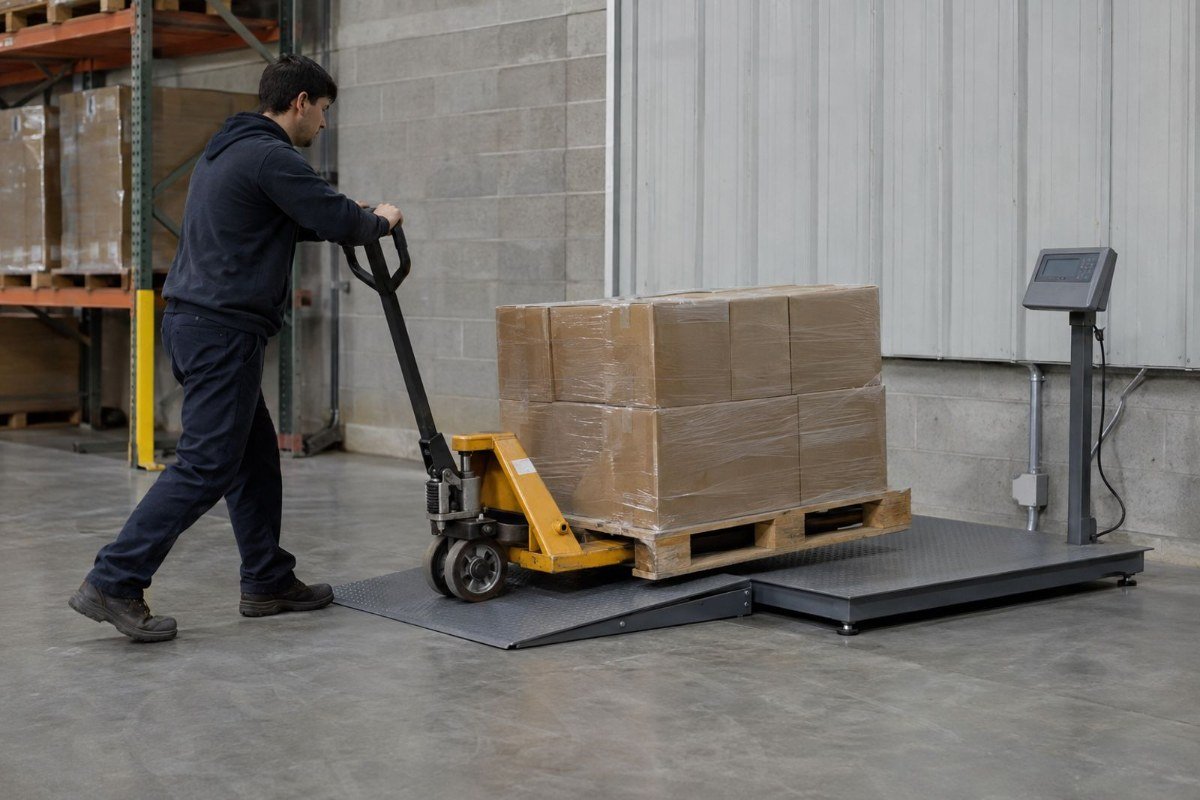
| Ramp-access | Any surface-mounted scale paired with bolt-on access ramps | Hand trucks, carts and pallet jacks on a surface-mount install |
A few rules of thumb: choose pit-mount when forklifts will drive over the scale all day, low-profile plus a ramp when you cannot cut the floor, and stainless when water and chemicals are part of daily cleaning — our comparison of stainless steel vs mild steel scales explains the trade-off. If you weigh drums or tanks, start with our guide to drum and hopper scales.
Floor Scale Sizes and Capacities
Platform size and capacity are chosen separately: most manufacturers offer each size in several capacities. Here is what current catalogs list:
| Platform size | Capacities offered | Typical use |
|---|---|---|
| 2 × 2 ft (24 × 24 in) | 1,000–20,000 lb | Drums, kegs, small carts, compact spaces |
| 3 × 3 ft (36 × 36 in) | 1,000–20,000 lb | Drums on small pallets, carts, cylinders |
| 4 × 4 ft (48 × 48 in) | 1,000–30,000 lb | The standard pallet scale — fits a 48 × 40 in pallet |
| 4 × 5 to 4 × 8 ft | 1,000–30,000 lb | Long or overhanging loads, bundled goods |
| 5 × 5 ft (60 × 60 in) | 1,000–30,000 lb | Pallet jack drive-on, oversized pallets |
| 5 × 7 ft (60 × 84 in) | 1,000–30,000 lb | Carts, crates, mixed loads, livestock |
| 6 × 6 to 8 × 10 ft | 1,000–30,000 lb | Heavy industrial, forklift drive-on, large crates |
Readability scales with capacity. On SellEton’s SL-900-SD range, for example, a 1,000 lb model reads in 0.2 lb steps, 2,500 lb in 0.5 lb, 5,000 lb in 1 lb, 10,000 lb in 2 lb and 20,000 lb in 5 lb. So do not oversize “just in case” — a 20,000 lb scale weighing 300 lb drums will only tell you the weight to the nearest 5 lb.
For pallets specifically, 48 × 48 in is the practical minimum for a standard 48 × 40 in pallet — see our pallet scale guide for why overhang causes low readings.
Where Platform Scales Earn Their Keep
The same basic deck shows up in very different jobs. Here is how the requirements change from one setting to another:
Shipping and receiving docks
This is the classic use. Outbound pallets get weighed before the bill of lading is printed, and inbound deliveries get checked against the packing list before the driver leaves. Accuracy and repeatability matter more than anything, and if the weight goes on a freight bill, the scale should be NTEP-certified. A printer or a connection to your warehouse software saves a lot of hand-written tickets.
Manufacturing and batching
Production lines use platforms to weigh raw materials into a batch, check finished goods and track scrap. Here the indicator does a lot of the work: setpoints, checkweighing (over/under) and data output to a PLC or MES are common requirements. Pick a capacity that keeps the division size small enough for your recipe tolerances.
Recycling and scrap
Scrap yards buy material by weight, so they need legal-for-trade equipment that can take abuse — dropped loads, sharp edges and outdoor weather. Thick tread plate, protected cables and sealed load cells pay for themselves quickly in this environment.
Food processing and pharmaceuticals
Hygiene drives the choice: stainless steel construction, smooth surfaces that are easy to clean, and components rated for washdown. Some plants use lift-deck designs so the area underneath can be cleaned as well.
Farms and ranches
A 5 × 7 ft platform with side rails doubles as a livestock scale for pigs, sheep and calves, and a smaller deck handles feed, seed and produce. Mud and manure mean painted or galvanized frames, sealed load cells and a battery-powered indicator are worth paying for. For weighing animals, our livestock scale buyer’s guide goes deeper.
Whatever the setting, the questions are the same: how big and heavy is the load, how finely do you need to know its weight, does the number set a price, and how harsh is the environment? Answer those four and the right model usually picks itself.
How Much Does a Floor Scale Cost?
Floor scale prices depend on size, capacity, NTEP certification and materials. These are the ranges we found on current US listings as of October 2026:
| Model type | Listed price (USD) | Source |
|---|---|---|
| 4 × 4 ft carbon steel pallet / platform model, 2,500–10,000 lb | $1,279 – $2,099 | Global Industrial (Global Industrial, Optima, Adam, Brecknell models) |
| Ultra-low-profile model, 2 × 2 to 5 × 5 ft, 1,000–5,000 lb | $1,034 – $1,954 | Liberty Scales LS-LPX |
| NTEP aluminum model, 2 × 2 to 5 × 5 ft | $1,199 – $1,999 | Liberty Scales LS-900 |
| NTEP super-duty model, 2 × 2 to 7 × 7 ft, 1,000–20,000 lb | $1,149 – $8,049 | SellEton SL-900-SD (48 × 48 in: $2,299 – $3,449) |
| 48 × 48 in model with stainless indicator | $2,734 | Ohaus via Liberty Scales |
| 4 × 4 ft stainless washdown model | $4,249 – $5,752 | Optima via Global Industrial; Ohaus washdown via Liberty Scales |
Don’t forget ramps and installation
A surface-mounted scale needs at least one access ramp if anything rolls onto it. Steel ramps were listed at $519–$759, and stainless ramps at about $1,649–$1,897, on the same sites. Pit installation adds a concrete pit, and often a pit frame; Rice Lake, for example, lists pit frames as a quoted option rather than a catalog price. Add freight, an indicator upgrade or printer, and setup and calibration by a scale technician if the scale will be used for trade.
NTEP, Legal-for-Trade and IP Ratings
NTEP and legal-for-trade
If the weight on your floor scale sets a price — billing a customer by the pound, buying scrap or produce by weight, or declaring freight weights — the scale generally needs to be legal for trade. In the US, that starts with an NTEP Certificate of Conformance, which shows the model can meet NIST Handbook 44 requirements. The NCWM notes that many states require an NTEP certificate before a device is put into commercial use, and some states also evaluate devices locally.
Look for the certificate number on the spec sheet and data plate. Rice Lake’s RoughDeck HP-H, for example, lists NTEP CC 92-001, Class III, 5,000 divisions. Our guide to NTEP scales explains what those terms mean.
IP ratings
An IP (ingress protection) rating tells you how well the load cells, junction box and indicator keep out dust and water. The first digit covers solids — 6 means dust-tight — and the second covers water:
| Rating | Water protection (summary) | Typical floor scale use |
|---|---|---|
| IP65 | Low-pressure water jets from any direction | Dry warehouses with occasional splashes |
| IP66 | Strong water jets from any direction | Outdoor or wet areas |
| IP67 | Temporary immersion (15 cm to 1 m for 30 minutes) | Load cells in wet floors and pits |
| IP68 | Continuous submersion under conditions set by the manufacturer | Pits that may flood, heavy washdown |
| IP69K | High-pressure, high-temperature washdown | Food plants with hot-water or steam cleaning |
For a dry warehouse, IP65–IP67 is plenty. For washdown, choose stainless steel with IP68 or IP69K components. Our full guide to IP ratings for industrial scales goes further.
How to Choose a Floor Scale
- Size the platform to the load. The whole load should sit on the deck with no overhang.
- Size capacity to your heaviest load plus headroom, but not so high that readability gets too coarse.
- Decide surface-mount or pit. Surface-mount needs ramps; pit-mount needs concrete work but no ramps.
- Match materials to the environment — painted steel for dry areas, stainless for washdown.
- Buy NTEP if you sell by weight.
- Pick an indicator that fits your workflow — printer, USB, Ethernet or Wi-Fi to your software.
Our step-by-step guide on how to choose a floor scale for your warehouse covers each decision in detail.
Floor Scale Calibration and Care
A floor scale takes a beating — forklifts, dropped loads, debris and moisture all work against accuracy. A few habits keep it honest:
- Keep the gap clear. Debris wedged between the deck and the floor, frame or pit wall can carry part of the load and make the scale read low.
- Zero before use and check the scale against a known weight regularly.
- Load the center of the deck and avoid dropping loads or braking forklifts on the platform.
- Protect the cables from forklift traffic and pinch points.
- Re-level and recalibrate after a move.
- Follow your state’s inspection schedule for legal-for-trade scales, and keep calibration records.
Our guide to industrial scale calibration covers intervals, test weights and what a technician checks.
Our Floor Scale Picks
ScaleBlog may earn a commission if you buy through links on this page, at no extra cost to you. See our affiliate disclosure.
SellEton pick
SellEton SL-900-SD Super-Duty NTEP Floor Scale
- NTEP certified (Legal for Trade), made in the USA
- 3/8 in steel tread plate on 1/2 in structural channels
- Sizes from 2 × 2 ft to 7 × 7 ft; capacities from 1,000 lb × 0.2 lb to 20,000 lb × 5 lb
- 10-year warranty on parts (excluding damage); free shipping in the lower 48
Best for: legal-for-trade weighing, heavy pallets and forklift traffic.
Use code SCALEBLOG10 for 10% off.
Liberty Scales pick
Liberty Scales LS-LPX Ultra Low-Profile Floor Scale
- Ultra-slim 2.2 in height
- X-shaped channel frame with load cells at each end of the X
- 2 × 2, 3 × 3, 4 × 4 and 5 × 5 ft platforms
- 1,000 lb × 0.2 lb, 2,500 lb × 0.5 lb or 5,000 lb × 1 lb; made in the USA, 5-year warranty
Best for: low-clearance setups and roll-on loading where you cannot cut a pit.
Use code SCALEBLOG10 for 10% off.
Frequently Asked Questions
What is a floor scale used for?
Floor scales weigh anything too heavy or bulky for a bench: loaded pallets, drums, carts, crates, bulk bags and even livestock. They are common on shipping and receiving docks, in manufacturing and recycling, and anywhere goods are bought or sold by weight.
How much is a floor scale?
As of October 2026, US listings put a 4 × 4 ft carbon steel floor scale at about $1,279–$2,099, NTEP super-duty models from about $1,149 for small sizes to $8,049 for large high-capacity ones, and stainless washdown scales around $4,249–$5,752. Ramps, pits and installation are extra.
What size floor scale do I need?
Pick a platform big enough that the whole load sits on it without overhang — 48 × 48 in for a standard 48 × 40 in pallet — and a capacity comfortably above your heaviest load. Larger decks such as 5 × 5 or 5 × 7 ft suit pallet jacks, carts and oversized loads.
Is a platform scale the same as a floor scale?
Yes, in most cases. Both terms describe a flat, low deck at floor level. Some catalogs also use “platform scale” for small benchtop platforms, so check the size and capacity.
Does a floor scale need to be NTEP certified?
Only if it is used in commerce — for example, to bill customers by weight. In that case most states require an NTEP Certificate of Conformance before the scale goes into service. For internal weighing, a non-NTEP scale can be fine.
Sources
- Rice Lake — RoughDeck HP-H floor scale specifications
- Rice Lake — Floor scales overview
- SellEton — SL-900-SD floor scale sizes, capacities and prices
- Liberty Scales — LS-LPX floor scale specifications and prices
- Global Industrial — pallet and floor scale listings (October 2026)
- NCWM — NTEP frequently asked questions
- Machine Design — IP ratings for sensors
Last reviewed October 2026.