








A crane scale is a suspended weighing instrument designed to measure the weight of a load while it is being lifted by a crane, hoist, or overhead beam. Unlike a floor scale — where the load must be placed on a platform — a crane scale hangs between the lifting equipment and the load, measuring weight in mid-air during the same lift that was already going to happen. The load is weighed without being set down, without transferring it to a separate weighing station, and without consuming any additional floor space.
This is what makes crane scales indispensable in applications where the load cannot practically be placed on a floor scale — suspended structural steel, molten metal ladles in foundries, cargo containers at port terminals, scrap metal loads of irregular shape, and heavy machinery components during assembly.
Table of Contents
How a Crane Scale Works
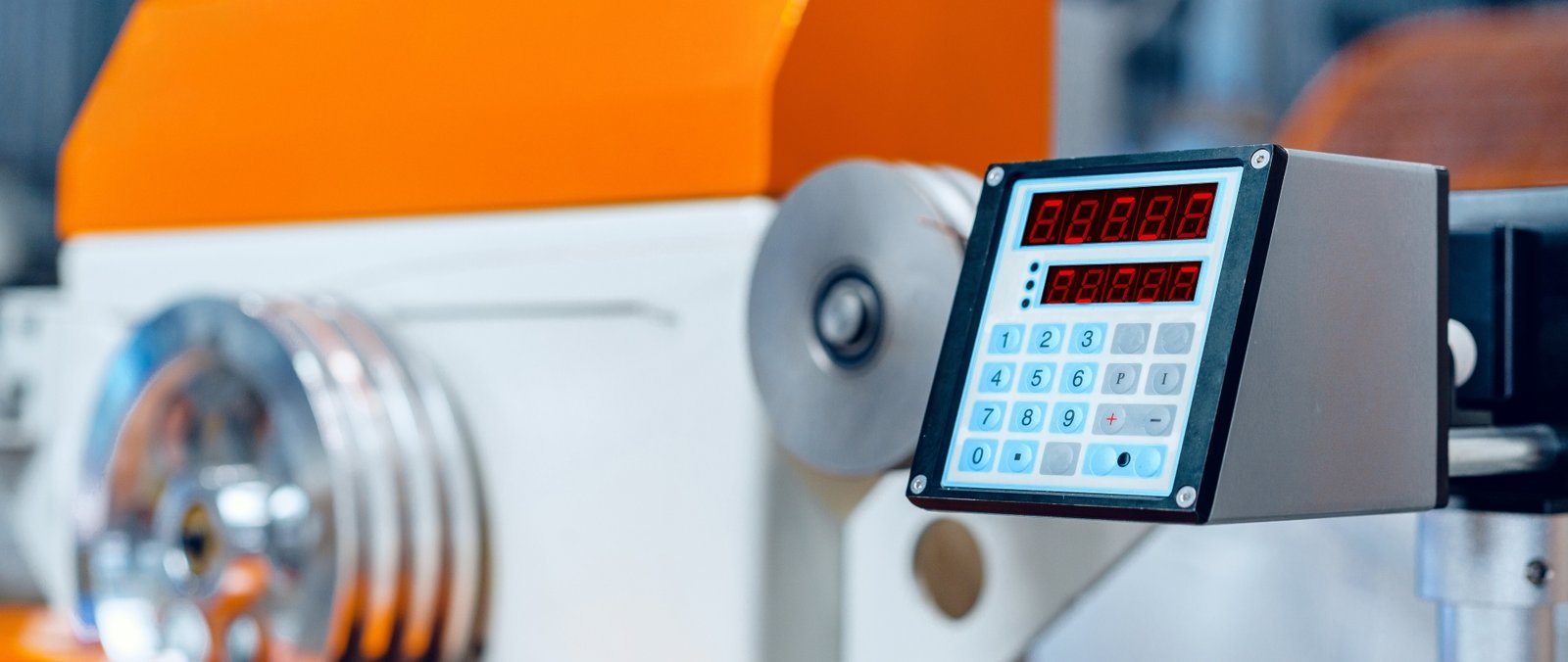
At the center of every crane scale is a load cell — a precision sensor that converts mechanical force into an electrical signal. A crane scale includes a load cell that converts mechanical force into electrical signals, a digital display unit for readouts, and sturdy housing protecting the internal components from damage.
The operating principle follows a straightforward sequence. The crane scale is connected between the crane hook and the load — either directly via its own hook and shackle, or through rigging such as chains or lifting straps. As the crane lifts the load, gravity creates a tensile force on the scale’s internal load cell. The load cell measures that tension, converts it to an electrical signal, and the indicator displays the result as a weight reading on a digital display.
On most commercial crane scales, the display is mounted on the scale body itself — visible from a distance on the floor below. On wireless models, the weight reading is transmitted to a handheld remote receiver held by the operator, eliminating the need to look up at a scale suspended high in the air.
Types of Crane Scales
Several configurations exist to match different industrial applications, load types, and environmental requirements.
Standard Digital Crane Scale
The most widely used type. A self-contained unit with an integrated load cell, digital display, rechargeable battery, upper hook for crane attachment, and lower hook for load attachment. Capacities range from a few hundred pounds on light-duty hanging models to well over 100 tons on heavy-duty dynamometer-style units. Most include an integrated remote control for zeroing, taring, and unit switching from the floor level.
Best for: General manufacturing, warehouse receiving, scrap metal operations, and any application requiring occasional suspended weighing of loads that fit within the scale’s capacity range.
Wireless Crane Scale
Functionally identical to a standard digital crane scale, but transmits weight data wirelessly to a handheld receiver carried by the operator. The operator does not need line-of-sight to the scale display — the reading appears on the handheld unit regardless of where the scale is positioned during the lift.
Best for: High-bay warehouses and manufacturing facilities where the scale may be operating at 20–50 feet above the floor, and reading the scale display directly is impractical or unsafe.

Dynamometer and Tension Link
A dynamometer measures tensile force in cables, ropes, and rigging rather than load weight directly. A tension link is a compact in-line load cell that replaces a shackle in an existing rigging configuration — adding weight measurement capability to existing lift equipment without requiring a separate scale unit.
Best for: Testing rigging loads, measuring cable tension in winch and mooring operations, and retrofit applications where a purpose-built crane scale cannot be accommodated within the headroom available.
Weighing Hook Block
A weighing hook block integrates the load cell directly into the crane’s hook block — the assembly at the bottom of the hoist that carries the hook. With a weighing hook block, two tasks are carried out simultaneously — a load is lifted and transported while being weighed, without losing headroom between the crane hook and the load. This is the most seamless integration available for operations that weigh every lift as a standard workflow step.
Best for: Production facilities where every lift is also a weighing event — foundries, steel fabrication, port terminals — and headroom constraints make a traditional crane scale impractical.
Industrial Applications
Crane scales serve a wider range of industries than most buyers initially consider.
Metal fabrication and steel manufacturing: Weigh steel beams, plates, coils, and structural sections during cutting, assembly, and finished goods verification. A crane scale at the end of a fabrication line confirms that finished components meet declared weights before dispatch without any additional handling.
Foundry and casting operations: Weigh molten metal ladles before pouring. Weigh finished castings before machining. Neither application is practical with a floor scale — the ladle cannot be safely set down mid-process, and hot finished castings damage standard platform surfaces.
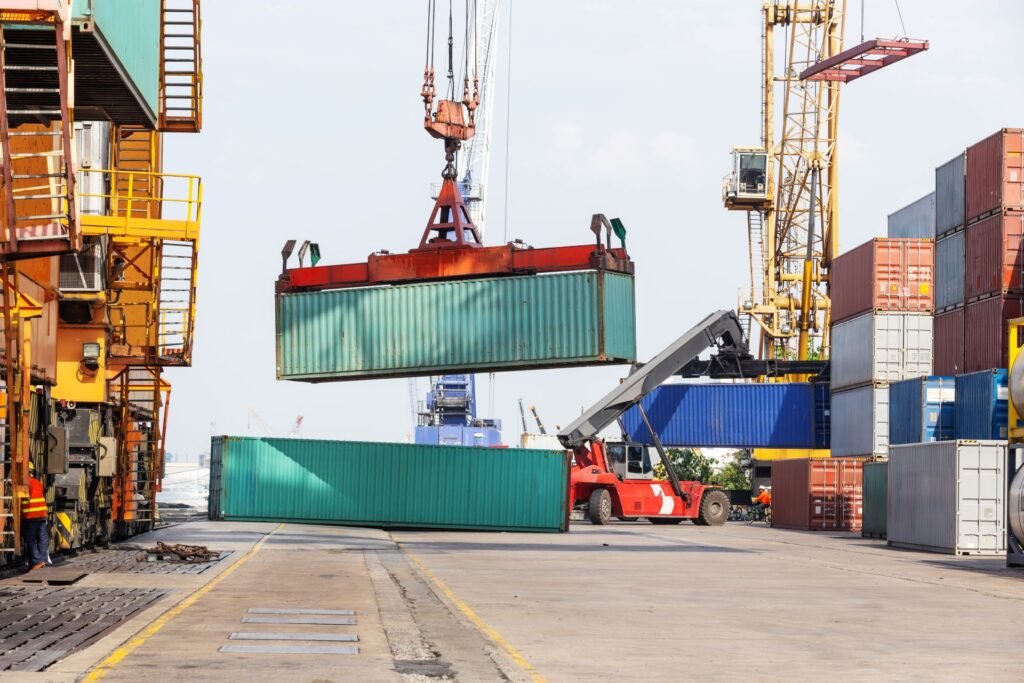
Port terminals and freight handling: Verify container and cargo weights during loading and unloading at the point of lift. As covered in our article on SOLAS VGM scale requirements, Method 1 VGM compliance requires weighing the entire packed container — a crane scale or weighbridge at a port terminal is the most common implementation of this requirement.
Scrap metal and recycling: Scrap loads arrive in irregular shapes and sizes that do not sit flat on a floor scale. A crane scale weighs each load during the lift from the truck or collection point — producing the weight record for billing without any additional handling.
Construction and heavy lifting: Verify that structural elements, concrete panels, and prefabricated sections are within the crane’s rated lifting capacity before the lift begins. Operating a crane above its rated capacity is a serious safety violation and a direct cause of crane failure incidents.
Aerospace and precision manufacturing: Weigh large assembled components and subassemblies during production verification without disturbing the assembly line workflow or requiring a dedicated weighing station.
Key Specifications When Selecting a Crane Scale
Capacity: Select a crane scale with a rated capacity that covers your heaviest expected lift with a meaningful safety margin — typically 25–30% above the maximum expected load. Never operate a crane scale at its rated capacity limit — the rated capacity is the maximum allowable load, not the recommended operating load. As E.G. Kantawalla notes, you should pick a scale rated above your heaviest expected lift.
Accuracy: Industrial crane scales are commonly specified at around ±0.1% of capacity, but check the datasheet — accuracy is stated differently by different manufacturers. For legal-for-trade use in the US, the requirement is not a percentage: an NTEP-certified scale must stay within NIST Handbook 44 tolerances, which are expressed in scale divisions (d) for its accuracy class. Confirm the accuracy class matches the tolerance required by the application — a crane scale used to determine the price of scrap metal purchased by weight requires higher accuracy documentation than one used for internal load monitoring.
Display visibility: The display must be readable from the floor below the lift. Assess the working height of the crane and the ambient light conditions. Backlit LED displays with large digit heights are the standard for heavy industrial environments. For lifts above 15 feet, a wireless display to a handheld receiver is the practical solution.
IP rating: Crane scales used in outdoor or harsh industrial environments require appropriate ingress protection. IP54 for indoor environments with moderate dust. IP65 for outdoor applications or environments with water spray. IP67 for washdown environments or coastal/marine operations. Confirm the IP rating covers both the scale housing and the indicator.
NTEP certification: For any application where the crane scale weight reading determines a commercial transaction — scrap metal billing, cargo weight for freight invoicing — the scale must carry NTEP certification for legal-for-trade use. Confirm the Certificate of Conformance number before purchasing for commercial transaction applications.
Overload protection: All quality crane scales include overload protection — a mechanical or electronic stop that prevents damage to the load cell when the rated capacity is accidentally exceeded. Confirm overload protection is specified and read the safe and ultimate overload ratings in the manual — they vary by model. Overload ratings exist to protect against accidents; they are never extra working capacity.
Battery life: Crane scales operate on rechargeable internal batteries. Confirm the battery life covers a full shift of operation — typically 30–100+ hours per charge, depending on model. For operations where recharging between shifts is not practical, models with replaceable battery packs are available.
Calibration Requirements for Crane Scales
Crane scales used in commercial transactions — where weight determines the price paid — must be calibrated at defined intervals using NIST-traceable reference weights and sealed by a state Weights and Measures inspector for legal-for-trade use.
For internal industrial use — load monitoring, production verification, and weight records where no commercial transaction is based on the reading — calibration by an accredited service provider is recommended annually at a minimum, and immediately after any overload event, impact, or electronic repair.
Verification of crane scales is required for price calculation on the basis of weight, while calibration is necessary for ISO 9001 certification. The two serve different purposes and are performed by different authorities.
For the complete calibration requirements that apply to industrial scales, including crane scales, see our article on how often industrial scales should be calibrated.
Safety Considerations
A crane scale operates in a suspended load environment. Every safety protocol that applies to crane and hoist operations applies equally to the crane scale within that operation.
Never exceed the rated capacity. Overloading a crane scale damages the load cell — sometimes visibly, often not. A load cell that has been overloaded may continue to display readings while producing inaccurate results. Any suspected overload event requires the scale to be removed from service and inspected before the next use.
Inspect rigging before every lift. The hooks, shackles, and any connecting rigging used with the crane scale must be inspected for wear, cracking, and correct seating before every lift. A rigging failure under a suspended load is a serious safety incident — the weight of the load and the accuracy of the scale are irrelevant if the rigging fails.
Ensure clear below-lift zones. Anyone below a suspended load is in the crane’s exclusion zone. Establish and enforce clear exclusion zones during any lift, including weighing lifts. The crane scale does not change the safety requirements of the lift.
FAQs
What is a crane scale used for?
A crane scale weighs heavy loads while they are suspended from a crane, hoist, or overhead beam — without requiring the load to be placed on a floor scale platform. Applications include scrap metal billing, cargo weight verification at port terminals, structural steel weighing during fabrication, foundry ladle weighing, and any application where the load cannot practically be placed on a floor scale.
How accurate is a crane scale?
Many industrial digital crane scales are specified at roughly ±0.1% of rated capacity; lower-cost models may be looser, so check the datasheet. Legal-for-trade crane scales must meet NIST Handbook 44 tolerances, which are set in scale divisions rather than percentages. Accuracy is affected by load cell quality, calibration state, operating temperature, and dynamic effects during the lift. For static weighing — the load hanging still — accuracy is at its highest. For weighing during an active lift cycle, some dynamic fluctuation occurs.
Do crane scales need to be NTEP certified?
Yes, for any application where the crane scale weight determines a commercial transaction — buying or selling scrap metal by weight, billing freight by weight, or any other trade application. NTEP certification and state Weights and Measures inspection are required for legal-for-trade use. For internal industrial monitoring with no commercial transaction involved, NTEP certification is not legally required.
What is the difference between a crane scale and a dynamometer?
A crane scale is a purpose-built suspended weighing instrument displaying results in weight units — pounds or kilograms — for use in weighing applications. A dynamometer measures force in Newtons or pounds-force, used for testing and pull-force measurement. The two terms are sometimes used interchangeably in commercial contexts, but their intended applications differ. Crane scales are for weight measurement; dynamometers are for force measurement.
How high can a crane scale read from?
The standard integrated display on a crane scale is typically readable from 20–30 feet below the scale. For lifts above this height — or where visibility is obstructed by the load — wireless models transmit weight data to a handheld receiver at the operator’s position, allowing weight to be read from any distance within the wireless range.
Conclusion
A crane scale fills the weighing gap that no floor scale can — loads that cannot be set down on a platform, loads too heavy or irregular for any available platform, and loads where weighing during the lift is the only practical option.
The right crane scale is determined by capacity, accuracy, display visibility, IP rating for the operating environment, and NTEP certification if the weight reading will be used in any commercial transaction. For any operation where cranes handle loads regularly, a crane scale is the weighing instrument that converts the lift cycle from a material handling step alone into a material handling plus verified weight capture step — adding measurement value to work that was already happening.
Sources
- NIST Handbook 44 (2026), Section 2.20 Scales, Table 6 maintenance tolerances — nist.gov
- National Conference on Weights and Measures, NTEP Certificates of Conformance — ncwm.com
- OSHA 29 CFR 1910.179 (overhead and gantry cranes) and ASME B30 series (cranes and below-the-hook lifting) — osha.gov, asme.org
Last reviewed September 2026 by the Scale Blog editorial team. Specifications vary by model; confirm with the manufacturer’s datasheet.