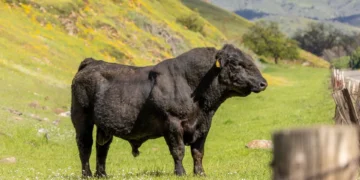




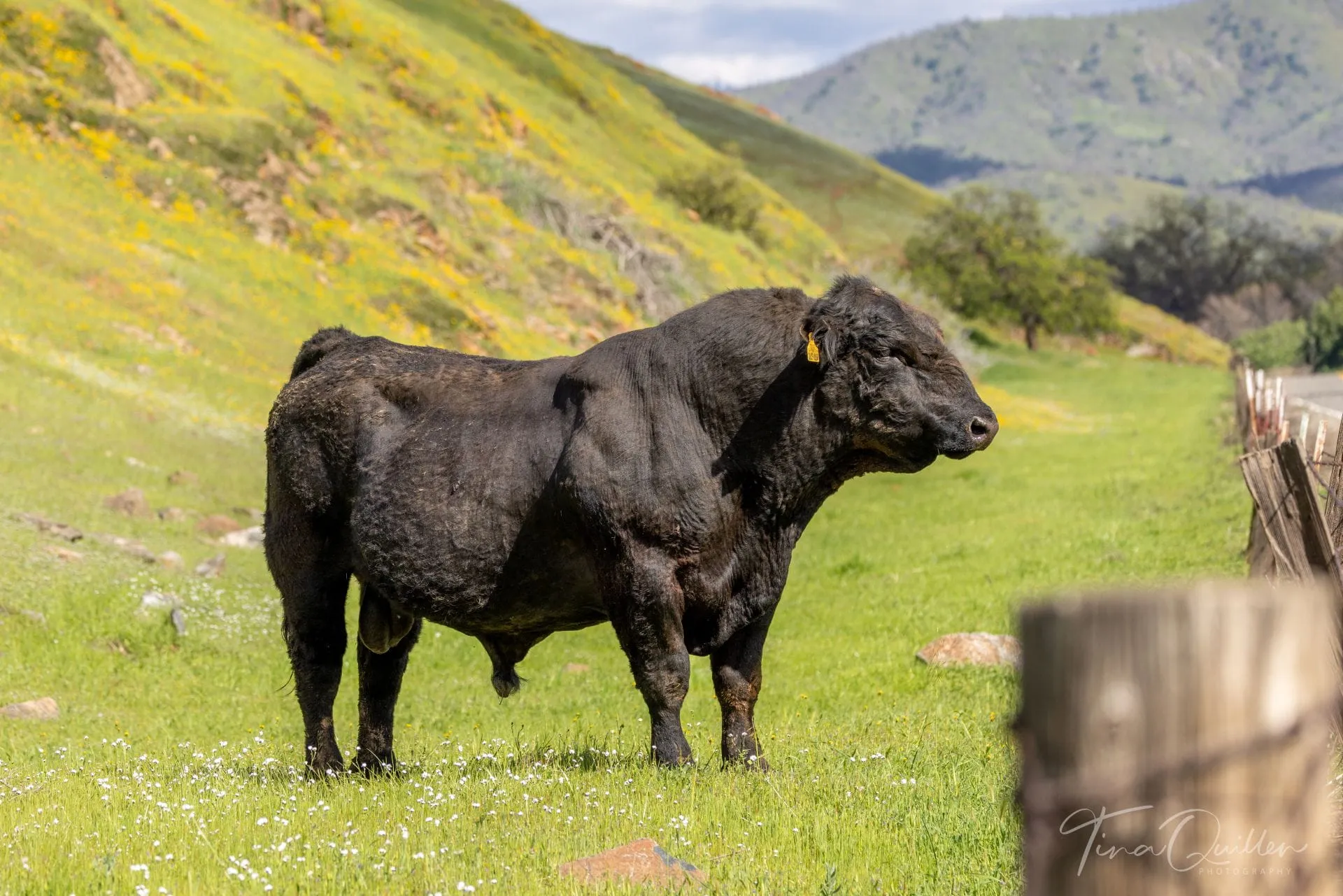
Quick answer: A mature beef bull typically weighs 1,700–2,300 lb, and large-framed bulls can exceed 2,500 lb. Registered Angus bulls born in 2025 averaged 1,191 lb at an adjusted 365 days, and North Dakota State University herd data shows bulls averaging about 1,340–1,380 lb at 1½ years and 1,660–1,900 lb at 2½ years. Texas A&M’s Beef Skillathon notes that mature bulls weigh about 55–60% more than cows of the same frame score.
| Age | Light-framed Breeds (lb) | Medium-framed Breeds (lb) | Large-framed Breeds (lb) |
|---|---|---|---|
| Birth | 65–85 | 75–95 | 90–110 |
| Weaning (6 mo) | 480–560 | 520–620 | 580–700 |
| Yearling (12 mo) | 900–1,100 | 1,000–1,200 | 1,100–1,350 |
| 2 years | 1,300–1,600 | 1,450–1,750 | 1,600–1,950 |
| 3 years | 1,600–1,900 | 1,800–2,100 | 1,950–2,300 |
| Mature (4–5 yrs) | 1,700–2,000 | 1,900–2,200 | 2,100–2,500 |
Frame size, not breed name, is the better predictor of a bull’s mature weight. Most breeds include small-, medium- and large-framed bloodlines; for example, USDA’s U.S. Meat Animal Research Center found Angus-sired cows to be among the heaviest at maturity, so modern Angus should not be assumed to be a light breed. Use these ranges as general guides.
Table of Contents
Bull weight by frame score
Breed associations do not publish official mature bull weights, and weights within a breed vary widely. A more reliable reference comes from frame score. Texas A&M’s Beef Skillathon puts a mid-frame-score-5 mature cow at about 1,200–1,250 lb (body condition score 5), changing by roughly 100 lb per frame score, and notes that mature bulls weigh about 55–60% more than cows of the same frame score. That gives these approximate mature bull weights:
| Frame score | Approx. mature cow weight (lb) | Approx. mature bull weight (lb) |
|---|---|---|
| 3 | ~1,025 | ~1,590–1,640 |
| 4 | ~1,125 | ~1,745–1,800 |
| 5 | ~1,225 | ~1,900–1,960 |
| 6 | ~1,325 | ~2,055–2,120 |
| 7 | ~1,425 | ~2,210–2,280 |
| 8 | ~1,525 | ~2,365–2,440 |
Continental breeds such as Charolais, Simmental and Maine-Anjou commonly carry larger frames and heavier muscling, so large bulls in these breeds can pass 2,500 lb. Dairy bulls, especially Holsteins, are also large and should always be handled with extra caution.
How Much Does a Bull Weigh at Yearling Age?
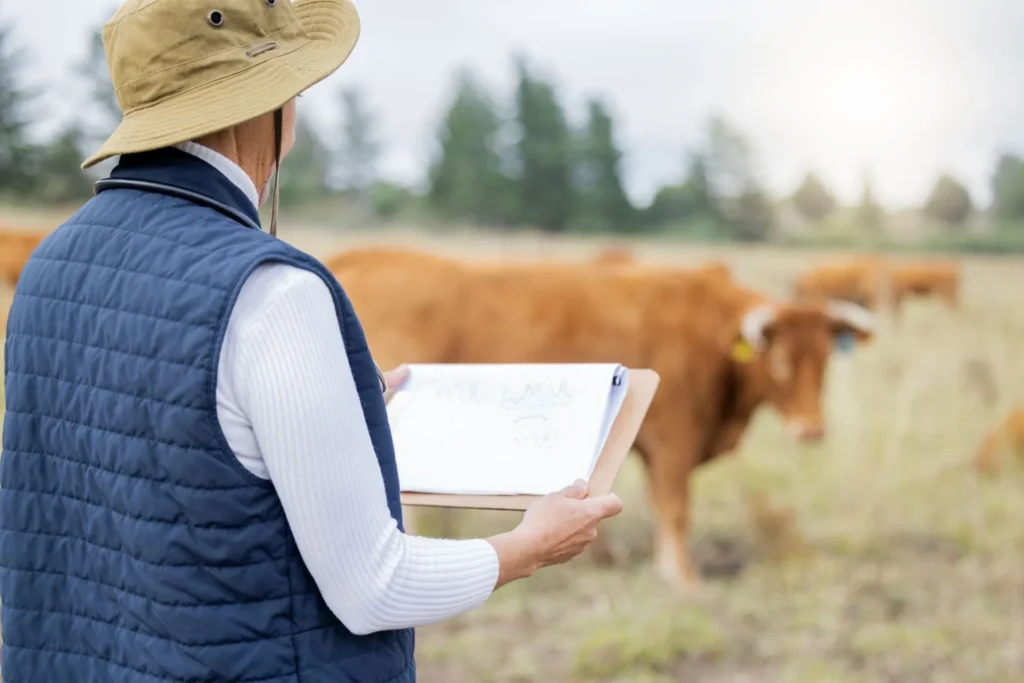
A yearling bull at 12 months commonly weighs about 900–1,350 lb, depending on breed, frame score and development program. As a benchmark, registered Angus bulls born in 2025 averaged 1,191 lb at an adjusted 365 days, according to the American Angus Association.
Yearling weight is the most commonly evaluated benchmark when purchasing breeding bulls at sale. It reflects both genetic potential and the quality of the development program. A yearling bull significantly below breed average for his frame score signals either poor nutrition, a health setback, or genetics that won’t perform in the breeding pasture.
Average Bull Weight at 2 Years
Bulls keep growing well past their first breeding season. North Dakota State University’s Dickinson Research Extension Center recorded herd bulls averaging 1,342–1,376 lb at 1½ years and 1,659–1,895 lb at 2½ years.
Bulls in that herd gained roughly 300 lb per year as they matured, and NDSU beef specialist Kris Ringwall suggested a projected mature weight of about 2,200 lb or less keeps bulls more manageable (reported by Drovers, 2020).
Mature Bull Weight — What to Expect at Age 3, 4, and 5
Bulls reach functional maturity at about 3–4 years and usually reach peak weight at 4–5 years. Most mature beef bulls fall between 1,700 and 2,300 lb; Oklahoma State University’s nutrient-requirement tables use 1,700, 2,000 and 2,300 lb as reference bull weights. Large-framed Continental bulls can exceed 2,500 lb.
Bulls continue gaining beyond age 4, but the rate slows substantially. A 5-year-old bull may weigh 2,400–2,500 lb in heavy breeds — at this size, accidental damage to facilities and increased handling risk typically outweigh the reproductive advantage of additional size.
Why Bull Weight Matters for Breeding Performance
Bull weight relative to the cows he services matters for two practical reasons: physical capacity to cover females and body condition maintenance through the breeding season.
A bull that enters the breeding season underweight — below BCS 5 on the 1–9 scale — will lose body condition rapidly during the breeding season and may fail to settle all cows in his group. As confirmed by Mississippi State University Extension, a body condition score of 6 at the start of breeding is the recommended target. A bull in BCS 6 has sufficient reserves to sustain the physical demands of the breeding season without losing reproductive capacity.
As a general guideline, many producers let a yearling bull cover about 15–20 cows, a 2-year-old about 20–25 and a mature bull about 25–35, adjusting for pasture size, terrain, breeding-season length and the bull’s condition and breeding soundness exam results. Ask your veterinarian for a recommendation specific to your operation.
How Bull Weight Compares to Cow Weight
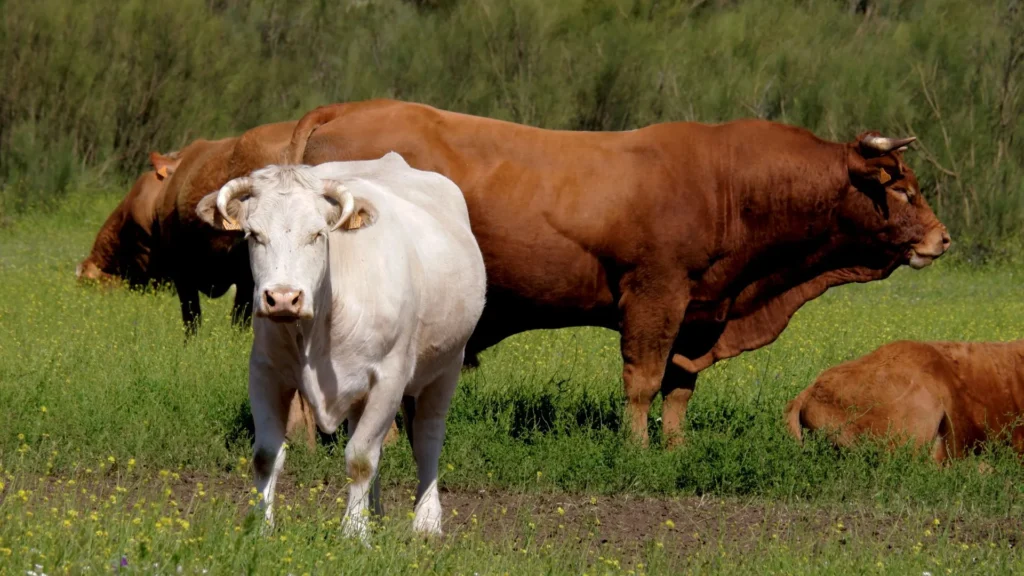
Texas A&M’s Beef Skillathon notes that mature bulls weigh about 55–60% more than cows of the same frame score. With the average U.S. beef cow now close to 1,400 lb, a bull of similar frame would be expected to weigh roughly 2,170–2,240 lb.
For producers tracking herd genetics and frame size, this ratio is a useful cross-check. A bull significantly below the expected 55–60% premium over his contemporary group’s cow weight may be underdeveloped, lower-framed than desired, or managing below his genetic potential.
For complete mature cow weight references by breed and frame score to use in this comparison, see our cattle weight chart.
FAQs
How much does a mature bull weigh?
A mature beef bull typically weighs 1,700–2,300 lb, depending on frame score, muscling and condition. Large-framed Continental bulls such as Charolais or Simmental can exceed 2,500 lb. Texas A&M’s Beef Skillathon notes that mature bulls weigh about 55–60% more than cows of the same frame score.
How much does a yearling bull weigh?
A yearling bull commonly weighs about 900–1,350 lb. Registered Angus bulls born in 2025 averaged 1,191 lb at an adjusted 365 days (American Angus Association).
How much does a 2-year-old bull weigh?
North Dakota State University’s Dickinson Research Extension Center recorded herd bulls averaging 1,342–1,376 lb at 1½ years and 1,659–1,895 lb at 2½ years, so most 2-year-old beef bulls fall roughly in the 1,400–1,800 lb range.
How much heavier is a bull than a cow?
Texas A&M’s Beef Skillathon states that mature bulls weigh about 55–60% more than cows of the same frame score. With U.S. beef cows now averaging close to 1,400 lb, a bull of similar frame would weigh roughly 2,170–2,240 lb.
At what age does a bull reach full weight?
Most beef bulls reach functional maturity at 3–4 years and peak body weight at 4–5 years. Bulls gain approximately 300 lb per year from yearling through age 4 under good management conditions.
How do I know if my bull is the right weight?
Compare him with bulls of similar age and frame score, and track his weight and body condition over time on a calibrated scale. Registered Angus bulls averaged 1,191 lb at an adjusted 365 days in 2025, and NDSU herd bulls averaged 1,659–1,895 lb at 2½ years. A breeding soundness exam from your veterinarian is the best check before the breeding season.
Conclusion
A bull’s weight at every stage — yearling, 2-year-old, and mature — is one of the most practical indicators of whether his development program is on track and whether he will perform through the breeding season.
The benchmarks here — 1,000–1,200 lb at yearling, 1,450–1,750 lb at 2 years, 1,900–2,200 lb at maturity for medium-framed breeds — are starting points. Breed, frame score, nutrition, and management all move these numbers. What matters is whether your bull is hitting expected milestones and entering each breeding season in BCS 6 with sufficient reserves to sustain the physical demands ahead.
For cow weight references by breed to use alongside these bull benchmarks, see our cattle weight chart. For calf weight milestones from birth through weaning, see our guide to how much a calf weighs.
Sources
- Texas A&M Beef Skillathon, Frame Score, Frame Size, and Weight.
- Drovers, How Much Should Bulls Weigh? (Kris Ringwall, North Dakota State University, 2020).
- American Angus Association, Adjusted Weight Average by Birth Year.
- Zimmermann, M.J. et al. (2021). Breed and heterotic effects for mature weight in beef cattle. Journal of Animal Science, 99(8).
Last reviewed September 2026 by the Scale Blog editorial team.