On this page
- Where food plants weigh, and which scales they use
- Receiving
- Ingredient batching
- Portioning, filling and packaging
- Pricing and labeling
- Shipping
- Net contents: what NIST Handbook 133 requires
- Legal for trade
- Sanitary design and washdown
- Accuracy and calibration
- How to choose food industry weighing equipment
- Related
- Sources
Quick answer: a food plant weighs at almost every stage: receiving (truck and floor scales), ingredient batching (bench, floor and hopper scales), portioning and filling, checkweighing packaged products, labeling products sold by weight, and shipping. The right system depends on two things: what the weight is used for (process control, net contents or price) and how the area is cleaned. Net contents are governed by NIST Handbook 133, scales that set a price must be legal for trade, and washdown areas need the right IP rating and stainless steel construction.
This guide walks through each stage, the rules that apply and the questions to settle before you request quotes.
Where food plants weigh, and which scales they use
| Stage | Typical equipment | What matters most |
|---|---|---|
| Receiving | Truck scales, floor scales, pallet scales | Capacity, durability, records of incoming weights |
| Ingredient batching | Bench and floor scales, hopper and tank scales, batching systems | Accuracy for small ingredients, recipe control, traceability |
| Portioning and filling | Portion scales, filler controls, weigh hoppers | Speed, giveaway control, washdown |
| Packaged product checks | In-motion checkweighers, statistical sampling scales | Net contents compliance, reject handling |
| Pricing and labeling | Label printing scales, price computing scales | Legal for trade, label accuracy |
| Shipping | Floor and pallet scales, dimensioning systems | Shipping weights, carrier accuracy |
Receiving
Incoming ingredients are often weighed on a truck scale or a floor scale so you can check deliveries against the bill of lading. If a delivery is paid for by the weight on your scale, that scale is being used for trade and has to meet legal-for-trade rules.
Ingredient batching
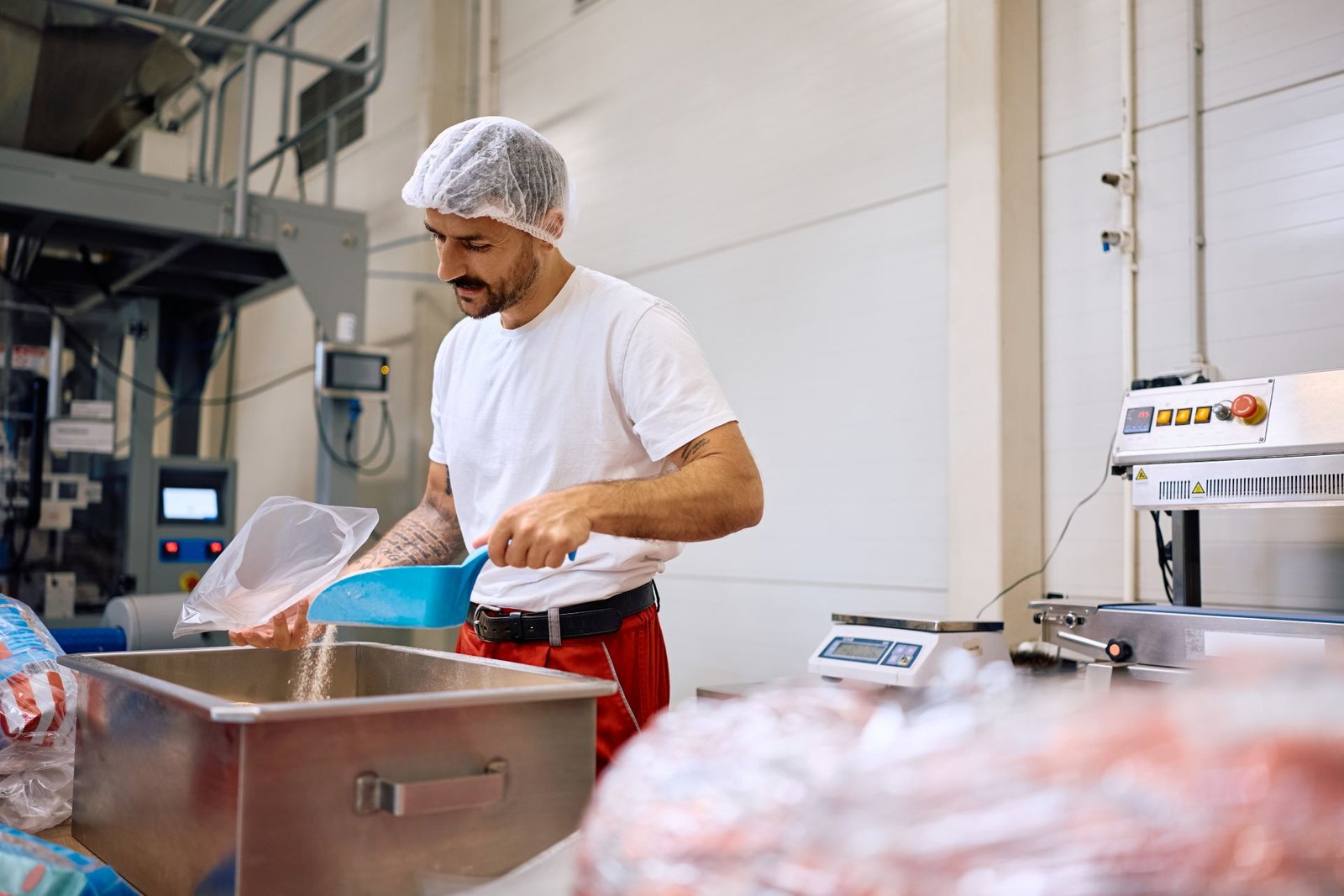
Recipes are weighed by hand on bench or floor scales, guided by formulation software, or fully automated with weigh hoppers on load cells. Our guide to batch and ingredient weighing systems covers gain-in-weight vs loss-in-weight batching, accuracy and how to size a system. For hoppers, tanks and drums, see drum scales and hopper scales.
Portioning, filling and packaging
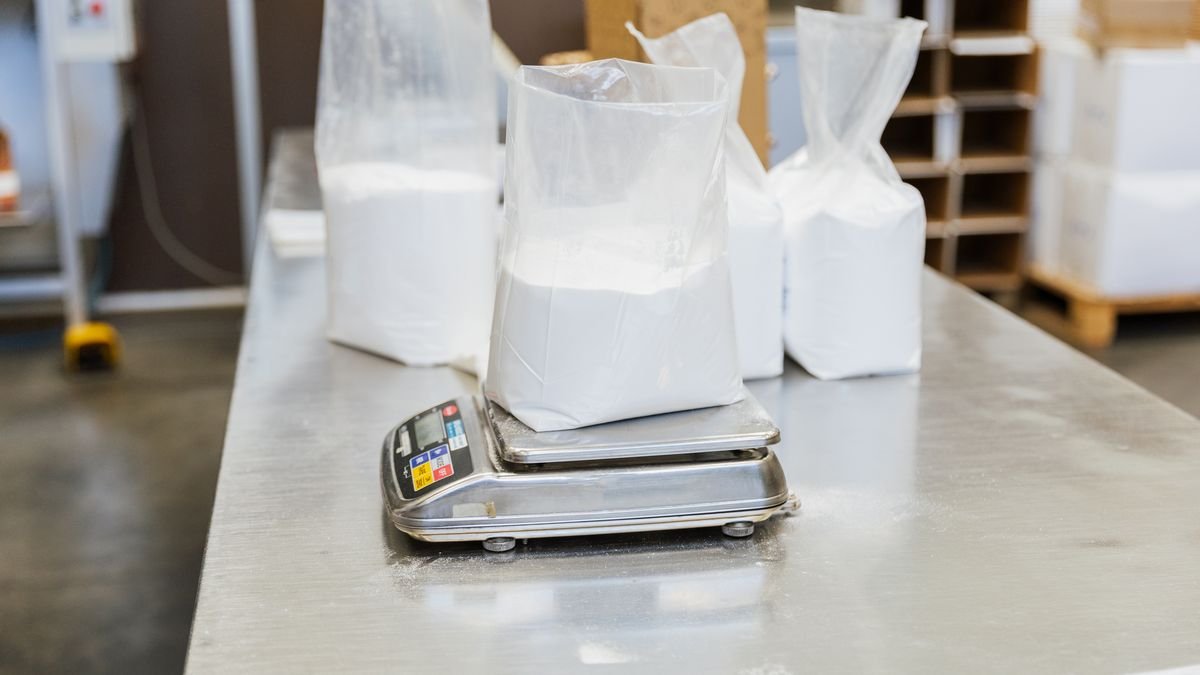
On the line, the goal is to fill every package to at least its labeled quantity without giving away too much product. Fillers and portioning equipment are adjusted using weight feedback, and finished packages are checked by an in-motion checkweigher or by sampling on a scale.
Pricing and labeling
Products sold by weight, such as random-weight meat, cheese and deli items, are weighed and priced on label printing scales or price computing scales. Because the weight sets the price, these scales must be legal for trade. For counter scales, see how to choose a deli scale.
Shipping
Outbound pallets are weighed for shipping documents and freight charges. See the pallet scale buying guide.
Net contents: what NIST Handbook 133 requires
NIST Handbook 133 is the procedure weights and measures officials use to check the net quantity of packaged goods, at the plant, in warehouses and in stores. As NIST puts it, the net quantity statement “must be accurate, but reasonable variations are permitted.” Two rules apply together:
- Average requirement: the average net quantity of the packages in a lot must at least equal the quantity declared on the label.
- Individual package requirement: individual packages may vary, but not by an unreasonable amount. A package that falls short by more than the Maximum Allowable Variation (MAV) for its size is an unreasonable shortage, and only a limited number are allowed in an inspection sample.
Who enforces it: FDA regulates most packaged food, USDA’s Food Safety and Inspection Service regulates meat and poultry, and packaged goods also come under the jurisdiction of state and local weights and measures agencies. Handbook 133 also requires the scales and standards used for official testing to be traceable to the SI, usually through NIST.
For MAV tables, the sampling plans and how to set checkweigher reject limits, see our detailed guide to checkweigher compliance.
Legal for trade
When a weight is used to work out a price, the scale must be legal for trade. In practice that means a model with an NTEP Certificate of Conformance that meets NIST Handbook 44 and is inspected under your state’s weights and measures law. Typical examples in food plants are label printing scales for random-weight products, retail and deli scales, and receiving or shipping scales when goods are bought or sold by that weight.
Scales used only to run the process, such as for batching or in-process checks, usually do not need NTEP certification, but they still need regular calibration. See what an NTEP scale is, and confirm with your state weights and measures office if a scale’s weight could ever reach an invoice or a label price.
Sanitary design and washdown
FDA’s current good manufacturing practice rule for food, 21 CFR 117.40, requires plant equipment to be “adequately cleanable,” and food-contact surfaces must be corrosion-resistant and made of nontoxic materials. For scales, that shapes three choices:
- Material: stainless steel is the usual choice for food-contact and washdown areas. Grade 316 resists chlorides and aggressive cleaners better than 304. See stainless vs mild steel scales.
- Ingress protection: scales that are hosed down need protection against water jets: IP66 or higher, and IP69K for high-pressure, high-temperature washdown. IP69K does not automatically mean the scale can be submerged, so look for a dual rating such as IP67/IP69K if that can happen. See IP ratings for industrial scales.
- Cleanability: open frames, platforms that lift for cleaning, and no ledges or gaps where product collects.
Dry ingredient areas have a different risk. Flour, sugar, starch and other fine powders can create combustible dust, and areas classified as hazardous locations need certified equipment. See explosion-proof scales.
Accuracy and calibration
Weighing errors in food plants cost money in two directions: underweight packages are a compliance risk, and overfilling gives product away. Keep both under control with:
- The right scale for the job: capacity close to the heaviest load and readability fine enough for the smallest amount you weigh.
- Daily or per-shift checks with a known test weight on critical scales, recorded.
- Scheduled calibration by a qualified service company, with certificates traceable to NIST. See industrial scale calibration.
- Records that link scale checks to production lots, so a failed check can be traced to the product it affected.
This is general information, not legal or regulatory advice. Confirm the requirements for your products with FDA, USDA FSIS and your state weights and measures office, and have scales installed and serviced by a qualified technician.
How to choose food industry weighing equipment
For each weighing point, write down:
- What the weight is used for: process control, net contents or price.
- Capacity and readability needed.
- Cleaning method: dry wipe, wet wipe, hose-down or high-pressure washdown.
- Environment: temperature, humidity, cold rooms, dust.
- Data: printers, labels, PLC or plant network, traceability software.
- Service: who will calibrate and repair it, and how fast.
Next step: request free quotes from scale suppliers, or browse manufacturing and industrial scale suppliers and calibration companies in the directory.
Related
- Batch and ingredient weighing systems
- Checkweigher compliance: NIST Handbook 133, FDA and USDA
- IP ratings for industrial scales: IP65, IP67 and IP69K
- Label printing scales
Sources
- National Institute of Standards and Technology, Handbook 133 (2026), Chapter 1: General information
- National Institute of Standards and Technology, Net contents of packaged goods: FAQs
- US Code of Federal Regulations, 21 CFR 117.40, Equipment and utensils
- USDA Food Safety and Inspection Service, fsis.usda.gov
Questions & answers