







Every business in the United States that sells products by weight is operating under a legal framework that most business owners have never read. That framework is NIST Handbook 44 — the national model code for commercial weighing devices, developed through the National Conference on Weights and Measures with NIST and adopted into law by the states. The mechanism that connects Handbook 44 to the scales on retail counters, farmers’ market stands, deli departments, and shipping docks across the US is the National Type Evaluation Program — NTEP.
NTEP certification is not a marketing claim. It is not a quality badge that manufacturers apply voluntarily. It is the legal requirement that separates a scale that can be used in a commercial transaction from one that cannot. Understanding what NTEP certification is, how it works, and exactly when your business is legally required to have it prevents a category of compliance exposure that most business owners do not discover until an inspector arrives.
What NTEP Stands For
NTEP stands for National Type Evaluation Program. It is a testing and certification program jointly administered by the National Conference on Weights and Measures (NCWM) and the Weights and Measures Division of the National Institute of Standards and Technology (NIST) within the US Department of Commerce.
The purpose of NTEP is to evaluate weighing and measuring devices against the requirements of NIST Handbook 44, the comprehensive technical standard covering accuracy tolerances, construction requirements, operational specifications, and display requirements for all commercial weighing devices used in the United States.
NIST’s FAQ on weighing and scales notes that because all 50 US states have adopted NIST Handbook 44, the most important factor when selecting a scale for commercial use is that it carries an active NTEP Certificate of Conformance as proof that it is compliant with those standards.
How NTEP Certification Works
NTEP certification is a model-type evaluation — not an individual unit inspection. The process works as follows:
The manufacturer submits a prototype. A scale manufacturer seeking NTEP certification submits a representative unit of each model to an NTEP participating laboratory — mostly state weights and measures laboratories authorized by NCWM — or arranges an evaluation under NTEP procedures. The submission includes technical documentation covering the design, load cell specifications, and intended applications.
Independent laboratory testing. NTEP-approved laboratories perform tests that assess accuracy, repeatability, temperature stability, environmental durability, and performance under varying conditions. A model that fails must be corrected and re-evaluated before a certificate is issued.
Certificate of Conformance issued. A scale model that passes all testing receives a Certificate of Conformance — a CC number — from the NCWM. This CC number is recorded in the publicly accessible NCWM NTEP database. Every unit of that model produced by the manufacturer carries that CC number on its data plate.
State Weights and Measures inspection. Purchasing an NTEP-certified scale model is the first step — not the final step. Before any NTEP-certified scale can be used in a commercial transaction, it must be inspected by an authorized state or county Weights and Measures official. The inspector confirms the CC number, tests the individual unit’s accuracy, and affixes a seal. That seal is the physical evidence that the specific unit — not just the model type — has been verified as compliant for use in your state.
In its Weights and Measures guidance, weighing and measuring devices used for commercial purposes must be traceable to an NTEP Certificate of Conformance, and violations may result in civil penalties, stop-use orders, or seizure of the device.
NTEP vs Legal-for-Trade — What Is the Difference?
These two terms are frequently used interchangeably — including by scale dealers — but they are technically distinct.
NTEP certification applies to the scale model type. It means the model has passed the laboratory evaluation process and holds a Certificate of Conformance. This is the manufacturer’s responsibility.
Legal-for-trade is the status of an individual unit that has been inspected, verified, and sealed by a government-approved Weights and Measures official for use in a specific commercial location. This is the business owner’s responsibility.
As 1800scales.com — an established US scale dealer — explains clearly, according to the NCWM, no scale is technically legal for trade until the regulatory authority says it is legal for trade. A brand-new NTEP-certified scale still in its box is not yet legal for trade until it has been inspected and sealed by a Weights and Measures official at its place of use.
In practice, the two terms are used interchangeably in everyday conversation because NTEP certification is the prerequisite for legal-for-trade status — you cannot have one without the other. But the distinction matters at the compliance level: owning an NTEP-certified scale that has not been inspected and sealed by your state Weights and Measures office is not full compliance.
NTEP Accuracy Classes — Which Class Does Your Business Need?
NTEP certification categorizes scales into accuracy classes based on their application and the precision they are required to deliver. For most retail and commercial businesses, two classes are relevant.
Class II — High Precision
Under NIST Handbook 44 (Table 3), Class II scales use division sizes from 1 mg to 0.05 g (with 100 to 100,000 divisions), or 0.1 g and larger (with 5,000 to 100,000 divisions). They are required for applications where very small quantities of high-value goods are sold by weight — jewelry, precious metals, gemstones, and pharmaceutical dispensing, where the weight determines the price paid by a consumer.
This level of precision is required where even milligram-level discrepancies carry significant financial value.
Class III — General Commercial
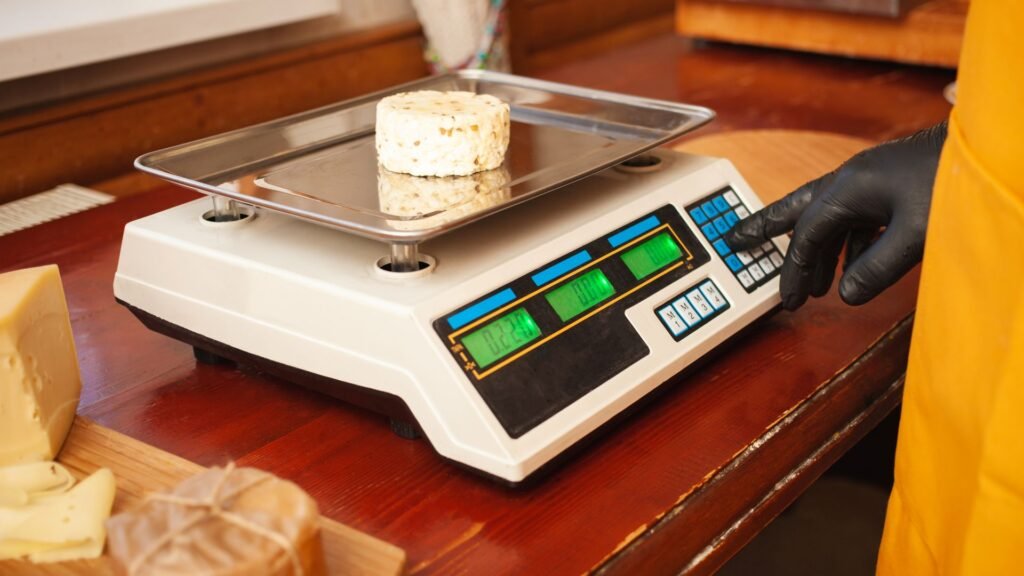
Class III is the standard for most retail food businesses in the US. Class III scales are limited to 10,000 divisions and typically use divisions such as 0.005 lb, 0.01 lb or 0.002 kg. This is the accuracy class for deli counters, produce stands, farmers’ markets, candy shops, seafood counters, butcher shops, bulk food stores, grocery produce departments, and postal and shipping scales.
Class IIIL — Large Capacity Commercial
Class IIIL covers large-capacity commercial scales such as vehicle scales, livestock scales, grain hopper scales, and crane scales. Class IIIL scales have 2,000 to 10,000 divisions (division size 2 kg or larger), and their tolerances increase by one division for each additional 500 divisions of test load — reflecting the very large loads involved. Some hopper and crane scales are certified as Class III instead.
Most retail food businesses need a Class III NTEP-certified scale. Businesses selling jewelry, precious metals, or other high-value, low-weight goods by weight need a Class II scale.
When You Legally Need an NTEP Scale
The legal trigger for NTEP certification is straightforward. If a financial transaction is based on what the scale reads, the scale must be NTEP-certified.
Applications That Require NTEP Certification
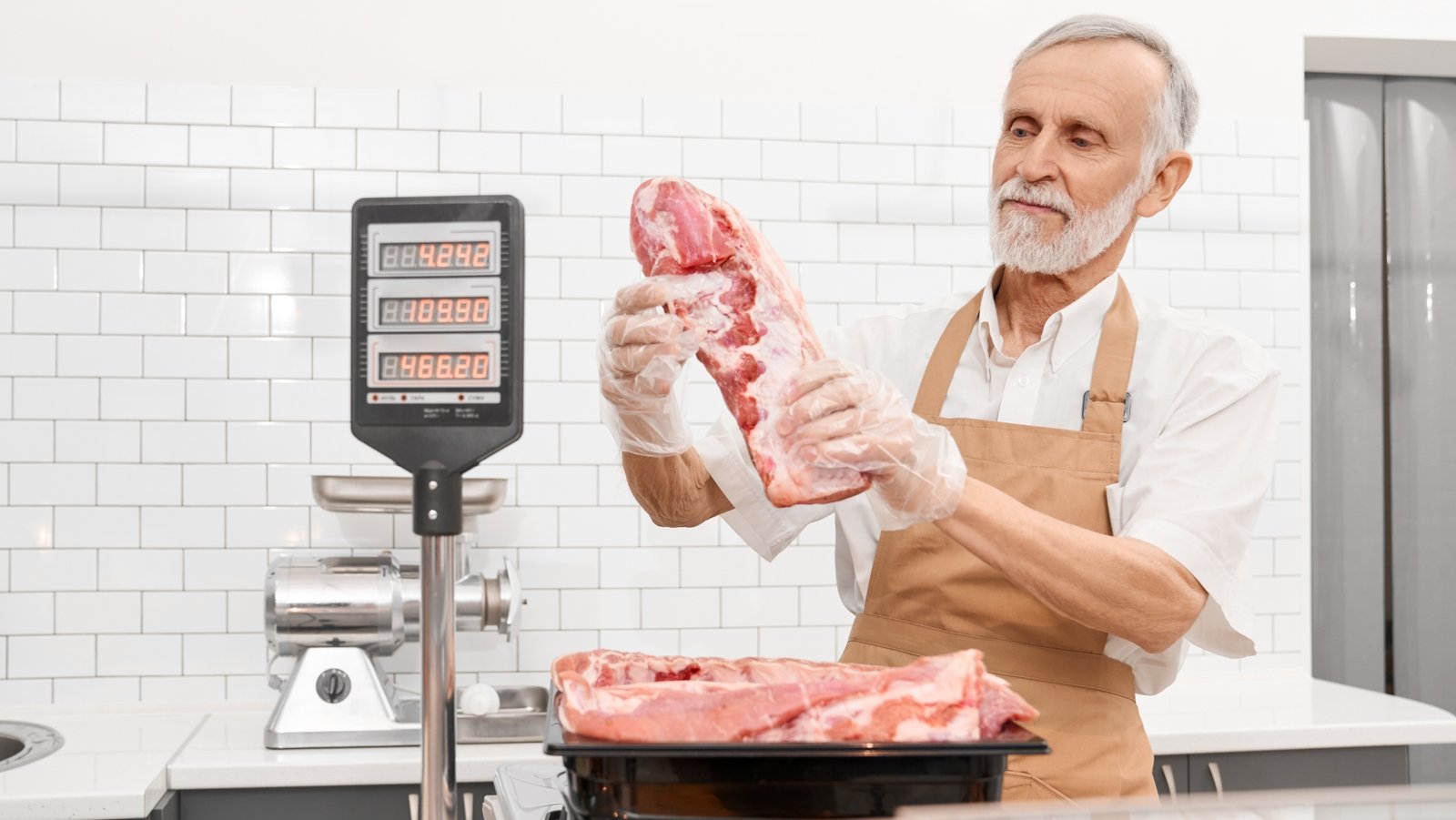
Retail food sales by weight — Any deli counter, produce stand, seafood counter, butcher shop, candy shop, bulk food store, or farmers market where a customer pays based on the weight displayed on the scale. This is the most common application and the one most frequently found out of compliance during inspections.
Pre-packaged food label weight — When a scale is used to determine the net weight printed on a pre-packaged food product label, that scale must be NTEP-certified. The weight on the label is a commercial representation — and it is legally required to be accurate.
Shipping and freight billing by weight — When a shipper charges a customer based on the weight a scale records — at a shipping counter, a mailbox store, or a carrier pickup location — NTEP certification is required for the scale producing that weight.
Intermediate commercial transactions — When goods are sold between businesses based on weight — raw materials, bulk commodities, scrap metal — the scale used to establish that weight must be NTEP-certified.
Applications That Do NOT Require NTEP Certification
Food preparation and portioning — Weighing ingredients in a kitchen or production facility for internal recipe use, where no customer pays based on the weight the scale reads.
Quality control and production yield monitoring — Internal production weighing, where the result is used to monitor output but does not determine a price paid by any external party.
Research and laboratory weighing — Weighing for scientific analysis, formulation development, or internal testing — not connected to any commercial transaction.
Inventory and receiving verification — Checking inbound delivery weights against purchase orders for internal record-keeping, where the weight does not directly determine the price paid to the supplier.
The core question is always the same: does the weight on this scale’s display — or a document generated from it — determine how much money changes hands? If yes, the scale must be NTEP-certified.
What Happens If You Use a Non-NTEP Scale for Commercial Weighing?
The consequences of operating a non-NTEP scale in a legal-for-trade application vary by state but are consistently serious.
Fines: State Weights and Measures inspectors have the authority to issue civil penalties for operating non-compliant weighing devices in commercial applications. Fine amounts vary by state and by the nature of the violation.
Stop-use orders: An inspector can issue a stop-use order on the non-compliant scale — prohibiting any further commercial weighing on that device until it is replaced or brought into compliance.
Device seizure: Some states authorize the seizure of non-compliant weighing devices found in commercial use.
Disputes and corrective action: Customers or trading partners can dispute weights from an uncertified scale, and weights and measures officials may order corrective action such as refunds or relabeling.
Escalating enforcement: Repeat or willful violations can bring larger penalties and, in some states, court action.
Reputational damage: A Weights and Measures violation — particularly one involving a scale that has been underweighing products — is publicly recorded in most states. The reputational damage to a small retail food business from a publicized weights and measures violation can exceed the financial cost of the fine.
The cost difference between an NTEP-certified scale and a non-certified equivalent of the same model is typically small. Many manufacturers offer both NTEP and non-NTEP versions of similar models. The gap in compliance risk between the two is not small at all.
How to Verify NTEP Certification Before You Buy
Every NTEP-certified scale carries a CC number on its data plate — a five-digit number formatted with a dash separating the second and third digits (for example, 12-345). That number is the specific Certificate of Conformance number for that model.
Verify the CC number in the NCWM NTEP database before purchasing any scale for commercial use. The CC number is active, that the model description matches the scale being purchased, and that the certification has not been withdrawn.
Product listings and manufacturer claims that a scale is NTEP-certified cannot be taken at face value without checking the database. The database is the authoritative record.
After Purchase — What You Must Do Before Commercial Use
Purchasing an NTEP-certified scale is the beginning of the compliance process — not the end.
Step 1: Contact your local or county Weights and Measures office before putting the scale into commercial use. Find your state’s office through the NIST state Weights and Measures office directory.
Step 2: Schedule an inspection. Depending on your state, a weights and measures official inspects the scale, or a registered service agency places it in service and reports it to the state for a later official inspection. The test confirms the CC number and checks accuracy with certified test weights against NIST Handbook 44.
Step 3: The inspector affixes a seal. Two things are usually applied: a security seal (a wire and lead seal, tamper-evident label or audit trail) protecting the calibration adjustment, and an inspection sticker or tag showing the date. Together they are the physical confirmation that the specific unit has been verified as compliant for commercial use at your location.
Step 4: Register the scale if your state requires it. Some states maintain a registry of commercial weighing devices and require periodic re-registration.
Step 5: Schedule regular re-inspections. Inspection frequency is set by each state or local jurisdiction, and many aim for roughly annual inspections. A scale that has been repaired, adjusted or had its seal broken must be placed back in service under your state’s rules; after a move, check it with test weights and confirm whether your jurisdiction requires re-inspection.
For a complete guide to inspection schedules and calibration requirements between official inspections, see our article on retail scale calibration: how often and what the law requires.

FAQs
Does every US state require NTEP certification for commercial scales?
Practically, yes. All 50 states have adopted NIST Handbook 44, and nearly all require an NTEP Certificate of Conformance (or an equivalent state approval) for commercial devices. Requirements are enforced at the state and county levels. Inspection frequency and penalty structures vary by state, so confirm the specifics with your state weights and measures office.
Is NTEP certification the same as calibration?
No. NTEP certification applies to the scale model type — it confirms that the model meets the accuracy and construction requirements of NIST Handbook 44. Calibration applies to an individual unit — it confirms that the specific scale you are using is reading accurately at the time of testing. Both are required. A certified model that is out of calibration is not compliant for commercial use.
Can a portable or battery-powered scale be NTEP-certified?
Yes. Many portable, battery-powered price computing scales carry Class III NTEP certification and are specifically designed for farmers’ markets, outdoor produce stands, and mobile food vendors. Portability does not affect NTEP status. The scale must still be inspected and sealed by a Weights and Measures official before its first commercial use.
What does the CC number on a scale’s data plate mean?
CC stands for Certificate of Conformance. The CC number is the unique identifier for the NTEP certification of that scale model. It links the specific model to its test records in the NCWM NTEP database. An inspector uses the CC number to verify that the scale model has passed NTEP evaluation and that the certification is active.
Can I use a non-NTEP scale for any retail application?
Yes — if the scale is used for internal purposes only, where no customer pays based on the weight it displays. Back-of-house food preparation, kitchen portioning, production yield monitoring, and internal quality control are all applications where NTEP certification is not required. The legal requirement applies specifically and exclusively to any application where the scale’s reading determines how much money changes hands.
Conclusion
NTEP certification is the legal framework that makes a commercial scale trustworthy — to customers, to inspectors, and to the business using it. It is not optional for any business that sells products by weight in the United States. It is not expensive relative to the cost of a non-compliance violation. And it is not complicated to verify — the CC number on the data plate and the NCWM database are the two tools needed.
The legal requirement is clear: if weight determines price, the scale must be NTEP-certified, inspected, and sealed. Every business that sells by weight in the US operates within this framework, whether or not they are aware of it.
For guidance on choosing the right NTEP-certified scale for your specific retail application, see our article on how to choose a retail scale for your business.
Sources
- NIST Handbook 44 (2026), General Code and Section 2.20 Scales, Table 3 (accuracy classes) — nist.gov
- NCWM, National Type Evaluation Program and NTEP Certificate of Conformance database — ncwm.com
- NIST Office of Weights and Measures, Weighing and scales FAQ — nist.gov/pml/owm
Last reviewed September 2026 by the Scale Blog editorial team. This is general information, not legal advice; your state or local weights and measures office has the final word.