






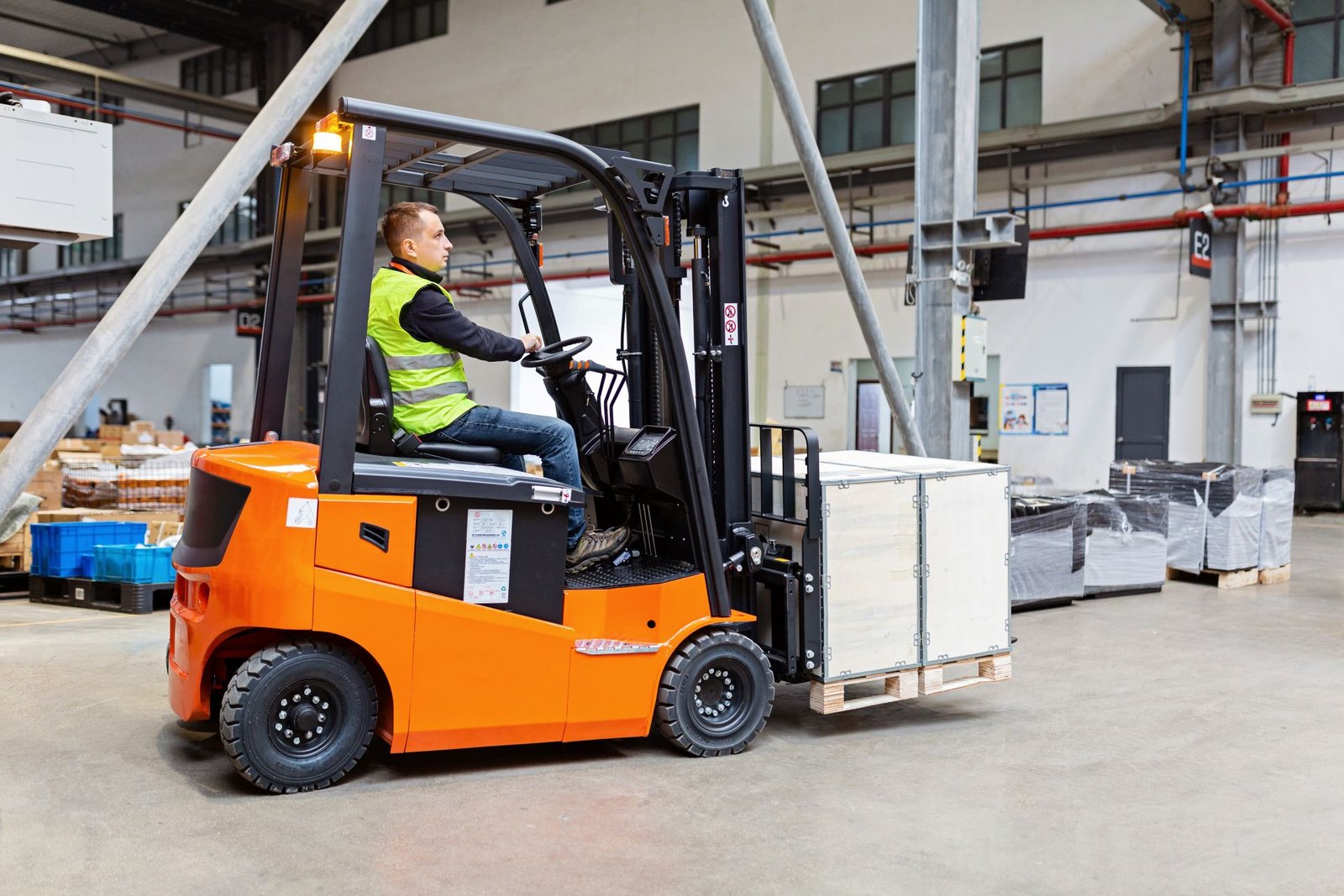
Every warehouse that uses a forklift to move pallets has an opportunity to weigh those pallets at zero additional time cost. The forklift is already lifting the pallet. The forklift is already carrying the pallet from one location to another. Adding a forklift scale converts that routine lifting operation into a weight-capture event — without adding a separate trip to a floor scale, creating a weighing queue, or taking the operator off their normal material-handling route.
That is the core value proposition of a forklift scale. It does not replace stationary weighing equipment. It captures weight data during handling that would otherwise go uncaptured — or require a separate handling step to capture.
This article explains exactly how forklift scales work, the two fundamentally different technologies used, what each type is suitable for, how to choose between them, and where a forklift scale delivers its greatest operational value.
Table of Contents
What a Forklift Scale Is
A forklift scale is a weighing system integrated into or mounted onto a standard forklift truck. It measures the weight of any load lifted on the forks and displays that weight on an indicator in the operator’s cab — during the normal lift, without any additional step required.
The pallet weight is recorded the instant the pallet is picked up by the forklift. Weight data is merged with the pallet ID and transferred wirelessly to invoicing and warehouse management systems.
The result is a weighing system that adds no time to the material handling workflow. The pallet is picked up. The weight appears on the indicator. The weight is recorded — either manually, on a printed ticket, or automatically through wireless WMS integration. The pallet is moved to its destination. The weighing step is complete before the forklift arrives at the putaway location.
This is categorically different from a floor scale or a pallet jack scale. A floor scale requires the pallet to be routed to a dedicated weighing station. A forklift scale weighs the pallet during whatever handling the pallet was already going to receive.
How a Forklift Scale Works — The Two Technologies
There are two fundamentally different measurement technologies used in forklift scales. Understanding the difference is essential before making a purchasing decision because the two types have different accuracy levels, installation requirements, capacity implications, and NTEP certification status.
Technology 1 — Hydraulic Pressure Scale
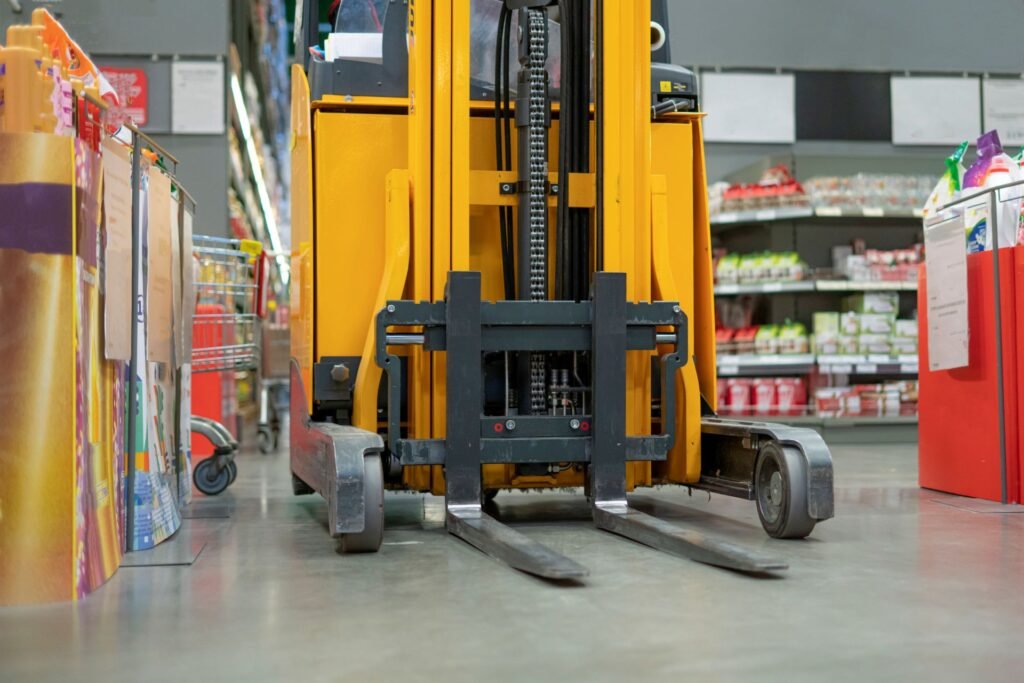
A hydraulic forklift scale connects a pressure transducer to the forklift’s existing hydraulic lift circuit. When the operator lifts a load, the hydraulic pressure in the lift cylinder increases in proportion to the weight of the load. The pressure transducer converts that hydraulic pressure reading into a weight value. The weight value is displayed on the cab indicator.
A hydraulic forklift scale targets the hydraulic sensor to measure the resistance the forklift experiences when lifting the object being weighed.
Key characteristics of hydraulic forklift scales:
Installation: Fast and non-invasive. The installer adds a tee fitting to the lift line, connects the pressure transducer and hose, and wires the indicator to the forklift’s power supply. The forklift’s rated lifting capacity is not affected because no additional weight or carriage material is added to the forks.
Accuracy: Typically ±1–2% of the forklift’s rated capacity. For a 5,000 lb capacity forklift, that is ±50–100 lb. This level of accuracy is sufficient for check weighing, load planning, safety monitoring, and freight verification. It is not sufficient for legal-for-trade commercial transactions where weight directly determines the price paid.
NTEP certification: Hydraulic forklift scales are generally not NTEP-certified for legal-for-trade use. They are designed for internal operational use — not for transactions where weight determines billing.
Capacity: Compatible with virtually any forklift make and model, up to the forklift’s rated lifting capacity. Hydraulic scales do not reduce the forklift’s capacity.
Technology 2 — Load Cell Carriage Scale
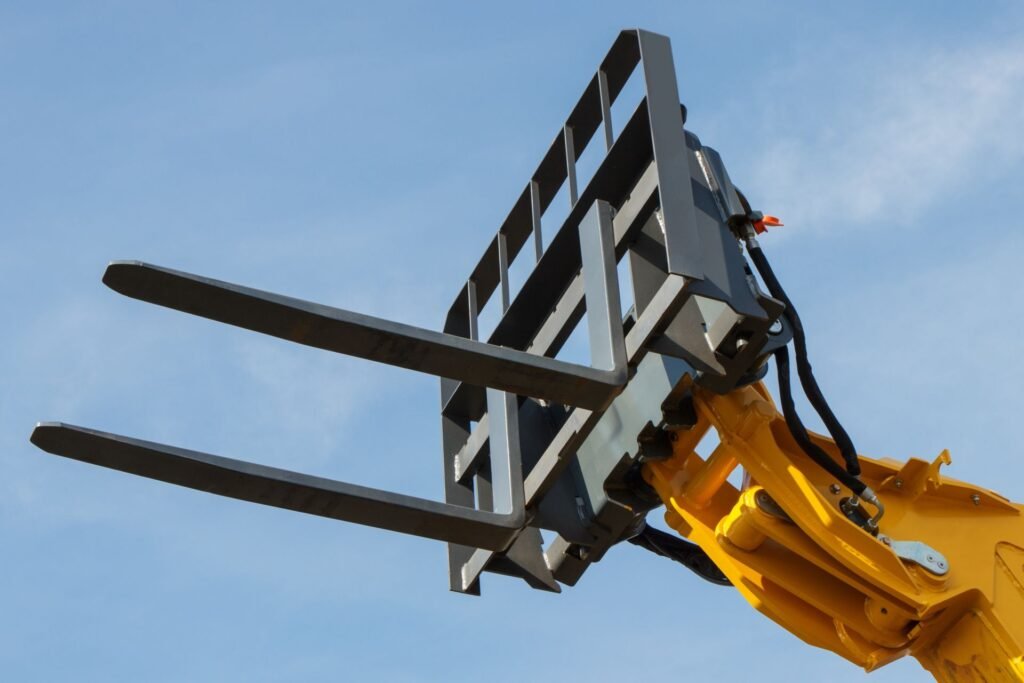
A load cell forklift scale uses strain gauge load cells integrated into a carriage plate — a steel plate that mounts between the forklift’s mast and the forks. The forks attach to the carriage plate rather than directly to the mast. When a load is lifted, the weight is transmitted through the forks into the carriage plate and measured by the load cells embedded in it.
Their Weigh Bar load cell system, it eliminates fragile components like springs, hydraulics, or flexures that could fail under heavy use, and automatically adjusts for uneven ground, tilted masts, and off-center loads to ensure precise readings in real time.
Key characteristics of load cell carriage scales:
Installation: More complex than a hydraulic installation. The carriage plate adds weight and thickness between the mast and the forks. This reduces the forklift’s effective lifting capacity — typically by the weight of the carriage plate plus a safety margin. Under OSHA 29 CFR 1910.178(a)(4), modifications that affect capacity or safe operation need the truck manufacturer’s prior written approval, and the capacity plate must be updated to match — have the installer and your dealer handle this.
Accuracy: Significantly higher than hydraulic systems. Quality load-cell carriage systems are commonly specified at around ±0.1% of capacity (about ±5 lb on a 5,000 lb system) — check the datasheet. NTEP-certified versions can be used for legal-for-trade transactions within NIST Handbook 44 tolerances.
NTEP certification: Load cell carriage scales are available in NTEP-certified configurations. Hydraulic systems are appropriate for day-to-day control and simple record-keeping, while load cell carriage systems offer the higher accuracy and legal-for-trade options needed for weight-based transactions.
Capacity: Reduced by the weight and thickness of the carriage plate. The reduction varies by system but is typically several hundred pounds below the forklift’s original rated capacity.
Hydraulic vs Load Cell — Side-by-Side Comparison
| Feature | Hydraulic Scale | Load Cell Carriage Scale |
|---|---|---|
| Measurement method | Hydraulic pressure | Strain gauge load cells |
| Typical accuracy | ±1–2% of rated capacity | Around ±0.1% of capacity (model-dependent) |
| Installation complexity | Low — no carriage modification | Moderate — carriage plate added |
| Forklift capacity impact | None | Reduced by carriage plate weight |
| NTEP legal-for-trade | Not available | Available on certified models |
| Cost | Lower | Higher |
| Best application | Internal check weighing, load planning, safety monitoring | Legal-for-trade transactions, high-precision freight billing |
| Forklift compatibility | Nearly all makes and models | Specific ITA carriage classes (commonly II–IV) — varies by model |
Where Forklift Scales Deliver the Most Value
Inbound Receiving Without a Dedicated Scale Station
A receiving dock that processes a high volume of inbound pallets faces a recurring bottleneck when those pallets must queue at a floor scale before putaway. A forklift-mounted scale eliminates that queue entirely. The operator picks up the pallet from the trailer. The weight appears on the indicator during the lift. The operator records or transmits the weight while carrying the pallet to its putaway location.
The weight capture step adds zero time to the receiving workflow. The queue at the floor scale disappears. For high-volume operations, this time saving is significant.
Outbound Load Planning and Trailer Optimization
Knowing the weight of each pallet as it is loaded onto a trailer allows the loader to track the trailer’s cumulative weight in real time. When the running total approaches the legal gross vehicle weight limit, the operator stops loading. This prevents costly overweight violations and the delays they create at weigh stations.
Without a forklift scale, load planners rely on declared pallet weights that may be inaccurate — or they stop loading conservatively to avoid the risk of overweight, leaving usable trailer capacity unused. A forklift scale removes the guesswork from both decisions.
Freight Verification Before Carrier Pickup
When a less-than-truckload carrier picks up freight, the carrier’s driver is not obligated to accept the shipper’s declared weight as final. Carriers reweigh freight at their terminals. Significant discrepancies generate invoice adjustments.
A forklift scale that weighs each pallet as it is staged for carrier pickup gives the shipping team confirmed weights before the driver arrives. Those confirmed weights go on the bill of lading. When the carrier reweighs match the shipper’s declared weights, no adjustments are made.
Inventory Verification for Variable-Weight Items
Operations that hold bulk materials, cut-to-length stock, or other variable-weight inventory cannot track those items by unit count alone. Accurate weight is the unit of measure. A forklift scale that captures the weight of each pallet during a cycle count or inventory audit provides current actual weights — without routing each pallet to a floor scale and back.
Safety — Preventing Forklift Overloads
Overloading a forklift is a safety hazard and an equipment damage risk. The forklift’s stability decreases as the load approaches and exceeds its rated capacity. A hydraulic forklift scale that displays load weight in real time allows operators to confirm — during the lift — that the load is within the forklift’s rated capacity. This is particularly valuable when loads are irregular, non-palletized, or of unknown weight.
Forklift Scale vs Floor Scale — When to Use Each
These are not competing instruments. They answer different questions and serve different workflows.
A floor scale is a fixed, high-accuracy reference instrument. It produces the most consistent readings in the facility. It handles any load type — not only pallets. For legal-for-trade applications requiring the highest possible accuracy, a properly calibrated floor scale at a stable, fixed location is the reference standard.
A forklift scale captures weight during material handling — without routing pallets to a dedicated weighing station. It trades some accuracy (in the case of hydraulic systems) for speed and workflow integration. Its value is in the volume of weight readings it enables: every pallet that the forklift touches becomes a potential weight data point, rather than only the pallets that are deliberately routed through a weighing station.
The most operationally mature warehouses use both. The floor scale is the reference instrument at the receiving dock — used for precise verification of inbound deliveries. The forklift scale is the operational instrument throughout the facility — used for continuous weight data capture during normal material handling.
For a complete comparison of stationary pallet weighing options, see our article on pallet scale vs floor scale: what is the difference.
Buying Guide — What to Confirm Before Purchasing a Forklift Scale
Step 1 — Determine whether NTEP certification is required: If your operation charges customers based on the weight reading from the forklift scale, NTEP certification is legally required. If the forklift scale is used for internal operations only — load planning, safety monitoring, inventory management, freight verification — NTEP certification is not required, and a hydraulic system is likely sufficient.
Step 2 — Confirm forklift compatibility: Hydraulic scales are compatible with nearly all forklift makes and models. Load cell carriage systems require compatibility with the forklift’s carriage class and dimensions. Confirm compatibility with the specific make, model, and carriage class of every forklift in the fleet before ordering. Load cell carriage systems change the truck itself: OSHA’s powered industrial truck standard (29 CFR 1910.178(a)(4)) bars modifications that affect capacity and safe operation without the truck manufacturer’s prior written approval, and requires capacity plates to be changed accordingly. Plan installation through a qualified scale company.
Step 3 — Assess the capacity impact: For hydraulic scales, no capacity reduction applies. For load cell carriage systems, confirm the capacity reduction from the carriage plate weight and factor that into the decision — particularly for operations that regularly lift near the forklift’s rated maximum.
Step 4 — Determine connectivity and data requirements: If weight data must flow automatically into a WMS or ERP, specify a scale with wireless connectivity — Wi-Fi or Bluetooth — and confirm it is compatible with your WMS integration architecture. If a printed ticket is sufficient, confirm the scale is compatible with a cab-mounted printer. For guidance on WMS integration architecture, see our article on how to integrate a scale with your warehouse management system.
Step 5 — Confirm calibration requirements: Hydraulic forklift scales require calibration against a known reference weight after installation and periodically thereafter. Load cell carriage systems require more rigorous calibration — particularly if NTEP certification is required — and should be calibrated by a qualified technician using NIST-traceable test weights. For calibration frequency guidance, see our article on warehouse scale calibration: how often and how to do it right.
SellEton carries Rice Lake forklift scales, including NTEP-certified models — check the product pages for capacities and carriage classes. Scale Blog readers get 10% off with code SCALEBLOG10.
If your operation weighs pallets before the lift rather than during it, Liberty Scales’ NTEP-certified pallet jack scales deliver equivalent ±0.1% accuracy without a carriage installation — the same 10% discount applies.
FAQs
What is a forklift scale?
A forklift scale is a weighing system integrated into or mounted onto a standard forklift truck. It measures the weight of any load lifted on the forks and displays that weight on an indicator in the operator’s cab during the normal lifting operation, with no additional step or separate trip to a weighing station required. Weight data can be recorded manually, printed on a ticket, or transmitted wirelessly to a WMS or ERP system.
What is the difference between a hydraulic forklift scale and a load cell forklift scale?
A hydraulic forklift scale connects a pressure transducer to the forklift’s existing hydraulic lift circuit and measures the hydraulic pressure change when a load is lifted — converting that pressure into a weight reading. It is fast to install, does not affect the forklift’s rated capacity, and typically achieves ±1–2% accuracy. It is not NTEP-certified for legal-for-trade use. A load cell carriage scale mounts a steel carriage plate with integrated strain gauge load cells between the mast and the forks, commonly specified at around ±0.1% of capacity and available in NTEP-certified configurations. It reduces the forklift’s effective lifting capacity by the weight of the carriage plate.
Are forklift scales accurate enough for carrier freight billing?
Hydraulic forklift scales, at ±1–2% accuracy, are generally appropriate for internal freight verification and load planning but not for legal-for-trade billing transactions. Load cell carriage scales in NTEP-certified configurations achieve the accuracy required for commercial transactions where weight directly determines the billing amount. For most carrier freight billing applications, an NTEP-certified load cell carriage scale is required.
Does adding a forklift scale reduce the forklift’s lifting capacity?
For hydraulic forklift scales, no — the pressure transducer adds no material to the carriage, so the forklift’s rated capacity is unchanged. For load cell carriage scales, yes — the carriage plate adds weight and thickness between the mast and the forks, reducing the effective lifting capacity. The reduction varies by system. Capacity-affecting modifications need the truck manufacturer’s written approval and an updated capacity plate (OSHA 29 CFR 1910.178(a)(4)).
When should I use a forklift scale instead of a floor scale?
Use a forklift scale when weight data is needed during normal material handling — without routing pallets to a dedicated weighing station. This is most valuable in high-volume receiving, outbound load planning, freight verification before carrier pickup, and inventory management for variable-weight items. Use a floor scale when the highest possible accuracy is required, when non-palletized loads must be weighed, or when a legal-for-trade reference instrument is needed at a fixed receiving point. Most operationally mature warehouses use both.
Conclusion
A forklift scale converts every routine forklift lift into a weight capture event. For high-volume warehouse and distribution operations where pallets move constantly, that conversion is significant. Weight data that previously required a separate trip to a floor scale — or went uncaptured entirely — becomes available as a continuous operational data stream.
The technology choice between hydraulic and load cell comes down to accuracy requirements and NTEP needs. Hydraulic scales are lower cost, faster to install, and do not affect forklift capacity — appropriate for the majority of internal warehouse applications. Load cell carriage systems deliver higher accuracy and NTEP-certified legal-for-trade capability — required when the weight reading directly determines a commercial transaction.
Either way, the fundamental operating principle is the same. The forklift is already moving the pallet. The scale makes that movement count as a data point.
Sources
- Occupational Safety and Health Administration, 29 CFR 1910.178, Powered Industrial Trucks (including (a)(4) modifications and capacity plates).
- National Institute of Standards and Technology, NIST Handbook 44 (2026), Section 2.20 Scales.
- National Conference on Weights and Measures, NTEP Certificates of Conformance database.
- Industrial Truck Association fork and carriage class standards; International Organization for Standardization, ISO 2328:2011, Fork-lift trucks — Hook-on type fork arms and fork arm carriages — Mounting dimensions.
Last reviewed September 2026 by the Scale Blog editorial team. Forklift scale installation should be done by qualified technicians with the forklift manufacturer’s approval; never exceed the de-rated capacity shown on the updated plate.