









Choosing an analytical balance is a more consequential decision than most lab managers realize at the point of purchase. An instrument that is under-specified for its application produces results that cannot be trusted. An instrument that is over-specified costs significantly more to purchase, calibrate, and qualify — without improving data quality for the work it is actually doing. The selection criteria are not complicated, but they must be applied in the right order. This guide covers every specification that matters — readability, capacity, calibration type, connectivity, compliance features, and installation environment — and explains how to match each one to your laboratory’s specific requirements.
Table of Contents
Step 1 — Establish the Minimum Readability Your Method Requires
Readability is the first and most important specification. Every other decision follows from it.
The minimum readability required by an application is determined by the smallest mass difference that must be reliably detected and reported. This is not a matter of preference — it is a methodological requirement. Choosing a balance with finer readability than the method requires adds cost and environmental sensitivity without improving the result. Choosing one with coarser readability than the method requires introduces measurement uncertainty that invalidates the data.
Readability decision guide:
| Application | Minimum Readability Required |
|---|---|
| Routine reagent weighing, buffer preparation | 1 mg (0.001 g) — precision balance |
| Quantitative chemical analysis, standard prep | 0.1 mg (0.0001 g) — analytical balance |
| Pharmaceutical ingredient weighing (API) | 0.1 mg (0.0001 g) — analytical balance |
| Gravimetric filter analysis (PM2.5/PM10) | 0.01 mg — semi-micro balance |
| Trace pharmaceutical research, pipette calibration | 0.01 mg — semi-micro balance |
| Nano-scale and isotope research | 0.001 mg or finer — microbalance |
For most quantitative laboratory work — reagent preparation, quality control, and pharmaceutical ingredient weighing — a standard analytical balance with 0.1 mg readability is the correct instrument. An analytical balance with 0.0001 g readability and 200–300 g capacity covers the majority of pharmaceutical and chemical laboratory applications.
Before specifying a semi-micro or microbalance, confirm that your standard operating procedures or regulatory methods genuinely require that readability. Over-specifying wastes capital and introduces unnecessary environmental sensitivity into routine operations.
Step 2 — Calculate the Capacity You Actually Need
Capacity is the maximum mass the balance can weigh accurately. The working rule is simple: the balance must accommodate the weight of the sample plus the weight of the container in which it is weighed.
Container tare weights to account for:
- Standard glass beaker (100 mL): approximately 80–100 g
- Plastic weighing boat: approximately 1–3 g
- Stainless steel weighing dish: approximately 10–30 g
- Glass volumetric flask (100 mL): approximately 75–90 g
An analytical balance with 200 g capacity, holding a 100 mL glass beaker (90 g) leaves only 110 g of working range for the sample. If your typical samples are in the 50–80 g range, that balance is workable. If your samples regularly approach or exceed that range, specify a 320 g or 520 g capacity model.
A practical rule is to add a 10–20% buffer above your maximum routine sample weight plus container weight. This prevents operating near the top of the capacity range, where load cell accuracy can degrade and overload risk increases.
Do not use capacity alone to decide between balance types. A 320 g analytical balance and a 320 g precision balance have the same capacity but different readabilities, different mechanisms, and different price points. Capacity confirms the balance can handle your containers and samples — readability determines whether it is an analytical or precision instrument.
Step 3 — Internal vs External Calibration
All analytical balances require calibration — the process of comparing the balance’s readings against certified reference weights traceable to NIST and correcting any deviation. The difference between internal and external calibration is where the calibration weights are stored and how the calibration process is initiated.
Internal calibration uses a motor-driven weight sealed inside the balance housing. When calibration is triggered — either automatically by the balance when it detects a temperature change, on a timed schedule, or manually by the operator — the internal weight drops onto the weighing pan, the balance records the reading, adjusts its span correction digitally, and confirms completion. No operator handling of calibration weights is required.
Advantages of internal calibration:
- Eliminates handling errors from contaminated or damaged external weights
- Automatically compensates for temperature drift — the most common source of analytical balance error in normal laboratory conditions
- Faster — calibration typically takes 60–120 seconds with no setup time
- Reduces reliance on operator compliance with calibration protocols
Disadvantages of internal calibration:
- Internal weights cannot be independently verified by the operator without service access
- Single-point calibration — the internal weight tests one point in the capacity range, not linearity across the full range
- May not fully satisfy ISO/IEC 17025 accreditation requirements without supplementary external verification
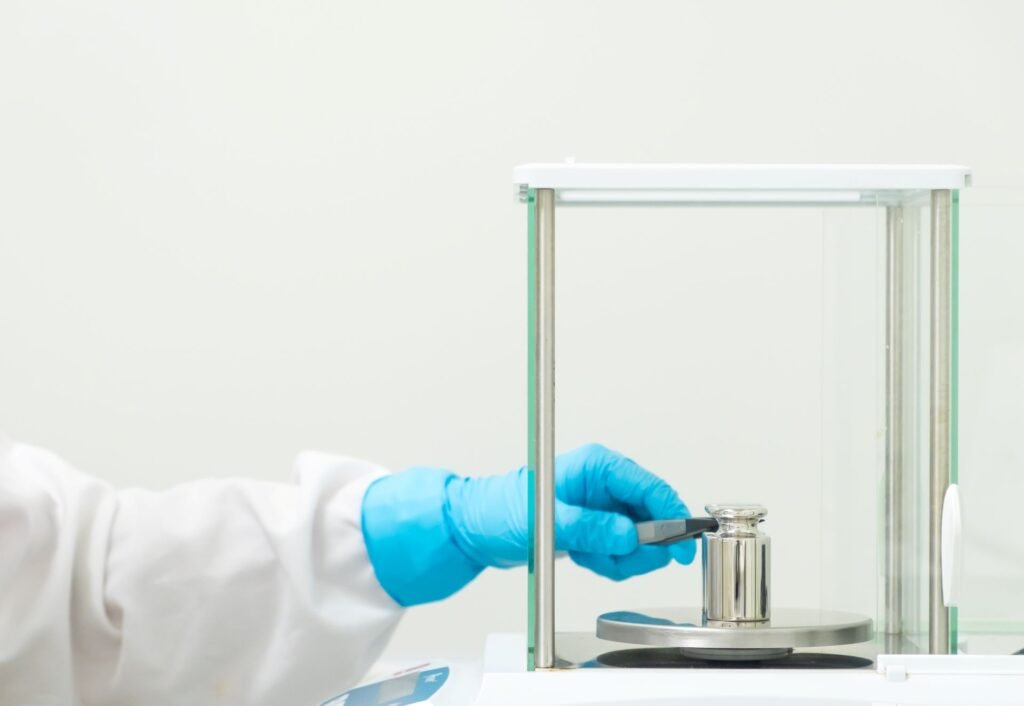
External calibration uses separately certified reference weights placed manually on the weighing pan by the operator. The balance compares its reading to the known value and adjusts accordingly.
Advantages of external calibration:
- Full traceability — the calibration weights carry their own NIST-traceable certificates
- Multi-point calibration is possible, verifying linearity across the capacity range
- Mandatory for ISO/IEC 17025 accreditation as the primary verification method
Disadvantages of external calibration:
- Requires operator involvement — compliance with calibration protocols depends on personnel
- External weights must be stored, handled correctly (tweezers or gloves, never bare hands), and recertified on schedule
- Slower than internal calibration when performed correctly
The practical recommendation: For most pharmaceutical, food, and industrial QC laboratories operating under GLP or GMP, a balance with internal calibration — supplemented by periodic external verification using certified weights — provides the best combination of day-to-day operational reliability and regulatory documentation. For ISO/IEC 17025 accredited laboratories, external calibration using accredited reference weights is the primary requirement, with internal calibration serving as a between-service check.
Step 4 — Connectivity and Data Output Requirements
Modern analytical balances are not standalone instruments — they are data generation nodes in a laboratory information workflow. The connectivity specifications of the balance determine how weight data flows from the instrument to the laboratory record.
Minimum connectivity to specify:
- RS-232 serial port: The legacy standard. Compatible with older LIMS (Laboratory Information Management Systems), label printers, and data logging systems. Still required in many validated pharmaceutical environments.
- USB port: The current standard for direct connection to a computer. Allows weight data to be sent directly to a spreadsheet, LIMS, or Electronic Lab Notebook (ELN) without manual transcription.
- Ethernet/LAN: Required for balances integrated into networked laboratory systems where multiple instruments feed into a central data management platform.
- Bluetooth or Wi-Fi: Available on newer models for wireless data transfer in environments where cable management is a concern.
GLP/GMP data output requirements: In regulated laboratory environments, the balance must output data with a GLP-compliant printout that includes the date, time, balance identification number, result, and unit of measurement. Most analytical balances from established manufacturers — Mettler Toledo, Sartorius, Ohaus, Adam Equipment — provide GLP printout functionality as a standard feature. Confirm this before purchasing for any regulated application.
Audit trail capability: For FDA 21 CFR Part 11 compliance and pharmaceutical GMP, the balance should maintain an electronic audit trail recording every weighing event, calibration event, and parameter change with operator ID, timestamp, and before/after values. This feature is present on higher-specification analytical balances and is a requirement in fully electronic pharmaceutical QC environments.
Step 5 — Installation Environment Requirements
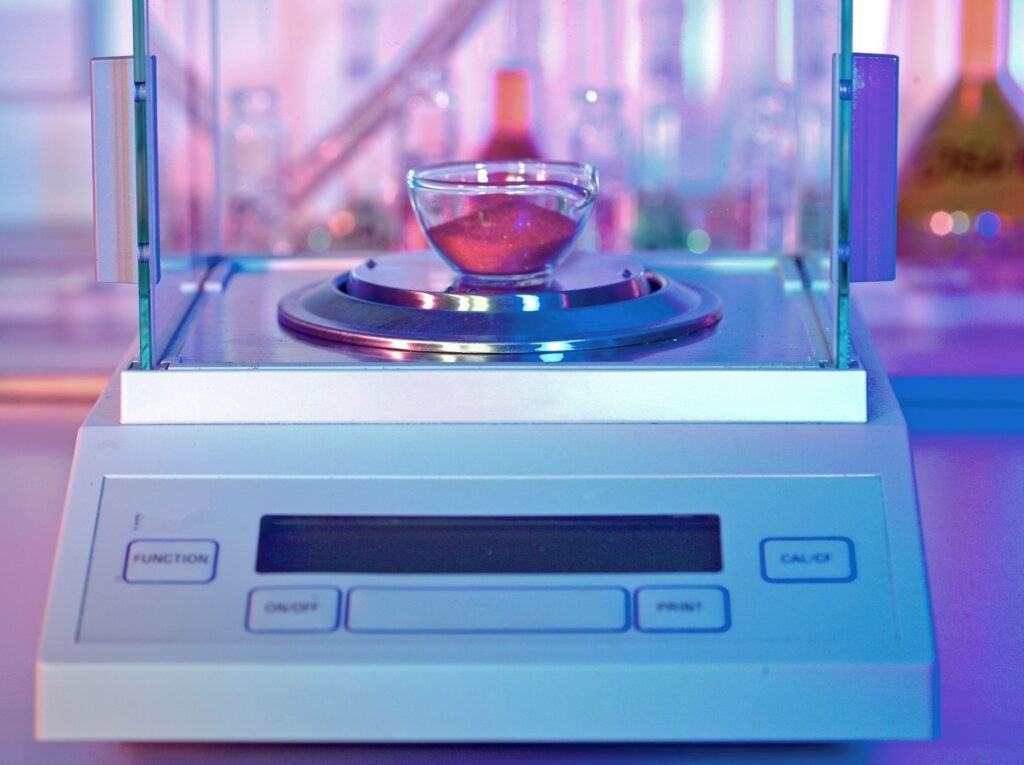
An analytical balance with 0.1 mg readability is affected by environmental conditions that are invisible at coarser readabilities. The installation environment is not a secondary consideration — it directly determines whether the balance performs to specification.
Five environmental requirements for analytical balance placement:
Level, vibration-free surface. The balance must be placed on a bench that does not transmit vibration from centrifuges, shakers, refrigerators, or foot traffic. Anti-vibration tables are the standard solution for environments with moderate vibration. A balance that produces fluctuating readings on a stable sample is almost always affected by surface vibration.
Away from air movement sources. HVAC vents, open windows, doors that open frequently, and fume hood sash movements all create air currents that affect analytical balance readings even with the draft shield closed. Position the balance at least 1 meter from any air movement source and confirm that the draft shield doors seal correctly before use.
Stable temperature. Temperature changes cause the balance’s internal components to expand and contract, producing zero drift. Modern analytical balances with internal calibration compensate automatically for temperature changes, but compensation has limits — rapid temperature swings of more than 2–3°C within a short period affect any analytical balance. Avoid placement near windows with direct sunlight, near hot ovens or autoclaves, or near cold storage equipment.
Away from static electricity sources. Static charge on a weighing vessel or sample causes the reading to drift continuously. Plastic weighing vessels, powder samples, and low-humidity environments are the primary sources of static in analytical laboratory work. Ionizers are available to neutralize static on samples and vessels before they are placed on the balance pan.
Adequate warm-up time. Electronic balances require a warm-up time after being powered on before measurements are stable. Most analytical balances require 30–60 minutes of warm-up at a minimum; balances left permanently powered on in a controlled environment are preferred in high-throughput and regulated laboratories.
Step 6 — Compliance and Qualification Requirements
If your laboratory operates under a regulatory framework — GLP, GMP, ISO/IEC 17025, USP Chapter 41 — the balance selection must satisfy the documentation and qualification requirements of that framework before any measurement data is generated.
Installation Qualification (IQ) and Operational Qualification (OQ) are the standard validation steps for analytical balances entering regulated service. IQ confirms that the instrument was installed correctly according to the manufacturer’s specifications. OQ confirms that it performs within specification under the conditions of its intended use. Most major balance manufacturers offer IQ/OQ documentation packages that satisfy pharmaceutical GMP requirements.
USP Chapter 41 also sets a minimum weight — the smallest net sample a given balance can weigh while meeting the repeatability requirement (twice the standard deviation divided by the sample weight must not exceed 0.10%). In practice that means a minimum weight of 2,000 × the standard deviation (and never less than 820 × the scale interval). A 0.1 mg balance does not automatically let you weigh a 10 mg sample: its real minimum weight depends on its repeatability where it is installed, so check it before you commit to a model.
For a complete treatment of GLP, GMP, and what each framework requires from a balance and its documentation trail, see our article on GLP and GMP compliance for lab balances.
Where to Start: Two Solid Options
If your application calls for a standard 0.1 mg analytical balance, the Ohaus Pioneer PX224 (220 g × 0.0001 g, internal calibration, draft shield) is a widely used lab workhorse from an established manufacturer; an external-calibration version (PX224/E) costs less if you will calibrate with your own weights. For daily checks, pair it with a traceable test weight such as the Ohaus ASTM Class 1 100 g calibration weight with NVLAP certificate.
For regulated work, buy from a source that can supply the documentation you need (IQ/OQ, calibration certificates) and arrange installation and calibration by a qualified provider. As an Amazon Associate, Scale Blog earns from qualifying purchases.
Practical Pre-Purchase Checklist
Before finalizing any analytical balance purchase, confirm the following:
- Readability meets or exceeds the minimum required by your methods
- Capacity accommodates your largest routine sample plus container with a 10–20% buffer
- Internal calibration specified for GLP/GMP environments; external calibration capability confirmed for ISO/IEC 17025 requirements
- USB or RS-232 connectivity confirmed compatible with your LIMS or data management system
- GLP-compliant data output confirmed with operator ID, date, time, and balance ID
- An anti-vibration table is specified if the installation environment has moderate or higher vibration
- IQ/OQ documentation package confirmed available from the supplier if regulatory validation is required
- USP Chapter 41 minimum weight calculated and confirmed below your smallest routine weighing quantity
Rice Lake Weighing Systems manufactures a range of analytical and precision balances designed for laboratory compliance applications — including models with internal calibration, GLP data output, and IQ/OQ documentation support for regulated laboratory environments.
FAQs
What readability do I need for an analytical balance?
For most quantitative laboratory work — reagent preparation, standard solution preparation, pharmaceutical ingredient weighing — 0.1 mg (0.0001 g) readability is the appropriate specification. If your method requires detection of mass differences below 0.1 mg, specify a semi-micro balance with 0.01 mg readability. Only specify a microbalance when the method genuinely requires microgram-level resolution.
Should I choose internal or external calibration?
Internal calibration is the practical choice for most GLP and GMP laboratories — it compensates automatically for temperature drift, reduces operator handling errors, and maintains accuracy between formal calibration events. External calibration using certified NIST-traceable weights is required for ISO/IEC 17025 accredited laboratories as the primary verification method and should supplement internal calibration in any regulated environment. Many laboratories specify both: internal calibration for daily use and periodic external verification using certified weights.
How much capacity does an analytical balance need?
Capacity must accommodate the weight of the sample plus the weight of the container in which it is weighed, with a 10–20% buffer above the maximum routine load. A 100 mL glass beaker weighs approximately 80–100 g — this alone consumes half the working range of a 200 g capacity analytical balance. For most laboratory applications, a 200–320 g capacity covers routine work; 520 g capacity is appropriate where larger containers are routinely used.
What connectivity does a laboratory analytical balance need?
At minimum, a USB port for direct computer connection and RS-232 for compatibility with legacy systems. Regulated environments additionally require GLP-compliant data output with operator ID, date, time, balance ID, and result. Pharmaceutical laboratories subject to FDA 21 CFR Part 11 require an electronic audit trail recording every weighing event and parameter change.
What environmental conditions does an analytical balance require?
A level, vibration-free surface; placement away from HVAC vents, open windows, and other air movement sources; stable temperature without direct sunlight or proximity to heat sources; and a minimum 30–60 minute warm-up after powering on. Anti-vibration tables are recommended in any environment with moderate vibration from nearby equipment or foot traffic.
Conclusion
Choosing the right analytical balance comes down to six decisions made in the right order: readability first, capacity second, calibration type third, connectivity and data output fourth, installation environment fifth, and compliance qualification sixth. Laboratories that work through these decisions systematically buy the right instrument the first time — one that produces data their methods and regulatory frameworks can rely on. Laboratories that start with brand or price and work backward from there frequently discover that what they purchased either cannot resolve the differences their methods require or cannot satisfy the documentation trail their quality system demands.
For the full breakdown of the regulatory standards that govern analytical balance use in pharmaceutical laboratories, see our article on pharmaceutical lab weighing and USP standards.
Sources
- American Pharmaceutical Review, USP 41 and 1251 Chapters on Balances.
- Sartorius, Analytical Balances.
- A&D, Analytical vs Precision Balance.
Last reviewed September 2026 by the Scale Blog editorial team.