








A laboratory balance can be perfectly specified, correctly calibrated, and operated by a trained scientist — and still produce inaccurate results if the environmental conditions surrounding it are wrong. At 0.1 mg readability, a laboratory balance detects forces so small that the air pressure from a nearby centrifuge, a temperature change of 1°C, or static charge on a plastic weighing vessel all register on the display. These are not theoretical concerns. They are the most common causes of weight discrepancies in routine analytical laboratory work — and each one is preventable once its mechanism is understood. This article covers every major environmental factor that affects lab balance accuracy, explains precisely how each one introduces error, and gives a concrete fix for each.
Table of Contents
1. Vibration
Vibration is the most consistently underestimated source of balance error in laboratory environments. An analytical balance using electromagnetic force compensation detects forces in the sub-milligram range. Foot traffic in the corridor, a centrifuge on the same bench, a refrigerator compressor cycling on three feet away — each transmits mechanical vibration through the floor and bench surface to the balance’s load cell, producing a fluctuating reading that the display averages into a plausible-looking but inaccurate result.
Vibrations from nearby machinery, foot traffic, or even external building movements directly affect the precision of analytical balances. The effect is not always a visibly unstable reading. Many modern balances use digital damping algorithms to average out vibration-induced fluctuation — producing a stable-looking display that is nonetheless systematically shifted from the true value.
The fix:
- Place the balance on a dedicated anti-vibration table. Granite-topped tables with vibration-isolating feet are the standard solution for analytical balances at 0.1 mg readability. Marble and cast iron alternatives with damping mounts are also used.
- Never place an analytical balance on the same bench surface as a centrifuge, orbital shaker, vortex mixer, or refrigerator compressor.
- If anti-vibration furniture is not available, a heavy granite tile placed on foam isolation pads under the balance provides a meaningful reduction in transmitted vibration.
- Position the balance in a low-traffic area of the laboratory — away from corridors, doorways, and high-movement workstations.
2. Air Currents and Drafts
Air currents push on the weighing pan and the sample. At 0.1 mg readability, even a gentle draft from an HVAC vent, an open door or someone walking past can make the last digits wander or stop the reading from stabilizing — which is why analytical balances have enclosed draft shields.
The draft shield on an analytical balance is the primary defense against this effect, but it is not infallible. Air movement strong enough to penetrate the shield’s seals, or drafts entering through an open shield door, bypass the protection entirely. A fully closed draft shield eliminates only the air currents present at floor level and bench level — it does not compensate for convection currents generated by temperature differences between the sample and the surrounding air inside the shield.
The fix:
- Always close all draft shield doors before initiating or recording a measurement. Readings taken with an open door at 0.1 mg readability are not valid data.
- Position the balance at least 1 meter from any HVAC vent, fan, or open window. If this is not possible, position a physical barrier — a partition board — between the air source and the balance location.
- Do not operate an analytical balance near a fume hood sash that opens and closes during the weighing session.
- Allow the draft shield interior to reach equilibrium after placing a sample — particularly if the sample was recently handled and is slightly warmer than the surrounding air.
3. Temperature and Thermal Gradients
Temperature affects laboratory balance accuracy through two distinct mechanisms: it causes the balance’s internal components to drift, and it generates convection currents inside the draft shield when the sample temperature differs from the ambient air.
Component drift: The weighing cell and electronics of an analytical balance are temperature-sensitive, so a change of even 1°C in the room can shift readings measurably at 0.1 mg readability. What matters most is stability: keep the room at a steady temperature (typically somewhere in the 20–25°C range), avoid drafts and direct sunlight, and let the balance warm up and self-adjust before use.
Convection currents: When a sample is warmer than the surrounding air inside the draft shield, it heats the air immediately above it. That heated air rises, creating a convection current that exerts an upward force on the weighing pan — making the sample appear lighter than it actually is. The reverse applies to cold samples. A sample removed from a refrigerator and placed immediately on the balance will appear heavier than its true mass for as long as it continues to cool the surrounding air.
The fix:
- Allow all samples to equilibrate to room temperature before weighing. For most samples at room temperature, 30 minutes is sufficient. For samples removed from ovens or refrigerators, allow longer — up to several hours for dense or insulating materials.
- Specify a balance with internal calibration if the laboratory experiences regular temperature fluctuations. Internal calibration automatically compensates for temperature drift by recalibrating when the balance detects a temperature change above its threshold — typically 1–2°C.
- Keep the balance away from direct sunlight, hot plates, ovens, autoclaves, and cold storage equipment.
- Do not position the balance near exterior walls where temperature fluctuates with outdoor conditions.
4. Static Electricity
Static electricity is described by DSC Balances as the invisible enemy of analytical precision. Static charge builds on plastic weighing vessels, powdered samples, glass surfaces in low-humidity conditions, and synthetic clothing worn by operators. When a charged object is placed on the weighing pan, the electrostatic force between the charged object and the grounded components of the balance — or between the charged sample and the inner glass surfaces of the draft shield — produces a force that the balance cannot distinguish from mass. The reading drifts continuously upward or downward until the charge dissipates.
The characteristic sign of a static problem is a reading that does not stabilize — it continues to creep in one direction rather than settling on a value. This is distinct from a vibration problem, where the reading fluctuates randomly around a central value.
The fix:
- Maintain laboratory relative humidity above 40%. Dry air — below 35% RH — dramatically increases static charge accumulation. A room-level humidifier or HVAC humidity control is the most effective systemic solution.
- Use metal, stainless steel, or conductive weighing vessels in preference to plastic or glass for powdered or light samples at analytical readability.
- Use anti-static ionizers positioned inside or adjacent to the draft shield. An ionizer emits a stream of positive and negative ions that neutralize surface charge on samples and vessels before they affect the reading.
- Handle weighing vessels and samples with stainless steel tweezers or forceps — never bare hands. Skin oils transfer charge and contamination simultaneously.
- Ground the balance through a properly earthed power outlet. A balance that is not grounded accumulates charge over time in its own housing.

5. Sample Temperature and Condition
Beyond the convection current effect described under temperature, the physical condition of the sample itself introduces errors that are independent of the balance’s mechanical performance.
Hygroscopic samples absorb moisture from the surrounding air. A sample that gains 0.2 mg of moisture during the 60 seconds it sits on the open balance pan produces a result 0.2 mg above the true dry mass. This error compounds in humid laboratory conditions and for samples with high surface area, such as powders, silica gels, and desiccants.
Volatile samples evaporate during weighing. A sample that loses 0.5 mg of solvent while sitting on the balance pan produces a result 0.5 mg below the true mass at the time of placement. The reading typically drifts downward continuously rather than stabilizing.
Magnetic samples interact with the EMFC mechanism. Ferromagnetic samples — iron powders, magnetic particles — exert a force on the electromagnetic components of the balance that is indistinguishable from mass. Balances with EMFC load cells are sensitive to magnetic interference from both external sources and magnetic samples.
The fix:
- Weigh hygroscopic samples in sealed containers, or use a desiccator to store them until immediately before weighing.
- Weigh volatile samples quickly with the draft shield doors closed, and note the time of weighing alongside the result.
- For magnetic samples, use the balance’s “below-balance weighing” function or place the sample in a non-magnetic container with a minimum 10 cm separation from the EMFC coil.
- Never weigh samples directly from heat sources — autoclave bags, hot evaporation dishes, or freshly dried material — without allowing full temperature equilibration first.
6. Leveling
An analytical balance must be level to function correctly. The weighing cell’s output assumes a horizontal load — when the platform tilts, even slightly, the force vector of the sample’s weight shifts away from vertical. Part of the gravitational force is then transmitted laterally rather than downward through the load cell, producing a systematic low reading.
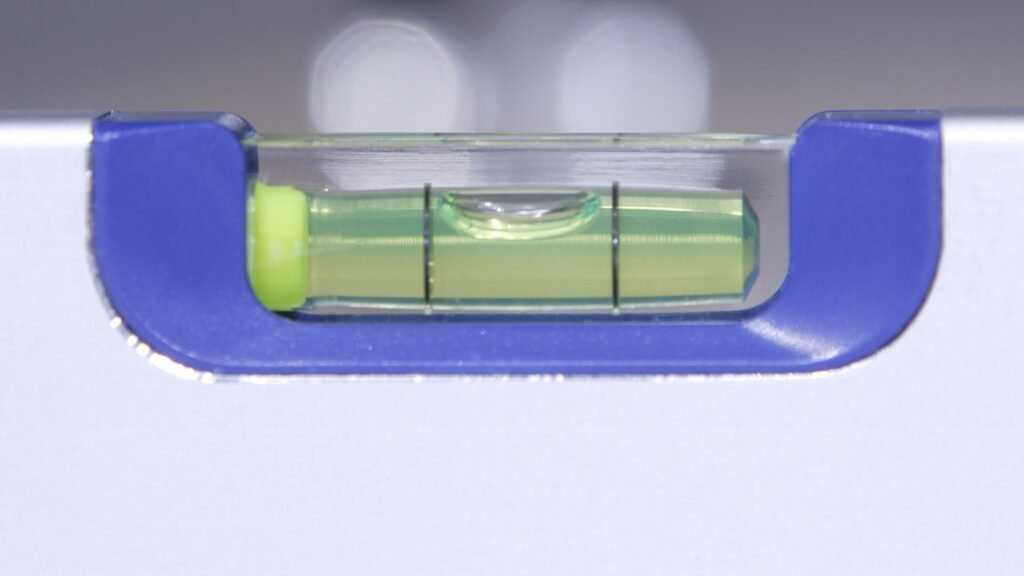
Most analytical balances include a built-in bubble level and adjustable feet. The level indicator should be checked before every weighing session — particularly after the balance has been moved, the bench surface has shifted, or nearby equipment has been added or removed.
The fix:
- Check the built-in bubble level before every weighing session. Adjust the leveling feet until the bubble is centered.
- Do not assume a balance that was level yesterday is level today. Building settlement, floor loading changes, and bench surface movement all shift the balance level over time.
- If a balance consistently loses level, investigate whether the bench itself is stable — bolted to the floor or wall if necessary.
7. Air Buoyancy
Air buoyancy is a less commonly discussed but physically real source of error in precision laboratory weighing. Every object immersed in air experiences an upward buoyant force equal to the weight of the air it displaces. This is the same principle as Archimedes’ principle for fluids. Because the buoyant force depends on the object’s volume and the density of the surrounding air — which changes with temperature, humidity, and atmospheric pressure — air buoyancy introduces a systematic error that varies with laboratory conditions.
Air buoyancy is often dismissed as negligible, but it is not. Every object on the pan is lifted slightly by the air it displaces, and balances are adjusted with steel weights (density about 8 g/cm³). A sample with a much lower density — water, for example, at 1 g/cm³ — displaces more air, so its displayed weight is roughly 0.1% lower than its true mass: about 1 mg per gram of sample. For routine relative work, such as weighing samples and standards of similar density or weighing by difference, the effect largely cancels. It matters for absolute mass determination, calibration work, density measurement and whenever sample and reference densities differ greatly.
Changes in air density from temperature or altitude shifts impact the apparent weight of objects being weighed on high-precision balances. For laboratories requiring buoyancy-corrected results, most modern analytical balance software includes a buoyancy correction function that calculates and applies the correction when sample density is entered.
The fix:
- For routine comparative work, buoyancy effects largely cancel when samples and standards have similar densities — but do not assume it is negligible for absolute results.
- For calibration work, reference standard preparation, and density determinations where the highest accuracy is required, apply the buoyancy correction function available in most modern analytical balance software.
- Maintain stable atmospheric pressure conditions — do not locate analytical balances in areas subject to rapid pressure changes such as near compressors or in high-altitude facilities, without applying altitude correction at initial calibration.
Practical Environmental Checklist
Before placing any balance into service in a new location, verify the following:
- Balance placed on an anti-vibration table or an isolation surface
- No HVAC vents, fans, or open windows within 1 meter
- No heat sources, cold storage, or direct sunlight within 2 meters
- Bench not shared with vibration-producing equipment
- Room humidity maintained at 40–55% RH
- Bubble level confirmed centered before first use
- Balance powered on with a 30–60 minute warm-up before the first measurement
- Draft shield doors confirmed closing and sealing correctly
- An anti-static ionizer is present when working with powders or plastic vessels
- All samples to be equilibrated to room temperature before weighing
FAQs
What is the most common cause of inaccurate analytical balance readings?
Environmental factors account for the majority of accuracy failures in routine laboratory use. Air currents, vibration, static electricity, and sample temperature — particularly samples not equilibrated to room temperature — are the four most frequent causes. Each produces a characteristic symptom: air currents cause slow, directional drift; vibration causes random fluctuation; static causes continuous upward or downward creep; thermal differences cause the reading to settle slowly at a wrong value.
How does temperature affect a laboratory balance?
Temperature affects balance accuracy in two ways. It causes the balance’s internal components to drift — typically corrected by internal calibration when a temperature change above 1–2°C is detected. It also generates convection currents inside the draft shield when the sample temperature differs from ambient air, making warm samples appear lighter and cold samples appear heavier than their true mass. Allowing all samples to reach room temperature before weighing eliminates this effect.
How do I know if static electricity is affecting my balance reading?
The characteristic sign of a static problem is a reading that continues to drift in one direction without stabilizing — either creeping upward or downward after the sample is placed on the pan. This is distinct from a vibration problem, where the reading fluctuates randomly. Using metal weighing vessels, maintaining humidity above 40%, and using an anti-static ionizer all prevent static from affecting readings.
Does an analytical balance need an anti-vibration table?
Yes, in most laboratory environments. Analytical balances at 0.1 mg readability detect vibration from foot traffic, centrifuges, refrigerators, and nearby equipment that is transmitted through standard bench surfaces. Anti-vibration tables with isolation feet prevent this transmission. A balance producing inconsistent, slow-to-stabilize readings on a standard bench will often perform correctly once placed on an anti-vibration table.
What humidity level does a laboratory balance need?
A relative humidity of 40–55% is the standard recommendation for analytical balance environments. Below 35% RH, static charge accumulation increases significantly, causing erratic and non-repeatable readings. Above 70% RH, condensation risk on electronic components increases, and hygroscopic samples gain mass rapidly during weighing. Most modern analytical laboratories maintain 45–55% RH as a controlled parameter for this and other equipment sensitivity reasons.
Conclusion
Laboratory balance accuracy is determined as much by the environment surrounding the instrument as by the instrument itself. A correctly specified, well-calibrated analytical balance placed in an uncontrolled environment will produce inaccurate results. The same balance placed on an anti-vibration table, away from air movement sources, in a temperature-stable and humidity-controlled room, with samples properly equilibrated before weighing, will perform to its specified accuracy consistently. The fixes for every environmental factor discussed in this article are practical, low-cost, and applicable in any laboratory setting. For guidance on the calibration process that keeps the balance performing correctly within a controlled environment, see our article on how to calibrate a lab balance.
Sources
- OIML, R 111-1:2004 (reference density of weights and air density conventions).
- Sartorius, Analytical Balances.
- A&D, Analytical vs Precision Balance (draft shields and environment).
Last reviewed September 2026 by the Scale Blog editorial team.