








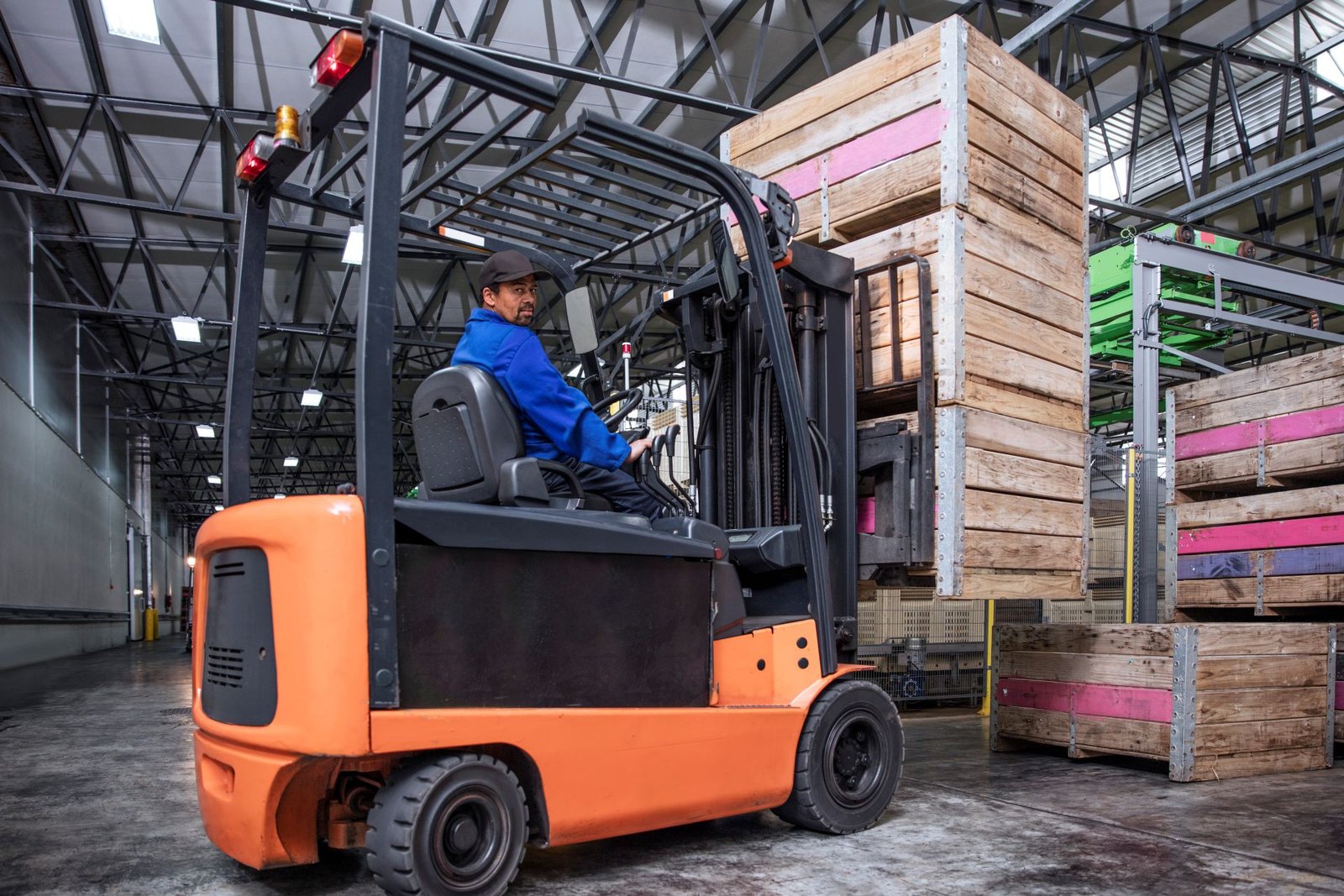
Both a forklift scale and a pallet jack scale weigh pallets without a separate trip to a floor scale. Both integrate weighing into the normal material handling workflow. The choice between them is not about which is more accurate — it is about which fits the equipment your warehouse already uses, the weights you move, the distances you travel, and the throughput you need.
This article compares the two instruments across every specification that matters for a shipping and logistics operation — capacity, accuracy, NTEP status, workflow integration, cost, and the operational scenarios where each one delivers its greatest value.
Table of Contents
What Each Instrument Actually Is
A forklift scale is a weighing system mounted to a forklift — either integrated into the carriage as a load cell system or built around a hydraulic pressure sensor that reads pressure in the lift cylinder. As the forklift raises the pallet, the weight registers on an indicator mounted in the operator’s cab. The pallet is weighed during the same lift that was already going to happen. No additional handling step is required.
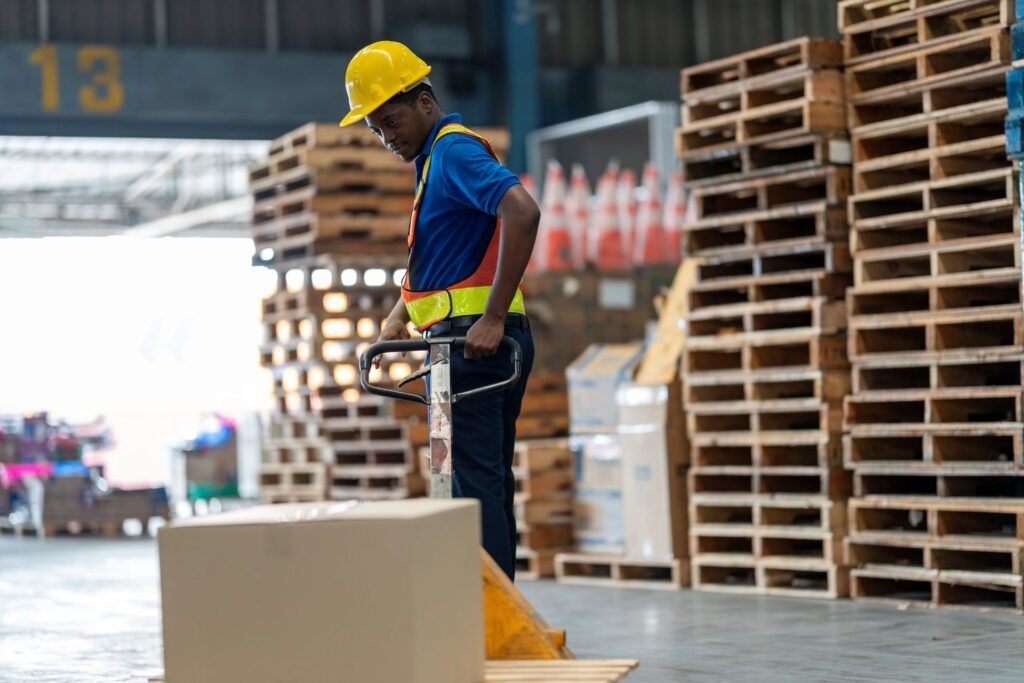
A pallet jack scale is a manual or electric pallet jack with integrated load cells in the forks. The operator slides the forks under the pallet, pumps the handle to raise it, and the weight displays on an indicator mounted on the handle. Like the forklift scale, the weighing occurs during the lift, with no separate floor scale required.
Both instruments eliminate the dedicated weighing station trip. The operational difference is the equipment they are attached to — and everything that follows from that.
Side-by-Side Comparison
| Specification | Forklift Scale | Pallet Jack Scale |
|---|---|---|
| Typical capacity | 3,000–10,000+ lb | 2,200–5,500 lb |
| Accuracy | ±0.1–0.5% (load cell); ±1–2% (hydraulic) | ±0.1% |
| NTEP certification | Load cell systems: available; Hydraulic: generally not | Available on most commercial models |
| Operator requirement | Trained and evaluated forklift operator (OSHA 1910.178) | Manual jack: basic training; powered jack: OSHA 1910.178 training |
| Aisle width required | Wide — standard forklift clearance | Narrow — pallet jack width only |
| Travel distance | Mounted to an existing forklift | Short — within a zone or dock area |
| Vertical stacking | Yes | No |
| Installation | Mounted to existing forklift | Self-contained — no installation |
| Relative cost | Higher — scale plus installation on the truck | Lower — self-contained unit |
| Best environment | Large warehouses, high-capacity loads | Mid-size warehouses, dock areas, tight spaces |
Accuracy and NTEP Certification: The Critical Difference
Accuracy is where the two instruments diverge most significantly — and where the choice between them has direct consequences for freight billing and compliance.
Forklift Scale Accuracy
Forklift scales use one of two measurement technologies, and the technology determines the accuracy level.
Load cell carriage systems mount calibrated load cells directly to the forklift carriage. Manufacturers commonly specify these at around ±0.1% of capacity, similar to a pallet jack scale. For legal-for-trade use, what matters is an NTEP certificate and meeting NIST Handbook 44 tolerances, which are set in scale divisions rather than percentages. NTEP certification is available on load cell forklift scale systems.
Hydraulic pressure systems measure the pressure in the forklift’s lift cylinder and convert that reading to a weight estimate. These are lower cost and easier to retrofit to an existing forklift, but are typically much less accurate (often in the ±1–2% range) — too coarse for weights you will declare or bill on. Hydraulic systems are generally not NTEP certified.
The practical implication: if your forklift scale application includes generating Bill of Lading weights, LTL freight declarations, or SOLAS VGM documentation, a load cell system is required. A hydraulic system is appropriate for inventory tracking and approximate weight capture — not for commercial weight declaration.
Pallet Jack Scale Accuracy
Pallet jack scales use strain gauge load cells integrated into the forks, commonly specified at around ±0.1% of capacity. Many models are available with NTEP certification for legal-for-trade use — check the CC number. For the freight billing and shipping dock applications covered throughout this cluster, a pallet jack scale with NTEP certification is appropriate for all commercial weight declaration purposes.
Workflow Integration: Where Each Instrument Fits
When a Forklift Scale Is the Right Tool
Your warehouse uses forklifts as the primary material handling equipment. If pallets move by forklift as a matter of course — putaway, picking, dock loading — a forklift scale captures weight during the handling that was already going to happen. The operator lifts the pallet, reads the weight on the cab indicator, and continues to the destination. Zero additional time is consumed.
Your loads regularly exceed pallet jack scale capacity. Pallet jack scales top out at approximately 5,500 lb on most commercial models. Operations moving steel coils, heavy machinery components, or bulk materials in the 5,000–10,000 lb range require forklift-level capacity. Only a forklift scale handles this weight range in a mobile weighing configuration.
You need to weigh loads at height. A forklift scale can capture the weight of a load at any point in the lift cycle — at floor level, at rack height, or during transfer between levels. A pallet jack scale only weighs at floor level.
You move pallets long distances across a large facility. Forklift travel speed across a large warehouse is significantly faster than a pallet jack. For operations where pallets regularly travel 100 feet or more between the weighing point and the destination, the forklift scale is the operationally efficient choice.
When a Pallet Jack Scale Is the Right Tool
Your primary handling equipment is a pallet jack, not a forklift. If pallet jacks handle most ground-level movement — dock areas, staging zones, truck loading — a pallet jack scale integrates weighing into the existing workflow without requiring forklift involvement.
Your aisles are too narrow for a forklift. Many distribution centers and mid-size warehouses have aisle widths that accommodate pallet jacks but not forklifts. A pallet jack scale is the mobile weighing solution for these environments.
You need NTEP-certified mobile weighing without a forklift. Forklift scale NTEP certification depends on the system type — hydraulic systems are generally not NTEP certified, and load cell systems require professional installation on an existing forklift. A pallet jack scale with NTEP certification is a self-contained, immediately deployable solution.
Your capital budget does not extend to a forklift scale installation. A pallet jack scale is a self-contained purchase, while a load-cell forklift scale adds installation on the truck and usually costs more overall — get quotes for both, including installation and calibration. For operations where the forklift scale’s higher capacity and travel speed are not required, the pallet jack scale provides equivalent accuracy at significantly lower cost.
Your operation weighs pallets at or near the shipping dock only. Pallet jack scales are a practical tool for dock-side weighing before LTL pickup — the pallet is already at floor level, travel distance is short, and no forklift is needed. This is the most common pallet jack scale application in outbound shipping operations.
The Scenario That Requires Both
Some operations benefit from both instruments serving different functions simultaneously.
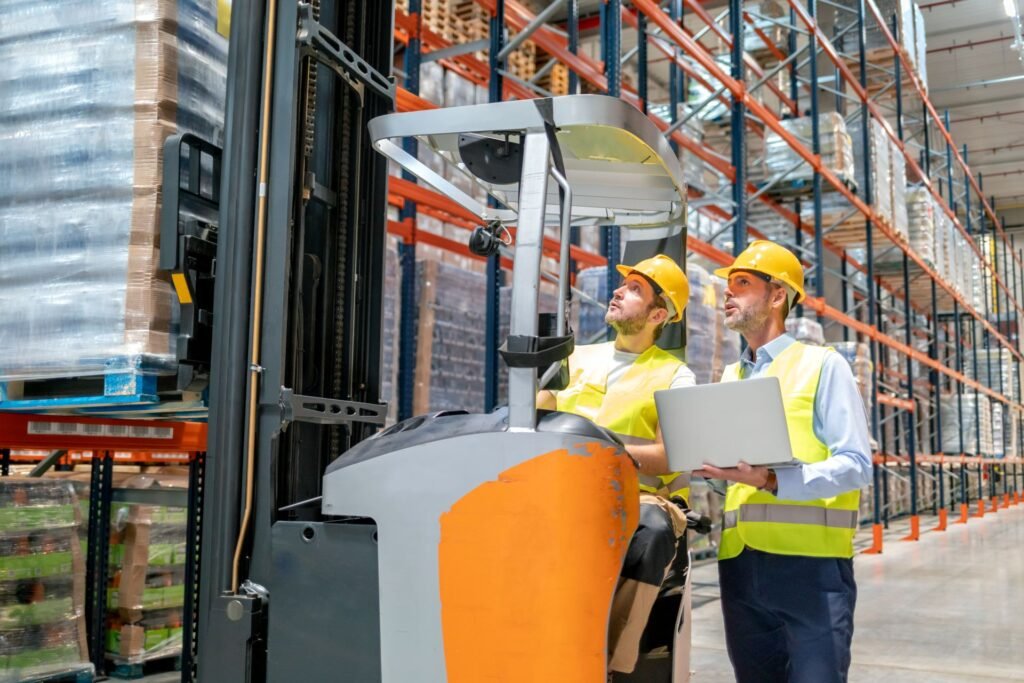
A large distribution center might use forklift scales during putaway and pick operations — capturing inbound pallet weights during receiving and outbound weights during pick — and pallet jack scales at dock staging areas where pallets are finalized for LTL shipment at close range before BOL generation.
In this configuration, the forklift scale handles high-throughput mobile weighing across the full warehouse floor, and the pallet jack scale provides NTEP-certified dock-side weight verification for the freight billing record. The two instruments are complementary rather than competitive.
Connectivity and Data Output
Both forklift scales and pallet jack scales are available with data output connectivity for warehouse management system integration — the capability that determines whether weight data flows automatically into your shipping records or requires manual transcription.
Standard connectivity options on both instrument types:
- RS-232 serial output for legacy WMS platforms
- USB for direct computer connection
- Bluetooth for wireless transmission to handheld terminals or dock computers
- Wi-Fi for direct WMS integration in networked warehouse environments
Built-in printer: Both instrument types are available with integrated label or ticket printers that produce a weight ticket — gross weight, tare, net weight, date, time, and transaction reference — immediately after each weighing. For outbound freight documentation, a printed weight ticket from an NTEP-certified instrument is the record that supports a BOL weight declaration and provides the dispute documentation covered in our article on carrier invoice adjustments.
The Decision Framework
Answer these four questions to identify the right instrument.
1. What equipment moves your pallets? If forklifts — forklift scale. If pallet jacks — pallet jack scale. If both — evaluate both.
2. What is your heaviest regular pallet weight? Above 5,500 lb — forklift scale required. Below 5,500 lb — either instrument covers the capacity requirement.
3. Does the weight need to be NTEP certified for freight billing? Yes — specify a load cell forklift scale or an NTEP-certified pallet jack scale. Hydraulic forklift scales do not satisfy this requirement.
4. What is the travel distance between the weighing point and the destination? Long distance across a large facility — forklift scale. Short distance within a dock area or staging zone — pallet jack scale.
For the full breakdown of pallet jack scale specifications, see our article on what a pallet jack scale is and how it works. For forklift scale technology in detail, see our article on what a forklift scale is. For specifying a fixed pallet scale at a dedicated dock weighing station, see our pallet scale buying guide.
FAQs
What is the difference between a forklift scale and a pallet jack scale?
A forklift scale mounts to a forklift and weighs pallets during the lift cycle, with capacities up to 10,000 lb and above. A pallet jack scale integrates load cells into a pallet jack and weighs during the hand-pump lift, with capacities typically up to 5,500 lb. Both eliminate a separate floor scale trip. The right choice depends on which equipment moves your pallets, how heavy they are, and what travel distances are involved.
Are forklift scales accurate enough for freight billing?
It depends on the technology. Load-cell forklift scale systems are commonly specified at around ±0.1% and some are available with NTEP certification for legal-for-trade use. Hydraulic forklift scales are typically around ±1–2% and are generally not NTEP certified — they are appropriate for inventory tracking but not for legal-for-trade freight weight declaration.
Do pallet jack scales need to be NTEP certified for shipping use?
Yes, for any application where the weight reading determines a shipping charge or other commercial transaction. Most commercial pallet jack scale models are available with NTEP certification. Confirm the Certificate of Conformance number on the specific model before purchasing for freight billing use.
Can a pallet jack scale replace a floor scale at a shipping dock?
For most outbound LTL freight applications at the dock level, yes — provided it is NTEP certified and calibrated. The pallet jack scale produces equivalent accuracy to a fixed floor scale for freight billing purposes and eliminates the need for a dedicated weighing station. A fixed floor scale remains the better choice for very high-throughput fixed dock positions where speed and consistency of placement are priorities.
Which is more cost-effective — a forklift scale or a pallet jack scale?
A pallet jack scale is significantly more cost-effective for operations where forklift scale capabilities — high capacity, long travel distance, vertical lift weighing — are not required. A pallet jack scale is usually the lower-cost option; a load-cell forklift scale adds installation and typically costs more — request quotes for both. The forklift scale’s higher cost is justified only when its specific capabilities are genuinely needed.
Conclusion
The choice between a forklift scale and a pallet jack scale is decided by three operational facts: the equipment that already moves your pallets, the weight of your heaviest regular pallet load, and whether the application requires NTEP-certified accuracy for freight billing.
If forklifts move your pallets and loads regularly exceed 5,500 lb, a load cell forklift scale is the correct instrument. If pallet jacks handle your dock and staging operations at weights within their capacity range, an NTEP-certified pallet jack scale covers all commercial shipping requirements at significantly lower cost and with no installation overhead.
For most shipping and logistics operations, the pallet jack scale is the practical first step into mobile pallet weighing — and for many operations, it is the only mobile weighing instrument needed.
Sources
- NIST Handbook 44 (2026), Section 2.20 Scales — nist.gov
- NCWM NTEP Certificate of Conformance database — ncwm.com
- OSHA 29 CFR 1910.178, Powered Industrial Trucks (operator training) — osha.gov
Last reviewed September 2026 by the Scale Blog editorial team. Accuracy and capacity vary by model; never exceed the rated capacity of the forklift, pallet jack or scale.