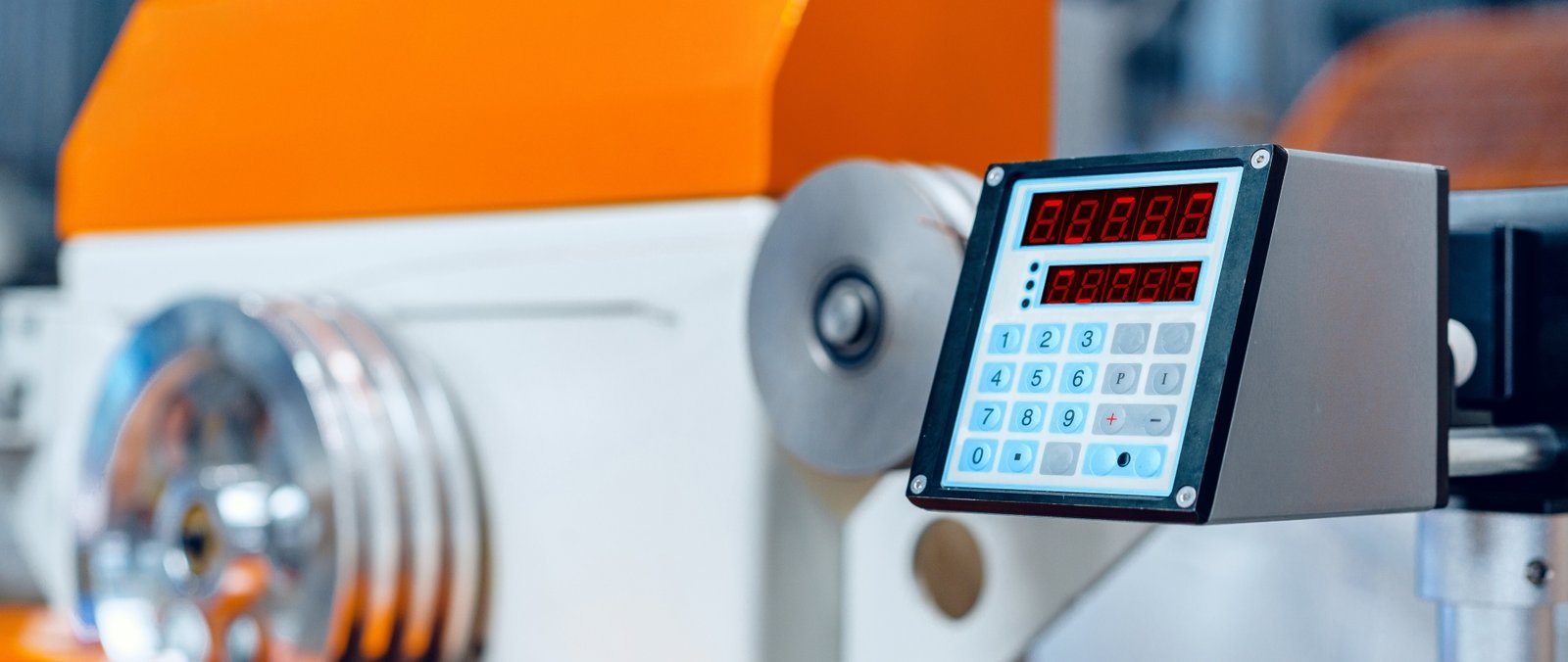








Two industrial weighing instruments serve applications where standard floor scales are impractical — drum scales for weighing cylindrical containers of liquid or bulk material, and hopper scales for weighing process vessels and bulk material in elevated containers. Both are specialized instruments built around a specific container geometry. Both appear in chemical manufacturing, food production, and pharmaceutical processing. Choosing between them — or understanding when each is the right tool — determines whether your weighing process integrates smoothly with your production workflow or requires a separate, inefficient handling step.
Table of Contents
What a Drum Scale Is
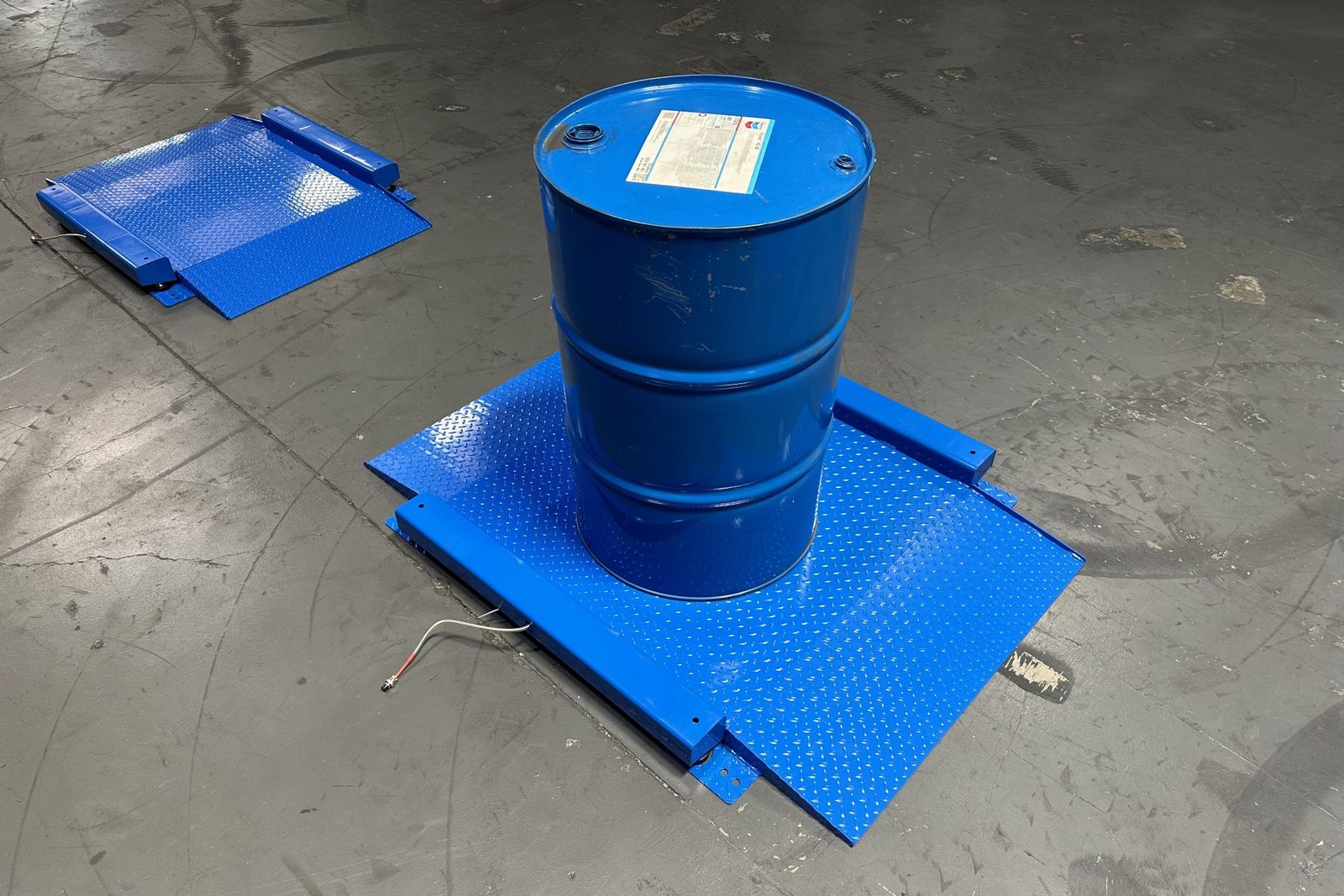
A drum scale is a low-profile platform scale optimized for weighing standard 55-gallon steel or plastic drums. Its defining physical characteristics are a low deck height with a ramp or a forklift-entry slot, a platform sized to accommodate a standard drum’s footprint, and a capacity matched to a full drum’s weight — typically 400–800 lb for a 55-gallon drum, depending on the contents.
The low platform height is not incidental — it is the primary design feature. A full 55-gallon drum of liquid typically weighs roughly 400–600 lb or more, depending on the liquid’s density (water alone is about 460 lb, plus the drum) and cannot be lifted onto a standard bench-height scale platform. A low-profile drum scale typically sits only a few inches above the floor, with a ramp or built-in entry slot allowing the drum to be rolled or hand-trucked directly onto the weighing surface without lifting.
Drum scale design variants
Ramp drum scale: The most common configuration. A low-profile platform with approach ramps on one or two sides. The drum is rolled up the ramp, positioned on the platform, and weighed. The reading appears on a remote indicator or a column-mounted display positioned for easy reading without bending.
Drum cradle scale: The drum sits in a curved cradle that prevents rolling during the weighing event. Used for drums containing liquids that slosh — keeping the drum stationary during weighing produces a more stable, accurate reading.
Drum positioner scale: Combines weighing with a mechanical drum rotator, allowing the drum to be tilted and rotated for dispensing while simultaneously displaying the weight of contents dispensed. Used in chemical blending operations where precise dispensing by weight is required.
Drum dolly scale: A wheeled dolly with an integrated scale. The drum is placed on the dolly, moved wherever needed in the facility, and weighed at any point without a fixed scale station.
Applications: Chemical receiving and dispensing, lubricant management, paint and coating operations, food ingredient receiving, solvent handling, and any operation that regularly receives, stores, or dispenses material in 55-gallon drums.
What a Hopper Scale Is
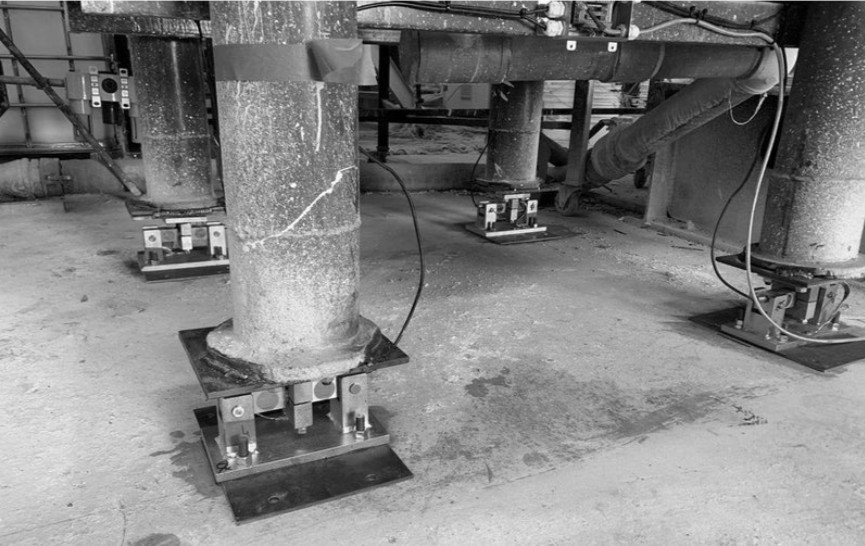
A hopper scale is a structural weighing system in which a container — a hopper, bin, silo, mixing vessel, or process tank — is mounted on load cells so that the weight of the contents can be measured without transferring the material to a separate scale. The container itself becomes the weighing vessel.
Unlike a floor scale, where a load is placed on the scale, a hopper scale integrates the scale directly into the container structure. Four load cells are mounted at the support points of the hopper or tank frame. The weight of the container, its contents, and any mounted accessories is measured continuously by the load cells and displayed on an indicator.
What this means operationally: Material is added to or removed from the hopper, and the weight changes in real time on the display — without any transfer, sampling, or separate weighing step. For batch formulation operations where multiple ingredients are added to a mixing vessel in sequence, the hopper scale displays the cumulative weight of each addition, allowing precise formulation without intermediate weighing of individual ingredients.
Hopper scale configurations
Above-floor hopper scale: The hopper sits on legs above the floor, with load cells at each leg support point. Product discharges from the bottom of the hopper into a process line or conveyor below. The most common configuration in food processing and chemical blending.
Floor-mounted tank scale: A process tank or mixing vessel sits on a scale platform or on individual load cells at its support legs. The weight of the tank contents is monitored continuously for inventory management, batch formulation, or process control.
Suspended hopper scale: The hopper hangs from above rather than sitting on a floor support, with load cells measuring the tensile force of the suspended hopper weight. Used where floor access below the hopper must remain unobstructed.
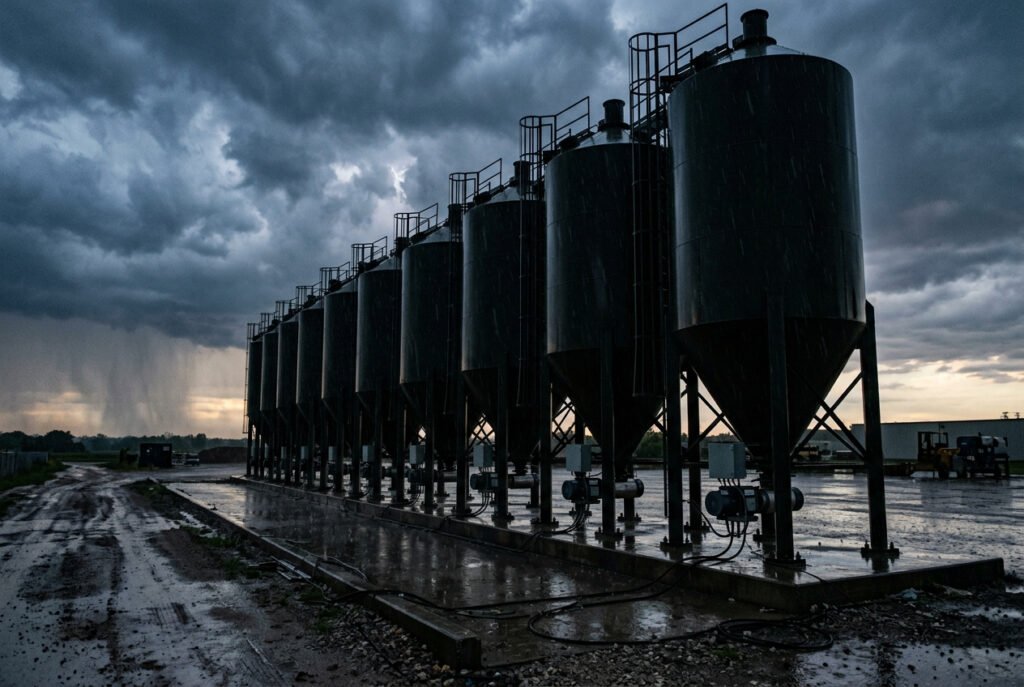
Silo and bulk storage scale: Load cells mounted under a large storage silo measure the total weight of bulk material in storage — grain, powder, granules, pellets. The weight reading provides continuous inventory data without any manual measurement or sampling.
Applications: Food ingredient batching, pharmaceutical compound preparation, chemical mixing, grain and feed ingredient blending, plastic resin storage monitoring, and any process where the weight of material in a vessel drives the production or formulation decision. For pharmaceutical batch weighing specifically, the compliance requirements that govern these weighing events are covered in our article on GLP and GMP compliance for lab balances.
Key Differences at a Glance
| Feature | Drum Scale | Hopper Scale |
|---|---|---|
| Container type | Standard 55-gallon drums | Custom-mounted hoppers, tanks, silos |
| Container position | Minimal — set on floor, plug-in indicator | 500 lb to 500,000 lb depending on the vessel |
| Mobility | Portable to semi-portable | Fixed installation |
| Installation | Drum receiving, dispensing, and inventory | Structural — requires engineering and commissioning |
| Weighing method | Place the drum, read the display | Continuous — contents weighed in real time |
| Typical capacity | 400–1,500 lb | 500 lb to 500,000 lb, depending on the vessel |
| Best suited for | Integrated — scale built into the container support | Batch formulation, process control, bulk inventory |
When a Drum Scale Is the Right Choice
A drum scale is the right tool when the operational unit is a drum — receiving, dispensing, or transferring material in standard 55-gallon containers — and when a fixed hopper installation is not justified by the operation’s scale or process requirements.
Drum scales are appropriate when:
- Material arrives in drums from suppliers and must be weighed on receipt. For the complete guide to receiving dock weighing, see our article on inbound and outbound weighing in a warehouse.
- Material is dispensed from drums by weight — lubricants, chemicals, adhesives, food ingredients — and the quantity dispensed per transaction varies
- Multiple drum types and sizes must be weighed on the same instrument
- The operation does not have fixed process vessels, and material moves through the facility in portable containers
A drum scale is not the right tool when the process requires continuous weight monitoring of a fixed vessel, when ingredient batching requires tracking cumulative additions to a mixing vessel, or when the material never physically leaves the vessel during the process.
When a Hopper Scale Is the Right Choice
A hopper scale is the right tool when the material lives in a fixed vessel during the production process, and when knowing the weight of the contents in that vessel drives a production decision.
Hopper scales are appropriate when:
- A mixing vessel, batch tank, or silo must be monitored continuously by weight during production
- Multiple ingredients are added sequentially to a vessel, and each addition must be verified by weight
- Bulk storage inventory must be tracked by weight without emptying the silo or bin
- The process requires automatic dosing or discharge control based on vessel weight, where the scale output triggers a valve, conveyor, or pump
A hopper scale requires a structural installation — load cells must be correctly positioned at the vessel’s support points, the vessel must be mechanically isolated from any fixed piping or structure that would transfer load away from the cells, and the system must be commissioned and calibrated as an integrated unit. This installation complexity is justified for fixed process vessels where the hopper scale integrates directly into the production workflow. It is not justified for occasional drum weighing, where a portable drum scale serves the application at a fraction of the cost and installation complexity.
For the full NTEP certification and legal-for-trade requirements that apply to industrial scales, including drum and hopper scales in commercial transaction applications, see our complete guide to industrial scales.
Installation Considerations for Hopper Scales
Hopper scale installation requires more than placing a scale on the floor. Four engineering requirements govern whether a hopper scale performs to specification.
Mechanical isolation: The vessel must not be connected to any fixed structure — piping, structural supports, or electrical conduit — that transfers a portion of its weight to the building rather than through the load cells. Any force path that bypasses the load cells produces a systematic low reading that changes as the vessel is filled or emptied. Flexible connections — flex hose, flex conduit, and expansion joints — at all penetrations are the standard solution.
Load cell positioning: Load cells must be placed symmetrically at the support points of the vessel to produce accurate corner loading. An asymmetric load cell placement or a vessel that does not distribute its weight evenly across all cells produces linearity errors across the weighing range.
Overload protection: Vessel overloads — overfilling, hydraulic pressure events, or product bridging — can permanently damage load cells. Mechanical overload stops that limit the travel of the vessel beyond the load cell’s rated capacity are required on all fixed hopper scale installations.
Calibration: A hopper scale cannot be calibrated by simply placing test weights on the vessel — the vessel itself is the load application point, and test weights must be added to the vessel in known increments from zero to the maximum expected operating weight. Multi-point calibration is required to verify linearity across the full operating range. For the calibration requirements that apply to all industrial scale types, see our article on industrial scale calibration: how often and what compliance requires.
FAQs
What is the difference between a drum scale and a hopper scale?
A drum scale is a low-profile platform scale designed for weighing 55-gallon drums — the drum is rolled onto the platform and weighed as a portable container. A hopper scale integrates load cells into the support structure of a fixed vessel — hopper, tank, or silo — measuring the weight of contents continuously without any material transfer. Drum scales suit portable container operations; hopper scales suit fixed process vessel applications.
What capacity drum scale do I need?
For a standard 55-gallon steel drum filled with a dense liquid such as a chemical or lubricant, a capacity of 1,000–1,500 lb typically provides headroom above a filled drum weight of roughly 400–600 lb — confirm with the product’s SDS density and the drum’s tare weight. For drums containing lighter materials — powders, loose granules — a lower capacity may be enough — weigh or calculate a full drum first, then apply the margin below. Always specify at least 20% above your maximum expected full drum weight.
Can a hopper scale be used for batching?
Yes — batching is one of the primary applications for hopper scales. The vessel weight is displayed continuously, allowing each ingredient addition to be verified in real time. The operator or automated system adds each ingredient until the display shows the target cumulative weight, then proceeds to the next ingredient. This is faster and more accurate than weighing each ingredient separately on a floor scale and transferring it to the vessel.
Does a hopper scale need NTEP certification?
NTEP certification is required if the hopper scale weight reading is used in a commercial transaction — for example, billing a customer for the weight of material dispensed from the vessel. For internal production monitoring and batch formulation where no commercial price is determined by the reading, NTEP certification is not legally required, though calibration traceability is required by most quality management frameworks. Any scale used in a commercial transaction where weight determines price must carry a valid NTEP Certificate of Conformance.
What is mechanical isolation on a hopper scale?
Mechanical isolation means the hopper or tank is not physically connected to any fixed structure — piping, electrical conduit, or building supports — that would transfer part of the vessel’s weight to the building rather than through the load cells. Any load path that bypasses the load cells produces a systematic low reading. Flexible connections at all vessel penetrations prevent this. Mechanical isolation is the most commonly overlooked installation requirement and the most frequent cause of hopper scale accuracy failures after commissioning.
Conclusion
Drum scales and hopper scales solve different problems in the same broad category of industrial weighing. A drum scale handles portable cylindrical containers — flexible, low-installation-cost, and suited to operations where material moves through the facility in drums. A hopper scale handles fixed process vessels — higher installation complexity, continuous real-time monitoring, and direct integration with production and batching workflows.
The right choice is determined by one question: is the material in a container that moves, or in a vessel that stays put? If it moves — a drum scale. If it stays put — a hopper scale. For operations where both apply at different points in the same production process, both are required. For the broader industrial scale context in which drum and hopper scales operate, see our complete guide to industrial scales.
Sources
- National Institute of Standards and Technology, NIST Handbook 44 (2026), Section 2.20 Scales.
- National Conference on Weights and Measures, National Type Evaluation Program (NTEP).
- U.S. Geological Survey, Facts About Water (water weighs about 8.33 lb per US gallon).
Last reviewed September 2026 by the Scale Blog editorial team. Drum weights are estimates; always check the product’s Safety Data Sheet for density and never load a scale beyond its rated capacity.