



Modern farming runs on data — and weight is one of the most valuable data points a farm generates. Whether you are tracking cattle weight gain, selling grain at the elevator, dosing medication by body weight, or verifying a truck load at the gate, the scale at the center of each decision determines whether that decision is accurate or approximate.
This guide covers every scale type used in agricultural and livestock operations, the decisions each one supports, the durability and regulatory requirements that govern farm scale selection, and how to match the right instrument to every weighing application on the farm.
Table of Contents
Why Accurate Weighing Matters on a Farm
A farm scale is not a convenience — it is a revenue protection tool, a health management instrument, and in many states, a legal compliance requirement.
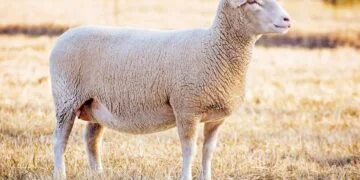
Livestock health and medication dosing: Drug dosages for cattle, pigs, sheep, and poultry are calculated per unit of body weight. An inaccurate weight produces an inaccurate dose — underdosing reduces treatment effectiveness, overdosing creates withdrawal period compliance issues and risks animal health. For the full picture of why weighing frequency matters for livestock health, see our article on how often you should weigh livestock. Our sheep weight guide lists typical weights by breed if you need a reference point.
Market decisions and fair pricing: Livestock sold by live weight — the standard in U.S. cattle, hog and sheep markets — needs an accurate weight for the sale to be fair to both buyer and seller. With USDA reporting live fed steers at about $218 per hundredweight in early September 2026, a scale that reads 20 lb low on a steer costs the seller roughly $44 per head — and that error repeats on every animal in the lot.
Grain storage and elevator transactions: Grain sold at a commercial elevator is weighed on a certified truck scale at the facility. A farm scale at the bin provides an independent check on that weight — the only tool available to a grower who wants to verify the elevator’s ticket reflects what they actually delivered. For the full explanation of why grain loses weight during storage and how farm scale records protect against systematic short-weighting, see our article on why grain loses weight during storage.
Transport weight compliance: Overloaded farm vehicles and grain trucks face fines, permit requirements, and liability exposure on public roads. A farm truck scale or weigh bar system at the loading point verifies the load before the vehicle leaves the property.
Livestock scales built for cattle handle hogs just as well — check our pig weight by age chart to see the growth benchmarks worth tracking on-scale.
The 5 Livestock Scale Types
Livestock scale selection starts with the species, the handling system already in place, and whether the weight reading will be used for a commercial transaction that legally requires NTEP certification.
1. Weigh Bars and Load Bar Systems
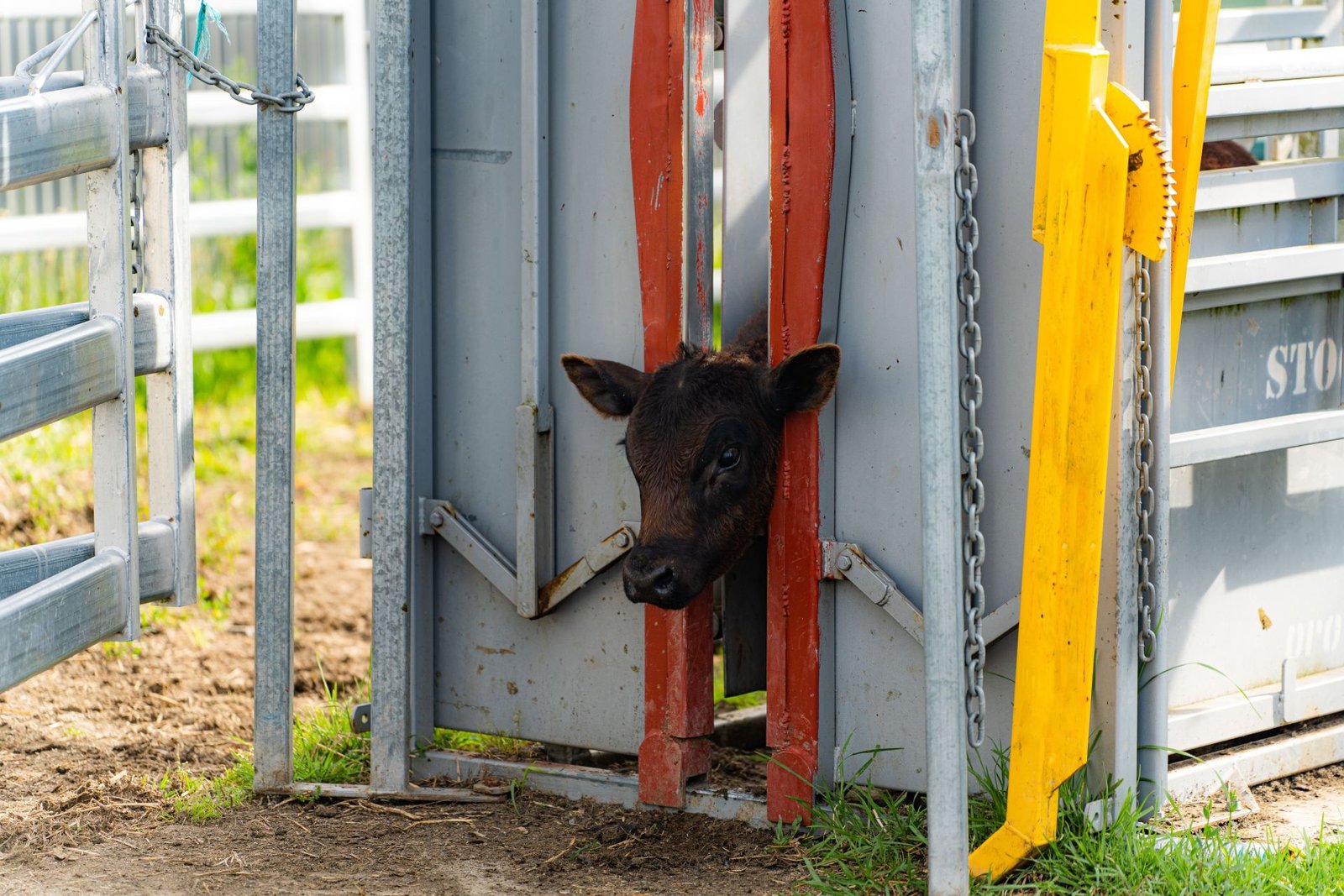
Weigh bars — also called load bars or weigh beams — are the most versatile livestock weighing solution available. A set of two to four bars is placed on the ground under an existing crush, chute, cage, or platform. The animal stands on the platform above the bars, and the bars measure the total load through their integrated load cells. No dedicated scale platform is required — the weigh bars convert existing handling infrastructure into a weighing station.
Best for: Operations with an established handling system — cattle crush, sheep race, or hog chute — where adding a dedicated scale platform is impractical or unnecessary.
Key advantage: Portability. A weigh bar set can be moved between locations on the same farm and set up under different platforms as needed.
2. Single Animal Livestock Scales
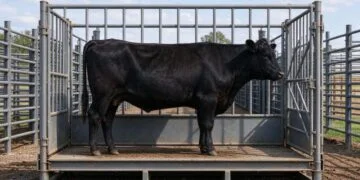
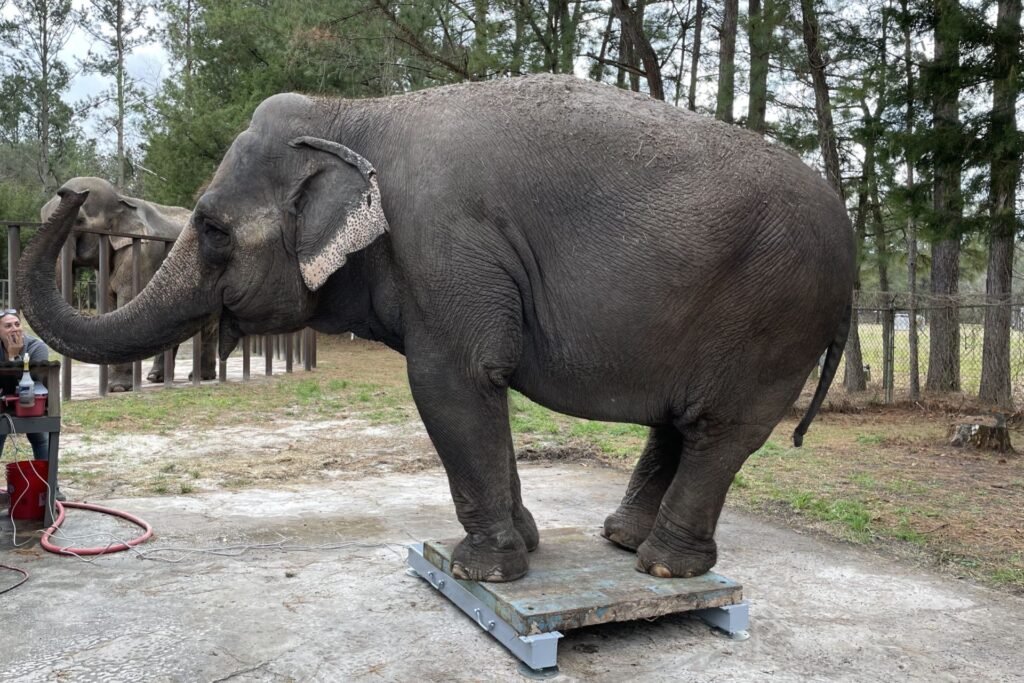
A single animal scale is a self-contained platform with integrated load cells, an indicator, and — on most models — a livestock pen or cage to contain the animal during weighing. The animal is loaded individually, the weight stabilizes, and the reading is recorded. Most models include a motion-detection algorithm that averages the weight reading during animal movement, allowing accurate results even when the animal does not stand completely still.
Best for: Cattle operations where individual animal records are required — breeding programs, feedlot performance tracking, and any application where knowing each animal’s weight individually is the operational requirement.
Typical capacity: 2,000–10,000 lb depending on model.
For the complete guide to setting up a livestock scale and chute system — including load cell installation, indicator setup, and integration with existing handling infrastructure — see our article on how to set up a livestock scale and chute system.
3. Portable Livestock Scales
Portable livestock scales are self-contained weighing platforms on wheels — designed to be towed to different locations on the farm rather than installed in a fixed position. Most include battery-powered indicators, allowing operation anywhere on the property without access to mains power.
Best for: Operations that weigh animals in multiple locations — different paddocks, outbuildings, or remote areas of a large property where installing a fixed scale is not practical.
Key consideration: Portability trades off against platform size and maximum capacity. Most portable individual animal scales handle up to 2,000–5,000 lb — sufficient for cattle, horses, and smaller livestock, but not for the heaviest bull weights.
For the complete buying guide covering every specification that matters when selecting a portable livestock scale — capacity, platform size, load cell durability, and indicator features — see our article on portable livestock scales: what to look for before you buy.
4. Group or Mobile Livestock Scales
A group livestock scale weighs multiple animals simultaneously — the entire mob, pen, or group steps onto a large platform, and the combined weight is recorded. Dividing by the number of animals gives an average weight per head. Mobile group scales are trailer-mounted, providing group weighing capability anywhere on the farm.
Best for: Large cattle, sheep, or hog operations where individual weighing of every animal at every session is impractical — average mob weights are sufficient for herd management decisions, and individual weights are captured only at key points such as weaning, marking, or market selection.
Typical capacity: Up to 20,000 lb on large group scales.
5. Veterinary and Small Animal Scales
Veterinary scales are compact, low-platform instruments designed for smaller livestock — sheep, goats, pigs, poultry, and small ruminants — where a full-sized cattle platform would be impractical. Many include a cage or pen to contain the animal. Low platform height minimizes the distance an animal must step up, reducing stress and improving cooperation.
Best for: Sheep and goat operations, pig finishing operations, poultry farms, and veterinary practices weighing a range of species from poultry through to small cattle.
For the full guide to the best scale types for weighing pigs at market weight — including the three scale configurations best suited to pig weighing and the key specifications that affect accuracy in a pig environment — see our article on best scales for weighing pigs at market weight.
Grain and Bulk Agricultural Weighing
Livestock scales handle animals. A parallel set of scale types handles the grain, feed, and bulk agricultural materials that flow through every farm operation.
Farm Platform and Floor Scales
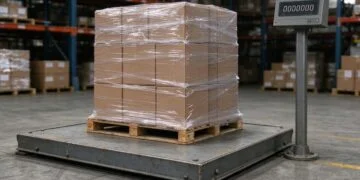
A farm platform scale is a heavy-duty floor-level platform designed for weighing bulk materials — grain bins, feed sacks, fertilizer bags, and individual commodity loads — that are moved onto the platform by hand, trolley, or forklift. Capacities range from 1,000 lb to 30,000 lb, depending on the model.
Best for: Operations that sell grain direct from the bin, weigh incoming feed deliveries against purchase orders, or need an independent weight check before loads go to the elevator.
Grain Cart and Truck Scales
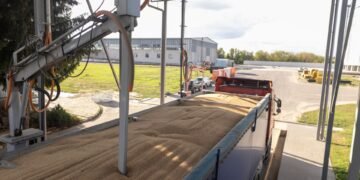
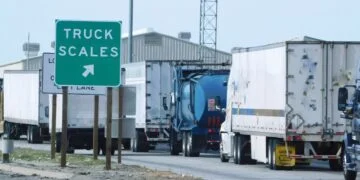
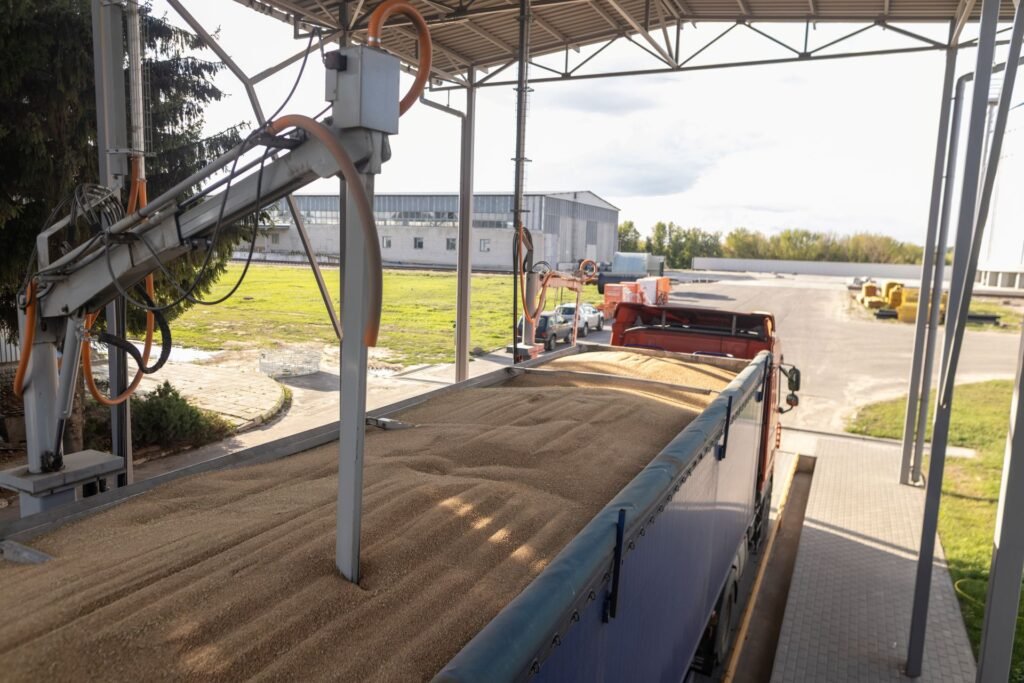
Grain cart scales and farm truck scales weigh grain in transit — either mounted directly to the grain cart frame as a weigh-as-you-go system, or as a portable axle scale set that the loaded vehicle drives across for a static reading.
Best for: Large grain operations where weighing every load at the bin or at the field edge provides real-time yield monitoring, and where having a documented farm weight record before the elevator ticket is issued protects against discrepancy disputes.
For the full comparison of farm scales versus commercial truck scales — when a farm platform scale is the right investment and when truck scale access at a co-op or elevator is the more cost-effective solution — see our article on farm scale vs truck scale: which does your operation need.
Grain Moisture Meters
While not a scale in the traditional sense, a grain moisture meter is the companion instrument to any farm grain weighing program. Grain loses weight during storage primarily through moisture loss — a process that directly affects the spread between farm weight and elevator weight, and that affects storage safety when moisture levels are above safe thresholds.
For the complete explanation of why grain loses weight, how moisture content drives that loss, and what measuring and monitoring moisture throughout storage prevents — see our article on why does grain lose weight during storage.
EID Integration: How Electronic Ear Tags Work With Livestock Scales
Electronic identification (EID) ear tags — transponder tags that carry a unique animal identification number readable by a panel or stick reader — are the technology that transforms a livestock scale from a weight recorder into a full individual animal management system.
When an EID-compatible scale indicator is paired with a panel reader mounted in the race or crush, the animal’s EID number is read automatically as it enters the weighing station. The indicator pairs the EID number with the weight reading and records both simultaneously — no manual data entry, no transcription errors, and no post-session matching of weights to animals from a handwritten tally.
For the complete explanation of what EID tagging is, how electronic ear tags work, and how they integrate with livestock scale indicators for automated weight recording — see our article on what is EID tagging and how do electronic ear tags work with livestock scales.
Estimating Livestock Weight Without a Scale
Before purchasing a livestock scale — or in situations where a scale is not accessible — experienced producers use two estimation methods that provide a useful approximation of body weight for non-critical decisions.
The heart girth formula uses a cloth tape measure around the animal’s heart girth to estimate weight from a mathematical relationship between body circumference and mass. For cattle, the standard formula is: weight (lb) = (heart girth in inches)² × body length (inches) ÷ 300. A livestock weigh tape — purpose-printed with weight graduations rather than length — eliminates the calculation step by reading estimated weight directly from the heart girth measurement.
Visual estimation is less reliable but widely practiced. Even professionals get it wrong: in a 2015 study published in The Veterinary Journal, 55% of visual estimates made by vets, stock handlers and students were more than 10% away from the actual weight. This accuracy is insufficient for medication dosing, market decisions, or transport weight compliance — but adequate for rough sorting and preliminary assessment.
For the complete guide to livestock weight estimation — including the formula, worked examples, and when a scale is non-negotiable — see our article on how to estimate cattle weight without a scale.
Farm Scale Durability Requirements
Agricultural environments impose conditions that commercial or laboratory scales are not built for. Every farm scale specification decision must account for the environment in which the scale will actually be used.
Moisture and washdown: Livestock scales are exposed to urine, dung, blood, and regular pressure washing. Load cells must be rated IP67 or higher — fully sealed against water ingress. Stainless steel load cells resist the corrosive effect of animal waste better than mild steel alternatives in long-term service.
Mud, dust, and debris: Platform decks on farm scales accumulate debris that must be cleared regularly. Platforms designed with minimal frame cavities, smooth undersides, and adequate clearance between the deck and the frame simplify cleaning and prevent debris accumulation around load cells.
Animal impact loads: Animals moving onto a scale create dynamic loads — impacts significantly higher than the static weight of the animal. Load cells must be rated with adequate overload protection, and platforms must be rigid enough that dynamic loading does not cause deck flex that shifts force away from the load cells.
Battery power: Many farm locations lack mains power. Scale indicators with rechargeable battery operation — providing 30–100+ hours between charges — allow weighing anywhere on the property without a power connection.
Temperature cycling: Farm scales operate through full seasonal temperature ranges — from below freezing in winter to high summer heat. Electronics and load cell adhesives must be rated for the full operating temperature range of the region.
NTEP Certification for Agricultural Weighing
Any farm scale used in a commercial transaction where weight determines price should be suitable for legal-for-trade use. In the U.S., commercial devices are expected to meet NIST Handbook 44, and most states require an NTEP Certificate of Conformance (issued through the National Conference on Weights and Measures) and inspection or sealing by state or local weights and measures officials. This typically applies to:
- Livestock sold by live weight at the farm gate
- Grain sold directly from the farm by weight
- Any agricultural commodity transaction where the farm scale reading determines the price paid
NTEP is not required for:
- Internal herd management weighing where no commercial transaction is based on the reading
- Medication dosing calculations where the weight is an internal management figure
- Yield monitoring and performance tracking
If you sell livestock or grain directly from the farm by weight, confirm your state’s legal-for-trade requirements with your weights and measures office before you buy, and have the scale installed and calibrated by a qualified technician. Livestock markets, dealers and packers also have to test their scales twice a year under USDA Packers and Stockyards rules (9 CFR 201.72).
Quick Reference: Farm Scale by Application
| Application | Scale Type | Typical Capacity | NTEP Required |
|---|---|---|---|
| Individual cattle weighing | Single animal scale or weigh bars | 2,000–10,000 lb | Yes — for commercial transactions |
| Group mob weighing | Group livestock scale | Up to 20,000 lb | Yes — for commercial transactions |
| Sheep, goats, pigs | Portable or vet scale | 500–5,000 lb | Yes — for commercial transactions |
| Grain and bulk materials | Farm platform scale | 1,000–30,000 lb | Yes — for commercial sales |
| Grain cart yield monitoring | Grain cart scale | 10,000–50,000 lb | Not typically |
| Farm truck compliance | Portable axle scale | Up to 80,000 lb | Depends on state |
| Herd performance tracking | Any certified livestock scale | As required | Recommended |
FAQs
What type of scale do I need to weigh cattle?
The right cattle scale depends on your handling system and whether individual or group weights are required. Weigh bars are the most versatile option — they convert existing crush or chute infrastructure into a weighing station without a new platform. A single animal scale with a livestock pen is the right choice for individual animal records in feedlot or breeding programs. A group scale handles mob weighing for larger operations. The complete buying guide is in our article on portable livestock scales: what to look for.
Do farm scales need to be NTEP certified?
Yes, for any commercial transaction where weight determines price — including livestock sold by live weight at the farm gate and grain sold direct from the farm. NTEP certification means the scale has been independently tested against NIST Handbook 44 accuracy standards. State Weights and Measures inspects the individual unit for legal-for-trade use. For internal herd management with no commercial transaction involved, NTEP certification is not legally required.
How do I estimate cattle weight without a scale?
The heart girth formula uses a cloth tape measure around the animal’s heart girth and body length to calculate an estimated weight. For cattle: weight (lb) = (heart girth in inches)² × body length (inches) ÷ 300. A livestock weigh tape eliminates the calculation by reading the estimated weight directly. For the complete guide, see our article on how to estimate cattle weight without a scale.
What is EID tagging, and how does it work with a livestock scale?
EID (Electronic Identification) ear tags carry a unique transponder number readable by a panel or stick reader. When paired with a compatible scale indicator, the animal’s ID is read automatically as it enters the weighing station and paired with the weight reading — eliminating manual data entry. The complete guide is in our article on what is EID tagging.
How often should I weigh livestock?
Frequency depends on the production system and the decision being supported. Cattle in a feedlot performance program are typically weighed every 28–30 days. Breeding cattle are weighed at key events — weaning, pregnancy testing, joining, and pre-sale. Sheep and pigs are weighed at key growth stages. The full guide to weighing frequency by species and production system is in our article on how often should you weigh livestock.
Conclusion
A farm scale program is built around three decisions: what is being weighed, where the weighing happens, and whether the weight reading is used in a commercial transaction that legally requires certification.
Livestock weighing — whether individual animals through a crush or mob groups on a portable platform — requires durable, weatherproof equipment with motion-averaging indicators and, for commercial sales, NTEP certification. Grain and bulk material weighing requires high-capacity platforms or truck scales with a certified weight ticket that protects against elevator discrepancy disputes. EID integration transforms both into a data system rather than a simple weight record.
The ten articles in the Scale Blog Agriculture & Livestock cluster cover every one of these applications in detail — from estimating cattle weight without a scale through to the full setup of a permanent livestock scale and chute system. Use the links throughout this guide to go deeper on any specific application your operation requires.
Sources
- USDA Agricultural Marketing Service, Five Area Weekly Weighted Average Direct Slaughter Cattle report (via IndexBox summary, September 2, 2026).
- Wood, S., Reyher, K.K. and Barrett, D.C. (2015). Comparison of visual assessment and heart girth tape measurement for estimating the weight of cattle in clinical practice. The Veterinary Journal.
- Electronic Code of Federal Regulations, 9 CFR 201.72 — Scales; testing of.
Last reviewed September 2026 by the Scale Blog editorial team. Legal-for-trade requirements vary by state — confirm with your weights and measures office.