





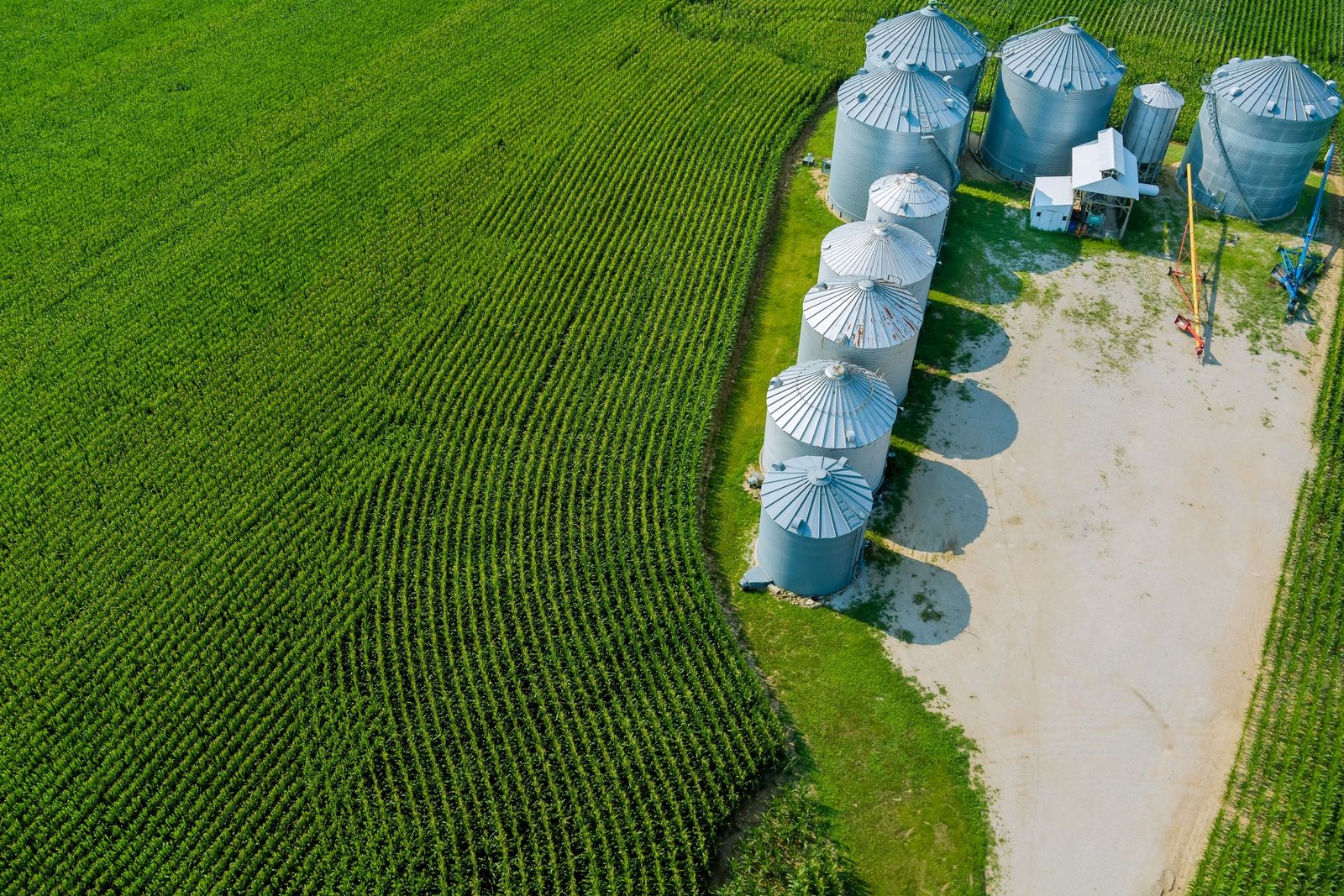
Grain loses weight during storage — and for most farmers, the full extent of those losses is invisible until they compare what went into the bin with what came out. The difference is real, it is measurable, and in a large grain operation, it translates directly into lost revenue. A 1% dry matter loss on 100,000 bushels of corn at $4.50 per bushel is $4,500 gone — not from a market price drop, but from biological and physical processes happening inside the bin while you are focused on other things.
Understanding why grain loses weight during storage is the first step toward quantifying the losses, minimizing them, and weighing outgoing grain with the confidence that the number on the scale reflects what you actually stored.
Table of Contents
The Two Categories of Grain Weight Loss
Before getting into specific causes, it helps to understand that grain weight loss during storage falls into two distinct categories — and they behave very differently.
Moisture loss: Grain gives up moisture to the surrounding air when the air is drier than the grain, or gains moisture when the air is more humid. Moisture loss reduces weight but does not necessarily reduce grain quality or dry matter content. When grain is dried intentionally — either in a dryer or through natural aeration — the weight reduction is expected and accounted for in the shrink calculation.
Dry matter loss: This is the category that costs money without any offsetting benefit. Dry matter loss occurs when biological activity — grain respiration, mold growth, insect feeding — consumes the starch, protein, and oil that make up the grain itself. Unlike moisture loss, dry matter loss is permanent and unrecoverable. The grain is lighter because part of it has been converted to carbon dioxide, heat, and water, and is simply gone.
A grain storage management program that focuses only on moisture ignores the more destructive category. Dry matter losses in poorly managed grain storage can reach 1–5% over a storage season — losses that do not show up until the grain is weighed out.
Cause 1: Grain Respiration
All living grain — corn, soybeans, wheat — continues to respire after harvest. Respiration is a metabolic process in which the grain consumes its own starch and sugars in the presence of oxygen, producing carbon dioxide, water, and heat as byproducts. Every molecule of starch consumed in respiration is dry matter that is no longer in the grain when it is weighed at the elevator.
Respiration rate is driven by two factors: temperature and moisture content. Both have an exponential relationship with respiration intensity.
- Corn stored at 60°F and 14% moisture respires at a fraction of the rate of corn stored at 80°F and 18% moisture
- High-moisture grain harvested at 20–25% moisture and placed in a bin without drying begins respiring rapidly within days
- Warm grain stored through summer in unventilated bins generates enough respiratory heat to create hot spots that further accelerate the process
The fix: Cool grain to below 40°F for winter storage and maintain it at safe moisture levels — 13–14% for corn, 11–12% for soybeans, 13% for wheat. This does not stop respiration but reduces it to levels where dry matter loss over a full storage season is below 0.1%.
Cause 2: Mold Activity
Mold is the most significant cause of dry matter loss in stored grain. Mold fungi consume grain starch and protein directly, and their metabolic activity generates heat and moisture that accelerate further mold growth in a self-reinforcing cycle.
“University of Minnesota Extension, the allowable storage time of shelled corn depends directly on grain moisture content and temperature — with proper aeration maintaining grain temperatures low enough to minimize deterioration and extend storage life significantly.”
Mold requires three conditions to proliferate: moisture above a threshold level, oxygen, and temperature above approximately 35°F. Below the safe moisture levels for each grain type, mold growth is effectively suppressed. Above those levels, mold can establish within days and cause measurable dry matter loss within weeks.
Safe storage moisture levels by crop:
| Crop | Safe Storage Moisture (12 months) | Safe Storage Moisture (6 months) |
|---|---|---|
| Corn | 13% | 14% |
| Soybeans | 11% | 12% |
| Wheat | 13% | 14% |
| Grain sorghum | 13% | 14% |
| Sunflowers | 8–9% | 10% |
These figures assume grain temperature is maintained at or below 40°F for long-term storage. Warmer grain at the same moisture level supports more mold activity.
The fix: Never store grain above safe moisture levels. If grain comes off the combine at harvest moisture above these thresholds — corn commonly harvested at 18–25% in the Corn Belt — it must be dried before long-term storage. Natural air drying with aeration fans can bring grain from 18–20% to safe levels in favorable fall conditions; grain above 20% typically requires a propane or natural gas dryer.
Cause 3: Insect Damage
Stored grain insects — weevils, grain borers, grain moths, and flour beetles — consume grain directly and generate heat and moisture through their metabolic activity. A significant insect infestation in a grain bin can cause dry matter losses of 1–3% within a single storage season, and the contamination they produce can downgrade grain quality below minimum standards for sale.
Insects thrive in warm grain — populations grow rapidly above 60°F and become dormant below 50°F. Grain with insect hot spots is also at elevated risk of mold, since insect activity generates localized heat and moisture concentrations.
The fix:
- Cool grain to below 50°F as quickly as possible after harvest using aeration fans — this suppresses insect populations before they establish
- Clean bins thoroughly before filling — grain dust, fines, and broken kernels from the previous crop are the primary food source and breeding habitat for stored grain insects
- Inspect grain temperature and condition monthly using bin monitoring systems or manual probing
- If insect activity is detected, treatment with approved grain protectant chemicals may be required — consult your local extension service for current recommendations and approved products
Cause 4: Moisture Migration and Condensation
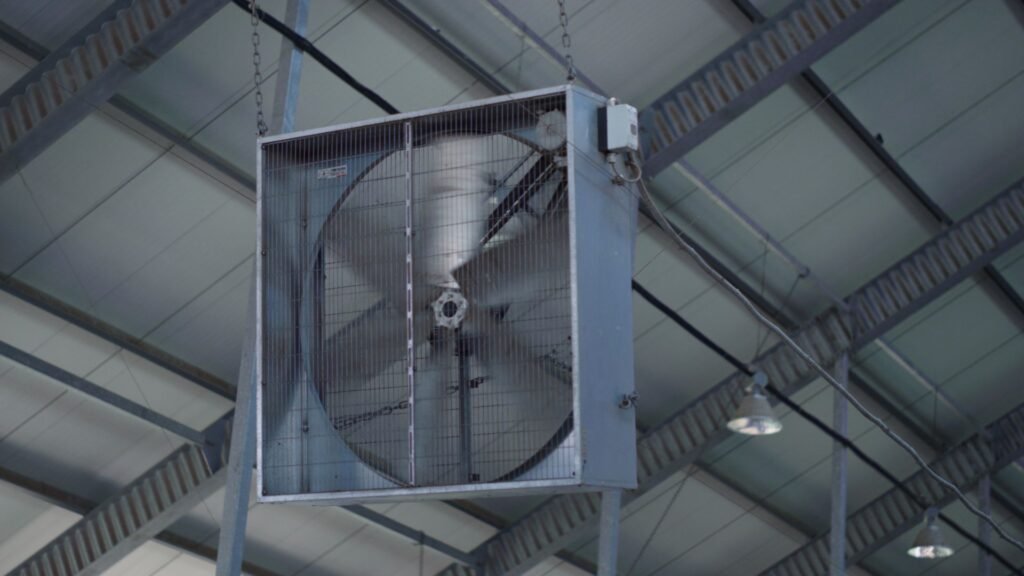
Even grain stored at the correct average moisture content can develop localized high-moisture zones through moisture migration. This occurs when a temperature gradient exists within the bin — typically warm grain in the center, cooler grain near the walls in winter — causing convection currents that carry moisture from warmer zones to cooler ones.
The result is a cool-top moisture accumulation zone where grain moisture can rise 2–5 percentage points above the bin average, creating ideal conditions for mold and caking even when the overall bin moisture appears safe.
The fix:
- Run aeration fans periodically through fall and winter to equalize grain temperature throughout the bin and eliminate the temperature gradients that drive moisture migration
- Monitor grain at multiple depths and locations — a single temperature probe in the center of the bin misses the top surface accumulation zone that is most at risk
- Check the top surface of the bin visually after the first cold snap of the season — caking, crusting, or visible mold at the surface is an early warning sign of moisture migration
“More dried grain goes out of condition because grain temperatures are not controlled than for any other reason — improper temperature control causes moisture to migrate from one part of the grain mass to another, where it accumulates and causes spoilage problems that are often not detected until significant dry matter loss has already occurred.”
Cause 5: Mechanical Damage and Fines
Grain that enters the bin with a high proportion of broken kernels, cracked seed coats, and fine material — collectively called fines — is at significantly higher risk of dry matter loss than clean, intact grain. Broken kernels have a higher surface area exposed to air and moisture, respire faster, and are more susceptible to mold colonization.
Fines also concentrate at the center of the bin under the filling spout, creating a dense core with reduced airflow that becomes a focal point for heating and spoilage regardless of how well the rest of the bin is managed.
The fix:
- Adjust combine settings at harvest to minimize kernel damage — cracked corn, split soybeans, and thresh-damaged wheat all increase fines percentage
- Use a grain spreader when filling large bins to distribute fines more evenly across the bin cross-section rather than concentrating them in the center
- Consider coring the bin — removing 5–10% of the grain from the center after filling — to draw out the fines-concentrated core before they create a spoilage nucleus
“Iowa State University Extension’s 2025 corn storage guidance recommends storing corn at 15.5–16.5% moisture with a minimum airflow rate of 0.1 CFM per bushel for spring sales — and notes that combine settings should be continuously refined to minimize kernel damage and fines that accelerate storage deterioration.”
How to Calculate Grain Shrink
Every bushel of grain that enters the bin at harvest moisture will weigh less when it leaves at storage moisture, because moisture has been removed. This is expected and accounted for in the grain trade through the standard shrink calculation.
The most widely used formula for calculating moisture shrinkage:
Shrink % = (Harvest Moisture% − Storage Moisture%) ÷ (100 − Storage Moisture%) × 100
Example: Corn harvested at 20% moisture and dried to 15%:
Shrink % = (20 − 15) ÷ (100 − 15) × 100 = 5 ÷ 85 × 100 = 5.88%
This means a farmer delivering 10,000 bushels of corn harvested at 20% moisture to an elevator that adjusts to 15% standard moisture will receive credit for approximately 9,412 bushels — a reduction of 588 bushels purely from moisture removal. Many U.S. elevators use 15.5% as the standard moisture for corn, which slightly reduces the shrink — always check the basis your buyer uses.
“Iowa State University Extension’s Ag Decision Maker notes that commercial elevators typically use a shrink factor of 1.35–1.40% per moisture point — which includes both the moisture removed and a handling allowance — and that general loss due to shrinkage from moving grain into and out of storage is typically 0.5–1% of the total grain weight.”
On top of water shrink, grain also loses a small amount of dry matter during drying and handling. Purdue University Extension (NCH-61) reports measured handling losses averaging about 0.8–0.9%, and notes that many shrink calculations assume 0.5% of the initial grain weight. Elevators often build this into a shrink factor or a separate handling charge, so check that the buyer’s calculation matches the standard formula — it is basic grain marketing due diligence.
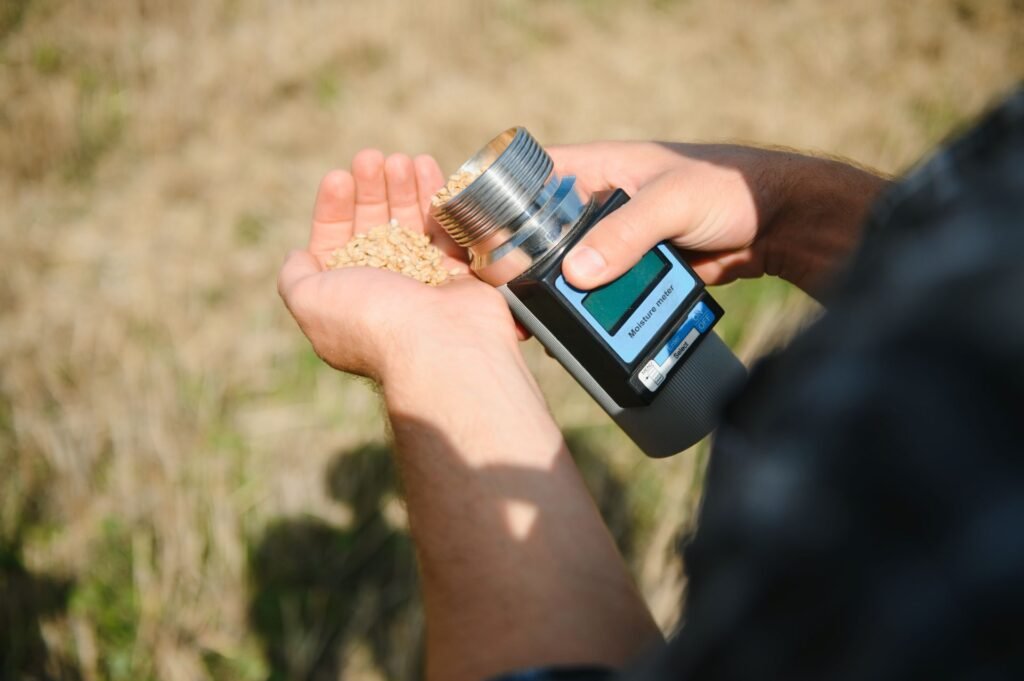
Weighing Grain in Storage: Why Accurate Scales Matter
Weight loss during storage is only measurable if you have accurate weights at both ends — what went in and what came out. A farm scale that records incoming grain weights accurately creates a baseline against which storage losses can be calculated. Without it, dry matter losses, excessive moisture removal, and elevator shrink discrepancies are all invisible in the numbers.
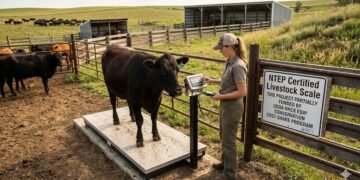
For operations selling grain direct from the bin, a farm truck scale or heavy-duty platform scale accurate to NTEP certification standards provides the independent weight verification that protects against systematic short-weighting at the elevator. Every bushel discrepancy between farm weight and elevator weight is either a legitimate storage or moisture loss, or a commercial error worth investigating. Choosing the right weighing equipment for outgoing grain loads is a separate decision — our guide to farm scale vs truck scale covers which investment is proportionate to your operation size and transaction volume.
Conclusion
Grain loses weight in storage for five reasons: respiration, mold activity, insect damage, moisture migration, and mechanical damage from fines. Of these, mold and insect damage are the most costly because they remove dry matter permanently — weight lost in these categories cannot be recovered at drying or reconditioning. The practical response to all five is the same: store grain cool, store it dry, maintain airflow, monitor regularly, and weigh accurately at both ends of the storage period. Farmers who do this consistently lose less grain, sell more of what they harvest, and can verify their elevator shrink calculations with confidence.
To make sure the weights you record at both ends of storage are reliable, our guide to what affects farm scale accuracy covers calibration, leveling, and every other variable that determines whether your scale data can be trusted.
FAQs
Why does grain lose weight during storage?
Grain loses weight in storage through five main causes: respiration, mold activity, insect damage, moisture migration, and mechanical damage from fines. Moisture loss reduces weight but is expected and calculable. Dry matter loss from mold and insects is permanent — the grain itself is consumed by biological activity and cannot be recovered.
How much weight can grain lose in storage?
Dry matter losses in well-managed grain storage are typically below 0.1–0.5% over a full storage season. In poorly managed storage — grain stored too wet, too warm, or with active mold or insect infestation — dry matter losses can reach 1–5% or more. Moisture shrink is additional and expected: corn harvested at 20% moisture and dried to 15% loses approximately 5.88% of its original weight in moisture alone.
What is the safe moisture level for storing corn?
Corn should be stored at 13% moisture or below for storage periods up to 12 months, assuming grain temperature is maintained at or below 40°F. For storage periods of 6 months or less, 14% moisture is acceptable. Above these levels, mold activity accelerates and dry matter losses increase significantly.
How do you calculate grain shrinkage?
The standard grain shrink formula is: Shrink % = (Harvest Moisture% − Storage Moisture%) ÷ (100 − Storage Moisture%) × 100. For example, corn harvested at 20% and dried to 15% shrinks by 5.88%. Elevators typically add an additional 0.5–1.0% handling shrink on top of the moisture shrink calculation.
How does aeration reduce grain weight loss in storage?
Aeration fans cool stored grain by moving ambient air through the bin, reducing grain temperature to below 40°F. Cooler grain respires more slowly, supports less mold activity, and suppresses insect populations — all of which reduce dry matter loss. Aeration also equalizes temperature gradients within the bin that would otherwise drive moisture migration toward the cool grain surface.
What are grain fines, and why do they cause weight loss?
Fines are broken kernels, cracked seed coats, and dust that accumulate during harvest and handling. They have higher surface area than intact kernels, respire faster, and are more susceptible to mold. Fines concentrate at the center of the bin under the filling spout, creating a dense core with poor airflow that becomes a focal point for heating and spoilage regardless of overall bin management quality.
Sources
- Purdue University Extension, Grain Drying: Water Shrink in Grain Drying (NCH-61).
- South Dakota State University Extension, Corn Grain Moisture Discount: Why and How Much?
Last reviewed September 2026 by the Scale Blog editorial team.