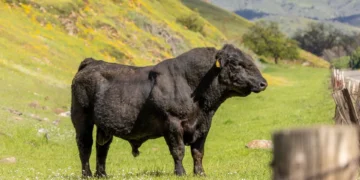
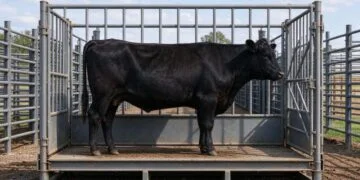





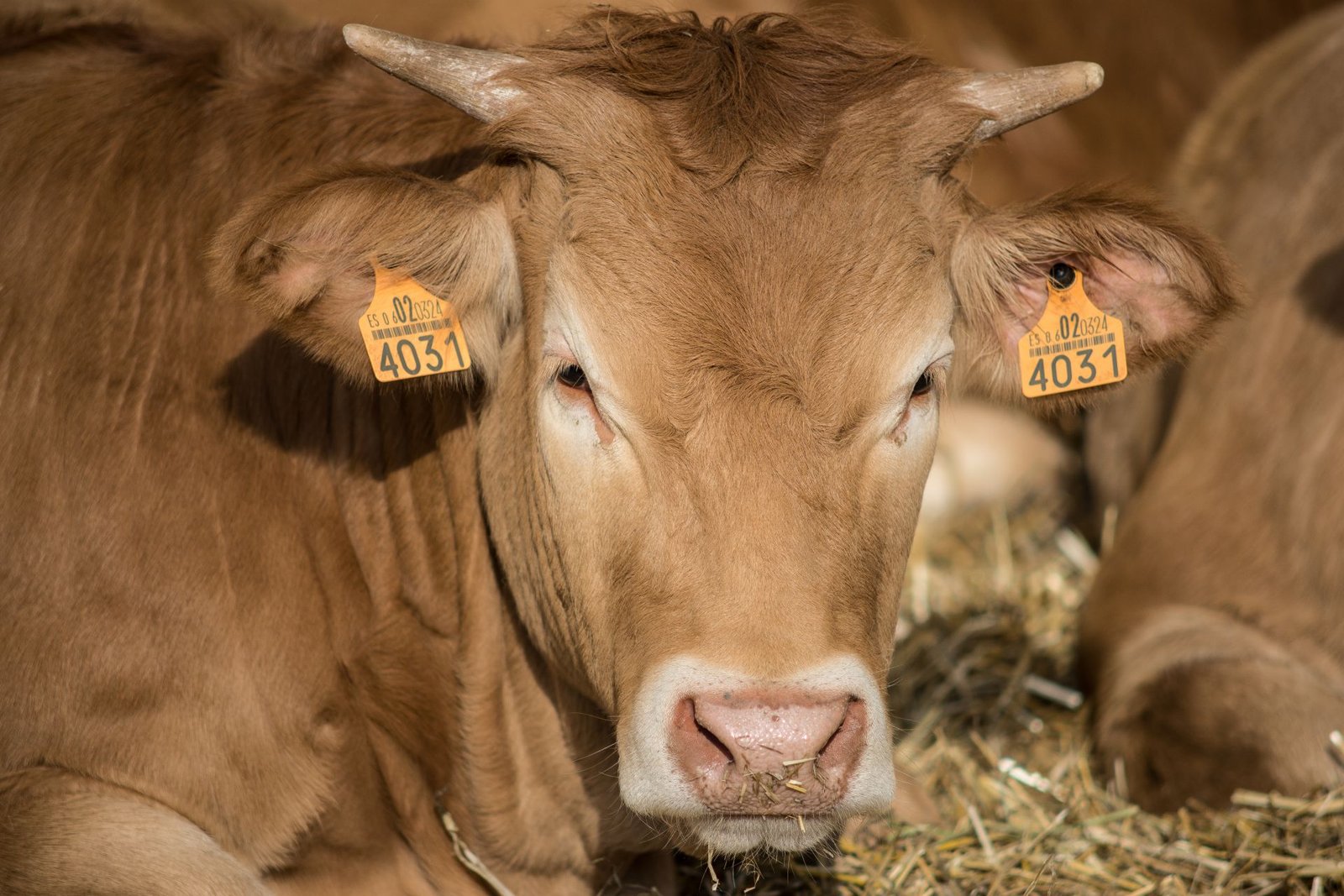
EID tagging — Electronic Identification tagging — is the technology that connects a unique electronic identity stored in an animal’s ear tag to the data your farm collects about that animal, including its weight at every weigh session. When an EID tag reader is integrated with a livestock scale indicator, the system automatically pairs each weight with the correct animal ID the moment the animal steps onto the platform. No manual writing. No transcription errors. No weights recorded against the wrong tag number. For any farm running a weight-based performance monitoring programme, EID integration is the single technology upgrade that most improves the quality and reliability of the data produced.
This article explains how the technology works, what equipment is involved, what it costs in practical terms, and how to decide whether your operation needs it.
Table of Contents
How EID Tags Work: The Technology Explained
An EID ear tag contains a small microchip and a coiled antenna sealed inside a durable plastic housing. The microchip stores a unique identification number — typically a 15-digit code compliant with ISO 11784 and ISO 11785 international standards — that cannot be altered or duplicated. The tag itself contains no battery. It is entirely passive.
When the tag comes within range of a reader device, the reader transmits a low-frequency radio signal — typically at 134.2 kHz — that energises the tag’s antenna through electromagnetic induction. This brief charge powers the microchip, which transmits its stored ID number back to the reader. The entire exchange takes a fraction of a second and requires no action from the animal or the operator.
Two tag technologies are in common use:
- FDX-B (Full Duplex B) — transmits its ID number continuously while in the reader’s field. The most widely used technology globally and the international standard for livestock identification
- HDX (Half Duplex) — charges first, then transmits. Slightly longer read time, but historically used in some national traceability systems
Most modern readers are dual-technology and read both formats automatically.
The Components of an EID Weighing System
A complete EID weighing system has three hardware components that must be compatible with each other.
1. The EID Tag
The tag is applied to the animal’s ear using a purpose-made applicator at birth, weaning, or on arrival at a new holding. Tags are available in several formats:
- Button tags — a two-piece tag with a stud through the ear; the most common format for cattle and sheep
- Flag tags — a single-piece tag with a larger visual panel for easy reading at a distance; often combined with a printed visual tag number for backup identification
- Rumen bolus — a ceramic or plastic capsule containing the EID chip, administered orally and retained in the reticulum for life; used where ear tag loss is a problem or where a secondary identification method is required
- Combined visual/EID tag — a single tag that carries both a printed visual number readable without a reader, and an embedded EID chip; the most practical format for most farm operations
Tag retention rate — the percentage of tags that stay in place over the animal’s productive life — is a critical specification. Tags from established manufacturers are designed for high retention, but losses still happen — check tags at every handling and replace missing ones promptly. Budget tags with poor retention rates undermine the entire identification system.
2. The EID Reader
The reader is the device that detects and captures the tag number. Three reader formats are used in livestock weighing applications:
Panel reader (stick reader mounted in a race): A flat antenna panel mounted in the side or floor of the weighing race, typically 20–32 inches (50–80 cm) wide. Animals walk past or over the panel, and their tag is read automatically without any operator action. This is the format used in integrated EID weighing systems — the panel sits immediately before or within the scale platform, reading the tag as the animal steps on to be weighed. “As profiled in American Cattlemen, permanently mounting a panel antenna in the chute or alleyway and connecting it to the scale indicator means the EID is forwarded to the scale head automatically — without the operator needing to pick up a wand or push a button — allowing the cattle processing session to flow without interruption.”
For full guidance on positioning a panel reader within a weighing race — including foundation, race design, and cable management — see our step-by-step guide to how to set up a livestock scale and chute system.
Wand or stick reader: A handheld device with a short antenna that must be passed within 4–8 inches (10–20 cm) of the tag. Used for individual identification outside the race — checking an animal in a field, scanning a group in a pen, or re-reading a tag that was not captured by the panel. Every farm with EID should have at least one wand reader for this purpose.
Bluetooth stick reader: A wand reader that transmits the captured tag number wirelessly to a smartphone, tablet, or compatible scale indicator. Useful for remote identification without trailing cables.
3. The Scale Indicator With EID Compatibility
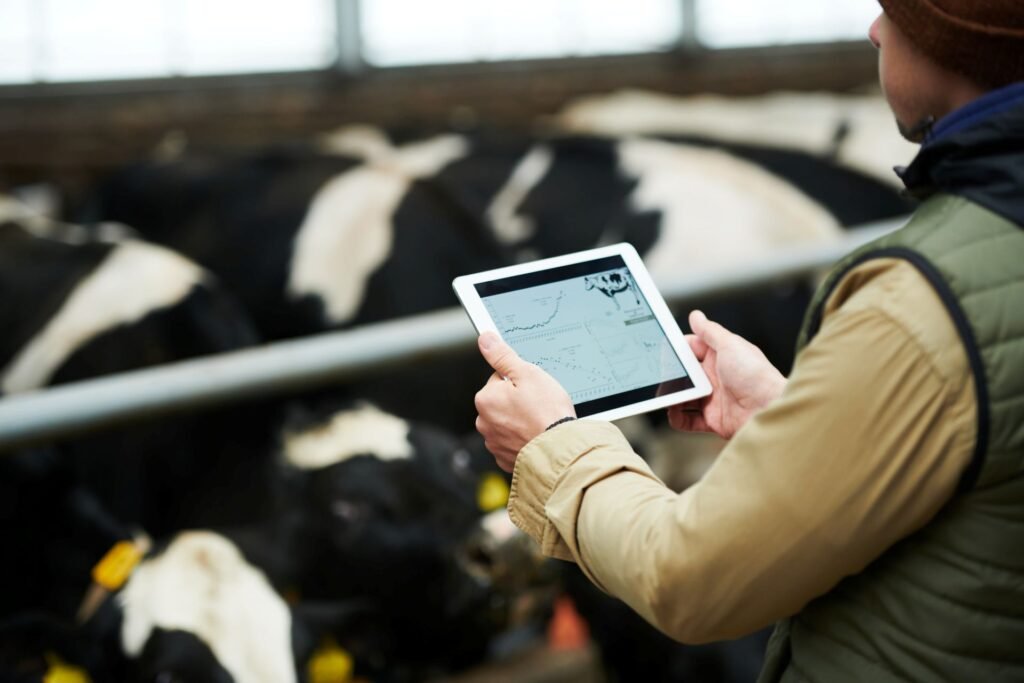
The scale indicator must be capable of receiving the tag number from the reader and pairing it with the weight reading at the moment the animal is on the platform. Not all livestock scale indicators support EID integration — confirm compatibility before purchasing either the scale or the reader. When selecting a scale that supports EID integration, indicator compatibility is a key specification — our portable livestock scale buying guide covers what to look for in an indicator alongside every other hardware decision.
The integration works as follows:
- The animal enters the weighing race and steps onto the platform
- The panel reader reads the EID tag and transmits the tag number to the indicator
- The indicator receives the weight from the load cells
- When the weight stabilises, the indicator automatically records the pairing: tag number + weight + date + time
- The record is stored in the indicator’s memory and can be exported to farm management software via USB or Bluetooth
The result is a weight record that is already linked to the correct individual animal, with no operator input required beyond managing the animal through the race.
“When an EID reader reads a tag, it automatically triggers the scale indicator to recognize the animal, record the weight against its individual record, and bring up other information relevant to that animal — eliminating the manual pairing step entirely.”
What EID Does for Your Weight Data
The practical value of EID integration in a weighing system is best understood by contrasting it with the manual alternative.
Without EID: An operator reads the weight from the indicator display, writes it on a paper sheet, or calls it out to a second person recording on a clipboard, alongside the visual tag number they have read from the animal’s ear. At the end of the session, the paper records are transcribed into a computer or farm management system. At each step — reading, calling, writing, transcribing — there is an opportunity for error. Every manual step — reading a visual tag, writing a weight, retyping it later — is a chance for a transcription error. In a 200-head herd that is weighed four times per year, that represents 24–64 incorrect weight records per year — enough to make individual performance data unreliable.
With EID: The tag number is captured electronically and automatically paired with the weight. No reading, calling, writing, or transcribing. Error rate in the tag-to-weight pairing step: effectively zero, subject to the tag being read cleanly. Session records are exported digitally to farm management software at the end of the day. EID integration adds the most value when paired with a consistent weighing schedule — our guide to how often you should weigh livestock covers the right frequency for every species and production stage.
The downstream benefits:
- Individual growth curves — every animal has a complete, accurate weight history from birth to sale or slaughter
- Automatic ADG calculation — farm management software calculates average daily gain for every individual and flags animals below target without any manual data processing
- Abattoir feedback integration — deadweight and carcase data from the abattoir can be matched back to individual farm weight records, allowing you to calculate kill-out percentage per animal and identify the genetics and management practices that produce the best carcase outcomes
- Automated drafting — some scale and race systems use EID data to trigger automatic drafting gates, sorting animals into different pens based on weight, identity, or management group without operator intervention
- Regulatory compliance — in countries with mandatory livestock traceability requirements, EID weight records that include tag number, date, and location provide the documentation needed for movement and health records
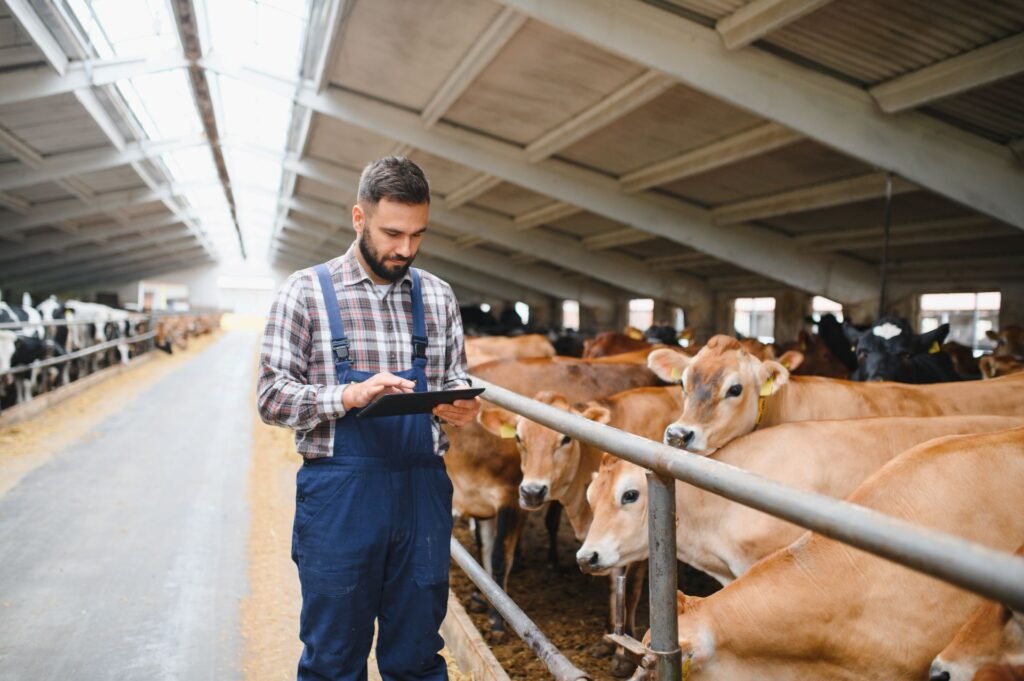
For a complete guide to calculating average daily gain, setting breed benchmarks, and building a weight monitoring program that uses this data effectively, see our article on how to track cattle weight gain over time.
EID Regulations: Is It Mandatory for Your Operation?
EID requirements vary significantly by country and species. Understanding what applies to your operation determines whether EID is a choice or a legal requirement.
United Kingdom: Electronic identification is mandatory for sheep and goats born after 2010 under EU-derived legislation retained post-Brexit. Cattle are identified with two visual ear tags (one of which carries a barcoded number) under the CTS (Cattle Tracing System), but electronic identification for cattle is not yet universally mandatory, though EID is increasingly adopted voluntarily for performance recording.
Australia: The National Livestock Identification System (NLIS) requires NLIS-accredited electronic tags for cattle, and electronic identification for sheep and goats has been phased in nationally. The NLIS database links tag numbers to property identification codes and movement records.
United States: Under a USDA APHIS rule that took effect on November 5, 2024, ear tags applied to covered cattle and bison must be both visually and electronically readable to count as official identification for interstate movement. The rule applies to groups such as sexually intact beef cattle 18 months and older, all dairy cattle, and rodeo, show and exhibition cattle. As of early 2026 the rule remained in effect while a legal challenge brought by rancher groups continued in federal court, so check APHIS or your state veterinarian for the current requirements.
European Union: Electronic identification is mandatory for sheep and goats in all member states. Cattle traceability is managed through the TRACES system with visual tag requirements; voluntary EID adoption for cattle is growing.
Is EID Integration Worth It for Your Farm?
EID integration adds cost — tags cost more than visual tags alone, a panel reader adds to the scale system cost, and a compatible indicator may cost more than a basic model. Whether the investment pays is a function of herd size and how you use weight data.
EID integration is clearly worth the investment if:
- Your herd or flock is above 100 animals
- You run a formal weight recording and performance monitoring programme
- Individual animal data informs breeding, selling, or culling decisions
- You are required to comply with national traceability regulations
- You compare farm liveweight records against abattoir deadweight feedback
Manual recording is adequate if:
- Your herd is small (under 50 animals), and you weigh infrequently
- Weighing is used only for group average decisions — batch selling, group drug dosing — rather than individual performance monitoring
- You have no traceability compliance obligation requiring linked electronic records
Conclusion
EID tagging connects the physical act of weighing an animal to a permanent, accurate, individual electronic record — automatically, every time. The technology is mature, reliable, and increasingly affordable. For farms that weigh regularly and use weight data to drive management decisions, EID integration transforms weighing from a labour-intensive data collection exercise into an automated data pipeline. The question is not whether the technology works — it does — but whether the size and ambition of your operation justifies the investment. For most commercial livestock farms above 100 head, the answer is yes, and the return comes quickly in labour saved, errors eliminated, and management decisions made on data you can actually trust.
FAQs
What is EID tagging in livestock?
EID stands for Electronic Identification. An EID tag is a passive RFID ear tag containing a microchip that stores a unique 15-digit identification number compliant with ISO 11784 and ISO 11785 international standards. When read by a compatible reader, the tag transmits the animal’s ID number automatically without any battery or operator action.
How does an EID tag work with a livestock scale?
A panel reader mounted in the weighing race reads the animal’s EID tag as it steps onto the scale platform. The tag number is transmitted to a compatible scale indicator, which automatically pairs it with the weight reading when the weight stabilises. The result is a weight record linked to the correct individual animal — with no manual data entry required.
Is EID tagging mandatory for cattle?
It depends on your country. In Australia, NLIS electronic identification is mandatory for all cattle. In the UK, EID is mandatory for sheep and goats but not yet universally required for cattle. In the US, the USDA ADT framework requires official identification for interstate cattle movements, which electronic ear tags satisfy. Always check the current regulations in your jurisdiction.
What is the difference between FDX-B and HDX EID tags?
FDX-B (Full Duplex B) tags transmit their ID number continuously while in the reader’s field and are the dominant international standard for livestock identification. HDX (Half Duplex) tags charge first then transmit, resulting in a slightly longer read time. Most modern readers are dual-technology and read both formats automatically.
How much does an EID weighing system cost compared to standard weighing?
EID tags cost more than visual tags alone — typically two to five times the price of a standard visual ear tag. A compatible panel reader and EID-capable indicator add to the initial system cost. However, for herds above 100 animals with a regular weighing programme, the labour saved in data recording and the elimination of transcription errors typically deliver a return on the additional investment within one to two weighing seasons.
What farm management software works with EID livestock scales?
Most major livestock farm management software platforms — including Herdwatch, Agrinet, AgriWebb, and breed society recording programmes — accept weight data exported from EID-compatible scale indicators via USB or Bluetooth. Confirm that your chosen indicator exports data in a format compatible with your preferred software before purchasing.
Sources
- Federal Register, Use of Electronic Identification Eartags as Official Identification in Cattle and Bison (May 9, 2024).
- American Veterinary Medical Association, APHIS finalizes rule requiring electronic ID tags for certain cattle, bison.
- Beef Magazine, Ranchers ask court to end USDA electronic ID ear tag rule (March 2026).
Last reviewed September 2026 by the Scale Blog editorial team. Identification rules change — confirm current requirements with APHIS or your state veterinarian.