








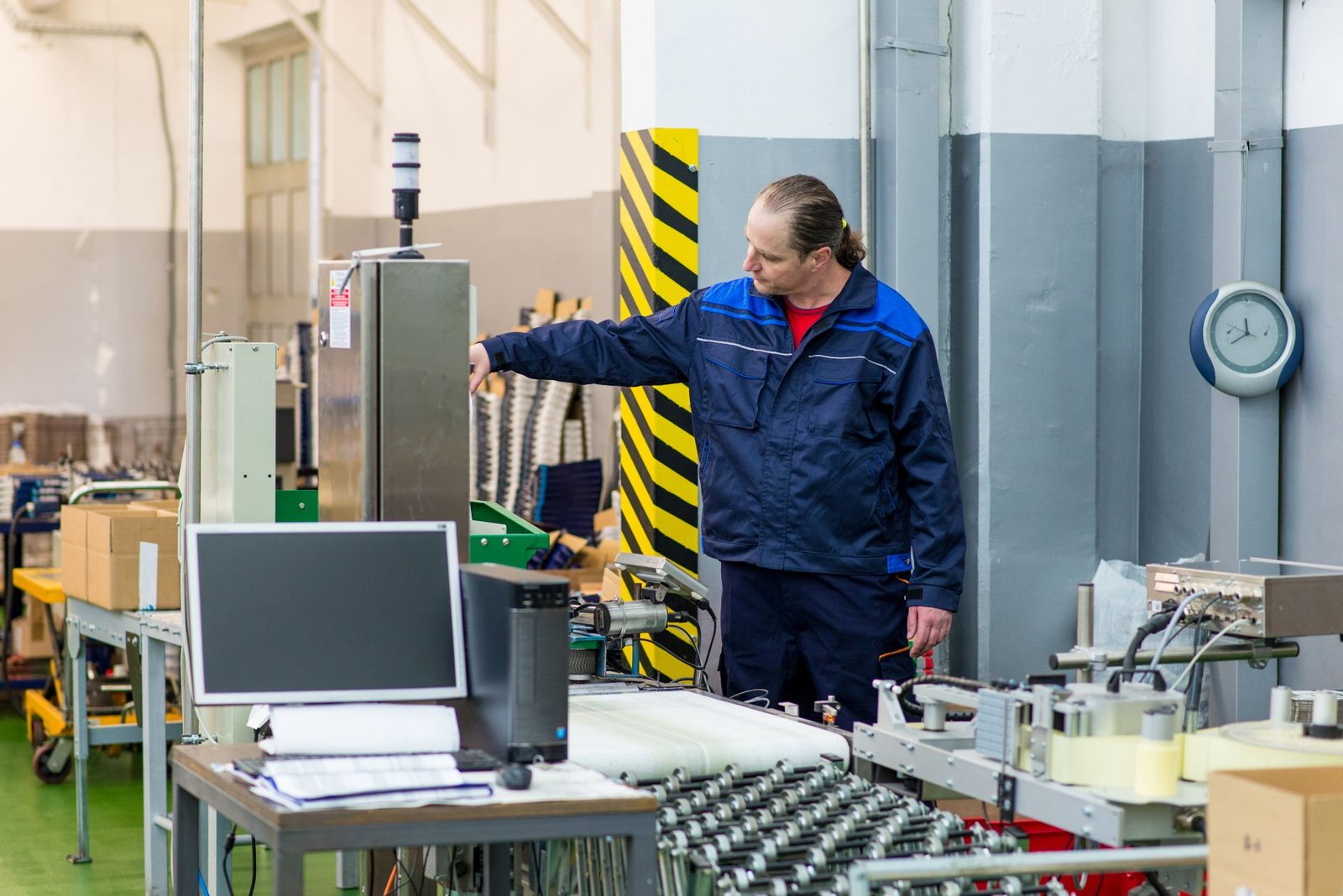
A warehouse scale that is out of calibration does not announce itself. It continues to display readings. Those readings look reasonable. No error message appears. The scale simply reads a little high or a little low — consistently, on every package, every pallet, and every receiving check that passes through it.
That silent error generates carrier invoice adjustments, shipping overcharges, receiving discrepancies, and inventory count errors. None of those problems traces back to the scale without deliberate investigation. Most operations absorb them as unavoidable operational friction. They are not unavoidable. They are a calibration problem with a calibration solution.
This guide covers exactly how often warehouse scales need to be calibrated, what triggers an immediate recalibration outside the normal schedule, and how to perform both in-house verification and professional calibration correctly.
Table of Contents
What Calibration Is — and What It Is Not
Calibration is the process of comparing a scale’s readings against certified test weights of known mass, determining any deviation from the correct value, and adjusting the scale so its readings fall within the required tolerance.
Three terms are frequently confused in warehouse settings:
Calibration: The full process of testing accuracy and adjusting the scale if readings fall outside tolerance. Requires certified test weights traceable to NIST. Produces a calibration certificate. Performed by a qualified technician for legal-for-trade and compliance applications.
Verification (In-House Check): Placing a known test weight on the scale and confirming the displayed reading matches. Does not involve adjustment of the scale’s internal settings. An operational check performed by the scale’s users is not a substitute for professional calibration. Calibration is defined as standardizing a measuring instrument by determining the deviation from a standard and applying the proper correction factors.
NIST-Traceable Calibration: A calibration performed using reference standards that can be linked through an unbroken chain of documented comparisons back to the primary measurement standards maintained by NIST. Traceability (to NIST or another national metrology institute) underpins legal-for-trade testing, is required by quality standards such as ISO 9001 (clause 7.1.5.2), and is expected in food and pharmaceutical GMP programs.
Understanding this distinction matters because in-house verification — which most warehouse teams perform — confirms that a problem does not exist. It does not fix a problem that exists. Professional calibration is what corrects a reading that has drifted outside tolerance.
Why Warehouse Scales Drift
Calibration drift is normal. It is not a sign of a defective scale. Every load cell degrades gradually under the physical reality of warehouse use. Understanding the causes helps predict when calibration is needed most urgently.
Temperature cycling: Load cells change their electrical characteristics with temperature. A scale calibrated at 68°F (20°C) can read slightly differently at 40°F (4°C) — especially outside its rated temperature range — in a cold storage environment or at 90°F (32°C) in a summer warehouse without climate control. Scales operating across wide temperature ranges need more frequent calibration than those in stable environments.
Repeated loading and overloading: Every load placed on a scale deforms the load cell’s metal body slightly. Over thousands of load cycles, this cumulative deformation causes the load cell’s zero reference to shift. Overloading — placing weight above the scale’s rated capacity — accelerates this process significantly and can cause sudden rather than gradual accuracy loss.
Vibration: Forklift traffic, conveyor systems, and heavy machinery generate floor vibration that affects load cell readings during measurement and accelerates mechanical wear over time. Scales installed near dock doors or in high-traffic aisles experience more vibration-related drift than scales in quieter locations.
Physical impact and shock: A pallet dropped onto a floor scale. A pallet jack is driven into a floor scale’s corner. A heavy carton dropped from a height onto a bench scale platform. Each impact applies a force spike far above the scale’s rated capacity for a fraction of a second — enough to shift the load cell’s calibration permanently.
Debris accumulation: Material packed under the platform corners or around the load cell mounting points creates a false preload — additional weight that the auto-zero function does not fully detect or correct. The scale reads consistently low as a result.
How Often to Calibrate Warehouse Scales
Calibration frequency is not a single answer. It depends on the scale type, the application, the usage volume, and the regulatory framework in which the operation works.
Calibration frequency depends on manufacturer recommendations, how often the scale is used, the environment it operates in, and how essential accurate weight is to the business. Their general guideline: certified calibration once per quarter, with a weekly user spot check, is appropriate for scales used fairly often.
For warehouse and distribution applications specifically, the following schedule applies:
Shipping and Receiving Floor Scales
Professional calibration (suggested): Every 6 months; high-volume receiving docks often move to quarterly. Adjust the interval based on your verification records. Floor scales are the instruments most likely to experience overloading and impact events — both of which accelerate drift.
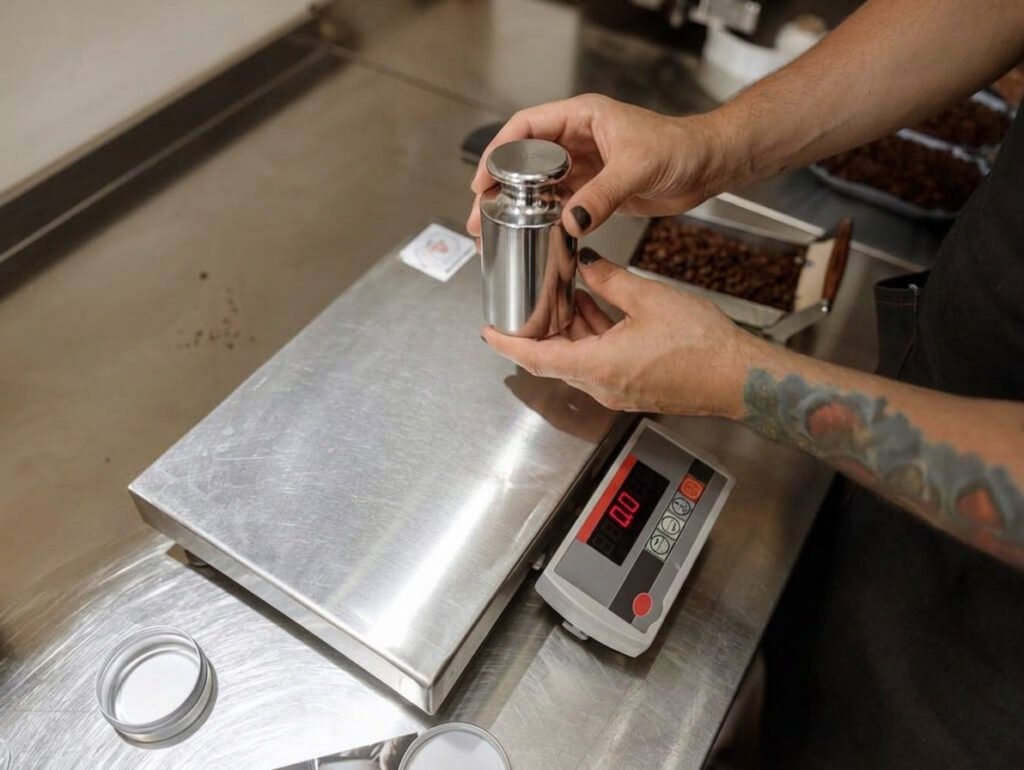
In-house verification: Weekly. Place a certified test weight at the center of the platform at the start of the first shift each week. Record the reading. Compare against the known weight. If the deviation exceeds the scale’s stated accuracy tolerance, take the scale out of service and schedule professional recalibration immediately.
Parcel and Bench Scales at Packing Stations
Professional calibration: Annually at a minimum. Monthly for high-volume fulfillment centers processing hundreds of packages per shift.
In-house verification: Daily. A simple zero check and a single test weight placement take under two minutes at the start of each shift. Given that parcel scale errors translate directly into carrier invoice adjustments, this two-minute daily check has the fastest return on time of any operational maintenance activity in a packing station.
Pallet Jack Scales
Professional calibration (suggested): Every 6 months. Pallet jack scales are portable — they are moved, bumped, and operated on imperfectly level surfaces constantly. Each relocation introduces variables that stationary scales do not experience.
In-house verification: Before each use session. Zero the scale on a flat surface. Place a known weight on the forks. Confirm the reading is within tolerance before beginning the day’s weighing.
Legal-for-Trade Scales
Any scale used in a legal-for-trade application — where the weight reading determines a commercial transaction — must pass inspection by state or local weights and measures officials (who test and seal it; adjustments are made by a registered service agency) in addition to regular professional calibration. The state inspection establishes legal-for-trade compliance. Professional calibration maintains measurement accuracy between inspections.
Contact your state Weights and Measures office — listed in the NIST state office directory — to confirm your state’s requirements for inspection frequency.
Triggers for Immediate Recalibration
These events require recalibration before the scale returns to service — regardless of when its last scheduled calibration occurred:
- Physical impact or shock — Any event where weight significantly above the scale’s rated capacity was applied, even briefly
- Scale was moved — Any portable or semi-portable scale relocated to a new surface must be re-zeroed and verified before use
- Overload event — The scale displayed an overload indication or was loaded beyond its rated capacity
- Environmental change — The scale moved from one temperature environment to another (for example, from a climate-controlled warehouse to an outdoor staging area or cold storage room)
- Readings inconsistent with known reference — Any time a package or item of known weight reads differently than expected
- Scale was repaired or serviced — Any maintenance work involving the load cell, junction box, or indicator requires recalibration before returning to service
- Extended storage — A scale that has been in storage for more than three months should be verified before being put back into regular service
How to Perform In-House Verification Correctly
In-house verification is not calibration, but it is the daily and weekly practice that catches drift before it causes billing or compliance damage. Here is the correct procedure for a warehouse floor scale or bench parcel scale.
What You Need
- A set of NIST-traceable certified test weights appropriate for the scale’s capacity. For a 5,000 lb floor scale, test weights at approximately 25%, 50%, and 75% of capacity are appropriate. For a 150 lb parcel scale, a single 50 lb test weight is sufficient for a daily check.
- A flat, stable surface (the scale’s installed location — do not move the scale to verify it)
- A verification log — a simple form recording the date, shift, test weight used, displayed reading, and the operator’s initials
Procedure
Step 1 — Clean the platform: Remove all debris, packaging material, and dust from the platform and the area around the scale’s base. Even small amounts of material trapped under the platform corners affect readings.
Step 2 — Allow warm-up: Power on the scale and allow 5–10 minutes of warm-up time before beginning verification. Electronic components — particularly load cells and analog-to-digital converters — need time to reach stable operating temperature after a cold start.
Step 3 — Zero the scale: With nothing on the platform and nothing touching the platform or indicator, press Zero. Confirm the display reads 0.00. If the scale cannot zero — if it consistently shows a small positive or negative value that does not clear — there is likely debris under the platform or a load cell issue requiring professional attention.
Step 4 — Place the test weight at the center: Place the certified test weight at the center of the platform. Do not drop it — set it down gently. Wait for the reading to stabilize fully — typically 3–5 seconds on a floor scale.
Step 5 — Record and compare: Record the displayed reading. Compare it against the known weight of the test weight. Judge it against the right tolerance. For a legal-for-trade Class III scale, use the NIST Handbook 44 maintenance tolerance, which is set in divisions: on a 150 lb × 0.05 lb scale, a 50 lb check load is 1,000 divisions, so the tolerance is ±2 d (±0.1 lb). For internal-use scales, use the manufacturer’s specification or your own quality limit. A reading outside tolerance needs professional attention.
Step 6 — Perform a corner test (floor scales): For floor scales, repeat step 4 with the test weight placed in each of the four platform corners. Each corner should read within the same tolerance you use for the center check. Significant differences between corners indicate a load cell problem or leveling issue requiring professional attention.
Step 7 — Document the result: Record the result in the verification log. Note any deviation. A log of verification results over time reveals whether the scale is stable between calibrations or whether drift is occurring faster than the calibration schedule accounts for — which is the signal to increase calibration frequency.
Professional Calibration — What to Expect and What to Require
When scheduling professional calibration for warehouse scales, specify the following:
ISO/IEC 17025 accreditation: Choose a provider accredited to ISO/IEC 17025 for the scale type and range — required if your quality system, regulator or customer demands accredited calibration. This standard governs the competence of testing and calibration laboratories and ensures that the test weights and procedures used are traceable to NIST. An accreditation certificate from a recognized accreditation body — such this. Without it, the calibration certificate produced cannot satisfy ISO 9001, FSMA, or legal-for-trade compliance requirements.
Calibration at the installed location: Scales should be calibrated where they are used — not removed from the warehouse and calibrated in a shop. Moving a scale changes its loaded behavior. A shop calibration does not reflect the actual conditions — surface, temperature, vibration — of the operational environment.
Multi-point calibration: Quality calibration tests the scale at a minimum of three points across the weighing range — typically at approximately 25%, 50%, and 75% of rated capacity. A single-point calibration at midrange does not detect linearity errors at the high or low end of the range.
Written calibration certificate: The calibration provider must issue a written certificate that includes the date, scale serial number, test weights used, readings before and after adjustment, the calibration technician’s name, and the accreditation body’s endorsement. This document is what your quality auditor, ISO inspector, or state Weights and Measures official will ask to see.

Common Calibration Mistakes in Warehouse Environments
Using unverified weights for in-house checks: A test weight of unknown accuracy cannot confirm that the scale is accurate. Certified test weights must carry a calibration certificate of their own — traceable to NIST — and must themselves be recalibrated periodically.
Calibrating in a different location than the scale’s operational site: Performing calibration at the location where the scale is used maximizes effectiveness. Moving scales that are not portable may cause the calibration to change.
Returning an overloaded scale to service without recalibration: An overload event is not necessarily visible in the scale’s subsequent readings. The reading looks normal. The accuracy has changed. Always recalibrate after a confirmed or suspected overload event.
Failing to document verification results: Without a log of verification checks, there is no basis for identifying when a scale began to drift — or for demonstrating to an auditor that an appropriate verification schedule was followed.
Skipping calibration because the scale looks fine: Calibration drift is not visible. A scale that reads 2% high produces no error message, no alarm, and no obvious indication that anything is wrong. The only way to confirm accuracy is to measure against a known standard.
Conclusion
Warehouse scale calibration is not a compliance checkbox. It is the operational practice that ensures every weight reading — every package label, every pallet receiving check, every shipping weight — is accurate enough to be relied upon for billing, inventory, and compliance decisions.
The schedule is straightforward: professional calibration every 6 months for floor and pallet scales, annually for bench parcel scales at a minimum, with more frequent calibration for high-volume operations. In-house verification weekly for floor scales, daily for parcel scales at packing stations. Immediate recalibration after any impact, relocation, overload, or environmental change.
Follow the schedule. Document every check. Use accredited providers for professional calibration. And recalibrate before the problem announces itself in your carrier invoices or your receiving discrepancies — because by then, the cost of the delay has already been paid.
For guidance on how calibration frequency applies to manufacturing and production line scales specifically, see our article on how often should industrial scales be calibrated.
FAQs
How often should warehouse scales be calibrated?
Shipping and receiving floor scales require professional calibration every 6 months at a minimum — quarterly for high-volume operations. Bench parcel scales at packing stations require professional calibration annually at a minimum, monthly for high-volume fulfillment centers. Pallet jack scales require professional calibration every 6 months due to their portable, mobile nature. Any scale used in a legal-for-trade commercial transaction must also be verified and sealed by a state Weights and Measures inspector at the frequency required by state law.
What is the difference between calibration and in-house verification?
In-house verification places a known test weight on the scale and confirms that the displayed reading is within acceptable tolerance — it is an operational check performed by the scale’s users. Professional calibration tests the scale at multiple points across its range, identifies any deviation from the correct reading, adjusts the scale if readings are outside tolerance, and produces a calibration certificate. No problem has developed. Professional calibration is what corrects a problem that exists.
When does a warehouse scale need immediate recalibration outside the normal schedule?
Immediate recalibration is required after any physical impact or shock event, after the scale is moved to a new location, after an overload event where weight above the rated capacity was applied, after the scale operates in a significantly different temperature environment, after any repair or servicing of the load cell or indicator, and whenever in-house verification shows a reading outside the scale’s stated accuracy tolerance.
What is NIST-traceable calibration, and why does it matter?
NIST-traceable calibration means the test weights and reference standards used during calibration can be linked through an unbroken chain of documented comparisons to the primary measurement standards maintained by the National Institute of Standards and Technology. This traceability is required for legal-for-trade scale compliance, ISO 9001 quality management systems, FSMA food safety compliance, and pharmaceutical GMP audits. A calibration performed with unverified weights cannot satisfy any of these requirements.
What should a professional warehouse scale calibration include?
A quality professional calibration includes calibration at the scale’s installed location rather than in a shop, multi-point testing at a minimum of 25%, 50%, and 75% of rated capacity, a corner test for floor scales to verify load cell uniformity, adjustment where readings fall outside tolerance, and a written calibration certificate showing the date, test weights used, readings before and after adjustment, and the accreditation body’s endorsement. The calibration provider should be accredited to ISO/IEC 17025.
Sources
- NIST Handbook 44 (2026), Section 2.20 Scales, Table 6 maintenance tolerances — nist.gov
- ISO 9001:2015, clause 7.1.5.2 Measurement traceability; ISO/IEC 17025:2017 — iso.org
- NIST Handbook 105-1, Class F field standards — nist.gov
Last reviewed September 2026 by the Scale Blog editorial team. Intervals shown are suggestions; follow your state’s rules and your own verification history.