







A crane scale does something no floor scale can do — it weighs a load while it is suspended, in a single lifting motion, without setting the load down, repositioning it, or interrupting workflow. For operations handling steel coils, fabricated assemblies, bulk containers, or any load that moves by overhead crane or hoist, a crane scale eliminates the extra handling step of transferring the load to a platform scale entirely. But choosing the wrong crane scale — the wrong capacity, the wrong accuracy class, the wrong display configuration for the operating environment — creates both a safety risk and a measurement liability. This guide covers every decision in the right order.
Table of Contents
What a Crane Scale Is and How It Works
A crane scale is a heavy-duty electronic weighing instrument that suspends between the crane hook and the load, measuring the tension force of the suspended weight and converting that force into a digital weight reading via internal strain gauge load cells. Unlike traditional mechanical dynamometers that relied on springs and needles subject to wear and fatigue, a digital crane scale uses electronic load cells that convert applied force into electrical signals processed by microcontrollers, delivering accuracy, repeatability, and digital data output in a single operation.
The key advantage is workflow integration. The crane lifts the load — the scale reads the weight simultaneously. No additional handling, no floor scale, no separate weighing step. For operations running continuous material flow, this saves significant cycle time per lift while generating a documented weight record for every transaction.
Step 1: Establish Capacity — Including Rigging Weight
Capacity is the first and most critical specification. Getting it wrong in either direction creates problems: too low risks overload damage and load cell failure; too high reduces accuracy on typical loads.
The 25–30% Safety Margin Rule
Always select a crane scale with a capacity at least 25–30% above your heaviest expected single load. Sizing above the heaviest expected lift and operating at no more than two-thirds of maximum rating preserves load cell integrity and maintains accuracy over the long term. A scale operated consistently near its rated maximum wears load cells faster and drifts out of calibration sooner.
Include Rigging Weight in Your Calculation
This is the most commonly overlooked capacity error. The total load on the crane scale includes not just the item being weighed but the complete rigging assembly — slings, shackles, hooks, spreader bars, and any lifting attachments. A set of heavy-duty chain slings and shackles for a 20,000 lb lift can weigh 150–300 lb. That rigging weight sits between the crane hook and the scale’s top connection, adding to the measured load. Calculate your required capacity as:
Required capacity = heaviest expected load + total rigging weight + 25–30% safety margin
The tare function on a crane scale allows operators to zero out the known rigging weight before the lift so that the display shows only the net load weight, but the physical capacity must accommodate the full gross weight.
OSHA Load Verification Requirements
Under OSHA 29 CFR 1926.1417, crane operators must verify that the load is within the rated capacity of the equipment before proceeding with a lift. The rule allows two methods: determining the weight from an industry-recognized source or calculation, or beginning to hoist and using a load weighing device (such as a crane scale), load moment indicator, rated capacity indicator or limiter to check whether the load exceeds 75 percent of the maximum rated capacity at the longest radius of the lift — if it does, the lift must not proceed until the weight is verified by the first method. OSHA 1926 Subpart CC covers construction; general-industry cranes fall under 29 CFR 1910.179. “Critical lift” is not defined in 1926.1417 — it is usually set by your company’s lift-planning program. Your competent person or lift planner, not the scale, decides whether a lift can proceed.
Step 2: Match the Accuracy Class to the Application
Crane scale accuracy is expressed as a percentage of full-scale capacity. Many industrial models are specified at around ±0.1%–0.2% of full scale — check the datasheet, since manufacturers state accuracy differently. For a 20,000 lb crane scale at ±0.1% accuracy, the maximum error at full scale is ±20 lb — and, when accuracy is stated as a percentage of full scale, that same ±20 lb allowance applies across the whole range — so it is proportionally larger on light loads.
Accuracy class by application:
| Application | Typical specification (guide only) | Notes |
|---|---|---|
| General internal weighing — inventory, process monitoring | ±0.2%–0.5% | Standard industrial models |
| Internal shipping checks, material reconciliation | ±0.1%–0.2% | Better-grade industrial models |
| Legal-for-trade commercial transactions | NTEP Certificate of Conformance (commonly Class III or IIIL) | Must stay within NIST Handbook 44 tolerances; state or local inspection applies |
| Precision batching, high-value materials | ±0.05%–0.1% | Precision industrial models |
For any application where weight determines a commercial transaction price — billing by the ton for scrap metal, steel, or bulk material — the crane scale must carry NTEP certification with a Certificate of Conformance number and be verified by a state Weights and Measures inspector before commercial use, exactly as with floor scales used for legal-for-trade purposes.
Step 3: Specify the Display and Remote Reading Configuration
In overhead lifting operations, the scale body hangs 10–40 ft above the floor. An operator reading weight from a display mounted on the scale body itself requires looking upward, which is both inaccurate and unsafe in an active lifting environment.
Wireless Remote Display
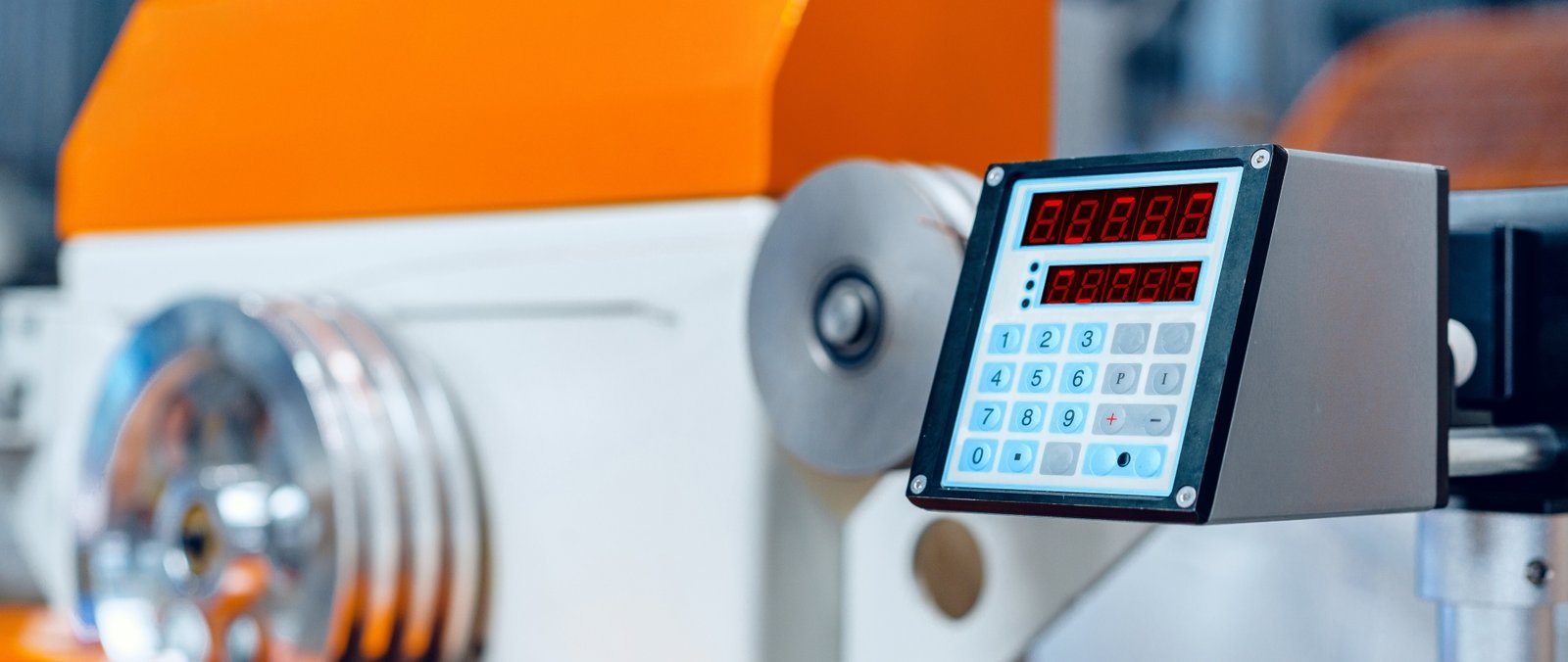
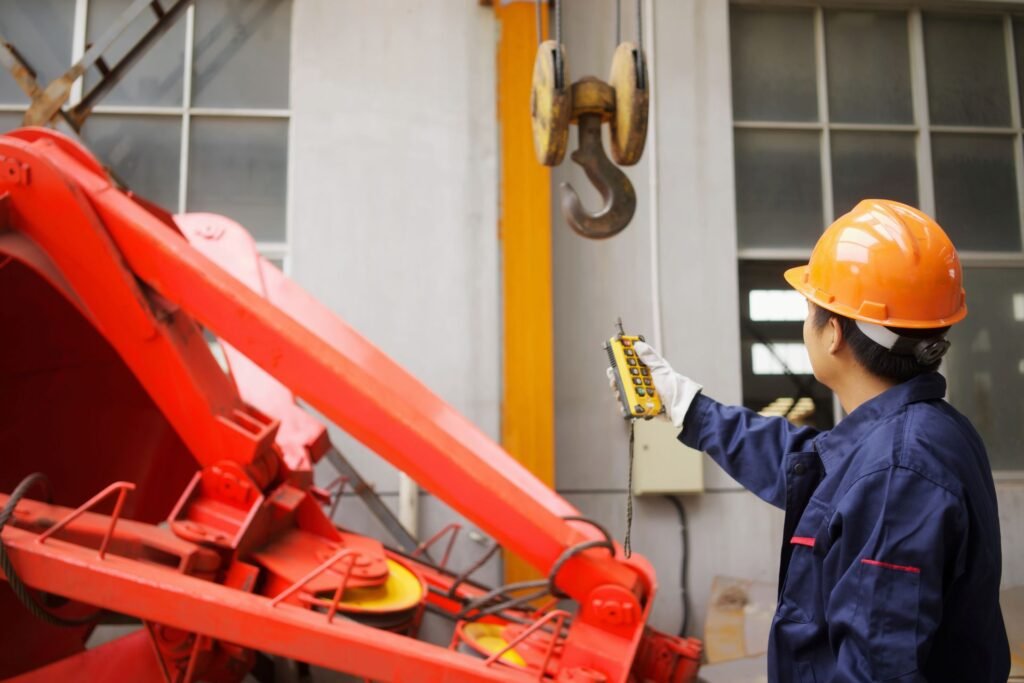
A wireless remote display — transmitted via radio frequency, Bluetooth, or infrared — is the correct configuration for virtually all industrial crane scale applications. The operator reads the weight from a handheld remote or a fixed remote display at eye level, from a safe distance from the suspended load, without looking upward at the scale body. A wireless remote control allows operators to control the scale’s functions from a safe distance, directly improving both safety and efficiency when dealing with large or awkwardly positioned loads.
For cab-operated cranes, specify a remote display that can be mounted in the crane cab, giving the operator a direct weight readout without leaving the controls — which is also consistent with the OSHA requirement that operators not leave their position at the controls while a load is suspended.
Display Visibility
Specify an LED display for environments with poor ambient light — foundries, enclosed warehouses, night operations. LCD displays are more energy-efficient but can be difficult to read in low light or at a distance. Large digits (about 1 inch or taller is a common rule of thumb) make floor-level reading much easier during a lift.
Step 4: Match IP Rating to the Environment
Crane scales operate in some of the most demanding industrial environments — steel mills, foundries, outdoor yards, ports, and chemical plants. The scale body hangs in the lifting zone and is exposed to whatever the environment presents.
For a detailed explanation of what each IP rating means in practice, see our article on IP ratings for industrial scales explained. Applied to crane scales specifically:
- IP65 — dust-tight, protected against water jets — suitable for general indoor industrial use and covered outdoor areas
- IP67/IP68 — submersion-rated — for marine, port, and outdoor environments with rain exposure or flooding risk
- High-temperature rated models — for foundry and steel mill environments where radiant heat from molten metal or hot castings can damage standard electronics; specify temperature-rated enclosures explicitly for these applications
For hazardous classified environments — chemical plants, fuel storage, grain handling — where an ignition source in the lifting zone creates explosion risk, see our article on what is an explosion-proof scale for the specific ATEX/NEC certifications that apply to intrinsically safe crane scales.
Step 5: Determine Battery Life and Power Requirements
Crane scales are battery-powered — there is no practical way to run a power cable to a suspended scale body. Battery autonomy directly determines operational continuity.
Key questions before specifying:
- How many lifts per shift? A recycling yard running 200+ lifts per shift needs significantly longer battery life than a fabrication shop running 20 lifts per day
- Is recharging between shifts practical, or does the scale need to run through multiple shifts?
- Are rechargeable lithium battery packs available, or does the model use disposable batteries?
Battery life varies widely between models — from a few dozen to a few hundred hours per charge depending on model and usage. Specify a model whose rated battery life comfortably covers your busiest operational period plus a margin — running out of battery mid-shift during a critical lift creates operational disruption and safety risk if the operator loses weight confirmation during a load.
Step 6: Calibration and Legal Requirements
Like all industrial scales, crane scales drift over time under load cycling, mechanical stress, temperature variation, and general wear. Massload Technologies recommends setting a simple calibration routine and keeping a record — a well-calibrated crane scale builds operational trust across shifts and provides defensible documentation during audits.
For comprehensive guidance on calibration intervals by application type and what triggers immediate recalibration regardless of schedule, see our article on how often industrial scales should be calibrated.
Minimum calibration guidance for crane scales:
- Annual calibration — minimum for any crane scale in regular industrial use
- After any overload event — if the scale was loaded beyond its rated capacity, remove from service and recalibrate before returning
- After any significant impact — a dropped scale or a load event that produced sudden shock must be recalibrated before the next use
- After relocation — if moved to a new facility or crane
Crane Scale Applications by Industry
Steel Fabrication and Service Centers
Weighing steel beams, plates, coils, and fabricated assemblies during production and before shipment. Structural fabricators verify component weights against engineering drawings; service centers verify incoming and outgoing coil weights for material billing. NTEP certification is required for weight-based commercial transactions.
Foundries and Metal Casting
Weighing molten metal ladles, castings, and raw material charges. High-temperature rated housings are essential — standard electronics fail in the radiant heat of an active foundry floor. Remote displays allow operators to read the weight from a safe distance while the crane is over the furnace or mold.
Ports, Shipping, and Logistics
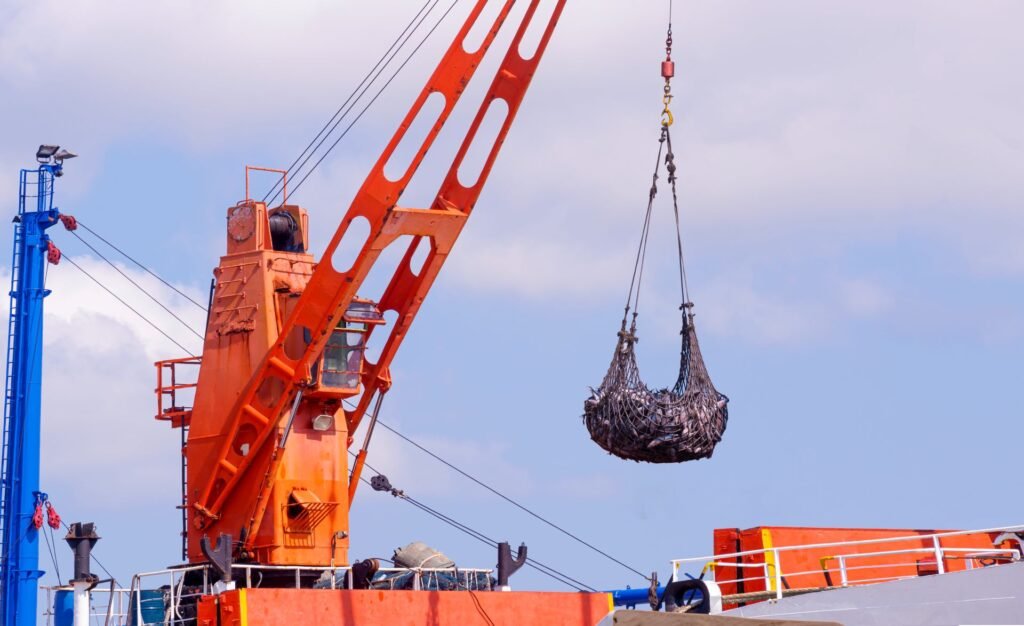
Weighing containers, bulk bags, and cargo nets during loading and unloading operations. IMO SOLAS regulations require verified gross mass (VGM) for all packed shipping containers before vessel loading — a crane scale at a port handling facility provides this verification during the lift itself, eliminating the separate floor-scale weigh step.
Scrap and Recycling
Weighing scrap metal, waste material, and bulk recyclables during collection and processing. Scrap dealers and recyclers buying and selling material by weight require NTEP-certified crane scales for legal-for-trade compliance.
Offshore and Marine
Weighing cargo, equipment, and provisions during crane operations on offshore platforms and vessels. Marine environments require IP67/IP68-rated scale bodies and corrosion-resistant housings, with sealed cable entries to prevent saltwater ingress into load cell electronics.
Crane Scale Buying Checklist
Before placing any order, confirm:
- Capacity is at least 25–30% above the heaviest expected load, including rigging weight
- Accuracy class matches the application — ±0.1%–0.2% for standard industrial; NTEP Class III for legal-for-trade
- Wireless remote display specified — operator reads weight at floor level or from crane cab
- IP rating matches the environment — IP65 minimum for indoor industrial; IP67/68 for outdoor or marine
- Battery life covers your operational period with a margin
- Temperature rating specified if the scale will operate near heat sources (foundry, steel mill)
- NTEP Certificate of Conformance number verified if commercial transactions require it
- Explosion-proof or intrinsically safe certification is required for hazardous area classification
- Calibration schedule documented before the scale enters service
- Remote display compatible with crane cab mounting if the cab-operated crane
Conclusion
Choosing a crane scale for heavy industrial lifting comes down to six decisions made in the right order: capacity with a full rigging-weight calculation and safety margin; accuracy class matched to whether the application is internal or commercial; display configuration that allows safe floor-level or cab reading; IP rating suited to the actual operating environment; battery life sufficient for the operational cycle; and NTEP certification if weight determines any transaction price.
A crane scale specified correctly for its environment and application is not just a weighing instrument — it is the load verification tool that satisfies OSHA’s requirement to confirm load weight before every lift, the commercial compliance document for weight-based transactions, and the operational efficiency gain that eliminates a material handling step on every cycle.
FAQs
What is a crane scale used for?
A crane scale suspends between a crane hook and the load to measure the weight of suspended items during lifting operations. It eliminates the need to set loads down on a floor scale by providing a weight reading during the lift itself. Applications include steel fabrication, foundry operations, port container weighing, scrap and recycling, and any industrial process where loads are moved by overhead crane or hoist and need to be weighed as part of that workflow.
How do I calculate the right capacity for a crane scale?
Add the weight of the heaviest expected load plus the total weight of all rigging (slings, shackles, hooks, spreader bars), then add a 25–30% safety margin above that combined figure. Operating a crane scale consistently near its maximum rated capacity accelerates load cell fatigue and shortens calibration intervals. Never select capacity based on the load weight alone — always include rigging weight in the calculation.
Does a crane scale need to be NTEP certified?
Only if the weight it measures is used in a commercial transaction where the price is determined by weight, such as billing by the ton for scrap metal, steel, or bulk material. For internal use — inventory tracking, process monitoring, or quality control — NTEP certification is not required. If commercial transactions are involved, the scale must carry a Certificate of Conformance number and be verified by a state Weights and Measures inspector before use.
Why does a crane scale need a wireless remote display?
The scale body often hangs well above head height during a lift. Reading the weight from a display on the scale body itself requires looking upward, which is inaccurate and unsafe in an active lifting zone. A wireless remote display allows the operator to read the weight at floor level or from the crane cab, from a safe distance from the suspended load, and without leaving the crane controls.
How often should a crane scale be calibrated?
At a minimum, annually for any crane scale in regular industrial use. Immediately — before returning to service — after any overload event, significant impact or drop, relocation, or repair. For crane scales used in legal-for-trade commercial transactions, calibration must follow the state Weights and Measures inspection schedule.
Sources
- 29 CFR 1926.1417(o), Rated capacity and load weight verification — ecfr.gov
- 29 CFR 1910.179, Overhead and gantry cranes — ecfr.gov
- NIST Handbook 44 (2026), Section 2.20 Scales — nist.gov
- NCWM National Type Evaluation Program — ncwm.com
Last reviewed September 2026 by the Scale Blog editorial team. This article is general guidance, not a lift plan or engineering advice. Never exceed the rated capacity of the scale, crane or rigging; lift planning must be done by a qualified person.