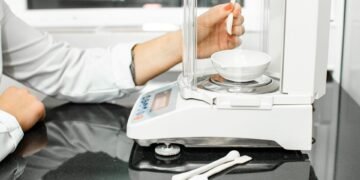







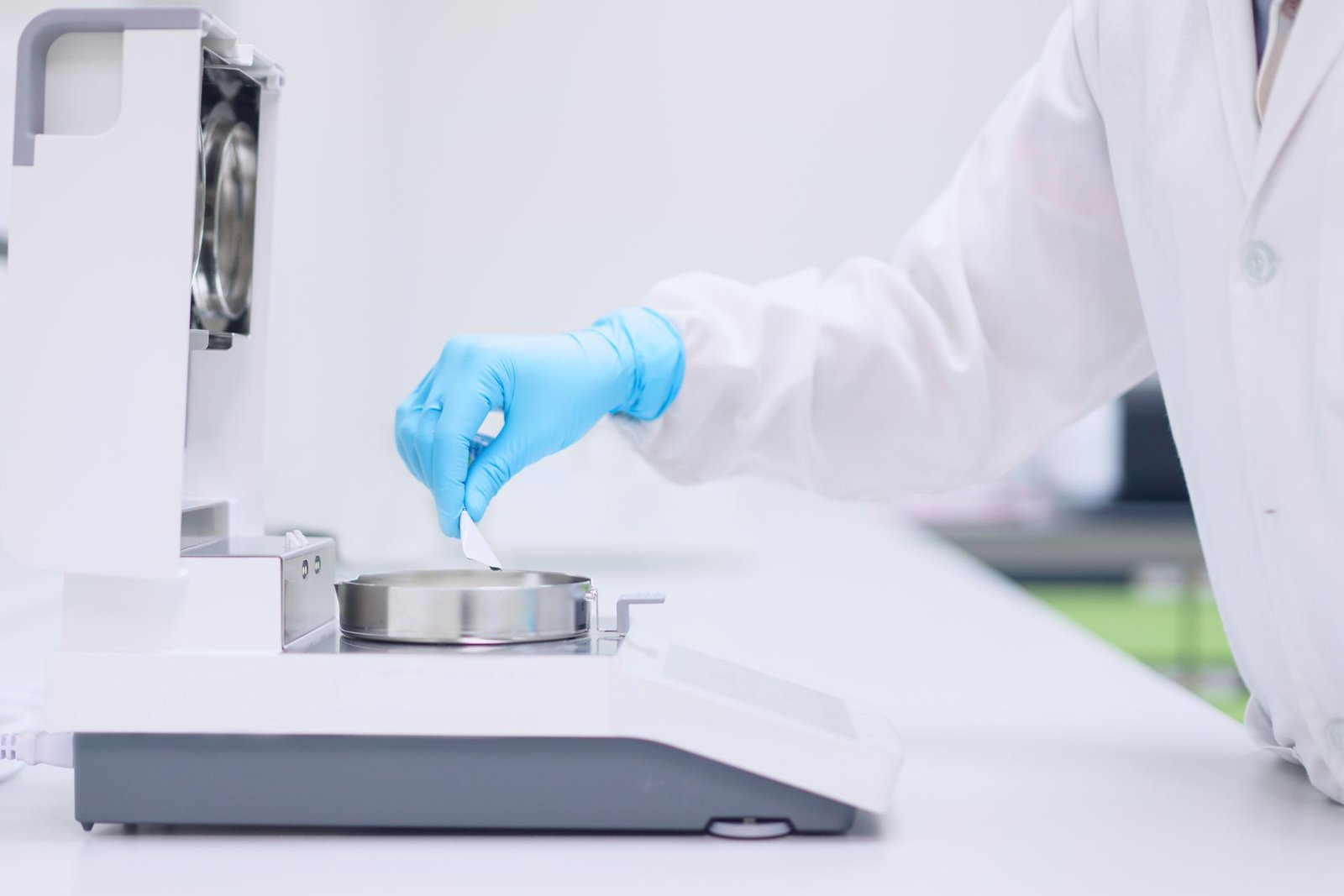
A moisture analyzer is a laboratory instrument that measures the moisture content of a sample using the loss-on-drying (LOD) method. The instrument weighs the sample, heats it with a halogen lamp or infrared element until weight loss stops, then calculates moisture content as the percentage difference between wet and dry weight. A result that takes 4–8 hours in a conventional drying oven takes 5–30 minutes in a moisture analyzer, with equivalent or better accuracy for most applications.
Moisture content is a quality parameter in nearly every industry that processes, formulates, or stores physical materials. Too much moisture in a pharmaceutical tablet affects stability and shelf life. Too little in a food product changes texture, safety classification, and labeling compliance. The moisture analyzer is the instrument that produces this measurement quickly, reproducibly, and with a documented result, which is why it appears in pharmaceutical QC labs, food production environments, plastics processing, environmental testing, and agricultural research globally.
Table of Contents
How Does a Moisture Analyzer Work?
A moisture analyzer operates on the principle of thermogravimetric analysis — it measures weight change as a function of heat applied over time. The process follows four steps in every determination:
Step 1 — Initial weighing. The sample is placed on the analyzer’s pan and the instrument records the wet weight at the start of the test.
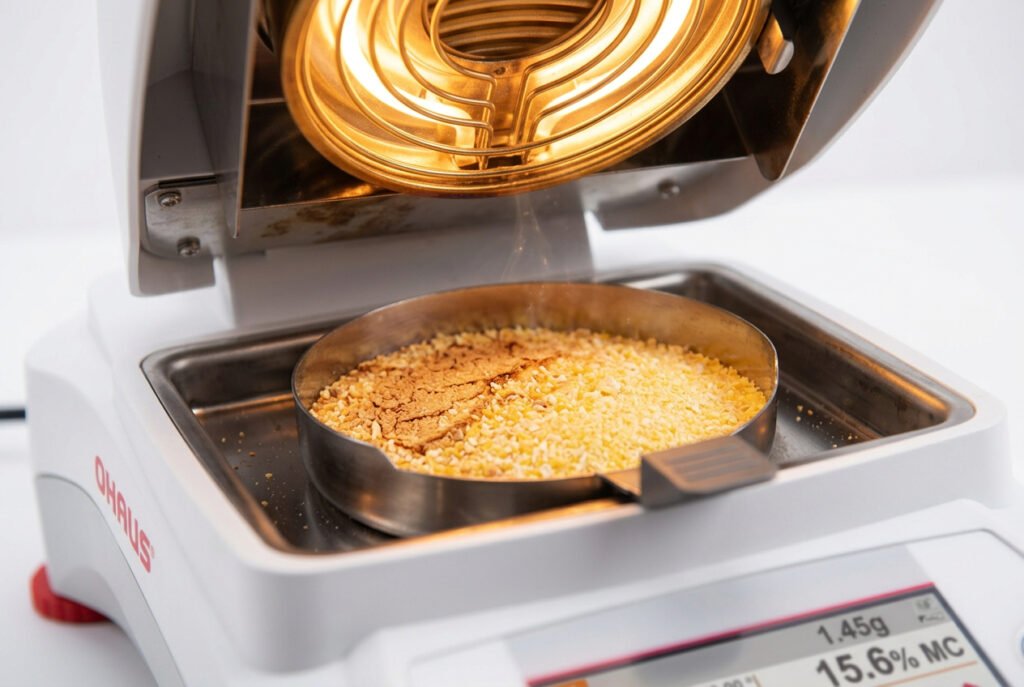
Step 2 — Heating. The heating element — halogen lamp, infrared radiator, or metal heater — applies heat from above the sample. The heat vaporizes moisture and any other volatiles present in the sample.
Step 3 — Continuous weighing. The precision balance beneath the pan continuously records weight loss as the sample dries. The instrument monitors the rate of weight change in real time.
Step 4 — Final calculation. When weight loss falls below a defined threshold (the stop criterion), heating stops and the instrument calculates moisture content using the formula:
% Moisture = [(Wet Weight − Dry Weight) ÷ Wet Weight] × 100
As confirmed by Precisa, this loss-on-drying method is the standard approach for moisture determination across laboratory and industrial applications. The result is expressed as a percentage of the original wet weight.
One important distinction: “moisture” in this context does not refer exclusively to water. Any volatile substance that evaporates under the applied heat — alcohols, solvents, low-boiling-point organic compounds — contributes to the measured moisture content. As confirmed by Lab People Inc., operators must account for this when interpreting results in applications where non-water volatiles are present.
Types of Moisture Analyzers
The heating element is the primary variable that distinguishes moisture analyzer types. Each has specific performance characteristics that suit different applications.
Halogen moisture analyzers use a halogen lamp as the heat source. Halogen lamps heat rapidly, deliver uniform radiant heat, and respond quickly to temperature adjustments. They are the most common type in laboratory and quality control settings and are particularly suited to samples that require precise, even heating without hot spots. As confirmed by Westlab, halogen analyzers are ideal where no single temperature setting heats all samples evenly — the rapid response of the halogen element allows fine temperature control.
Infrared (IR) moisture analyzers use an infrared radiator. IR heating penetrates the sample surface more deeply than halogen, making IR analyzers better suited to thicker samples or materials that form a dry crust on the surface before the interior has dried fully.
Metal heater moisture analyzers use a glass-free metal heating element. They are more robust than halogen or IR analyzers in environments where the lamp could be damaged by vibration or particulate contamination, making them preferred for production floor or industrial environments.
Microwave moisture analyzers use microwave radiation to heat the sample volumetrically — from the inside out — rather than from the surface. This allows much faster drying of large or dense samples and is used in industrial applications where throughput is critical, such as grain elevators and large-batch food processing.
How a Moisture Analyzer Differs From a Balance
A moisture analyzer is frequently confused with a laboratory balance because it contains a precision balance as its measurement component. The distinction is important.
A laboratory balance measures mass. It produces a single weight reading for the sample as it sits on the pan. It does not apply heat, does not track weight change over time, and does not calculate moisture content.
A moisture analyzer measures moisture content. It uses its internal balance to track weight loss during a controlled drying cycle — the balance is the measurement mechanism, but the result is not a mass. It is a percentage. The two instruments are complementary rather than interchangeable. A moisture analyzer cannot replace a laboratory balance for weighing reagents, preparing standard solutions, or any application where mass — not moisture — is the required measurement.
Moisture Analyzer vs Moisture Meter: Key Differences
A moisture analyzer and a moisture meter both measure moisture content but use fundamentally different methods and serve different purposes.
A moisture analyzer uses the loss-on-drying (LOD) thermogravimetric method — it physically removes moisture through heating and measures the mass change. It is a destructive, laboratory-grade method that produces results accurate to ±0.01–0.1% and is accepted in regulatory and quality control documentation.
A moisture meter uses electrical resistance or near-infrared (NIR) spectroscopy to estimate moisture content non-destructively, without altering the sample. Resistance-based meters measure the electrical conductivity of the sample (moisture conducts electricity; dry material does not) and are widely used for grain, wood, and construction materials. NIR meters use reflected light to estimate moisture from a surface reading.
| Moisture Analyzer | Moisture Meter | |
|---|---|---|
| Method | Loss on drying (destructive) | Electrical resistance or NIR (non-destructive) |
| Accuracy | ±0.01–0.1% | ±0.5–2% typical |
| Sample required | Yes — sample is consumed | No — sample is intact after measurement |
| Test time | 5–30 minutes | Seconds |
| Regulatory acceptance | Yes — LOD is reference method | Limited — field estimation only |
| Typical use | Laboratory QC, pharmaceuticals, food production | Field measurements, incoming goods screening, grain storage |
For laboratory reference testing and regulatory-compliant moisture determination, a moisture analyzer is required. For fast, non-destructive field screening — checking grain moisture at intake, wood moisture before installation — a moisture meter is the practical tool. As confirmed by Mettler Toledo’s moisture content determination guide, the LOD method is the industry reference against which other moisture measurement techniques are validated — and a moisture analyzer can deliver comparable results in under 15 minutes when properly cross-validated against the drying oven procedure.
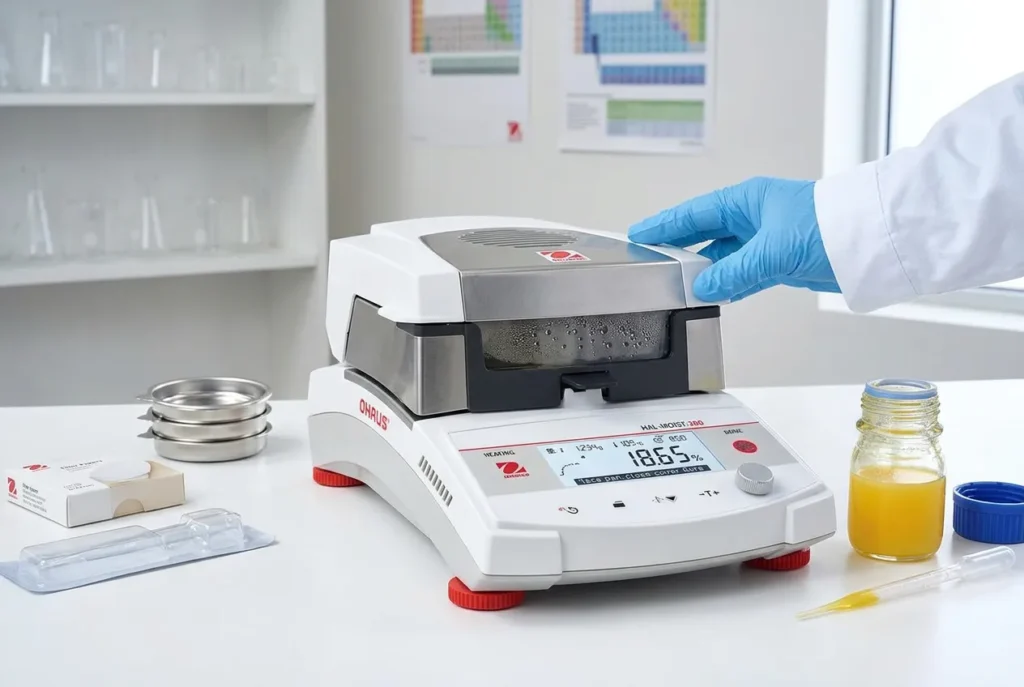
Moisture Analyzer vs Drying Oven — When to Use Each
The conventional drying oven method (ISO 589, ASTM D 2216) is the reference method for moisture determination in many industries and remains the regulatory standard for certain applications. A moisture analyzer is not a replacement in every context — it is a faster, more convenient alternative where the oven method’s hours-long drying time is impractical for routine quality control.
| Moisture Analyzer | Drying Oven | |
|---|---|---|
| Test time | 5–30 minutes | 4–24 hours |
| Sample size | 1–30 g typically | Unlimited |
| Accuracy | ±0.01–0.1% | ±0.01% (reference method) |
| Regulatory status | Accepted in most QC settings | Required for some regulatory submissions |
| Cost | $1,500–$10,000+ | $500–$5,000 |
| Throughput | One sample at a time | Multiple samples simultaneously |
Regulatory framework: ISO 589 (grain), ASTM D 2216 (soils/aggregates), USP Chapter 731 (pharmaceuticals) specifies whether the oven method or the LOD analyzer is acceptable for each application. Always confirm regulatory requirements before substituting a moisture analyzer for the oven reference method in a documented quality system.
For routine incoming material checks, in-process quality control, and formulation development where speed matters, a moisture analyzer is the practical choice. For regulatory submissions, official reference testing, and applications where the oven method is specified by pharmacopoeia or standard, the oven method remains required.
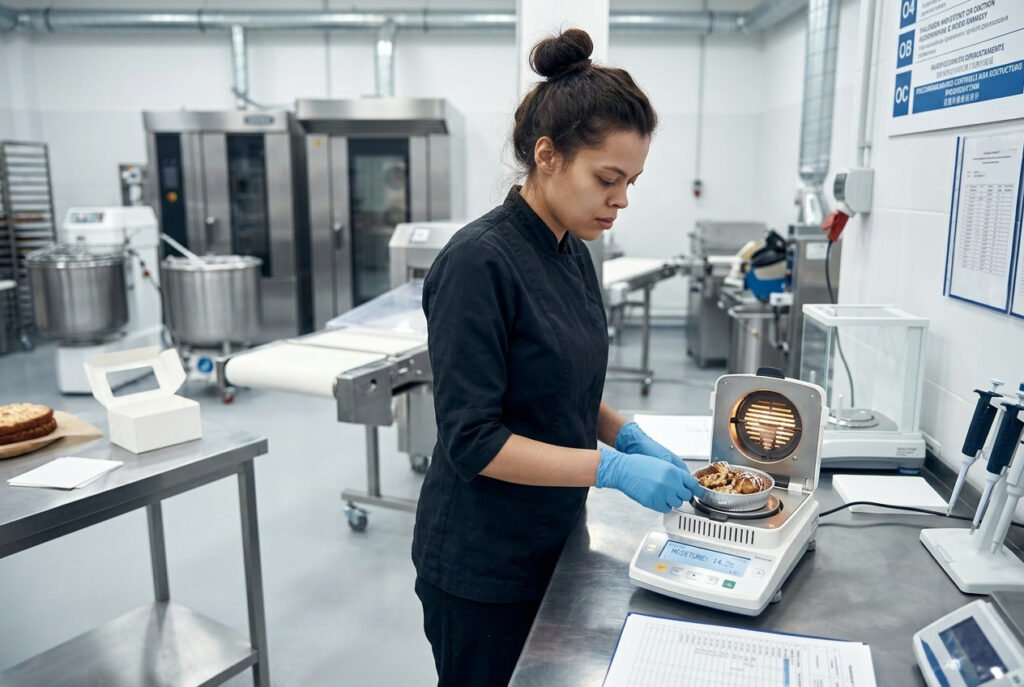
Industries and Applications
Moisture analyzers are used across a broad range of industries wherever moisture content affects product quality, regulatory compliance, or process efficiency.
Food and beverage — moisture content affects shelf life, microbial stability, texture, and weight-based pricing accuracy. Excess moisture promotes bacterial growth and staleness. Insufficient moisture reduces caloric density and produces unacceptable texture in baked goods.
Pharmaceuticals — moisture content affects drug stability, tablet hardness, powder flowability, and shelf life. USP Chapter 731 (Loss on Drying) specifies moisture determination requirements for active pharmaceutical ingredients and finished dosage forms. For the full regulatory framework governing pharmaceutical lab weighing, see our guide to pharmaceutical lab weighing and USP Chapter 41 standards.
Agricultural grains — grain moisture content at harvest and storage determines safe storage conditions, milling quality, and market value. Grain sold above maximum moisture specifications is subject to dockage. USDA grain standards specify moisture limits for each grain type.
Plastics and polymers — excess moisture in plastic resins causes defects (voids, splay marks, degradation) during injection molding and extrusion. Pre-drying to specified moisture levels is required before processing most hygroscopic resins.
Chemicals and cosmetics — moisture content affects chemical reactivity, viscosity, emulsion stability, and product consistency.
Construction materials — moisture content in concrete, aggregates, and wood affects structural performance and installation requirements.
How to Choose a Moisture Analyzer
Three specifications determine which moisture analyzer is right for your application:
Readability. Moisture analyzers read to 0.001% (1 mg readability balance) or 0.01% (10 mg readability balance). Applications requiring high-precision determination — pharmaceutical APIs, reference testing — need 1 mg readability. Most food and agricultural QC applications are adequately served by 1 mg or 10 mg readability.
Temperature range and control. Standard moisture analyzers reach 160–230°C. Some applications require higher temperatures (plastics resins may need 200°C+) or precise low-temperature drying (heat-sensitive samples may degrade above 70°C). Confirm the instrument’s temperature range covers your application before purchasing.
Sample size capacity. Most moisture analyzers accept 1–35 g samples. For applications requiring larger samples — grain, bulk powders — confirm the pan capacity and that the sample size is representative of the material’s moisture distribution.
For NTEP-certified and ISO/IEC 17025 traceable moisture analyzers for laboratory and industrial use, Liberty Scales offers a 10% discount with code SCALEBLOG10.
Key Specifications When Selecting a Moisture Analyzer
Once the need for a moisture analyzer is established, four specifications determine the right model.
Weighing capacity and readability. Most laboratory moisture analyzers have capacities of 35–200 g and readabilities of 0.001–0.01 g for the moisture percentage calculation. The readability of the internal balance determines the resolution of the moisture result — a 0.001 g readability balance produces more precise moisture percentage results than a 0.01 g readability instrument, particularly for low-moisture samples.
Temperature range. Standard analyzers cover 50–200°C. For plastic resin testing requiring temperatures above 200°C, or for temperature-sensitive biological samples requiring drying below 80°C, confirm the instrument’s range covers your specific application requirements.
Drying programs. Most analyzers offer standard (constant temperature), ramp, and step drying programs. Samples that crust or skin at high temperatures benefit from a ramp or soft start profile that increases temperature gradually. Samples with high moisture content benefit from a boost program that applies maximum heat initially before stepping down.
Connectivity and documentation. For GMP pharmaceutical and food safety applications, the analyzer must produce a GLP-compliant printout with sample ID, date, time, result, drying parameters, and operator ID. RS-232 or USB output for LIMS integration is standard on most laboratory-grade models from Mettler Toledo, Sartorius, and Ohaus.
For laboratory balance specifications that support moisture analysis workflow — sample preparation weighing, tare subtraction — see our guide to types of laboratory balances.
Calibration and Maintenance
A moisture analyzer’s accuracy depends entirely on the calibration of its integrated balance. As confirmed by Lab People Inc., a moisture analyzer should be treated with the same environmental and calibration discipline as an analytical balance — level surface, vibration-free location, away from air currents and direct sunlight, and calibrated with certified weights at the frequency required by your quality system.
Temperature calibration should be verified periodically using a certified temperature reference (typically a sodium tartrate dihydrate standard, which has a defined moisture content of 15.66% at its transition point). Many modern moisture analyzers include automated temperature verification programs using this standard.
For the full framework governing laboratory balance calibration under ISO/IEC 17025 and GLP/GMP requirements, see our guide to ISO 17025 lab balance calibration.
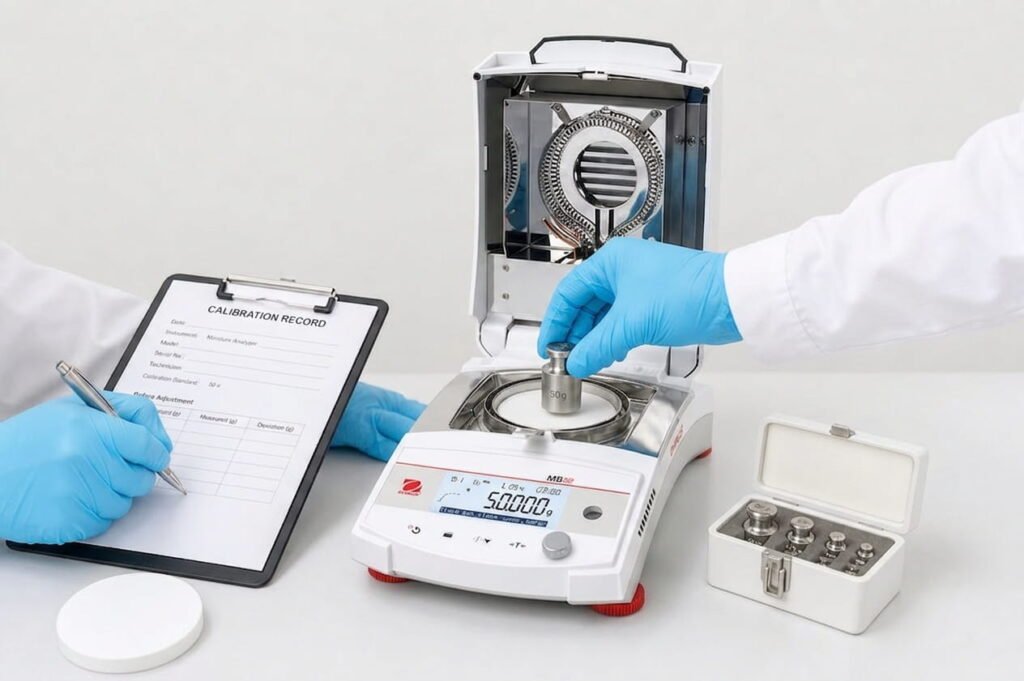
Drying Modes and Stop Criteria — How to Choose
Modern moisture analyzers offer multiple drying modes and endpoint (stop) criteria. Selecting the wrong mode is the most common source of inaccurate results.
Standard mode applies a constant set temperature throughout the determination. It is the most reproducible mode and the correct choice for method development and regulatory submissions where inter-laboratory consistency matters.
Quick mode uses a higher initial temperature to accelerate drying, then drops to the set temperature. It reduces test time by 20–40% but can cause surface crusting on heat-sensitive samples — sealing moisture inside — leading to falsely low results.
Slow (gentle) mode uses a temperature ramp starting below the set temperature. It is designed for heat-sensitive samples (sugars, fats, certain APIs) where standard temperature would cause thermal decomposition rather than moisture evaporation — decomposition produces volatile gases that register as moisture, inflating the result.
Auto stop criteria defines when the instrument considers the sample dry. The most common auto stop criterion is 1 mg weight loss per defined time period (typically 1 mg/30 seconds or 1 mg/60 seconds). A tighter criterion (1 mg/60 sec) gives more accurate results but longer test times. A looser criterion (1 mg/10 sec) speeds up testing but may stop before the sample is fully dry. For regulatory submissions, the stop criterion must be documented in the analytical method.
FAQs
What is a moisture analyzer used for?
A moisture analyzer measures the moisture content of a sample using the loss-on-drying method. It is used in food and beverage, pharmaceutical, agricultural, plastics, chemical, and construction industries wherever moisture content affects product quality, regulatory compliance, or process efficiency.
How accurate is a moisture analyzer?
A well-calibrated moisture analyzer is accurate to ±0.01–0.1% moisture content depending on instrument readability and sample type. High-readability instruments (1 mg balance) achieve ±0.01% accuracy, equivalent to the conventional oven drying method for most applications.
What is the difference between a moisture analyzer and a moisture meter?
A moisture analyzer uses the loss-on-drying (LOD) thermogravimetric method — it physically removes moisture by heating and measures the weight change. A moisture meter uses electrical resistance or capacitance to estimate moisture content non-destructively. Moisture analyzers are more accurate and are the laboratory reference method; moisture meters are faster, non-destructive, and used for field measurements where approximate values are sufficient.
What is the Loss on Drying (LOD) method?
Loss on drying is the analytical method used by moisture analyzers. It measures the percentage weight loss of a sample after heating to a defined temperature until weight is stable. LOD includes water and any other volatile substances that evaporate under the heating conditions used.
How long does a moisture analysis take?
A typical moisture analysis takes 5–30 minutes depending on sample type, moisture content, and temperature setting. This compares to 4–24 hours for the conventional drying oven method. Some moisture analyzers include rapid drying modes that produce results in 2–5 minutes for certain sample types.
Do moisture analyzers need calibration?
Yes. The integrated balance must be calibrated with certified weights at the frequency required by your quality system — typically daily or before each use in regulated environments. Temperature should be verified periodically using a certified temperature reference standard such as sodium tartrate dihydrate.
Conclusion
A moisture analyzer is one of the highest-throughput instruments in a quality control or research laboratory — replacing hours of oven drying with minutes of automated determination while delivering equivalent accuracy for the vast majority of applications.
Choosing the right instrument means matching heating element type to sample characteristics, confirming readability and temperature range cover your application, and treating the instrument’s integrated balance with the same calibration discipline as a standalone analytical balance.
For the regulatory frameworks that govern moisture analyzer use in pharmaceutical and ISO-accredited settings, see our guides to pharmaceutical lab weighing and USP Chapter 41 and ISO 17025 lab balance calibration.