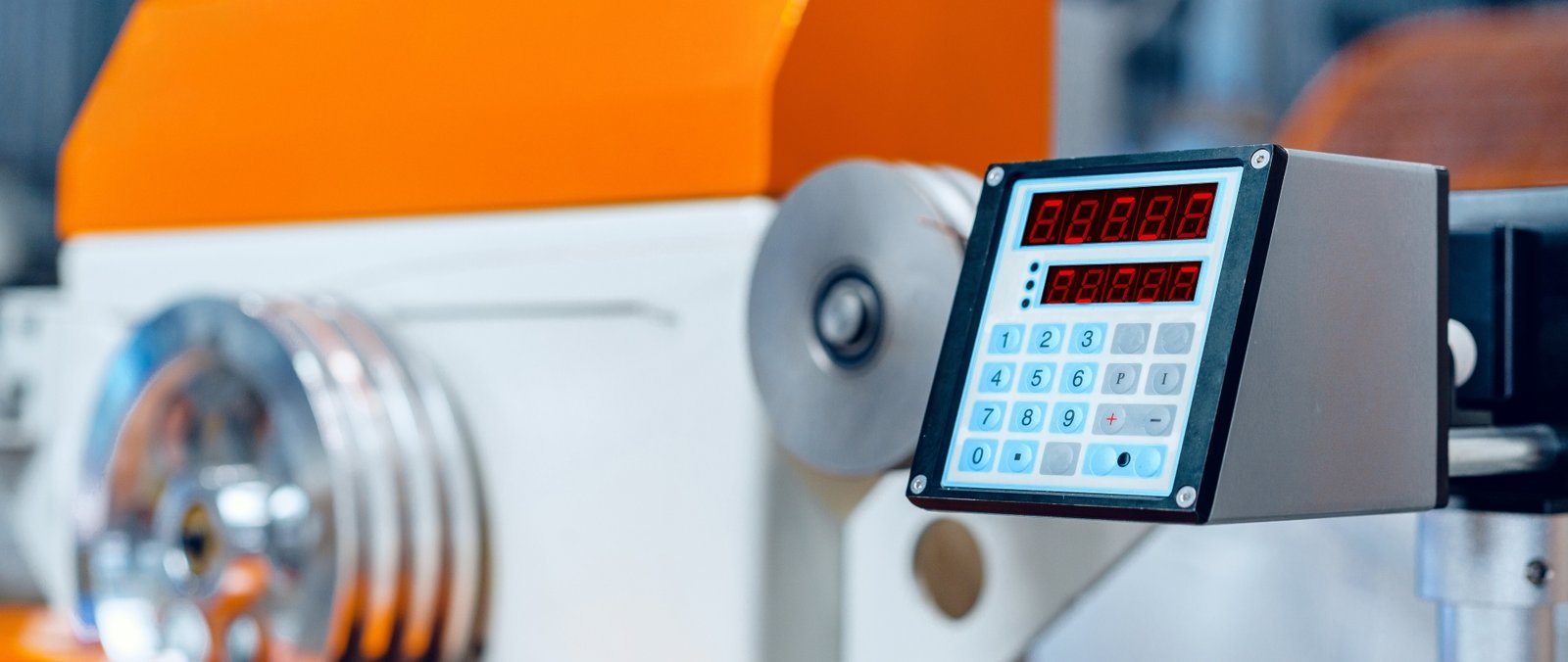









A counting scale is a digital weighing instrument that determines the number of identical parts in a batch by measuring their combined weight, without anyone counting a single piece by hand. It is one of the most practical tools in any manufacturing, warehousing, or distribution operation that handles large quantities of small, uniform components. This article explains exactly how a counting scale works, where it is used, what affects its accuracy, and how to choose the right model for your operation.
Table of Contents
How a Counting Scale Works
The operating principle is straightforward. As the Central Carolina Scale explains, a counting scale looks at the weight of the items placed on the platform and divides that weight by the number of pieces entered to compute the average piece weight (APW). Once the APW is established, the scale divides any subsequent total weight by that figure to display a piece count.
The process in three steps:
- Sample — Place a known number of identical parts on the platform (typically 10, 25, 50, or 100 pieces) and enter that count. The scale calculates the APW: total sample weight ÷ number of sample pieces.
- Store — The APW is stored in the scale’s memory. Most industrial counting scales hold multiple APW entries — one for each part number — so operators can switch between parts without re-sampling every time.
- Count — Add the full batch to the platform (or a connected remote platform for large quantities). The scale divides the total weight by the stored APW and displays the piece count in real time.
The entire sequence — for a well-practised operator with a familiar part — takes under a minute. For operations that previously counted by hand, the time saving is immediate and significant.
Where Counting Scales Are Used
Inbound Logistics notes that a 5% inventory deviation — which sounds modest — translates to $50,000 of inaccuracy on a $1 million parts inventory. Counting scales eliminate that exposure across the following applications:

Manufacturing and Assembly
Production lines use counting scales to verify that the correct quantity of components goes into each assembly or packaging station. Screws, bolts, washers, O-rings, springs, electronic components, and injection-moulded parts are counted before being loaded into kits, bins, or finished product packaging. A single missing fastener in a finished assembly can trigger a costly recall or warranty claim. A counting scale removes that risk at the point of assembly.
Receiving and Shipping Verification
Incoming deliveries of hardware, components, or raw materials are verified against purchase order quantities at the receiving dock. Outgoing shipments are verified before dispatch. Both applications eliminate the labour cost and error rate of manual hand-counting at high volumes.
Inventory and Cycle Counting
Warehouses use counting scales for periodic cycle counts of bin stock — particularly for small, high-volume components where manual counting is impractical. The scale enables one operator to count a bin of thousands of items in seconds rather than minutes, making frequent cycle counting operationally viable.
Retail and Distribution
Hardware retailers, vending operations, and coin-counting applications use counting scales to verify quantities of small goods — nuts, bolts, and nails sold by count — and to reconcile cash from vending machines.
What Affects Counting Scale Accuracy
Accuracy is the single most misunderstood aspect of counting scales. Manufacturing.net identifies three primary factors that determine how accurate a count is:
1. Internal Resolution
Internal resolution is the number of divisions the scale uses internally to calculate the APW — it is a ratio of the scale’s capacity to the finest increment it can measure. A higher internal resolution produces a more accurate APW, which in turn produces a more accurate count. This is why a high-resolution 60 lb counting scale will count lighter parts more accurately than a basic 60 lb scale at the same displayed readability — the internal calculation is finer.
For practical guidance: multiply the manufacturer’s stated readability by five to estimate the minimum average piece weight the scale can count reliably. A scale with 0.001 lb readability should not be used to count parts weighing less than approximately 0.005 lb each.
2. Sample Size
The larger the sample used to establish the APW, the more accurate the count, because a larger sample averages out natural weight variation between individual parts. Rice Lake Weighing Systems recommends a minimum sample size of 10 pieces, but notes that 20–30 pieces is statistically ideal. From a practical standpoint, many operations use 100-piece samples for high-volume parts to achieve the best possible accuracy. Samples above 30 pieces introduce diminishing returns because the increased statistical accuracy is offset by the risk of hand-count errors in the sample itself.
3. Part Uniformity
A counting scale assumes all items being counted are identical in weight. If parts vary significantly between pieces — due to manufacturing tolerances, different batches, or mixed sizes — the APW becomes unreliable, and the count will be wrong. Parts with weight variation above 1% between individual pieces should use a larger sample size to average out the variation. Parts with very high variation are not suitable for weight-based counting at all.
Counting Scale vs Scale with a Counting Function
These are not the same thing — and the distinction matters when specifying equipment.
Dedicated Counting Scale
A dedicated counting scale is purpose-built for parts counting. It features high internal resolution optimised for accurate APW calculation, multiple product memories for storing APW values for different part numbers, a remote platform input for bulk counting of large batches, and an interface designed around the counting workflow. It is the correct choice for any operation where counting is the primary daily task.
Scale with a Counting Function
A standard bench scale or floor scale with a counting function added to its indicator performs basic counting alongside its primary weighing role. The internal resolution is typically lower than a dedicated counting scale, and the memory and remote platform capabilities may be limited. It is appropriate for operations that count occasionally — once or twice a week — but do not need the throughput or accuracy of a dedicated instrument. As Adam Equipment explains, the key question is whether counting is your primary application or an occasional supplement to general weighing — that answer determines which product is the right fit.
Choosing the Right Counting Scale: Key Specifications
Capacity — Choose the Minimum That Works
A critical and frequently misunderstood rule: do not buy more capacity than you need. The higher the capacity of a counting scale, the coarser the internal resolution, which directly reduces counting accuracy for light parts. If 75% of your counting involves batches under 10 lb, a 10 lb or 30 lb capacity scale will count far more accurately than a 100 lb model on the same parts. Reserve higher-capacity counting scales for genuinely heavy parts.
Readability
Readability is the smallest weight increment the scale displays. For counting very light parts — small screws, electronic components, or thin stampings — specify the finest readability available at your required capacity. Coarser readability on light parts produces a large percentage of errors in the APW calculation, which cascade into large count errors on full batches.
Memory Storage
Specify the number of product memories based on how many different part numbers your operation regularly counts. Basic models store 10–20 part memories; mid-range models store hundreds. An operation counting 50 different fastener sizes daily needs a model with at least that many stored APW values — otherwise operators re-sample parts they have counted dozens of times before.
Remote Platform Capability
For operations counting large quantities of heavy parts, a remote platform scales the counting capability without reducing accuracy. The APW is calculated on the high-resolution counting scale; the bulk batch is weighed on a connected floor or bench platform of higher capacity. This combination is standard in any distribution or manufacturing environment where batches regularly exceed the counting scale’s own platform capacity. For guidance on choosing a floor scale to pair with a counting scale, see our article on how to choose a floor scale for your warehouse.
Connectivity
For operations that feed weight and count data into an inventory management system, ERP, or warehouse management system, confirm that the indicator offers the required output — USB, RS-232, Ethernet, or Wi-Fi. Some advanced models connect directly to a PLC for fully automated counting in production line applications. For guidance on calibrating counting scales and all industrial scales to maintain accuracy, see our article on how often industrial scales should be calibrated.
For operations that need to go beyond counting and verify that every packaged unit falls within a specified weight range automatically, see our article on what is a checkweigher and when do you need one.
Practical Tips for Accurate Counting
- Never use fewer than 10 pieces as a sample. Even well-made parts have micro-variations in weight. A sample of fewer than 10 pieces does not average those variations sufficiently.
- Sample from across the batch, not just the top. Parts at the top of a bin may be from a different production run with slightly different weights. Draw samples from multiple points in the container.
- Keep parts clean and dry. Oil, debris, or moisture on parts adds to their weight and corrupts the APW.
- Tare the container before sampling. Place the empty container on the platform, press Tare, then add the sample. The scale weighs only the parts, not the container.
- Store APW values for recurring parts. Re-establishing an APW every time the same part is counted wastes time and introduces operator inconsistency. Save it to memory once and recall it next time.
- Keep the scale away from drafts, vibration, and heat sources. Air movement and vibration from nearby machinery cause the platform reading to fluctuate, which corrupts both the APW calculation and the live count display.
Conclusion
A counting scale works by establishing an average piece weight from a known sample, then dividing subsequent batch weights by that figure to produce an accurate piece count — automatically, in real time. For any operation handling large quantities of identical small parts, it eliminates the labour cost and error rate of manual counting entirely. The accuracy of the count depends on three things: the internal resolution of the scale, the size of the sample used to establish the APW, and the uniformity of the parts being counted. Choosing the right capacity — the minimum that handles your typical batch — is as important as any other specification, because excess capacity directly reduces counting accuracy for light parts. Match those specifications to your parts, your volumes, and your data requirements, and a counting scale will pay for itself quickly in labour saved and inventory errors eliminated.
FAQs
What is a counting scale used for?
A counting scale is used to count large quantities of identical parts by weight — without manual counting. Common applications include manufacturing assembly verification, receiving and shipping quantity checks, warehouse cycle counting, and retail inventory of small hardware items such as fasteners, electronic components, and coins.
How does a counting scale work?
A counting scale establishes an average piece weight (APW) by weighing a known sample of identical parts. It then divides the total weight of any subsequent batch by the APW to display the piece count. The accuracy of the count depends on the scale’s internal resolution, the sample size used, and the uniformity of the parts being counted.
What sample size should I use on a counting scale?
A minimum of 10 pieces is required for any reliable count. From a statistical standpoint, 20–30 pieces is ideal — larger samples average out natural weight variation between individual parts. For high-volume operations or parts with significant weight variation, 100-piece samples deliver the best accuracy. Never sample from just the top of a container — draw pieces from multiple points across the batch.
What is the difference between a counting scale and a scale with a counting function?
A dedicated counting scale is purpose-built for parts counting, with high internal resolution, multiple product memories, and remote platform capability. A scale with a counting function is a standard weighing scale with counting added to its indicator — suitable for occasional counting but not optimised for daily high-volume applications.
Why should I not buy a counting scale with too much capacity?
The higher the capacity of a counting scale, the coarser its internal resolution — which directly reduces counting accuracy for light parts. If your typical batch weighs under 10 lb, a 10 lb or 30 lb capacity scale will count more accurately than a 100 lb model. Choose the minimum capacity that handles your typical batch, not the maximum available.