




This article contains affiliate link(s). If you purchase through these links, Scale Blog may earn a commission at no additional cost to you. See our full Affiliate Disclosure for details.
A portable livestock scale is one of the highest-return investments a farm can make — but only if you buy the right one for your species, your handling system, and your ground conditions. The wrong choice sits unused in a corner because it is too heavy to move, too flimsy to survive the yard, or too inaccurate to trust. This guide covers every specification that matters before you spend money, in the order you should think about them.
Table of Contents
Step One: Know What You Are Actually Buying
“Portable livestock scale” covers three fundamentally different products. Knowing which category you need narrows the decision immediately.
1. Weigh Bars (Load Bar System)
Weigh bars — also called load bars — are the most genuinely portable option. Typically sold in sets of two or four, they sit under an existing platform, crush, or trailer floor to turn it into a weighing surface. The animal stands on the existing structure; the bars measure the load and send data to a handheld or panel-mounted indicator.
Best for: Farms that already have a good handling system or crush and want to add weighing capability without replacing existing infrastructure. Also ideal for operations that move between multiple sites, since bars pack into a compact carry case.
Watch out for: The platform must be rigid and level for accurate readings. Weigh bars on uneven ground or flexible flooring produce inconsistent results.
“Agricultural weigh bars are designed to be mounted under cattle squeeze chutes, hog crates, feed hoppers, and custom platforms — with capacity options from 2,500 lb to 10,000 lb — making them a compact and efficient alternative to full platform scales for farms that already have existing handling infrastructure.”
2. Self-Contained Portable Platform Scales
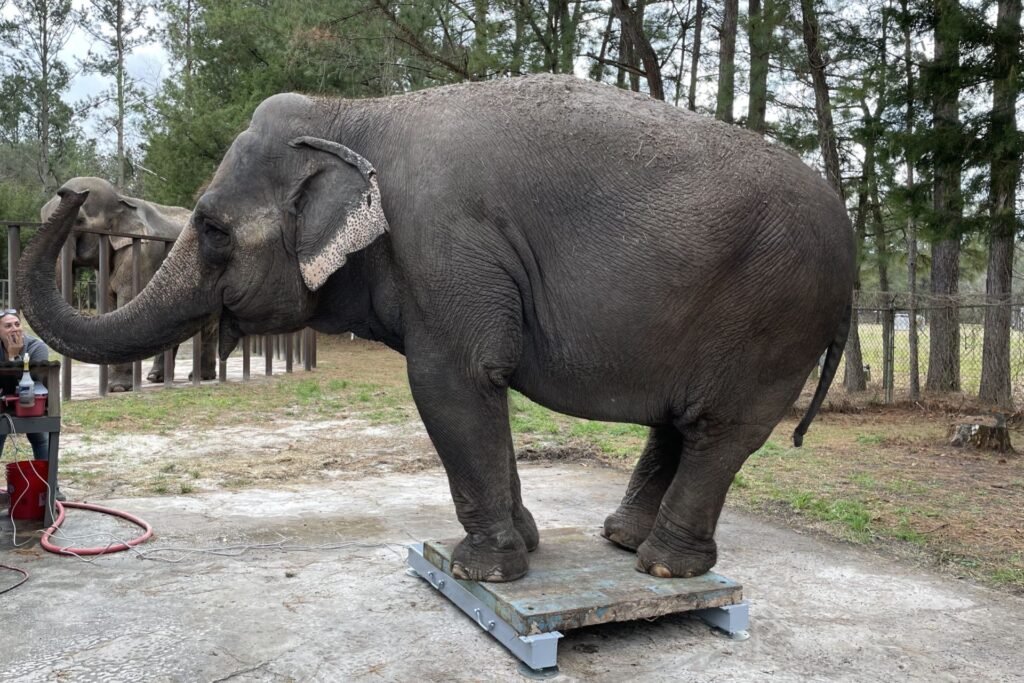
These combine a steel or aluminium weighing platform with built-in load cells and an integrated or cable-connected indicator. The animal stands directly on the platform. Many models include side rails or a basic crush framework.
Best for: Farms without an existing handling system, or operations weighing smaller livestock — sheep, pigs, goats — where a full crush is unnecessary.
Watch out for: Platform scales are heavier than weigh bars and genuinely portable only if mounted on a trailer or fitted with wheel kits. Check the assembled weight before assuming one person can move it.
3. Crush-Mounted Scales
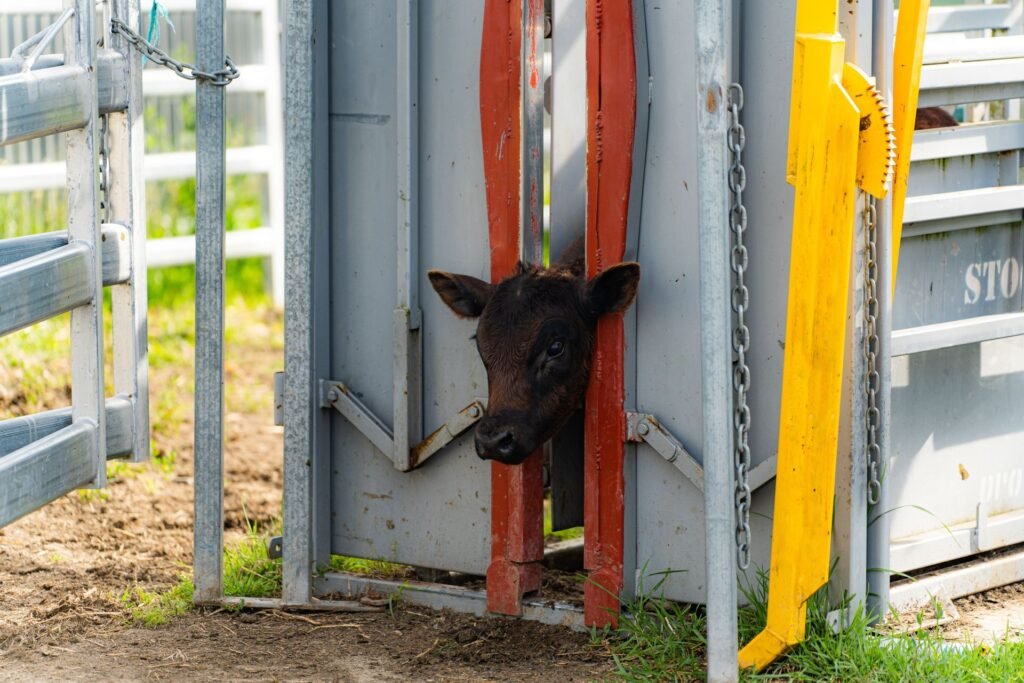
A crush-mounted scale integrates the weighing system directly into a purpose-built weighing crush or race. The animal is contained in the crush while being weighed, which improves both safety and weight accuracy by eliminating movement during measurement. If a crush-mounted system is the right choice for your operation, our step-by-step guide to how to set up a livestock scale and chute system covers foundation, race design, and load cell installation in full.
Best for: High-throughput operations weighing cattle regularly — particularly beef finishing units or dairy farms with routine weighing programmes.
Watch out for: These are the least portable of the three. Crush-mounted systems require a trailer for transport and a clear, level standing area at each location.
Capacity: Getting This Wrong Is Expensive
Capacity is the maximum load the scale is rated to weigh. Load cells have a safe overload limit set by the manufacturer, and shock loads or exceeding that limit — for example, an animal jumping onto the platform or weighing more than the rated capacity — can permanently damage load cells and degrade accuracy. Never operate a scale beyond its rated capacity.
Minimum capacity by species:
| Species | Typical Adult Weight Range | Recommended Scale Capacity |
|---|---|---|
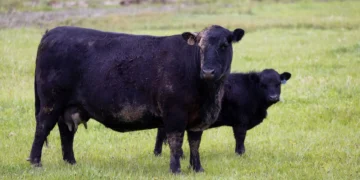
| Beef cattle (mature) | 500–900 kg | 2,000 kg minimum |
| Dairy cows | 550–750 kg | 2,000 kg minimum |
| Pigs (finishing) | 80–120 kg | 500–1,000 kg |
| Sheep (adult ewes) | 60–120 kg | 500–1,000 kg |
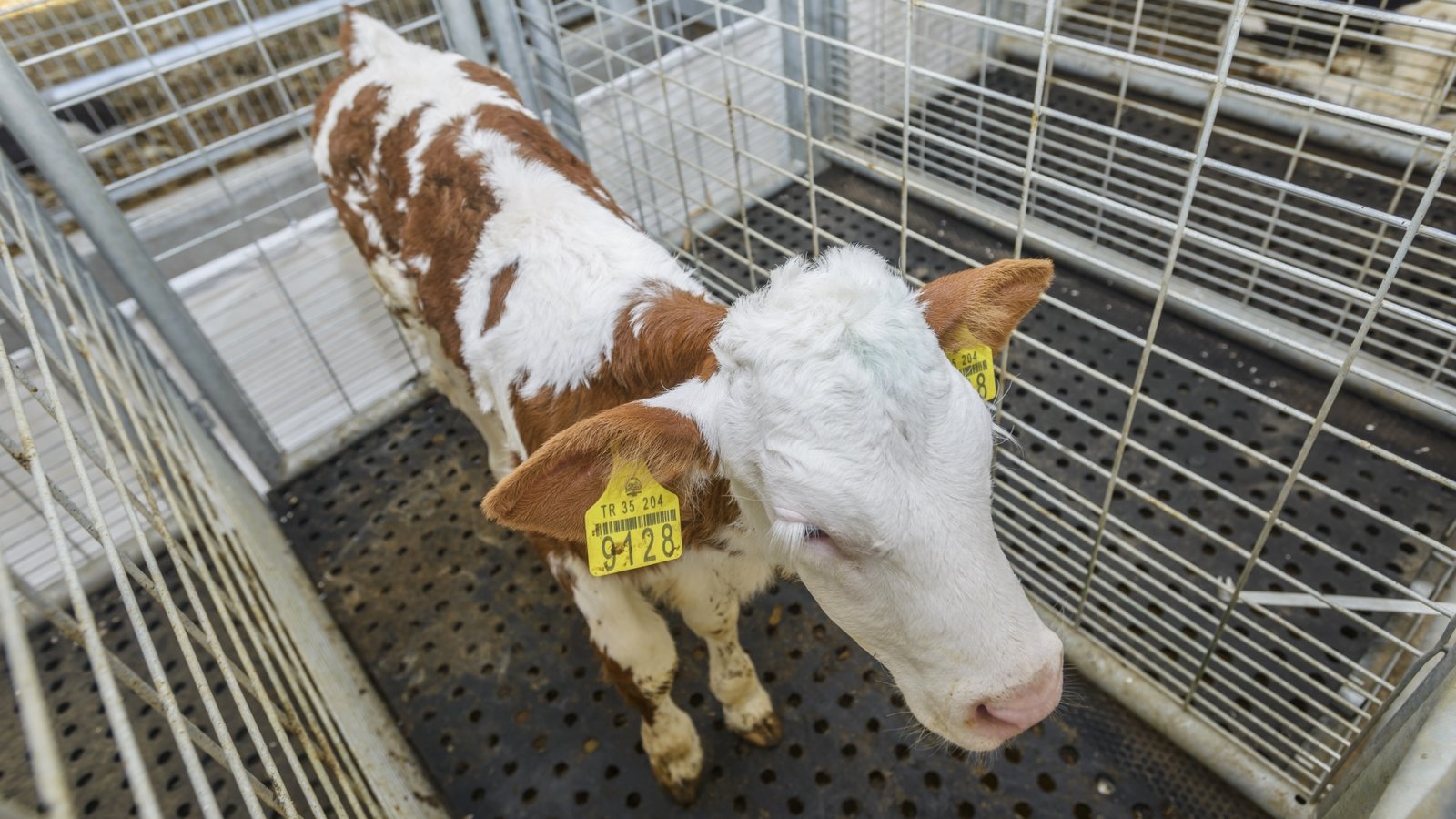
| Calves / lambs | 20–100 kg | 300–500 kg |
For cattle, choose a capacity comfortably above your heaviest animal to allow for growth, animals shifting their weight and occasional shock loading. Do not oversize too far, though: a higher-capacity scale usually displays in larger increments (for example, 2 lb instead of 1 lb), which reduces resolution for lighter animals. Compare the capacity and the display increment (division size) of each model against the animals you actually weigh, and ask the manufacturer or dealer to confirm the right combination for your application.
If you weigh multiple animals simultaneously — for group weighing or when separating an animal from a small mob — capacity must reflect the combined weight of animals likely to be on the platform at once.
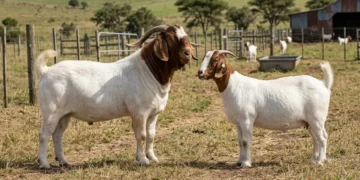
A single livestock scale handles cattle, hogs, and goats alike — see our goat weight by breed chart to know what range to expect on the display.
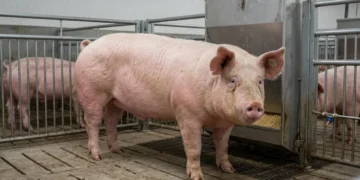
For pig-specific platform requirements, weighing frequency, and market weight considerations, see our dedicated guide to the best scale for weighing pigs at market weight.
Readability: How Fine Does Your Reading Need to Be?
Readability is the smallest increment the scale displays — typically 0.5 kg, 1 kg, or 2 kg for livestock scales.
- 0.5 kg readability — appropriate for lambs, piglets, and young stock where small differences in weight matter for treatment dosing or sorting
- 1 kg readability — the standard for most cattle and sheep applications; sufficient for market decisions and growth tracking
- 2 kg readability — acceptable for large cattle, where precision beyond 2 kg rarely changes a management decision
For farms that use weight to calculate drug dosing — anthelmintics, vaccines, or pour-on treatments — finer readability reduces the risk of under-dosing in young or light animals. This is a genuine safety and welfare consideration, not just a commercial one.
Platform Size: Does Your Largest Animal Fit?
A livestock scale platform must be large enough for the animal to stand squarely with all four feet on the weighing surface. An animal with any foot off the platform produces a partial reading that appears to be a real weight on the display but is meaningless data.
Minimum platform dimensions by species:
- Cattle: 180 cm × 60 cm minimum; 210 cm × 70 cm preferred for mature bulls and heavy cows
- Sheep and goats: 120 cm × 60 cm for individuals; larger for group weighing
- Pigs (finishing): 100 cm × 70 cm minimum
Check the platform surface as well. Rubber matting or anti-slip textured steel is essential — animals that slip or scramble during weighing produce inaccurate readings and are a welfare risk. Smooth steel platforms are inadequate for livestock use regardless of the scale’s other specifications. Platform size is just one of many factors affecting accuracy — our guide to what affects animal weight accuracy on a farm scale covers every variable from leveling to load cell condition.
The Indicator: Where the Data Lives
The indicator — sometimes called the display unit or weight head — is the brain of the system. It receives signals from the load cells, processes them, and displays the weight. For a portable system, the indicator specification matters as much as the platform.
Key indicator features to look for:
- Weatherproof housing (IP65 minimum) — IP ratings define how well an enclosure protects against dust and liquid intrusion — IP65 protects against water jets from any direction, IP67 against temporary immersion, and IP68 against prolonged submersion — with each step up in rating representing better protection for outdoor farm environments meaningfully
- Backlit display — readable in direct sunlight and in dark sheds; essential for early morning or winter weighing sessions
- Battery operation — a portable scale that requires mains power is not truly portable. Look for a battery life of at least 8 hours of active use, with solar charging as a bonus
- Auto-zero and auto-tare — the scale should zero itself between animals automatically; manual zeroing between every weigh significantly slows throughput
- Data storage and connectivity — the best portable livestock indicators store hundreds of individual weight records and connect via Bluetooth or USB to farm management software. This transforms weighing from a manual record-keeping exercise into an automated data pipeline
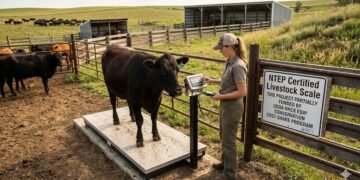
- Legal for trade certification — if you weigh animals for sale and the weight determines the transaction price, the scale must be certified legal for trade (NTEP in the US; Weights & Measures approved in the UK and Australia). Check this before purchase — not all livestock scales carry this certification
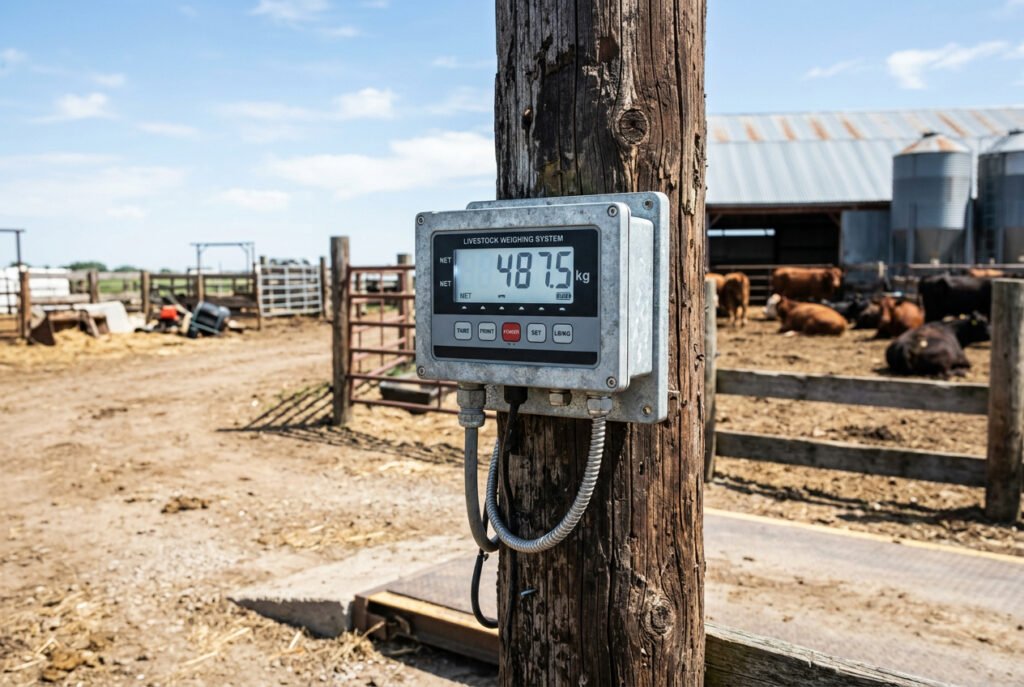
“As reviewed by Farmers Hot Line, portable livestock scales certified as legal for trade allow producers to generate official weigh tickets directly from their farm location — reducing the time and expense of hauling animals to a certified third-party facility for commercial transactions.”
For a full explanation of how tag readers, indicators, and farm management software work together, see our guide to how EID tagging works with livestock scales.
Durability: What Farm Conditions Will It Actually Face?
A portable livestock scale lives a hard life. It gets loaded onto trailers, dragged across yards, rained on, stood on by panicking cattle, and left outside while you deal with something else. Durability is not a premium feature — it is a basic requirement.
What to check:
- Load cell material — stainless steel load cells resist corrosion from urine, dung, and cleaning chemicals far longer than mild steel cells. This is the single most important long-term durability specification
- Frame construction — hot-dip galvanised steel or aluminium frames outlast painted mild steel in outdoor farm environments
- Load cell protection — load cells must be sealed against moisture ingress. Look for an IP rating on the load cells themselves, not just the indicator
- Cable protection — exposed cables between the load cells and the indicator are a vulnerability. Look for armoured cable runs or integrated cable management built into the platform frame
- Overload protection — quality load cells include mechanical overload stops that prevent permanent damage if an animal exceeds the rated capacity
“Using four stainless steel load cells rather than aluminum or steel-plated alternatives keeps the corrosive effects of moisture at bay, extends the life of the investment, and maintains accuracy over the full operating life of the scale — a material specification that pays for itself in any farm environment.”
Practical Checklist Before You Buy
Before placing any order, confirm the following:
- Capacity exceeds your heaviest expected single animal by at least 30%
- Platform dimensions accommodate your largest animal with all four feet on the surface
- Anti-slip platform surface (rubber matting or textured steel)
- Indicator is IP65 rated or higher
- Battery powered with a minimum 8-hour life
- Stainless steel or sealed load cells
- Legal for trade certified if the weight determines the sale price
- Auto-zero between animals
- Data storage or connectivity if you run a weight recording programme
- Weighs within your budget, including setup and any required accessories
Liberty Scales carries a range of livestock and agriculture scales built to the specifications covered in this guide — stainless steel load cells, IP-rated indicators, and NTEP certification for legal-for-trade use. Scale Blog readers get 10% off using code SCALEBLOG10 at checkout.
FAQs
What is the best type of portable livestock scale?
It depends on your setup. Weigh bars are the most genuinely portable and suit farms with existing handling equipment. Self-contained platform scales work for smaller livestock or farms without infrastructure. Crush-mounted scales suit high-throughput cattle operations where precision and throughput are priorities.
What capacity do I need for a cattle weighing scale?
For mature beef or dairy cattle, a minimum capacity of 2,000 kg is recommended. This ensures the scale is operating well within its accurate range and provides a safety margin for heavier animals or double-weighing scenarios.
Does a portable livestock scale need to be legal for trade?
Yes, if the weight recorded determines the price of a sale transaction. Legal for trade certification (NTEP in the US, Weights & Measures approved in the UK and Australia) is a legal requirement for commercial livestock transactions based on liveweight. Not all portable scales carry this certification — verify before purchasing.
What IP rating should a portable farm scale indicator have?
A minimum of IP65 for standard farm use. IP67 or IP68 is recommended for wet climates, washdown environments, or scales used outdoors in all weather. IP65 protects against water jets from any direction; IP67 and above provide protection against temporary or prolonged submersion.
Can portable livestock scales connect to farm management software?
Yes. Many modern portable livestock scale indicators store hundreds of individual weight records and connect via Bluetooth or USB to farm management and EID recording software. This capability is worth specifying if you run a weight-based animal health or growth monitoring programme.
Conclusion
The best portable livestock scale buying guide outcome is matching the right category — weigh bars, platform scale, or crush-mounted system — to your existing infrastructure and mobility needs. Get capacity and platform size right first, then specify the indicator for your data requirements and the durability for your environment. A portable scale that is genuinely easy to move, accurate in the field, and durable enough to last a decade will pay for itself many times over in better market decisions, faster drug dosing, and tighter growth monitoring. The ones that cut corners on load cell quality or indicator weatherproofing will cost you more in replacements and lost data within two years.
Sources
- NIST, Handbook 44 — Current Edition (scale divisions and tolerances).
- National Conference on Weights and Measures, National Type Evaluation Program (NTEP).
Last reviewed September 2026 by the Scale Blog editorial team. Always follow the manufacturer’s capacity and installation instructions.