








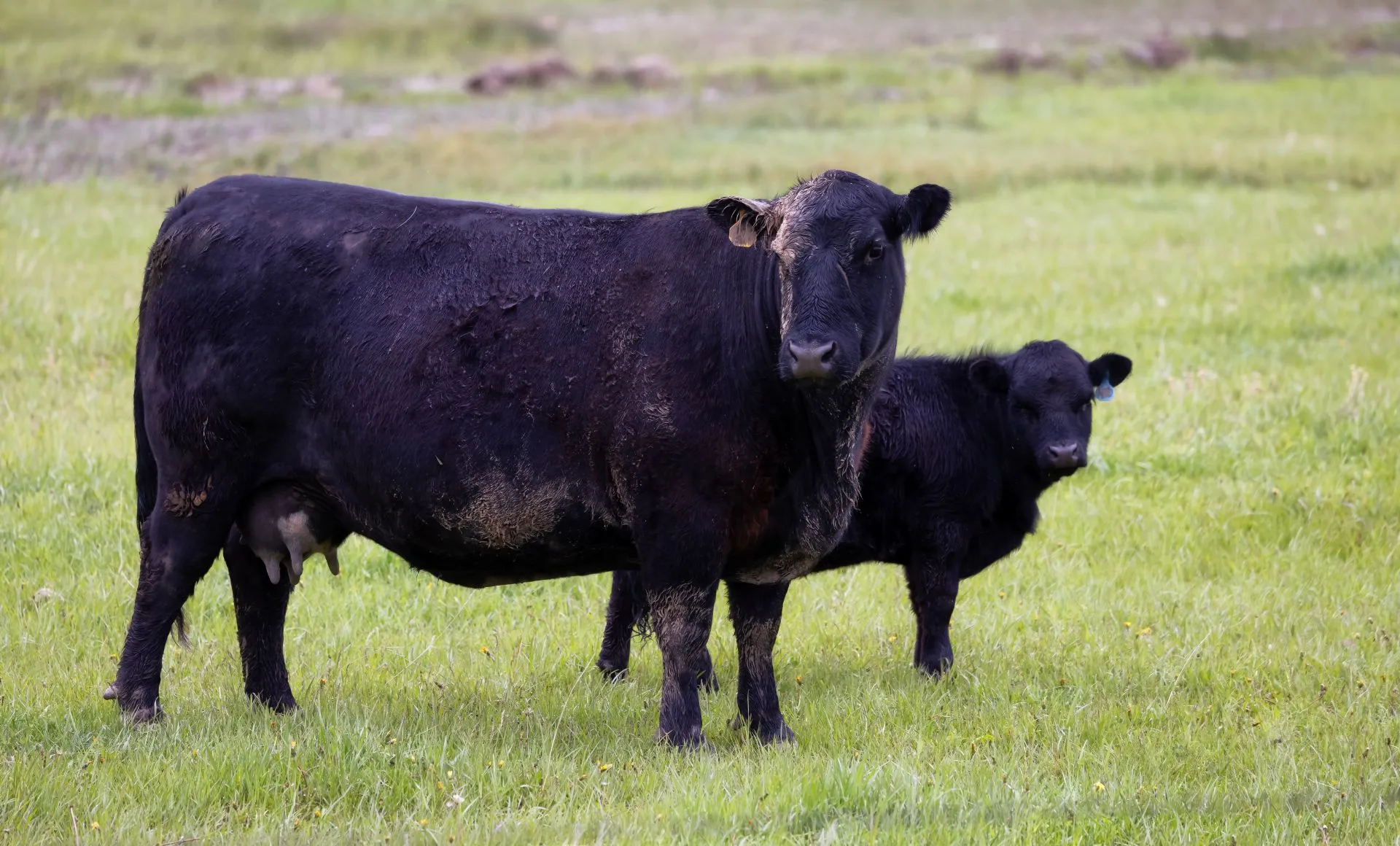
Quick answer: A newborn beef calf usually weighs 60–100 lb — registered Angus calves born in 2025 averaged 79 lb (bulls) and 74 lb (heifers). Beef calves typically gain about 2–2.8 lb per day and weigh 450–650 lb at weaning (5–7 months). Holstein dairy heifer calves average about 85 lb at birth and Jersey calves about 60 lb.
| Age | Beef Steer (lb) | Beef Heifer (lb) | Holstein Heifer (lb) |
|---|---|---|---|
| Birth | 70–100 | 60–90 | 75–100 |
| 1 month | 130–160 | 120–145 | 110–145 |
| 2 months | 190–230 | 175–210 | 155–200 |
| 3 months | 250–310 | 230–280 | 205–260 |
| 4 months | 320–390 | 290–350 | 255–320 |
| 5 months | 390–470 | 350–420 | 305–380 |
| 6 months (weaning) | 460–560 | 420–510 | 355–440 |
| 12 months (yearling) | 750–950 | 650–800 | 650–800 |
Beef figures are typical ranges for Angus and Angus-cross calves at moderate body condition on grass. Holstein figures follow University of Maine Extension growth targets (calves double their birth weight by weaning at about 8 weeks, then gain 1.7–2.0 lb per day). Actual weights vary with breed, dam milk production, nutrition and health.
Table of Contents
How Much Does a Calf Weigh at Birth?
A healthy beef calf weighs 60–100 lb at birth. Bull calves average 5–10 lb heavier than heifer calves of the same breed. Birth weight is determined primarily by genetics, dam nutrition during late gestation, and calf sex.
For a current benchmark, the American Angus Association reports that registered Angus calves born in 2025 averaged an adjusted 79 lb for bulls and 74 lb for heifers at birth. Continental breeds such as Charolais and Simmental tend to produce somewhat heavier calves, while dairy breeds vary widely: Holstein heifer calves average about 85 lb (Vita Plus) and most Jersey calves weigh about 60 lb (University of Maine Extension).
Birth weight matters beyond the first day. Calves born above 110 lb carry a higher risk of dystocia — difficult delivery — particularly in first-calf heifers. Calves born below 60 lb are at higher risk of hypothermia and failure to thrive. The ideal target range for most beef operations is 70–95 lb.
Average Calf Weight at 1, 2, and 3 Months
Beef calves typically gain about 2–2.5 lb per day in the first three months, so a 90-day-old calf born at 80 lb will usually weigh roughly 250–310 lb. Early growth depends mostly on the dam’s milk production, pasture quality and whether creep feed is offered.
Gains accelerate as calves start eating forage. Registered Angus bull calves in 2025 averaged 665 lb at an adjusted 205 days — roughly 2.9 lb per day from birth — and heifer calves averaged 600 lb, about 2.6 lb per day. Registered-herd averages are a high benchmark; many commercial calves gain closer to 2–2.5 lb per day.
Dairy calves follow a different pattern. University of Maine Extension advises that Holstein and Jersey calves should double their birth weight by weaning at about 8 weeks, gaining 1.2–1.8 lb per day, and Holstein heifers should then gain 1.7–2.0 lb per day. A Holstein heifer calf born at 85–90 lb will typically weigh about 205–260 lb at 3 months.
Average Calf Weight at 4, 5, and 6 Months (Weaning)
Most U.S. cow-calf operations wean at 150–210 days (5–7 months). Commercial beef calves commonly wean at 450–650 lb, with steers heavier than heifers and heavier weights where calves are born earlier, dams milk well or creep feed is used. Registered Angus calves in 2025 averaged 665 lb (bulls) and 600 lb (heifers) at an adjusted 205 days.
A calf significantly below these benchmarks at weaning signals one of three problems: inadequate dam milk production, poor pasture quality or carrying capacity, or a subclinical health issue reducing feed conversion. A calf above these benchmarks — particularly one approaching 650+ lb at weaning — indicates superior genetics or intensive creep feeding.
Weaning weight is the single most economically important weight benchmark in a cow-calf operation. It directly determines the value of calves sold at weaning and sets the trajectory for subsequent feedlot performance.

Average Calf Weight at 12 Months (Yearling)
A yearling beef steer at 12 months should weigh 750–950 lb on a grass-based program. Yearling weight is the second most important benchmark — it determines whether replacement heifers are on track to reach breeding weight (60–65% of mature cow weight) at 14–15 months.
Replacement heifers are commonly targeted to reach 60–65% of their expected mature weight at first breeding. With U.S. beef cows now averaging close to 1,400 lb, that means about 840–910 lb at 14–15 months. A heifer well below target will usually cycle later and have lower conception rates.
For bull-specific weight benchmarks beyond yearling age and into the breeding years, see our guide to average bull weight by breed.
Calf Weight by Breed — How Much Does Each Breed Differ?
Breed is the single biggest variable in calf weight after age. Here’s how the major US beef and dairy breeds compare at birth and weaning:
| Breed / type | Typical birth weight | Reference weaning weight |
|---|---|---|
| Angus (registered, 2025 averages) | 79 lb bulls / 74 lb heifers | 665 lb bulls / 600 lb heifers (adjusted 205-day) |
| Commercial beef calves | 60–100 lb | 450–650 lb |
| Holstein (dairy heifers) | about 85 lb | about 170–180 lb at 8-week weaning |
| Jersey (dairy) | about 60 lb | about 122–133 lb at 8-week weaning |
Continental breeds such as Charolais and Simmental are selected for growth and generally produce heavier calves at birth and weaning than British breeds, which is why many producers avoid them as sires on first-calf heifers. Brahman-influenced calves are often lighter at birth but are valued for heat tolerance across the Gulf Coast and Southern U.S. Dairy calves are weaned far earlier and lighter than beef calves because they are raised on milk replacer rather than nursing a cow.

What Does It Mean If Your Calf Is Underweight?
A calf more than 15% below the expected weight for its age and breed warrants investigation. The most common causes in order of frequency: dam producing insufficient milk (check dam body condition score), internal parasites (weigh and treat the calf), inadequate pasture (assess carrying capacity and supplement), or a chronic respiratory or digestive issue reducing feed conversion.
If you do not have access to a scale, a heart girth tape or formula gives a reasonable estimate, although accuracy is lower for young calves and animals in unusual body condition. See our guide to estimating cattle weight without a scale for the step-by-step method.
For operations selling calves at weaning, tracking weight against these benchmarks every 30 days from birth is the most practical management tool available. A simple livestock scale or weigh tape check at 30, 60, 90, and 205 days produces the data needed to identify problems before they cost money at the sale.
For a complete weight reference from weaning through market weight across all major breeds, see our cattle weight chart.
FAQs
How much does a newborn calf weigh?
A newborn beef calf typically weighs 60–100 lb. Registered Angus calves born in 2025 averaged 79 lb (bulls) and 74 lb (heifers), and bull calves are usually a few pounds heavier than heifers. Holstein heifer calves average about 85 lb and Jersey calves about 60 lb.
How much does a calf weigh at 6 months?
A beef steer calf at 6 months typically weighs about 450–600 lb, and heifers slightly less. For comparison, registered Angus calves in 2025 averaged 665 lb (bulls) and 600 lb (heifers) at an adjusted 205 days (about 6.7 months).
How much does a calf weigh at 3 months?
A beef steer calf at 3 months weighs approximately 250–310 lb on a cow-calf operation with moderate pasture. Heifers average 230–280 lb at the same age.
How much does a calf weigh at 12 months?
A yearling beef steer at 12 months weighs 750–950 lb on a grass program. Replacement heifers should weigh 650–800 lb at 12 months to stay on track for breeding weight at 14–15 months.
How much does a baby calf weigh?
A newborn (baby) beef calf weighs about 60–100 lb. Dairy calves vary by breed: Holstein heifer calves average about 85 lb and Jersey calves about 60 lb. Beef calves typically gain about 2 lb per day in their first month.
How do I know if my calf is the right weight for its age?
Compare your calf’s weight against the age-weight table above. A calf more than 15% below expected weight warrants a health and nutrition check — assess dam milk production, parasite load, and pasture quality. For field weight estimates without a scale, use the cattle weight formula.
Conclusion
A calf’s weight at every stage is one of the most reliable indicators of whether your operation is working. Birth weight reflects dam nutrition and genetics. Weaning weight reflects pasture quality, dam milk production, and herd health. Yearling weight tells you whether replacement heifers are on track for breeding.
The benchmarks here — 60–100 lb at birth, 450–650 lb at weaning, 750–950 lb at 12 months — are starting points, not fixed targets. What matters is whether your calves are hitting expected milestones for their breed and age, and acting quickly when they fall short.
For weight benchmarks beyond weaning across all major US breeds, see our complete cattle weight chart. For field weight estimates without a scale, see our guide to estimating cattle weight without a scale.
Sources
- American Angus Association, Adjusted Weight Average by Birth Year.
- University of Maine Cooperative Extension, Bulletin #1078: Calculating the Average Daily Gain of a Dairy Calf or Heifer.
- Vita Plus, Fast Fact: Average Birthweight.
- American Society of Animal Science, Cow Size: Implications for Grazing Rangelands and the Beef Industry (2025).
Last reviewed September 2026 by the Scale Blog editorial team.