



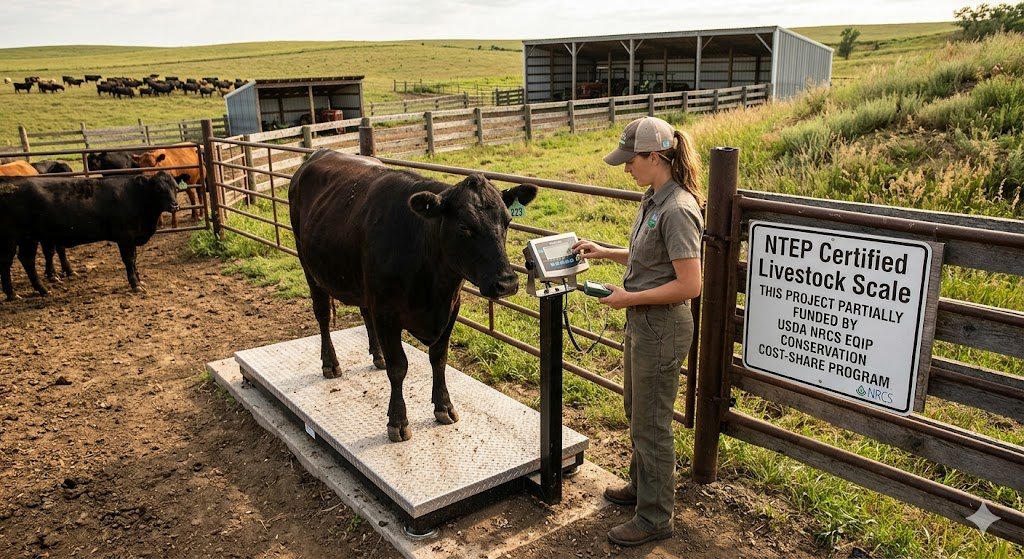
A livestock scale is a significant capital investment for any farm operation. A certified alleyway scale, a complete cage system, or a weigh bar installation can cost anywhere from $800 to $5,000 or more, depending on capacity and configuration. What many US producers do not know is that the USDA’s Natural Resources Conservation Service (NRCS) — through its Environmental Quality Incentives Program (EQIP) — provides cost-share funding that reimburses eligible farmers for a substantial portion of that investment.
This article explains what NRCS cost-share funding covers for farm scales, what certification requirements a scale must meet to qualify, how the EQIP application process works, and how to find your local NRCS office to start the process.
Do NRCS farm scales need to be NTEP certified?
Yes. To qualify for USDA NRCS EQIP cost-share funding under Conservation Practice Standard 910, livestock scales must carry a valid NTEP Certificate of Conformance. The scale must be installed for an eligible conservation purpose and approved through your local NRCS service center before purchase.
What farm scales qualify for NRCS EQIP cost-share funding?
To qualify for USDA NRCS EQIP cost-share funding under Conservation Practice Standard 910, a livestock scale must carry a valid NTEP Certificate of Conformance, be installed for an eligible conservation purpose, and be approved through your local NRCS service center before purchase. EQIP typically covers 50–75% of installed scale costs for general producers, and up to 90% for historically underserved producers.
What Is NRCS and What Is EQIP?
The Natural Resources Conservation Service (NRCS) is an agency of the US Department of Agriculture that provides technical and financial assistance to farmers, ranchers, and private landowners implementing conservation practices on working agricultural land.
The Environmental Quality Incentives Program (EQIP) is NRCS’s primary financial assistance program — a voluntary conservation program that offers cost-share funding to producers who implement approved conservation practices. As confirmed by the USDA NRCS, EQIP provides financial and technical assistance to help producers plan, install, and implement structural, vegetative, and management conservation practices on agricultural land.
Fifty percent of total EQIP funding is set aside for livestock operations at the national level, including grazing management practices. This makes livestock producers one of the highest-priority groups in the EQIP funding allocation — and livestock weighing equipment a natural fit for cost-share consideration under the livestock management practice category.
Does NRCS Cover Farm Scale Purchases?
This is the question most producers ask first — and the answer requires some nuance.
NRCS does not publish a universal national list that says “livestock scales = covered.” Instead, many specific features of EQIP are determined by NRCS State Conservationists with advice from local working groups and State Technical Committees. What qualifies for cost-share funding varies by state, by fiscal year, and by the conservation practice code under which livestock weighing equipment is categorized.
Livestock scales most commonly qualify under these NRCS practice codes
Practice Code 646 — Waste Facility Cover: Scales used in confined animal feeding operation (CAFO) waste management — weighing waste material for nutrient management compliance.
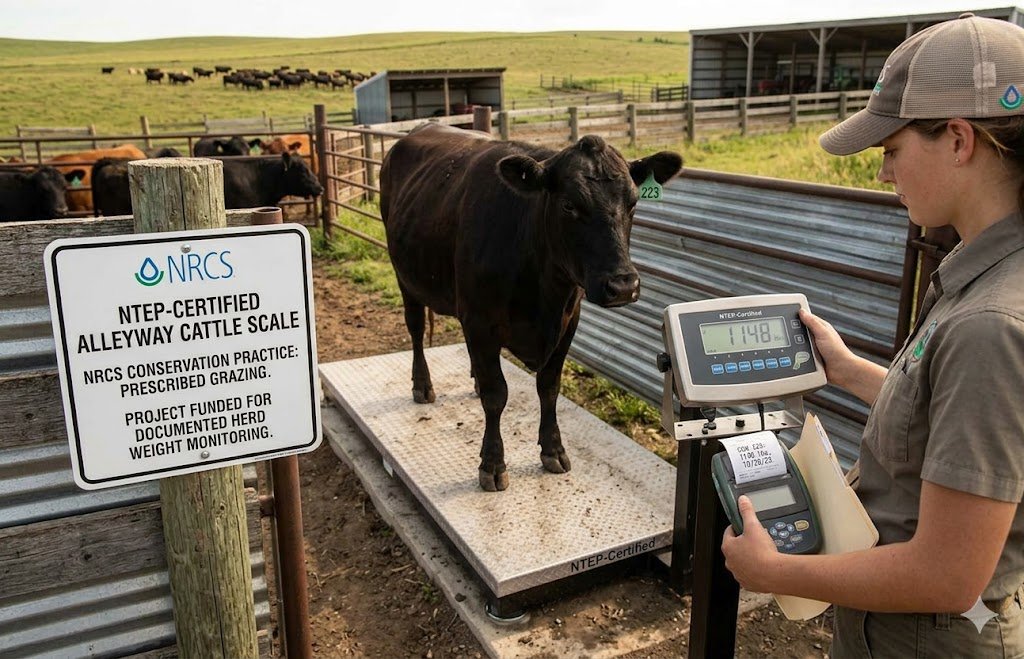
Practice Code 528 — Prescribed Grazing: Livestock weighing equipment used to monitor and document body weight gain in prescribed grazing programs — confirming that rotational grazing management is producing the intended animal performance outcomes.
Practice Code 512 — Forage and Biomass Planting: Livestock scales used to verify weight gain from improved forage systems funded under this practice code.
Livestock Management Practices — General: Many state NRCS offices fund livestock scales directly as part of livestock management improvement contracts where documented weight monitoring is required as part of the conservation plan.
The practical approach: Contact your local NRCS office and specifically ask whether livestock weighing equipment qualifies under any active practice codes in your state for the current fiscal year. Do not assume it does or does not based on national guidance — state-level determination is what matters.
How Much Does EQIP Pay?
EQIP awards are structured as cost-share contracts, where the NRCS will reimburse participating producers for 75 percent of the implemented practice cost. That means for a $2,000 NTEP-certified livestock scale system, EQIP would reimburse $1,500 — leaving the producer responsible for only $500 out of pocket.
The cost-share rate varies based on producer classification:
| Producer Type | Standard Cost-Share Rate |
|---|---|
| General producer | Up to 90% of the practice cost |
| Beginning farmer (in operation less than 10 years) | Up to 75% — advance payment available |
| Historically underserved producer | Up to 90% of the practice cost |
| Socially disadvantaged producer | Up to 90% of practice cost |
If you’re a beginning farmer, you can also apply to receive an advance of half of the funding for the project or practice. This advance payment provision addresses the cash flow challenge that prevents many beginning producers from making the upfront investment that EQIP cost-share requires.
Some states also allow NRCS to identify 10 highly effective conservation practices eligible for 90% cost-share payments, compared to the traditional 75% cost-share payments that apply to most practices. If livestock weighing is designated as one of these high-priority practices in your state, the reimbursement rate increases to 90%.
What Scale Certification Does NRCS Require?
When NRCS funds a livestock scale purchase through EQIP, the scale must meet NRCS technical standards for the conservation practice it is being funded under. In practice, this means the scale must be appropriate for its intended use — and for any scale used in a commercial transaction or as part of a documented conservation monitoring program, NTEP certification is the standard that demonstrates technical adequacy.
NTEP certification — administered by the National Conference on Weights and Measures (NCWM) — confirms that the scale model has been independently tested against the accuracy requirements of NIST Handbook 44. As confirmed by the NCWM, an NTEP Certificate of Conformance (CC) number on the scale’s data plate is the verification that this specific model meets national accuracy standards.
For NRCS purposes specifically:
- The scale must be appropriate for the species and weight range being monitored
- Installation must follow NRCS practice standards for the relevant practice code
- Documentation of weight measurements must be maintained as part of the conservation plan record
- The scale must be capable of producing the weight records required by the conservation practice agreement
For the complete guide to NTEP certification and what it means for commercial livestock operations, see our article on what is an NTEP scale and when do you legally need one.
Which Types of Livestock Scales Qualify
Any NTEP-certified livestock scale appropriate for the species and weight range specified in the conservation plan is generally acceptable for NRCS cost-share consideration. The most common configurations funded through EQIP include:
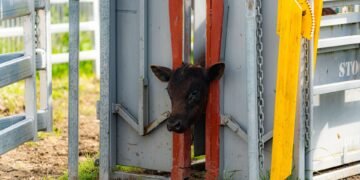
Weigh bar systems are load cell bars placed under existing handling infrastructure — the most cost-effective path to certified livestock weighing for operations with an existing squeeze chute or alleyway.
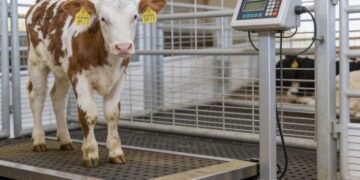
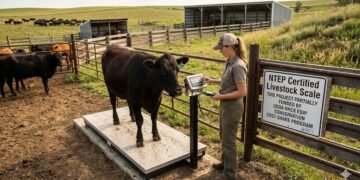
Complete alleyway scale systems combine a platform, indicator, and motion averaging into a fixed livestock handling facility — the standard configuration for commercial cattle operations.
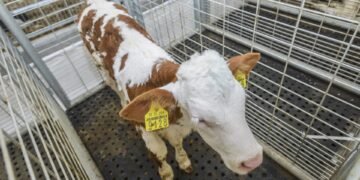
Portable cage systems — Self-contained cage and platform combinations on casters — are appropriate for operations that weigh animals in multiple locations on the property.
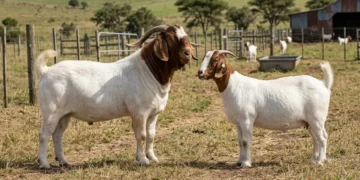
Veterinary and small livestock scales are calibrated instruments appropriate for sheep, goats, and pig operations where smaller capacity and finer readability are required.
The scale must match the conservation practice requirement. If the practice code requires documented cattle weight gain monitoring under a prescribed grazing plan, a cattle-capacity NTEP-certified scale is required. A scale undersized for the animals being monitored, or one without NTEP certification, would not satisfy the conservation practice standard.
How the EQIP Application Process Works
The application process for EQIP funding follows a consistent sequence regardless of state.
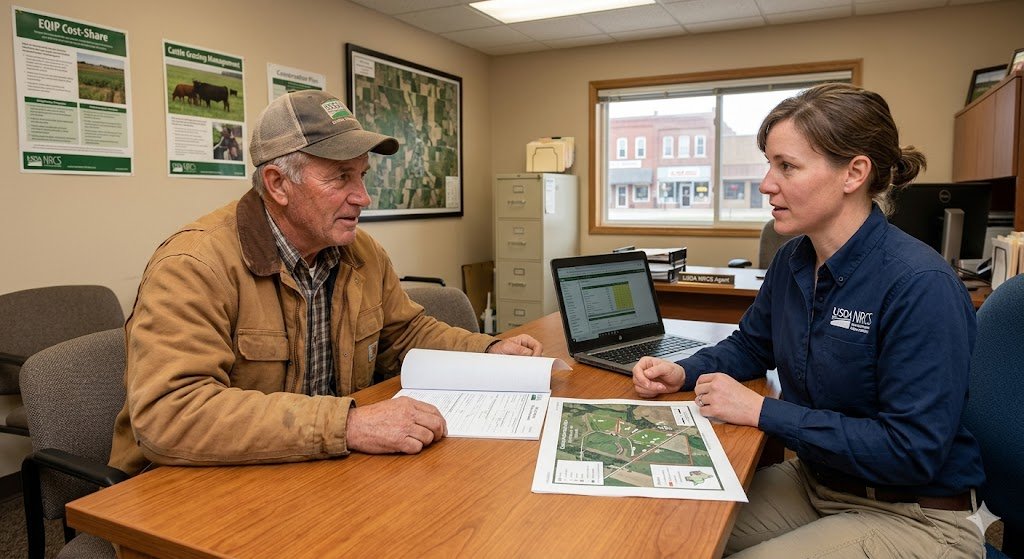
Step 1 — Contact your local USDA Service Center. Producers, landowners, and forest managers interested in applying for assistance should contact NRCS at their local USDA Service Center. Find your local office at offices.usda.gov. Bring documentation of your farming operation — land ownership or lease documentation, livestock inventory, and a description of the conservation issue you want to address.
Step 2 — Work with your local NRCS agent to identify eligible practices. Your NRCS agent will review your operation and identify which conservation practice codes are applicable and currently funded in your state. This is where you ask specifically about livestock weighing equipment. NRCS practice standards can be limiting — but this is nothing that cannot be fixed by a conversation with your local NRCS representative.
Step 3 — Develop a conservation plan. EQIP requires you to come up with a plan of operations and a conservation plan so the NRCS knows exactly what your plan for the fund is. For a livestock scale, this plan would document how the scale will be used — what species will be weighed, at what frequency, and how the weight data will be used to improve livestock management and conservation outcomes on your operation.
Step 4 — Submit your application by your state’s ranking date. Your state’s NRCS will set an application batching or ranking date, and you should treat this like a deadline to apply. All applications received by this date are assessed, scored, and ranked competitively for available funding. Applications received after the ranking date are deferred to the next funding cycle — and funding may not be available. Contact your local NRCS office as early as possible to confirm the current fiscal year ranking date for your state.
Step 5 — Ranking and award. Applications within each state are grouped with similar crop, forestry, and livestock operations and evaluated within each group. Ranking criteria include the cost-effectiveness of the proposed practice, the severity of the resource concern being addressed, and whether the practice addresses NRCS national priorities for the current fiscal year. Only about one in three applicants will receive funding — not because they are not worth funding, but because the most competitive applications address the NRCS’s existing resource concerns on the land.
Step 6 — Contract execution and implementation. If your application is funded, you sign an EQIP contract with NRCS specifying the practice to be implemented, the timeline, and the payment schedule. You implement the practice — purchase and install the livestock scale — and NRCS reimburses the agreed cost-share percentage upon verification.
How to Make Your EQIP Application More Competitive
EQIP is competitive. Understanding how applications are ranked helps you submit the strongest possible application for a livestock scale.
Address a documented resource concern. The most competitive EQIP applications connect the proposed practice to a specific, documented resource concern on the land — water quality, soil health, nutrient management, or livestock production efficiency. A livestock scale application is strongest when it connects to a documented grazing management program where weight monitoring is essential to verifying that the prescribed grazing plan is achieving its conservation objectives.
Propose a complete monitoring system. An application for a livestock scale that includes a documented weight monitoring protocol — how often animals will be weighed, what records will be kept, and how the data will be used to adjust grazing management — is more compelling than an application for scale hardware alone.
Apply early. Funding for livestock-related assistance runs out quickly, so if you miss your state’s ranking date, your application will likely not be funded in the current cycle. Contact your local NRCS office at the beginning of the calendar year for the best chance of funding in the current fiscal year.
Work with a beginning farmer designation if applicable. Beginning and underserved producers may receive up to 90 percent cost-share rather than the standard 75 percent rate. If you have been farming for fewer than 10 years, confirm your beginning farmer status with your NRCS agent before submitting — the higher cost-share rate significantly increases the financial value of the award.
State-Level Variation — Why Your State Matters
EQIP implementation varies significantly by state. The conservation practices funded, the cost-share rates, the ranking dates, and the priority resource concerns are all determined at the state level by the State Conservationist and State Technical Committee.
Some states with large livestock sectors — Texas, Kansas, Nebraska, Iowa, Missouri, Oklahoma, and the Dakotas, among others — have historically funded livestock management practices at higher rates and with more available funding than states where livestock production is a smaller part of the agricultural economy.
The most reliable source for current information about livestock scale funding availability in your state is your local NRCS field office — not national NRCS publications, which reflect program structure rather than current state-level funding priorities.
The Connection Between NRCS Funding and Scale Selection
If you are purchasing a livestock scale with the intention of applying for NRCS cost-share funding, the scale selection process should account for NRCS technical requirements from the start — not after you have already purchased a scale that may not qualify.
Confirm NTEP certification before purchasing. A scale without a valid NTEP Certificate of Conformance number may not satisfy NRCS technical standards for the relevant practice code. Verify the CC number in the NCWM NTEP database before purchasing any scale intended for NRCS cost-share reimbursement.
Match capacity to species. NRCS conservation plans specify the livestock species and approximate weight range being managed. The scale must be demonstrably appropriate for those animals — a scale rated to 1,000 lb is not appropriate for adult cattle management, even if it is NTEP certified.
Keep all purchase documentation. NRCS cost-share reimbursement requires documentation of actual costs — receipts, invoices, and installation records. Keep complete documentation from the moment of purchase through installation completion.
For guidance on selecting the right NTEP-certified livestock scale for your operation — including the complete comparison of weigh bar systems, alleyway scales, and portable cage systems — see our complete guide to farm and livestock scales.
FAQs
Does NRCS pay for farm scales?
NRCS provides cost-share funding for farm scales through the EQIP program when livestock weighing equipment is part of an approved conservation practice — most commonly under livestock management, prescribed grazing, or nutrient management practice codes. Eligibility varies by state and fiscal year. Contact your local USDA Service Center to confirm whether livestock scales qualify under active practice codes in your state for the current funding cycle.
How much does EQIP pay toward a livestock scale?
The standard EQIP cost-share rate is 75% of the approved practice cost. Beginning farmers and historically underserved producers may qualify for up to 90% cost-share. On a $2,000 livestock scale system, the standard 75% rate would reimburse $1,500 — leaving the producer responsible for $500.
Does a farm scale need to be NTEP certified to qualify for NRCS funding?
NRCS requires that funded practices meet NRCS technical standards. For livestock weighing equipment used in documented conservation monitoring programs, NTEP certification is the standard that demonstrates technical adequacy. Confirm the specific certification requirement with your local NRCS agent when developing your conservation plan.
How do I apply for NRCS cost-share for a livestock scale?
Contact your local USDA Service Center to speak with an NRCS agent. They will review your operation, identify applicable conservation practice codes, and help you develop a conservation plan. Apply before your state’s annual ranking date — contact your local office early in the calendar year for the current deadline. Find your local USDA Service Center at offices.usda.gov.
Is EQIP competitive?
Yes. Approximately one in three EQIP applications receives funding in any given cycle. Applications are ranked competitively within livestock operation groupings based on cost-effectiveness and the severity of the resource concern being addressed. The most competitive applications connect the livestock scale to a documented conservation outcome — such as verifying body weight gain targets in a prescribed grazing program.
Can beginning farmers get a higher EQIP cost-share rate?
Yes. Beginning farmers — those in operation for fewer than 10 years — may qualify for an advance payment of half the project cost and a cost-share rate up to 90% rather than the standard 75%. Confirm your beginning farmer status with your NRCS agent before submitting your application.
Conclusion
NRCS cost-share funding through EQIP represents a genuine financial opportunity for US livestock producers investing in certified weighing equipment. At 75–90% reimbursement on eligible practice costs, a livestock scale that might otherwise be deferred becomes financially accessible — and the conservation plan that accompanies the EQIP contract provides a documented weight monitoring framework that improves herd management outcomes beyond the equipment itself.
The process requires patience — EQIP is competitive, and not every application is funded — but producers who apply early, connect their scale purchase to a documented conservation plan, and work closely with their local NRCS agent have a meaningful chance of securing cost-share funding that significantly reduces their out-of-pocket investment.
The first step is a phone call to your local USDA Service Center. Find yours at offices.usda.gov.
For guidance on which livestock scales are NTEP certified and appropriate for different livestock operations — including weigh bar systems, alleyway scales, and portable cage systems — see our complete guide to farm and livestock scales.