



Inaccurate animal weight readings on a farm scale are more common than most farmers realise — and the consequences compound quietly. A scale reading 3% heavy means every drug dose calculated from that weight is 3% too high. Every market decision is based on a number that does not exist. Every growth rate calculation is wrong. The frustrating part is that most causes of farm scale inaccuracy are completely preventable once you know what to look for. This article covers every major factor that affects animal weight accuracy on a farm scale, and gives you a concrete fix for each one.
Table of Contents
1. The Scale Is Not Level
This is the single most common cause of inaccurate livestock weights — and the easiest to overlook because it is invisible during normal operation.
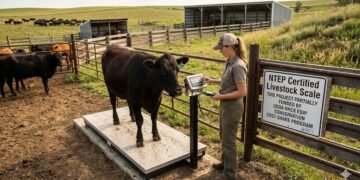
Load cells — the sensors inside a livestock scale that measure weight — are designed to be loaded vertically on a firm, level base. When the platform rocks or one foot sinks into soft ground, the load is shared unevenly between the load cells, frames can bind against gates or walls, and readings can become inconsistent or wrong in one direction. The error depends on the scale design and how badly it is out of level, so the fix is simple: set the scale on a firm, level base, check the level indicator before every weighing session and re-check with a known test weight if you move the scale.
The fix: Always deploy your scale on firm, level ground. Use a spirit level on the platform before each session. If your yard surface is uneven, use levelling feet or steel packing plates under the scale legs. For weigh bars set into a yard floor, check level periodically — ground movement, frost heave, and heavy vehicle traffic all shift concrete and compacted surfaces over time.
2. Animal Movement During Weighing
An animal that is moving, shifting weight, or attempting to turn on the platform produces a fluctuating reading. Electronic indicators deal with this through damping algorithms that average the signal over time — but they have limits. A highly agitated animal that never stands still for even a moment will produce a reading that is essentially an average of a range of values, not a true static weight.
The practical consequence: weighing stressed, unfamiliar, or poorly handled animals produces lower-quality data regardless of how good your scale is. A well-designed race and chute system reduces handling stress significantly — our guide to how to set up a livestock scale and chute system covers approach race design and animal flow in full.
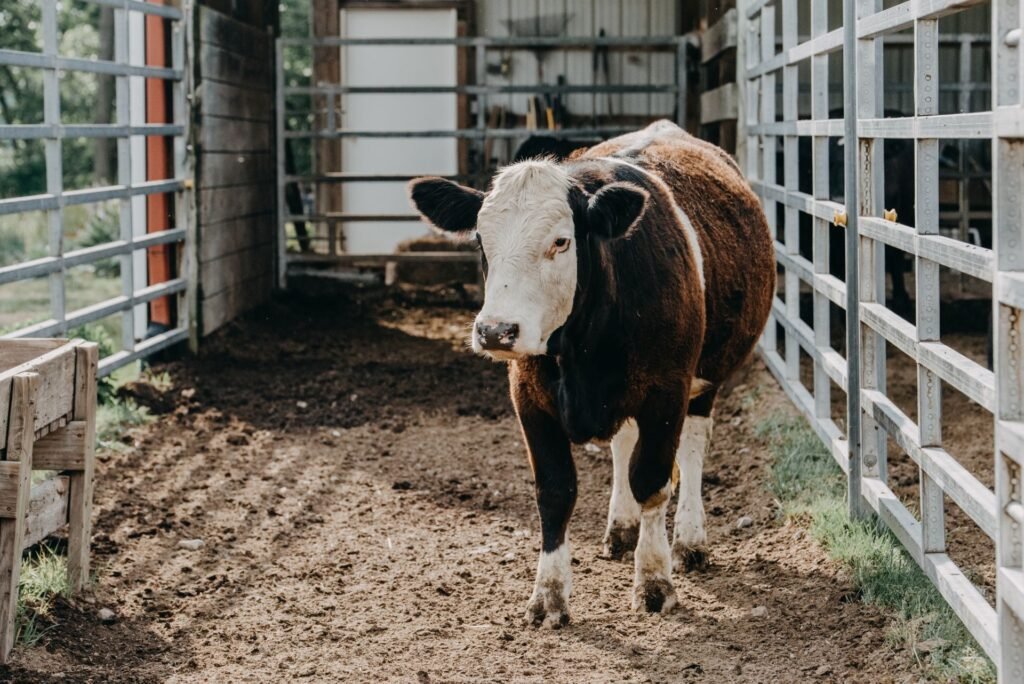
“Research highlighted by cattle conditions — including weather, feed type, and handling stress — all directly influence the degree of shrink, with some Montana studies recording shrinkage differences of nearly 2% between cattle coming off dry versus lush pasture, demonstrating how pre-weigh conditions significantly affect the weight recorded.”
The fix:
- Allow animals time to settle on the platform before accepting a reading. Most quality indicators include a stability indicator — a symbol or audible signal confirming the reading has stabilised. Do not record a weight until this appears
- Reduce handling stress before weighing. Animals that have been chased, loaded roughly, or mixed with unfamiliar animals will take longer to settle and will be lighter from adrenaline-driven gut motility
- Weigh animals that are accustomed to the handling system. Regular movement through a chute or crush makes animals calmer and faster to weigh
- Keep the weighing area quiet. Sudden loud noises — a metal gate slamming, a vehicle engine — cause movement just as a reading is stabilising
3. Gut Fill Variation
Live weight is not a fixed number for any animal. It changes throughout the day as the animal eats, drinks, and digests. The difference between a beef cow weighed immediately after a full day at grass and water, versus the same cow weighed after 12 hours off feed and water, can be 44–88 lb (20–40 kg) — a variation large enough to completely misrepresent the animal’s true body weight for market or management purposes.
This is not a scale problem. It is a protocol problem.
The fix: Establish a consistent pre-weigh protocol and apply it every time:
- Weigh cattle after a standard period off feed and water — 12 hours is the industry standard for commercial cattle weighing
- Weigh pigs after 3–4 hours off feed, where possible
- Weigh sheep after 4–6 hours off feed
- Weigh at the same time of day — gut fill cycles are predictable, so consistent timing removes a large source of variation
- Record the time and conditions of each weigh session so that data from different sessions are directly comparable
“Emphasizing low-stress cattle handling and shipping in minimum time benefits both buyer and seller by reducing shrink, stress, illness, and the cost to regain lost weight — with recovery from tissue shrink alone taking at least three days and up to 30 days in severe situations.”
When a scale is unavailable or impractical between scheduled sessions, body measurements can provide a useful reference — our guide to how to estimate cattle weight without a scale covers the most reliable field methods.
4. The Scale Has Not Been Calibrated Recently
Electronic livestock scales can drift over time as load cells age, cables and junction boxes are damaged, moisture gets in or mechanical parts shift under repeated loading. A scale that was accurate when new can read noticeably high or low after a season of hard farm use without anyone noticing, which is why regular checks against known test weights — and professional calibration at least annually for scales you rely on — matter.
“The USDA Agricultural Marketing Service requires that all scales used for weighing livestock in purchase or sale transactions under the Packers and Stockyards Act be tested for accuracy at least twice per calendar year — with a minimum of 120 days between tests — and be installed and maintained in accordance with NIST Handbook 44 standards.”
Many farmers assume that if the scale displays a number, it is correct. This assumption is costing them money.
The fix:
- Calibrate your scale at least twice per year using certified test weights — weights of known, traceable mass that allow you to verify what the scale is actually reading
- Calibrate after any significant event: the scale being dropped, moved to a new location, subjected to flooding, or involved in an overload incident
- For scales used in commercial transactions where weight determines price, calibration by a certified weights and measures technician is a legal requirement in most jurisdictions — not optional
- Keep a calibration log. If a reading is challenged — by a buyer, a vet, or an auditor — a documented calibration history is your evidence
5. Damaged or Deteriorated Load Cells
Load cells are precision instruments sealed inside what looks like a robust steel bar or beam. Inside that housing is a strain gauge — a tiny element that flexes microscopically under load and converts that flex into an electrical signal. Damage to the strain gauge, corrosion of the housing, or moisture ingress produces incorrect signals that the indicator cannot distinguish from legitimate weight data.
Load cell damage is particularly common on farm scales because of:
- Overloading — a single overload event can permanently shift a load cell’s zero point or reduce its sensitivity
- Corrosion — urine, dung, and cleaning chemicals attack mild steel load cells; even stainless steel cells eventually corrode if seals are compromised
- Moisture ingress — a damaged cable entry, cracked seal, or submerged load cell allows water into the electronics
- Impact damage — a load cell struck by a dropped gate, a vehicle, or a panicking animal may show no visible damage but produce permanently inaccurate readings
When purchasing a new scale, load cell material should be near the top of your specification checklist — our portable livestock scale buying guide covers this and every other durability specification in detail.
The fix:
- Inspect load cell cables and housings monthly for visible damage, corrosion, or cracking
- Never exceed the rated capacity of the scale — even briefly
- Specify stainless steel load cells when purchasing; they resist the farm environment significantly longer than mild steel alternatives
- If a scale begins showing inconsistent readings, zero drift, or readings that do not return to zero after the animal steps off, suspect load cell damage and have the cells tested or replaced before relying on the data
6. Corner Loading Error
Most platform livestock scales use four load cells — one at each corner. The system works on the assumption that all four cells are contributing equally to the measurement. If one load cell is damaged, dirty, or sitting on an uneven surface, the platform effectively weighs from three points rather than four, and the reading becomes dependent on where on the platform the animal is standing.
This is called a corner loading error. On a poorly installed or damaged scale it can be significant, and it produces different readings for the same animal depending on which part of the platform they stand on.
The fix:
- Perform a corner loading test periodically: place a known test weight at each corner of the platform separately, and confirm that all four corners read the same value within tolerance
- Ensure all four load cell feet are in firm, even contact with the ground surface
- If a corner loading error is detected, inspect each cell individually for damage, contamination, or mechanical misalignment
7. Temperature and Environmental Effects
Electronic load cells and indicators are designed to operate within a temperature range — typically 14°F to 104°F (-10°C to +40°C) for agricultural equipment. Outside these limits, readings become unreliable. More commonly, rapid temperature changes — from a cold barn to warm sunshine, or from overnight frost to midday warmth — cause temporary zero drift as metal components expand and contract.
Moisture, dust, and electromagnetic interference from nearby machinery (particularly electric fencing, motors, and welding equipment) can also introduce signal noise into the weighing system.
The fix:
- Allow scales that have been stored in cold conditions to equilibrate for 15–30 minutes before use
- Re-zero the scale at the start of each weighing session, particularly if conditions have changed since the scale was last used
- Keep scales away from active electric fencing, large electric motors, and radio transmitters during weighing sessions
- Use the indicator’s environmental sealing (IP rating) as a guide — an IP65-rated indicator can be used in rain; an unrated indicator cannot
8. Poor Weighing Software or Data Entry
Accurate hardware produces inaccurate records when the data entry step fails. Manual transcription errors, duplicate entries, wrong animal IDs, and software that rounds weights to incorrect increments all corrupt weight records downstream.
The fix:
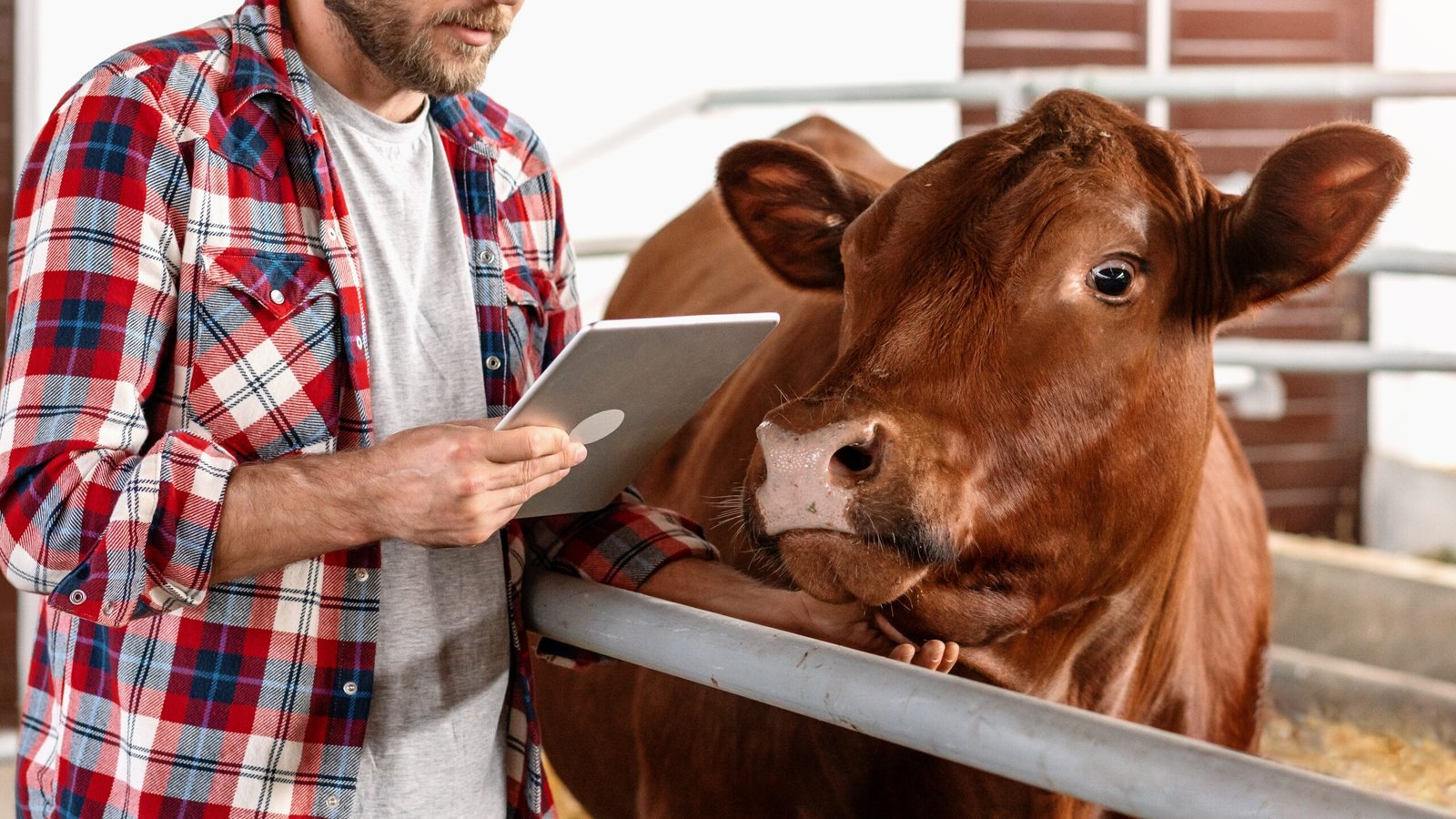
- Use an indicator with direct EID (electronic identification) tag reading capability — this eliminates the animal ID transcription step entirely
- Export weights electronically to farm management software rather than hand-writing them
- Audit weight records periodically for obvious outliers — a 110 lb heifer and a 1,100 lb heifer with the same ear tag number is a data entry error, not a growth miracle (50 kg and 500 kg respectively)
Accurate individual weights are only valuable if they are recorded consistently enough to calculate growth rates — our guide to tracking cattle weight gain over time covers how to build a reliable weight monitoring program.
Conclusion
Animal weight accuracy on a farm scale is not just about the quality of the hardware — it is about the whole system: level ground, calm animals, consistent pre-weigh protocols, regular calibration, load cell maintenance, and clean data recording. Fix the easiest problems first — levelling, protocol consistency, and calibration — and you will eliminate the majority of inaccuracy before you ever touch the scale itself. A farm scale that produces reliable, repeatable, comparable data over time is one of the most valuable management tools on any livestock operation. One that produces plausible-looking but systematically wrong numbers is worse than no scale at all, because it gives you false confidence.
FAQs
Why is my livestock scale giving inaccurate readings?
The most common causes are an unlevel platform, animal movement during weighing, gut fill variation from inconsistent pre-weigh protocols, lack of recent calibration, or damaged and corroded load cells. Most of these causes are preventable with correct setup, consistent protocols, and regular maintenance.
How often should a farm livestock scale be calibrated?
At a minimum, twice per year using certified test weights of known, traceable mass. Calibration is also required after the scale is moved, dropped, flooded, or involved in an overload incident. For scales used in commercial transactions where weight determines sale price, calibration by a certified technician is a legal requirement in most jurisdictions.
What is gut fill variation, and how does it affect livestock weights?
Gut fill is the weight of feed and water in an animal’s digestive system at the time of weighing. It changes throughout the day and can vary by 20–40 kg in mature cattle. Weighing at a consistent time after a standard period off feed and water — 12 hours for cattle — eliminates this source of variation and makes weight data comparable across sessions.
What is a corner loading error on a livestock scale?
Corner loading error occurs when the four load cells under a platform scale are not all contributing equally to the measurement, due to damage, contamination, or uneven ground contact. It causes different readings for the same animal depending on where they stand on the platform. It can be detected by placing a known test weight at each corner separately and comparing the readings.
Can temperature affect livestock scale accuracy?
Yes. Rapid temperature changes cause temporary zero drift as metal components expand and contract. Scales stored in cold conditions should equilibrate for 15–30 minutes before use. Operating outside the rated temperature range of the load cells and the indicator produces unreliable readings.
Sources
- Oklahoma State University Extension, Managing Shrink and Weighing Conditions in Beef Cattle (AFS-3257).
- Mississippi State University Extension, Understanding and Managing Cattle Shrink.
- Electronic Code of Federal Regulations, 9 CFR 201.72 — Scales; testing of.
Last reviewed September 2026 by the Scale Blog editorial team. For scales used in trade, calibration and adjustment should be done by a qualified scale technician.