









A shipping scale is a digital weighing instrument designed specifically to measure the weight of packages, parcels, and freight so that the correct carrier rate can be applied before dispatch. Every major carrier in the United States — UPS, FedEx, USPS, and DHL — determines shipping cost based on either the actual weight of a package or its dimensional weight, whichever is greater. A shipping scale produces the actual weight figure in that calculation. Without one, a business either guesses — and overpays or underpays — or depends on carrier-side reweighing, which results in invoice adjustments after the fact.
Shipping scales range from compact desktop models used at small business packing stations to heavy-duty industrial floor scales capable of weighing full pallets at receiving docks. What they share is a common measurement principle: a load cell that converts the physical force of a package into a precise digital weight reading. Understanding how that works — and what separates a reliable shipping scale from an inaccurate one — is the foundation for choosing the right instrument for your operation.
Table of Contents
How a Shipping Scale Works
The Load Cell — The Core Measurement Component
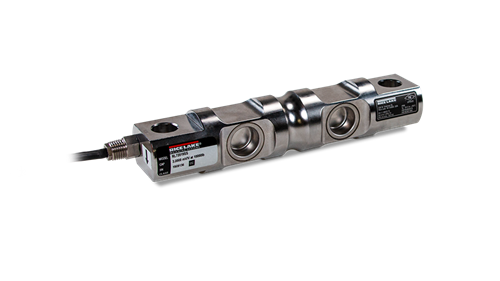
At the center of every digital shipping scale is one or more load cells. A load cell is a force transducer — a device that converts mechanical force into an electrical signal proportional to that force. The load cell used in most shipping scales is a strain gauge load cell, which works as follows:
When a package is placed on the scale platform, its weight exerts a downward force on the load cell’s metal body. The metal deforms slightly — too small to see with the naked eye, but measurable. Strain gauges, which are thin resistive elements bonded to the load cell body, deform along with it. That deformation changes the electrical resistance of the strain gauge. The change in resistance alters the voltage output of a Wheatstone bridge circuit inside the load cell — a standard electrical configuration used to detect very small resistance changes accurately.
As Mettler Toledo — the world’s largest weighing manufacturer — explains, the BC shipping scale series uses USB-powered load cell technology to deliver static weighing accuracy for routine postal and parcel applications in logistics operations.
Signal Processing and Display
The electrical signal from the load cell is amplified and sent to an analog-to-digital converter (ADC), which translates the analog voltage change into a digital value. That digital value is processed by the scale’s internal microprocessor, calibrated against a known reference, and displayed on the indicator screen as a weight reading in the user’s selected unit — pounds and ounces for most US shipping applications, with kilogram conversion available on all quality models.
The entire sequence — from placing the package on the platform to reading the stabilized weight — takes two to three seconds on a properly calibrated scale in normal operating conditions.
Key Functions That Affect Accuracy
- Zero / Auto-Zero: Before weighing, the scale must read exactly zero with nothing on the platform. Most scales include an automatic zero-tracking function that compensates for minor drift — dust accumulation, temperature change, or residual weight from a previous package that was not fully removed.
- Tare: The tare function subtracts the known weight of the packaging — the box, envelope, bubble wrap, or packing fill — from the gross weight reading, displaying only the net product weight. In a shipping context, tare is used to subtract the weight of the empty box before placing the product inside, or to subtract the weight of a container that holds multiple items being weighed together. For a full explanation of how tare works in practice and why it matters for billing accuracy, see our article on the shipping scale tare function and why it matters.
- Hold / Peak Hold: The hold function freezes the weight reading on the display after the scale stabilizes. This is particularly useful when the package is large enough to obstruct the view of the indicator screen — the operator places the package, the reading stabilizes, then they step back to read the frozen value. Without this function, the reading disappears as soon as the package is removed from the platform.
Types of Shipping Scales
Shipping scales are not one-size-fits-all. The correct type depends on the weight range of packages your operation handles and the workflow at the point of weighing.

Desktop / Bench Parcel Scale
The most common type in business environments. A compact platform — typically 12″ × 14″ to 16″ × 20″ — sits on a packing bench or shipping station. Capacity ranges from 35 lb to 300 lb depending on the model. Most desktop shipping scales connect to a computer via USB, which allows carrier software such as UPS WorldShip, FedEx Ship Manager, or ShipStation to read the weight directly — eliminating manual entry and the transcription errors that come with it.
Desktop parcel scales from manufacturers such as Rice Lake Weighing Systems — a major US scale manufacturer — are purpose-built for this application with NTEP-certified accuracy for legal-for-trade commercial transactions where carrier billing is based on the scale’s weight reading.
Heavy-Duty Bench Scale / Shipping Receiving Scale
For operations handling packages above 150 lb — large cartons, machinery components, consolidated freight — a heavy-duty bench scale with a larger platform (typically 18″ × 24″ or larger) provides the capacity and stability needed. These scales are typically installed at receiving docks and outbound shipping stations where weight must be captured for every inbound and outbound item.
Floor Scale with Ramp
For pallets, crates, and large freight that cannot be hand-lifted onto a bench scale, a floor-level pallet scale with approach ramps allows the load to be rolled onto the platform using a hand truck or pallet jack. Capacity typically ranges from 2,500 lb to 10,000 lb. For a full guide to choosing the right floor scale for a warehouse or distribution operation, see our article on how to choose a floor scale for your warehouse or factory.
Pallet Jack Scale
A pallet jack scale combines the weighing function with the pallet-moving function — the operator lifts and weighs the pallet in the same motion, with no transfer to a stationary floor scale required. For high-volume receiving operations where dozens of pallets per shift need to be weighed and moved, this is the most time-efficient configuration. See our full article on what is a pallet jack scale and how does it work for a complete breakdown of how load cells are integrated into the pallet jack fork mechanism.
What Makes a Shipping Scale Accurate — and What Degrades It
Knowing what affects accuracy prevents the most common shipping weight errors.
Factors That Support Accuracy
Level surface — A shipping scale must be placed on a stable, level surface. Load cells measure the vertical component of force applied to the platform. On an unlevel surface, the measured force vector is not perfectly vertical, which introduces a systematic error proportional to the degree of tilt. Most scales include adjustable leveling feet and a bubble level indicator for this reason.
Warm-up time — Electronic components, including load cells and ADCs, have operating characteristics that change with temperature. Cold components produce different readings than components at operating temperature. Most quality shipping scales need 5–15 minutes of warm-up time after being powered on in a cold environment before their readings fully stabilize.
Centered loading — Single-point load cell scales — the most common in compact desktop models — are most accurate when the package is centered on the platform. Off-center loading introduces bending moments that are not fully compensated by the load cell’s design. For consistent accuracy, always center packages on the platform and avoid letting the package overhang the edges.
Regular calibration — Load cells drift over time due to mechanical stress, temperature cycling, and normal use. A shipping scale that was accurate when installed may read several ounces high or low after months of use without recalibration. For guidance on how often to calibrate a shipping scale and when to schedule professional service, see our article on warehouse scale calibration: how often and how to do it right.
Factors That Degrade Accuracy
- Vibration from nearby machinery or forklift traffic while the reading is being taken
- Drafts or air currents from HVAC systems, dock doors, or fans directed at the platform
- Overloading — placing packages that exceed the scale’s rated capacity permanently damages load cells and degrades accuracy across the full weighing range
- Debris accumulation under the platform corners, which can create a false “pre-load” that the auto-zero function does not fully correct
NTEP Certification for Shipping Scales
If the weight your shipping scale records is used in a commercial transaction — meaning the carrier invoice is based directly on that weight reading — the scale must be NTEP-certified. In the US, NTEP certification means the scale model has been tested by an independent laboratory against the accuracy requirements of NIST Handbook 44 and issued a Certificate of Conformance (CC) number.
For most business shipping operations, the practical implication is straightforward: if the weight you capture at your packing station is what you bill the carrier for, or what the carrier bills you for, use an NTEP-certified scale. If the weight is used for internal purposes only — inventory, production planning, or rough cost estimation — NTEP certification is not legally required.
Most quality bench-top shipping scales from established manufacturers — Mettler Toledo, Rice Lake, Ohaus, Adam Equipment — are available in NTEP-certified versions. Verify the CC number on the data plate before purchase and confirm it in the NCWM NTEP database to ensure the certification is genuine.
Shipping Scale vs Postage Scale vs Parcel Scale — Terminology Clarified
These three terms are often used interchangeably, but they have functional distinctions worth understanding:
Postage scale — A light-duty scale designed specifically for letters, envelopes, and small parcels. Typically 5–70 lb capacity with readability to 0.1 oz. Used in mail rooms, post offices, and small business shipping stations for USPS First Class and Priority Mail calculations.
Parcel scale — A mid-range scale used for packages up to approximately 150–300 lb. The standard instrument at UPS and FedEx shipping counters, e-commerce fulfillment packing stations, and warehouse outbound departments. Most integrate with carrier software via USB.
Shipping scale — The broadest term, covering the full spectrum from postage scales through heavy-duty floor scales used at loading docks. When someone asks “what is a shipping scale,” the answer encompasses the full range above.
For a comprehensive buying guide covering the full spectrum from parcel scales to pallet scales, see our article on how to choose a shipping scale for your business.
Conclusion
A shipping scale converts the physical weight of a package into a precise digital reading through load cell technology — a process that happens in seconds and eliminates the guesswork that leads to carrier invoice adjustments, billing disputes, and overpaid postage. The type of scale that fits your operation depends on the weight range you handle and where in the workflow the weighing happens: a compact USB-connected bench scale for a packing station, a heavy-duty floor scale for a receiving dock, or a pallet jack scale for mobile weighing across a large distribution floor.
What all configurations share is the same underlying measurement principle, the same accuracy requirements, and the same need for regular calibration to maintain the precision the application demands.
FAQs
What is a shipping scale?
A shipping scale is a digital weighing instrument that measures the weight of packages and freight so the correct carrier rate can be applied before dispatch. Shipping scales range from compact desktop models for parcel weights up to 150–300 lb to heavy-duty floor scales for full pallets. All use load cell technology to convert the physical weight of a package into a precise digital reading.
How does a shipping scale work?
A shipping scale works through a load cell — a force transducer that converts the mechanical force of a package’s weight into an electrical signal. Strain gauges inside the load cell deform when weight is applied, changing their electrical resistance. That resistance change is amplified, converted from analog to digital, and displayed as a weight reading on the scale’s indicator. The full process takes two to three seconds.
What is the difference between a shipping scale and a postage scale?
A postage scale is a light-duty scale designed specifically for letters and small parcels, typically with a 5–70 lb capacity and readability to 0.1 oz. A shipping scale is the broader category covering instruments from postage scales through heavy-duty pallet floor scales. All parcel and postage scales are shipping scales, but not all shipping scales are postage scales.
Do I need an NTEP-certified shipping scale?
NTEP certification is required for any shipping scale used in a commercial transaction where the carrier invoice is based on the scale’s weight reading. If your scale is used for internal purposes only — production planning, rough cost estimates, or inventory — NTEP certification is not legally required. Most quality shipping scales from established manufacturers are available in NTEP-certified versions.
What affects shipping scale accuracy?
Shipping scale accuracy is affected by surface level, warm-up time, package centering on the platform, vibration from nearby machinery, air currents, load cell calibration status, and overloading. Regular calibration by a qualified service technician maintains accuracy within the scale’s rated specification over time.