








When you see IP65, IP67, or IP69K printed on an industrial scale’s data plate or specification sheet, those two or three characters tell you exactly what that scale can withstand in terms of dust and liquid exposure — and what it cannot. Choosing the wrong IP rating for the environment a scale will operate in is one of the most common and most costly specification errors in industrial weighing. A scale that is under-specified for its environment fails prematurely and produces inaccurate readings long before it fails visibly. A scale that is over-specified wastes budget without delivering proportional benefit.
This article explains what every digit in an IP rating means, what each common rating protects against in practice, and which rating is correct for every industrial scale environment.
Table of Contents
What an IP Rating Actually Means
IP stands for Ingress Protection. It is defined by the international standard IEC 60529, published by the International Electrotechnical Commission — the same body whose standards underpin electrical safety regulation globally. As the IEC explains, the IP code classifies how effectively an enclosure protects the electrical equipment inside it against the intrusion of solid particles and liquids. The standard replaces vague marketing terms like “waterproof” or “dustproof” with precise, testable definitions.
Every IP rating consists of the letters IP followed by two digits:
- The first digit rates protection against solid particles — dust, tools, and physical contact — on a scale of 0 (no protection) to 6 (completely dust-tight)
- The second digit rates protection against liquids — drips, splashes, jets, and immersion — on a scale of 0 (no protection) to 9 (high-pressure, high-temperature jets)
The letter K in IP69K is a specific test designation — not a continuation of the 0–9 liquid scale — indicating the high-pressure, high-temperature wash test originally defined under ISO 20653.
What the first digit means for scales:
| First Digit | Solid Particle Protection |
|---|---|
| 4 | Protected against objects larger than 1mm (tools, wires) |
| 5 | Dust-protected — limited ingress permitted, no harmful deposit |
| 6 | Dust-tight — complete protection, no ingress of dust |
All scales rated IP65 and above carry a first digit of 6 — meaning they are completely dust-tight. This is the correct minimum for any industrial scale used in manufacturing, warehousing, or food environments where dust, powder, or particulate matter is present.
IP65 — The Industrial Baseline
What IP65 Protects Against
An IP65-rated scale is completely dust-tight (first digit 6) and protected against water jets from any direction (second digit 5). The test standard requires the enclosure to withstand water projected by a 6.3mm nozzle at 30 kPa for a minimum of 15 minutes from any angle.
In plain terms: an IP65 scale can be cleaned with a low-pressure hose from any direction, exposed to rain and splash water, and used in dusty or mildly wet environments without damage to the internal electronics or load cells.
What IP65 Does Not Protect Against
IP65 does not protect against submersion. If the scale is placed in standing water, or if water pressure during cleaning significantly exceeds the test standard, water can enter. IP65 is also not rated for high-pressure steam cleaning.
Where IP65 Is the Right Specification
- General warehouse and shipping floors where the scale is occasionally wiped down or lightly hosed
- Outdoor environments with rain exposure
- Dusty manufacturing environments where powder or particulate matter is present
- Indicators and displays mounted in areas exposed to splashing but not direct hose cleaning
- Dry food production areas where only light cleaning is required
IP67 — Submersion Protection
What IP67 Protects Against
An IP67-rated scale is completely dust-tight and protected against temporary immersion in water up to 1 meter deep for up to 30 minutes. It passes the same water jet test as IP65 and additionally withstands brief submersion. As Scales Plus notes, IP67 load cells provide protection against immersion up to one meter, making them suitable for environments where water accumulates on the floor around the scale or where the scale may be submerged during a flood or washdown incident.
What IP67 Does Not Protect Against
IP67 does not protect against continuous submersion beyond the rated depth and duration. It is also not rated for high-pressure jets — a point that surprises many buyers. An IP67 enclosure is tested for still-water submersion, not pressurised spray. A scale that will face direct high-pressure hose cleaning requires IP66 or higher, not IP67.
Where IP67 Is the Right Specification
- Wet production environments where water regularly accumulates on floors
- Deli counters, fish processing, and meat preparation areas with frequent hosing
- Scales positioned near drainage channels or in low-lying floor areas
- Load cells in any environment where moisture ingress through the platform is a risk
- Outdoor platform scales exposed to standing water
IP69K — High-Pressure Washdown Protection
What IP69K Protects Against
IP69K is the highest practical IP rating for industrial-scale applications. It protects against complete dust ingress and against high-pressure, high-temperature water jets directed from close range at multiple angles. The test conditions are stringent: water temperature of 80°C (176°F), pressure of 80–100 bar (1,160–1,450 psi), delivered from a distance of 10–15 cm at a turntable rotation of 5 rpm.
As Mettler Toledo — one of the world’s leading industrial scale manufacturers — defines it, a washdown scale must carry an IP rating of IP66 or higher, and IP69K is required for applications involving high-pressure, high-temperature steam cleaning cycles. A scale that cannot withstand those conditions in a food processing or pharmaceutical environment cannot be properly sanitised — and a scale that cannot be properly sanitised is a food safety liability, not a weighing asset.
What IP69K Does Not Protect Against
IP69K does not guarantee chemical resistance. An IP69K scale withstands the water pressure and temperature of the test — it does not automatically resist the cleaning chemicals used in that water. For environments with aggressive acids, alkalis, or solvents, the material specification of the platform, load cells, and housing must be verified separately. Stainless steel (grade 304 or 316) is the standard material specification for IP69K-rated scales in food and pharmaceutical environments.
IP69K also does not imply IP67 protection. Because the K-rated test was developed separately from the standard IEC liquid scale, an IP69K enclosure is not automatically tested for submersion. If the scale may be submerged, look for a dual rating of IP67/IP69K.
Where IP69K Is the Right Specification
- Food processing facilities with mandatory high-pressure, high-temperature cleaning cycles — meat, poultry, dairy, seafood
- Pharmaceutical manufacturing areas subject to steam sterilisation or intensive chemical sanitisation
- Beverage production where floors and equipment are steam-cleaned between production runs
- Chemical processing environments with regular aggressive washdown
- Any facility where the cleaning regime involves pressure washers, steam lances, or automated clean-in-place (CIP) systems
IP Ratings Across the Scale System — Not Just the Platform
A critical and commonly overlooked point: the IP rating must apply to every component of the scale system, not just the platform or base.
Load Cells
Load cells are the most vulnerable component in any scale. They contain precision strain gauges sealed inside a metal housing with a cable entry point — and that cable entry is a primary moisture pathway. An IP67-rated load cell with a sealed cable entry significantly outlasts an unrated load cell in any wet environment. Specifying the IP rating of the load cells separately from the platform is essential — many scales sell the platform and indicator at one IP rating while using lower-rated load cells.
Junction Box
The junction box connects the load cell cables before the signal reaches the indicator. In wet environments, an unrated or IP65 junction box on a scale otherwise specified to IP67 or IP69K becomes the weakest link. Specify the junction box IP rating explicitly.
Indicator
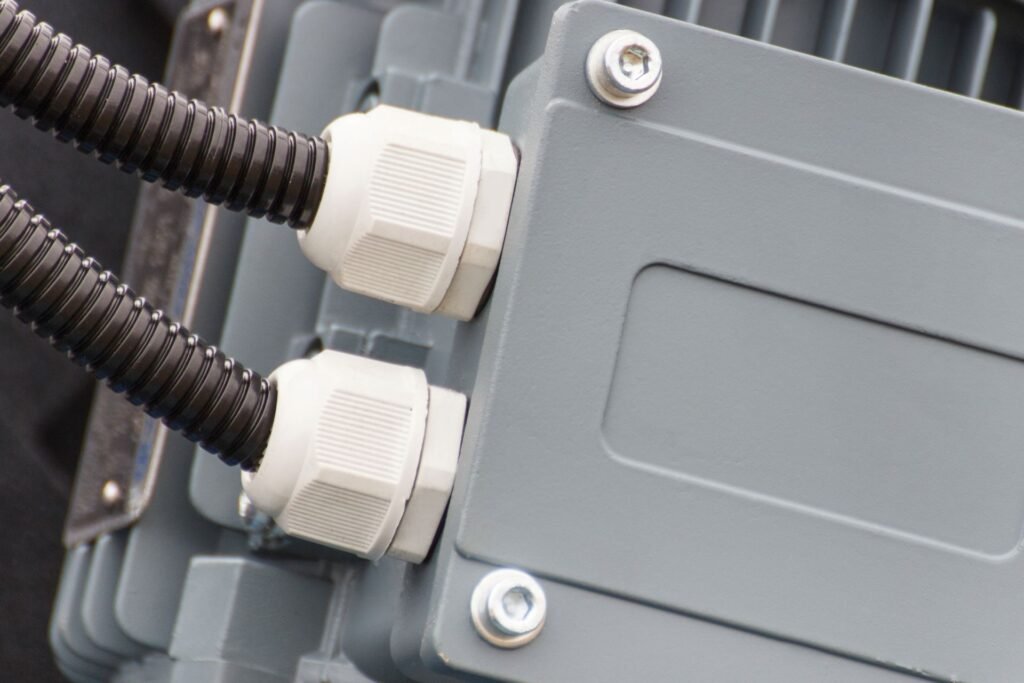
The indicator — the display and control unit — is often mounted away from the platform, on a post or wall bracket. Its IP rating must match the environment where it is mounted, not the environment where the platform sits. An IP69K platform with an IP54 indicator is effectively an IP54 scale in any cleaning situation that reaches the display.
Quick Reference: Choosing the Right IP Rating
| Environment | Minimum IP Rating |
|---|---|
| Dry indoor warehouse, no cleaning with water | IP54 or manufacturer default |
| General indoor industrial — occasional spray cleaning | IP65 |
| Wet production areas, regular hosing, floor water | IP65 (platform) / IP67 (load cells) |
| Food processing — medium cleaning intensity | IP66 |
| Food or pharma — high-pressure washdown or steam cleaning | IP69K (full system) |
| Outdoor exposure — rain, splash, no submersion | IP65 |
| Outdoor — risk of flooding or prolonged immersion | IP67 or IP67/IP69K dual rated |
For guidance on how IP rating interacts with deck material selection — particularly the choice between stainless steel and mild steel platforms — see our article on stainless steel vs mild steel industrial scales. For information on how IP rating affects calibration frequency in harsh environments, see our guide to how often industrial scales should be calibrated. For explosion-proof environments where IP rating intersects with hazardous area classification, see our article on what is an explosion-proof scale.
Conclusion
IP65, IP67, and IP69K are not a hierarchy where higher is always better — they are specifications matched to specific test conditions, and the right rating is the one that matches the actual cleaning and environmental conditions the scale will face. IP65 is sufficient for most dry-to-damp industrial environments. IP67 adds submersion protection for wet floors and occasional flooding risk. IP69K is mandatory for any scale that will be cleaned with high-pressure or high-temperature equipment in food, pharmaceutical, or chemical environments.
Apply the rating to the full system — platform, load cells, junction box, and indicator — not just the part number on the platform. And verify that the IP rating is tested and certified, not a marketing claim. A certified IP rating is a test result. Everything else is a description.
FAQs
What does IP65 mean on an industrial scale?
IP65 means the scale is completely dust-tight (first digit 6) and protected against low-pressure water jets from any direction (second digit 5). It can be cleaned with a low-pressure hose, exposed to rain and splash water, and used in dusty environments. It does not protect against submersion or high-pressure cleaning.
What is the difference between IP65 and IP67 on a scale?
Both IP65 and IP67 are completely dust-tight. The difference is liquid protection: IP65 resists low-pressure water jets from any direction; IP67 additionally withstands temporary immersion up to 1 meter deep for up to 30 minutes. IP67 does not automatically protect against high-pressure jets — for that, IP66 or IP69K is required.
When do I need an IP69K-rated scale?
IP69K is required for any scale that will be cleaned with high-pressure, high-temperature water jets — including pressure washers, steam lances, or automated clean-in-place (CIP) systems. It is the standard specification for food processing, pharmaceutical manufacturing, dairy, poultry, and chemical environments with intensive sanitation requirements.
Does IP69K include IP67 protection?
Not automatically. IP69K was developed under a separate test standard from the IEC 60529 liquid scale. An IP69K enclosure is not necessarily tested for submersion. For environments where both high-pressure cleaning and submersion risk exist, specify a dual-rated IP67/IP69K scale.
Does the IP rating apply to the whole scale or just the platform?
The IP rating must apply to every component of the scale system — the platform, the load cells, the junction box, and the indicator. A scale specified to IP69K is only as waterproof as its lowest-rated component. Verify the IP rating of each component separately, not just the overall system headline rating.
What IP rating do I need for a food processing scale?
For food processing environments with light to moderate cleaning, IP66 is the minimum. For facilities using high-pressure or high-temperature washdown equipment — which includes most meat, poultry, dairy, and seafood processing operations — IP69K on the full system (platform, load cells, junction box, and indicator) is required.