








Industrial scales drift. Load cells age under repeated loading, electronics shift with temperature cycles, and mechanical components settle over time. A scale that was accurate on installation day may be reading 2–4% high or low after 12–18 months of warehouse or factory use — silently producing wrong numbers on every transaction, batch, and quality check. The answer to how often industrial scales should be calibrated is not a single number. It depends on usage intensity, the environment, the regulatory framework the scale operates under, and what the scale’s data is used for. This article gives you the complete framework for every situation.
Table of Contents
The Baseline Rule: Minimum Once Per Year
For any industrial scale in regular use, annual calibration is the minimum baseline. As Scales Plus states, at a minimum, calibrating scales at least once per year is the general recommendation — but usage frequency, environmental conditions, and the scale’s application all determine whether that interval needs to be shortened.
Annual calibration is appropriate only for scales that are:
- Used infrequently — a few times per week or less
- Operating in a stable, clean, climate-controlled environment
- Not used for legal-for-trade commercial transactions
- Not subject to industry-specific regulatory requirements that mandate shorter intervals
For the majority of industrial operations — busy shipping departments, production lines, manufacturing batching stations — annual calibration is not enough. The correct interval is determined by working through the factors below.
Calibration Frequency by Application
General Warehouse and Shipping Scales
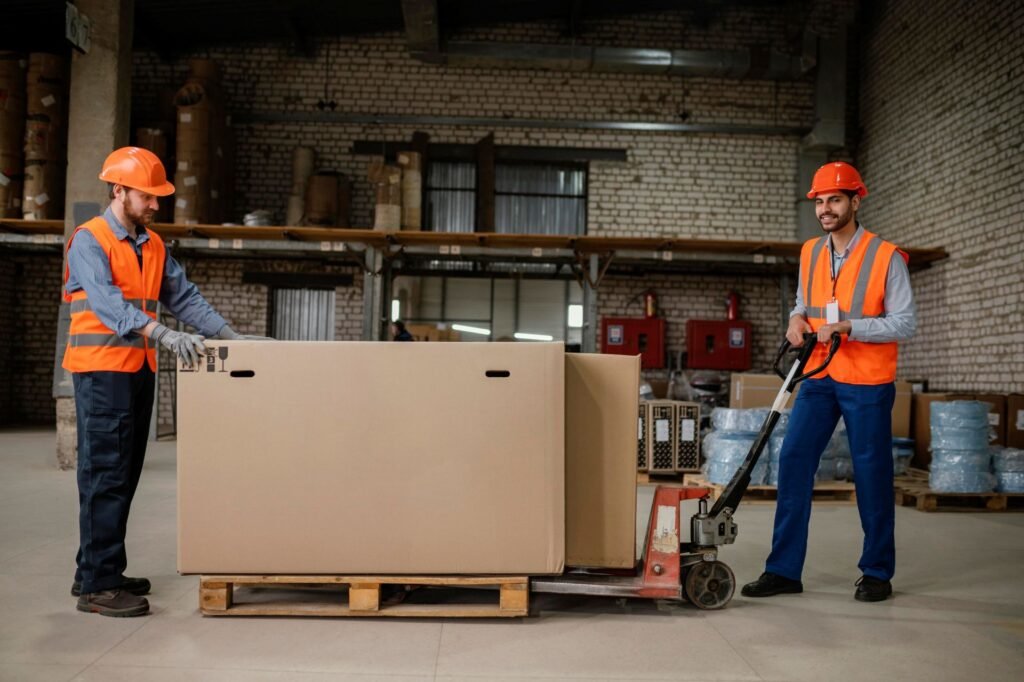
Floor scales and bench scales used in shipping and receiving in a typical warehouse environment should be calibrated every 6 months as a standard practice. These scales are loaded heavily and repeatedly throughout each shift, are exposed to forklift vibration and impact, and often operate near loading doors where temperature and humidity fluctuate. Industrial Monitor Direct confirms that most industrial floor scales require professional calibration every 6–12 months, with quarterly intervals recommended for high-accuracy applications or harsh environments.
Manufacturing and Production Scales
Scales used on production lines for batching, ingredient dosing, or quality control checkweighing should be calibrated quarterly, every three months. These scales carry a direct quality risk: an out-of-tolerance scale on a production line generates batches that are outside specification, which may not be detected until a customer complaint or audit. A quarterly calibration interval catches drift before it becomes a product quality event.
High-Precision and Pharmaceutical Manufacturing
Scales used in pharmaceutical manufacturing, chemical compounding, or any GMP-regulated environment require calibration intervals defined by the facility’s documented risk-based calibration programme. In practice, this typically means monthly calibration for high-precision bench scales and analytical instruments, with daily or per-shift zero checks and verification against certified test weights. As Precision Solutions Inc explains, pharmaceutical companies must comply with Good Manufacturing Practices (GMP), which include documented equipment calibration schedules, and all calibrations must be performed using NIST-traceable test weights by a calibration provider accredited to ISO/IEC 17025.
Legal-for-Trade Scales (NTEP Certified)
Any scale used in a commercial transaction where weight determines price — freight billing, material sales, receiving verification — must be calibrated in accordance with NIST Handbook 44, the federal standard for commercial weighing devices. Under Handbook 44, legal-for-trade scales must be verified by a state Weights and Measures inspector. The inspection frequency is set by each state’s Weights and Measures authority — most states inspect annually, but high-volume commercial operations may face more frequent inspections. A scale found out of tolerance during an inspection must be removed from commercial service immediately until recalibrated and resealed.
Industry-Specific Regulatory Requirements
Beyond general frequency guidelines, several regulatory frameworks mandate specific calibration intervals that override any internal schedule.
ISO 9001 Quality Management Systems
ISO 9001 requires that measuring equipment — including scales — be calibrated at defined intervals based on a documented risk assessment. The standard does not specify a universal interval; it requires the facility to determine the appropriate frequency based on the measurement’s importance to product quality, the scale’s operating environment, and historical calibration data. Scales that are critical to product conformity require more frequent calibration and must have complete calibration records available for audit. Using a calibration provider accredited to ISO/IEC 17025 satisfies the traceability requirement that ISO 9001 imposes.
GMP and Pharmaceutical (21 CFR)
Pharmaceutical manufacturing under FDA 21 CFR regulations requires that all weighing equipment used in production be calibrated at defined intervals with full documentation. Calibration records must include the date, the technician’s identity, the test weights used, the results before and after adjustment, and any corrective action taken. Failure to maintain calibration records during an FDA audit is treated as a GMP violation regardless of whether the scale is currently accurate.
Food Manufacturing (HACCP / FSMA)
Food manufacturers operating under HACCP plans or the FDA Food Safety Modernization Act (FSMA) requirements must include scales as monitored control points where weight is a critical control parameter — for example, in allergen control, net weight compliance, or recipe batching. Calibration frequency for these scales must be documented in the HACCP plan and supported by calibration records traceable to NIST standards.
Events That Require Immediate Recalibration
Regardless of the scheduled calibration interval, any of the following events requires the scale to be taken out of service and recalibrated before it is used again:
- The scale was moved to a new location — even moving a floor scale across the same room can shift load cell alignment and introduce zero drift. Recalibrate after every relocation.
- The scale was overloaded — a single overload event can permanently shift a load cell’s zero point or reduce its linearity. If a scale was overloaded, assume it is out of calibration until verified.
- The scale was subjected to shock or impact — a forklift strike, a dropped load, or a platform strike from vehicle contact can damage load cells invisibly. Recalibrate before returning to service.
- The scale was flooded or submerged — moisture ingress into load cell electronics produces drift and instability. Recalibrate after any flood or washdown incident that reached the load cells.
- The scale was repaired or a component was replaced — any service that involves load cells, the indicator, cabling, or the junction box requires recalibration before return to service.
- Readings are inconsistent or the scale does not return to zero — visible zero drift or inconsistent readings between repeated measurements of the same load are diagnostic signals that calibration has drifted. Do not wait for the scheduled calibration date.
In-House Verification vs Professional Calibration
These are two distinct activities — and understanding the difference matters for both compliance and budget.
In-House Verification
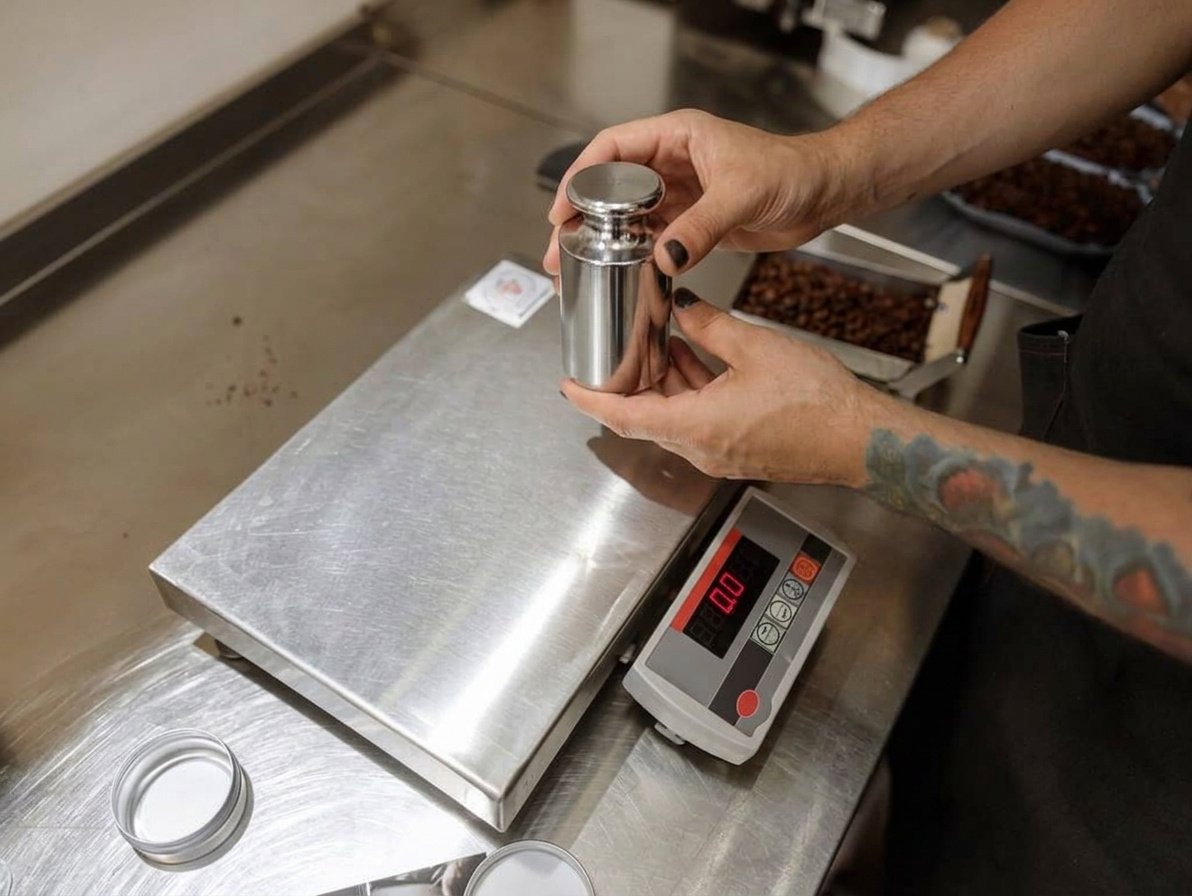
In-house verification means an operator places certified test weights on the scale and checks whether the reading is within acceptable tolerance. This is a daily or weekly check — not a calibration — and is appropriate for catching gross errors between scheduled professional calibrations. It requires the facility to own NIST-traceable certified test weights that are themselves regularly calibrated.
In-house verification does not satisfy the calibration requirement for legal-for-trade scales, ISO 9001 audit requirements, or GMP/pharmaceutical compliance. It is a supplement to professional calibration, not a replacement.
Professional Calibration
Professional calibration is performed by a technician with calibrated reference standards traceable to NIST, using the test procedures defined in NIST Handbook 44 or the applicable industry standard. The calibration provider should be accredited to ISO/IEC 17025 — this accreditation confirms that the provider’s own standards are traceable and that their procedures meet international requirements. As Precision Solutions Inc explains, ISO/IEC 17025 accreditation provides assurance of calibration traceability — the unbroken chain of calibrations back to NIST primary standards that regulatory auditors require.
Professional calibration produces a calibration certificate documenting the results before and after adjustment, the test weights used, the environmental conditions, and the technician’s credentials. This certificate is the document required during Weights and Measures inspections, ISO audits, GMP audits, and FSMA verification.

Building a Calibration Schedule: A Practical Framework
Use this table to establish the correct calibration interval for each scale in your operation:
| Scale Type and Application | Recommended Interval |
|---|---|
| Legal-for-trade — commercial transactions | Monthly, per GMP/SOP documentation |
| Per the state Weights and Measures schedule, the annual minimum | Every 6 months |
| Production line batching or dosing | Quarterly |
| High-precision or pharmaceutical manufacturing | Risk-based; document and justify in the quality system |
| ISO 9001 regulated environment | Immediately before returning to service |
| Any scale after relocation, overload, or repair | Immediately before return to service |
For guidance on the specific IP ratings and environmental protections that affect how quickly a scale drifts in harsh environments, see our article on IP ratings for industrial scales explained. For advice on choosing the right floor scale for your facility that will hold calibration longer under daily use, see our floor scale buying guide for warehouses and factories. For information on protecting scales in hazardous environments where standard calibration procedures require additional precautions, see our article on what is an explosion-proof scale.
Conclusion
How often industrial scales should be calibrated depends on four things: how heavily the scale is used, how demanding the environment is, what the scale’s readings are used for, and which regulatory framework applies. Annual calibration is the minimum for any scale. Shipping and receiving scales need a six-month calibration. Production line scales need quarterly calibration. High-precision and pharmaceutical scales need monthly calibration with documented records.
Legal-for-trade scales must follow the state Weights and Measures inspection schedule. Any scale that has been moved, overloaded, flooded, or repaired needs immediate recalibration before service return — regardless of when it was last on the schedule. Build the calibration interval into a documented schedule, keep calibration certificates on file, and treat any out-of-tolerance finding as a process event requiring corrective action. A scale that is never wrong is worth far more than a scale that is occasionally checked.
FAQs
How often should industrial scales be calibrated?
At a minimum, annually for any industrial scale in regular use. Shipping and receiving floor scales should be calibrated every 6 months. Production line batching and dosing scales should be calibrated quarterly. High-precision and pharmaceutical manufacturing scales typically require monthly calibration with full documentation. Legal-for-trade scales must follow the inspection schedule set by your state Weights and Measures authority.
When should an industrial scale be recalibrated immediately?
A scale must be recalibrated before service return any time it has been moved to a new location, subjected to an overload event, struck by a forklift or heavy impact, flooded, or subjected to moisture ingress in the load cells, repaired or had components replaced, or is displaying inconsistent readings or visible zero drift.
What is the difference between scale calibration and scale verification?
In-house verification means placing certified test weights on the scale to check whether it reads within tolerance — it is a daily or weekly check appropriate for catching gross errors between professional calibrations. Professional calibration is performed by an accredited technician with NIST-traceable reference standards and produces a calibration certificate. Only professional calibration satisfies legal-for-trade, ISO 9001, GMP, and FSMA compliance requirements.
Do legal-for-trade scales have a mandatory calibration frequency?
Yes. Legal-for-trade NTEP-certified scales must be verified by a state Weights and Measures inspector on a schedule set by the state authority — typically annually for most commercial applications. A scale found out of tolerance during inspection must be removed from commercial service immediately and recalibrated before it can be resealed for use.
What calibration standard applies to scales used in ISO 9001-certified facilities?
ISO 9001 requires that scales used as measuring equipment be calibrated at defined intervals based on a documented risk assessment, using calibration services traceable to NIST or equivalent national standards. ISO/IEC 17025 accreditation of the calibration provider satisfies the traceability requirement. The calibration interval must be documented in the quality management system and justified based on the scale’s role in product conformity.