

Choosing a floor scale for a warehouse comes down to five core factors: maximum load capacity, platform size, environmental rating, legal-for-trade certification, and connectivity with your existing systems. Get these right, and your scale will handle daily pallet weighing, shipping and receiving, and inventory management accurately for years. Get them wrong, and you’ll face inaccurate readings, overloading fines, or a scale that fails within 12 months of purchase. This guide walks through each factor in plain language so you can make a confident decision.
Table of Contents
What Is a Warehouse Floor Scale and How Does It Work?
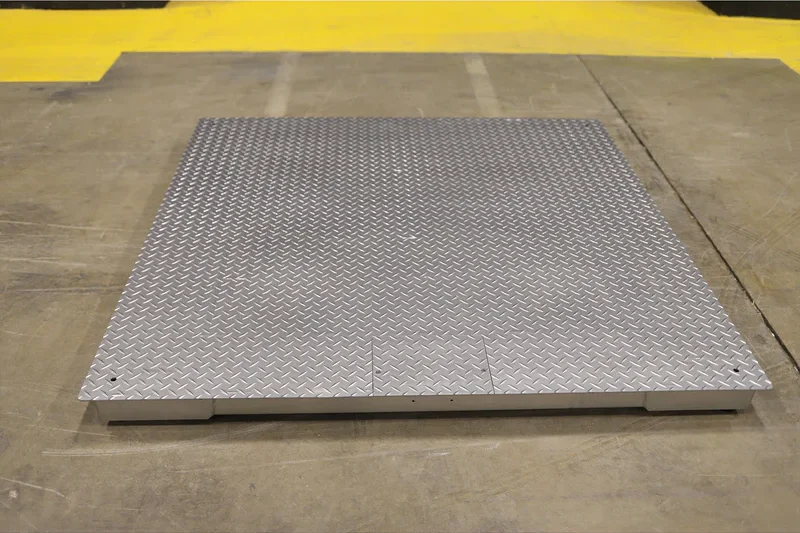
A warehouse floor scale — also called an industrial floor scale for warehouse use or a platform scale — is a low-profile, heavy-duty weighing system designed to sit directly on the floor. Items are loaded onto the flat steel deck either manually, by pallet jack, or by forklift, and the weight registers on a connected digital weight indicator.
The measurement mechanism at the heart of every floor scale is the load cell — typically four shear beam load cells positioned at each corner of the platform. When weight is applied, the load cells deflect microscopically and convert that force into an electrical signal. The digital weight indicator processes the signal and displays the reading.
Most warehouse floor scales also include:
- A tare function to zero out the weight of packaging or containers
- Auto-zero tracking to compensate for debris build-up on the platform over time
- A junction box (usually NEMA 4X rated) that combines load cell signals before sending them to the indicator
Understanding this basic mechanism matters because it directly informs what to look for when evaluating build quality, accuracy, and long-term reliability.
Why Getting This Decision Right Directly Affects Your Bottom Line
An incorrectly specified warehouse weighing scale creates problems that compound daily. A scale under-specced for your heaviest loads will experience load cell fatigue, leading to scale drift — readings that gradually skew from the actual weight. In a busy shipping and receiving environment, even a 0.5% error on a 1,000 kg pallet means your freight invoices are wrong on every single shipment.
The cost implications are real:
- Overloading fines from carriers can reach hundreds of dollars per incident if your declared weight doesn’t match the actual load
- Billing disputes with customers arise when the weight on the delivery note doesn’t match what they weigh at their end
- Compliance failures for businesses that sell by weight — a scale that isn’t NTEP certified as legal-for-trade can result in regulatory penalties
A distribution centre manager in a mid-sized e-commerce operation reported reducing freight billing disputes by over 80% after replacing an underpowered bench scale with a correctly rated heavy-duty floor scale at the outbound dock. The scale paid for itself within three months.
How to Choose the Right Floor Scale: 6 Factors to Evaluate
1. Weight Capacity
Always select a floor scale with a weight capacity at least 25–50% above your heaviest expected load. If your heaviest pallet runs to 2,000 kg, choose a scale rated for at least 2,500–3,000 kg. This headroom prevents overload damage to the load cells and extends the scale’s service life significantly.
2. Platform Size
Floor scale platform size determines whether your loads fit safely and centrally on the deck. The most common sizes for pallet weighing are:
- 4′ × 4′ (48″ × 48″) — fits standard pallets, the most widely used warehouse configuration
- 4′ × 5′ (48″ × 60″) — better for oversized pallets or long packages
- 5′ × 5′ and larger — for wide machinery components or double-stacked loads
If you’re using a pallet jack or forklift to load the scale, verify that the deck is low-profile enough for clean roll-on access — or consider a floor scale with ramp for easier loading without lifting.
3. Environmental Rating (IP and NEMA)
The IP rating tells you how well the load cells and junction box resist dust and water. In a standard dry warehouse, IP65 is sufficient. For cold storage facilities, washdown areas, or environments with high humidity, specify IP67-rated load cells and a NEMA 4X junction box — these are sealed against water ingress and corrosive cleaning agents.
4. NTEP Certification / Legal-for-Trade
If your business buys or sells goods by weight — or if you invoice customers based on weight — you legally require an NTEP certified floor scale that qualifies as legal-for-trade. NTEP (National Type Evaluation Program) certification means the scale has been independently tested to meet Handbook 44 accuracy standards. Without it, a routine weights and measures inspection can result in fines and forced downtime.
If you only use the scale for internal inventory management rather than trade transactions, a non-NTEP model will work and typically costs less.
5. Platform Material and Construction
For most warehouse applications, a mild steel alloy steel platform with a tread-plate surface provides the right balance of strength and traction. For food processing annexes or pharmaceutical warehouses, specify stainless steel to meet hygiene and washdown requirements. Check that the frame uses welded construction — bolted frames loosen over time under forklift loading impact.
6. Connectivity and WMS Integration
Modern warehouse operations benefit from scales that feed weight data directly into warehouse management systems (WMS) or ERP platforms. Look for a digital weight indicator with RS-232, USB, Ethernet, or wireless (Wi-Fi/Bluetooth) output. This eliminates manual data entry, reduces human error in inventory management, and creates an automatic audit trail for every weighing transaction.
Common Mistakes When Buying a Warehouse Floor Scale
Even experienced buyers make avoidable errors. The most common ones:
- Buying on price alone: The cheapest industrial floor scale for warehouse use often uses lower-grade load cells that drift within 18 months. Spend 20–30% more upfront on a reputable platform and you’ll avoid costly recalibration or replacement.
- Ignoring the floor condition: A floor scale requires a flat, stable surface. Uneven or cracked concrete causes the platform to rock, introducing measurement error from the first day. If your floor is uneven, specify a model with adjustable levelling feet — most quality scales include these, but it’s worth confirming.
- Forgetting about scale calibration requirements: Every floor scale needs periodic calibration to maintain accuracy — annually at minimum, or more frequently in high-throughput environments. Factor in the cost and availability of a certified calibration service in your area before purchasing. Some scale vendors include an initial calibration certificate; confirm this before buying.
- Overlooking the pit-mounted option: In high-traffic warehouse environments where pallet jacks or forklifts cross the scale dozens of times daily, a pit-mounted floor scale — installed flush with the floor — significantly reduces ramp wear, trip hazards, and loading time. The installation cost is higher, but operational gains often justify it for permanent scale stations.
- Choosing the wrong platform size: A platform too small for your typical load forces off-centre weighing, which degrades accuracy and stresses the load cells unevenly. Always measure your most common load footprint before specifying platform dimensions.
A Quick-Reference Checklist Before You Buy
Use this before finalising any floor scale purchase:
- Confirm your maximum load weight — then add 30% buffer for your capacity specification
- Measure your standard pallet or load footprint to determine the minimum platform size needed
- Identify your floor environment: dry, wet, cold, or washdown — this sets your IP and material requirements
- Confirm whether your application requires a legal-for-trade (NTEP certified) scale
- Check your forklift or pallet jack height clearance to determine whether a ramp or pit frame is needed
- Verify connectivity requirements with your WMS or ERP team before specifying the indicator
- Ask your supplier about calibration certification, warranty terms, and local service availability
Conclusion
Knowing how to choose a floor scale for a warehouse is less about finding the most expensive model and more about matching the specification precisely to your operation. The right heavy-duty floor scale — correctly rated for capacity, sized for your loads, built for your environment, and certified for your compliance requirements — will deliver accurate results for 5–10 years with minimal maintenance.
Start with your heaviest load and work outwards from there: capacity, platform size, IP rating, certification, and connectivity. Once you have those five parameters defined, shortlist two or three models and compare their calibration requirements and warranty terms before committing. That process takes less than an hour and will save you significant cost and frustration over the scale’s working life.
FAQs
What weight capacity do I need for a warehouse floor scale?
Choose a capacity at least 25–50% above your heaviest expected load. For a maximum pallet weight of 2,000 kg, specify a scale rated for at least 2,500–3,000 kg.
Do I need an NTEP certified floor scale?
Yes, if your business buys or sells goods by weight, or invoices customers based on weight. NTEP certification confirms the scale meets legal-for-trade accuracy standards required in most US states.
What is the standard platform size for warehouse pallet weighing?
The most common size is 4′ × 4′ (48″ × 48″), which fits standard pallets. For oversized loads, a 4′ × 5′ or 5′ × 5′ platform is more appropriate.
What IP rating does a warehouse floor scale need?
IP65 is sufficient for dry warehouse environments. For wet, cold storage, or washdown areas, specify IP67-rated load cells with a NEMA 4X sealed junction box.
